
Your pothos has pale new leaves, the bag of potting mix under the sink says “feeds for months,” and a box of blue crystals sits on the shelf by the window.
If you are asking whether Miracle-Gro is good for houseplants, you are asking the right thing before you mix a batch and pour it on.
The short version: Yes, Miracle-Gro is good for most houseplants when you dilute it, feed only during active growth, and flush the soil now and then.
The problems people blame on it, like burned leaf tips and white crust on the soil, usually come from feeding too much, too often, or in winter.
This guide covers which formula fits which plant, how to mix it, how often to feed indoors, how to spot and fix fertilizer burn, which plants should skip it, and pet safety.
At a Glance
| Factor | What it needs |
|---|---|
| Light | Feed only plants getting enough light to grow; low-light plants need much less |
| Water | Water the soil first, then apply diluted fertilizer to moist soil, never bone-dry soil |
| Soil | Fresh mixes with built-in fertilizer need no extra feeding for about 2 to 6 months |
| Temperature | Feed when rooms stay around 65 to 80°F and plants are actively growing |
| Pet safety | Store sealed and out of reach; the ASPCA notes ingested fertilizer often causes stomach upset |
| Difficulty | Easy, as long as you measure and dilute instead of eyeballing |
Is Miracle-Gro Good for Houseplants, or Just for Gardens?
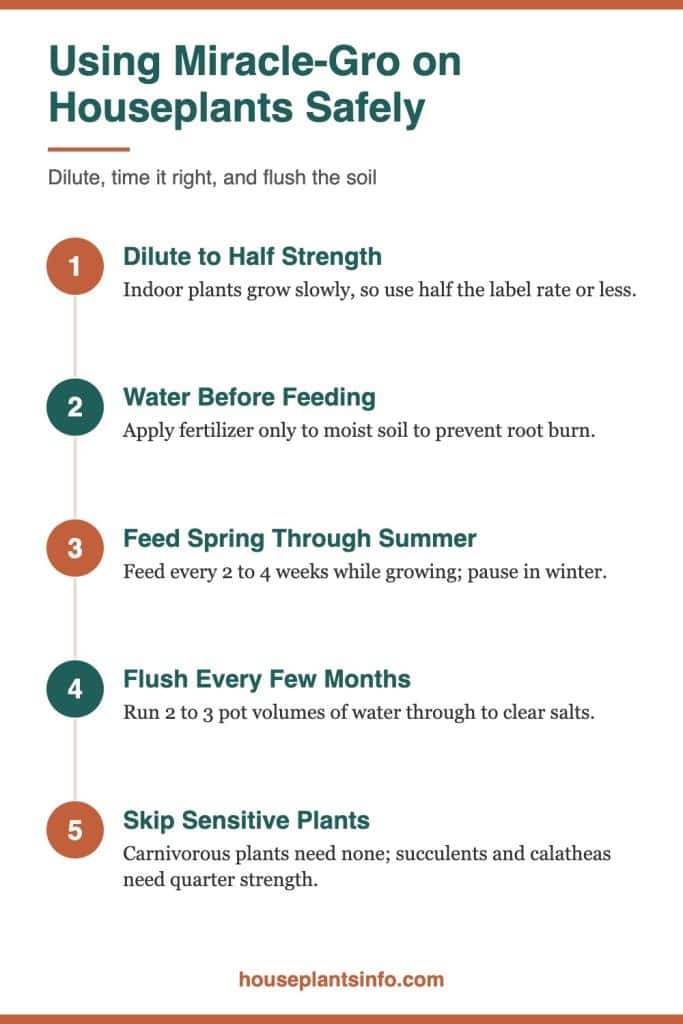
It is good for houseplants as long as you treat the label rate as a maximum, not a target. Indoor plants grow more slowly than outdoor plants, so they use far less fertilizer and are more sensitive to excess salts.
What it actually supplies
Miracle-Gro is a synthetic fertilizer that delivers nitrogen, phosphorus, and potassium in a form roots can absorb right away. The classic all-purpose water-soluble crystals are 24-8-16, which is nitrogen-heavy. That suits foliage plants, which make up most indoor collections.
Most formulas also include small amounts of micronutrients like iron, manganese, and zinc. These help prevent the yellowing that shows up when old potting mix runs out of nutrients.
Why indoor plants need a lighter hand
A pot holds a small, closed volume of soil. Fertilizer salts that roots do not use stay in that soil and concentrate as water evaporates, especially near a radiator or a forced-air vent.
Outdoor beds get rain that washes excess salts away. Indoors, nothing flushes the pot unless you do it. That is why half-strength feeding is standard advice for houseplants.
Measure, don’t guess
Use a dedicated measuring spoon kept with your fertilizer so you are never guessing with a kitchen teaspoon.
A soil moisture meter also helps, because you should only feed a pot that is already moist, and the meter tells you what the top inch of soil hides.
Light decides how much they can use
A plant 2 feet from a south or west window uses nutrients steadily in summer. The same plant 8 feet back from a north window barely grows and can only use a fraction of the food.
If you grow under a grow light on a 12 to 14 hour timer, your plants may keep growing through winter. In that case, light feeding can continue year-round.
Crystals, Liquid, Spikes, or Potting Mix: Which Should You Use?
For most indoor growers, a liquid or water-soluble formula diluted to half strength is the most controllable choice. Spikes and slow-release granules are convenient but harder to adjust once they are in the pot.
Water-soluble crystals
The blue crystals dissolve in water and feed immediately. They are inexpensive and strong, so they are easy to overdo indoors.
For houseplants, I mix the crystals at about half the label rate, roughly 1/4 to 1/2 teaspoon per gallon depending on the plant. That gives you a mild feed you can repeat every few weeks in the growing season.
Ready-to-use and concentrated liquids
Liquid houseplant formulas are usually lower in nutrients and made to be added to water at each watering or every couple of weeks. They are gentler and well suited to beginners.
Read the label carefully, since some are meant to be used every time you water and some every 1 to 2 weeks. Mixing up those instructions is a common cause of buildup.
Fertilizer spikes
Spikes release nutrients slowly into the soil around them. The trouble is uneven release: roots next to the spike can get a concentrated dose while the rest of the pot gets little.
If you use spikes, push them halfway between the stem and the pot edge, never against the main root ball. Skip them for small pots under 6 inches across.
Potting mix with built-in fertilizer
Many Miracle-Gro potting mixes contain slow-release fertilizer that feeds for about 2 to 6 months. That is enough food for a freshly repotted plant, so do not add liquid fertilizer on top during that window.
These mixes hold moisture well. That suits ferns, pothos, and peace lilies but can stay too wet for succulents, cacti, and plants that rot easily in a dim room.

| Formula | Best for | Watch out for |
|---|---|---|
| Water-soluble crystals | Fast-growing foliage plants in good light | Easy to overmix; use half strength |
| Liquid concentrate | Beginners, frequent light feeding | Confusing “every watering” instructions |
| Spikes | Large floor plants in big pots | Hot spots near roots, hard to undo |
| Mix with fertilizer | Fresh repots of moisture-loving plants | Double feeding, slow drying in winter |
Sophia’s tip: Write the date you repotted on a piece of masking tape stuck under the pot. When the tape says the mix is more than 3 months old, you know it is safe to start light liquid feeding.
How to Mix and Apply It Without Burning Roots
Water first, feed second, and always dilute. Following that order prevents most fertilizer burn before it starts.
Step-by-step
- Check that the soil is moist but not soggy. If it is bone-dry, water with plain water and wait an hour.
- Measure the fertilizer at half the label rate for houseplants, or quarter strength for sensitive plants.
- Dissolve it completely in room-temperature water. Cold water straight from the tap can shock roots in winter.
- Pour slowly over the soil surface, not over leaves or the crown, until a little drains from the bottom.
- Empty the saucer or cachepot within 30 minutes so roots do not sit in salty runoff.
Why dry soil is the danger zone
Dry roots absorb whatever reaches them first. A concentrated fertilizer solution hitting parched roots pulls moisture out of them, which shows up as brown, crispy tips within days.
Moist soil spreads the solution evenly and buffers the salts. This one habit protects your plants more than any particular formula choice.
Your water matters too
Hard tap water adds its own minerals, and those stack with fertilizer salts over time. If you are curious about switching, read about whether rainwater is good for houseplants before you change your routine.
Leaving tap water out overnight lets some chlorine dissipate, but it does not remove minerals. Filtered or collected water helps in areas with very hard water.
Sophia’s tip: Mix fertilizer in a marked 1-gallon jug and keep it separate from your plain watering can. That way you never accidentally feed a plant twice in one week.
How Often Should You Feed Houseplants Indoors?
Feed every 2 to 4 weeks in spring and summer at half strength, then taper off in fall and stop for most of winter. Adjust based on how much light and growth each plant has.
Spring and summer
From roughly March through September, days are longer and plants put out new leaves. This is when feeding pays off.
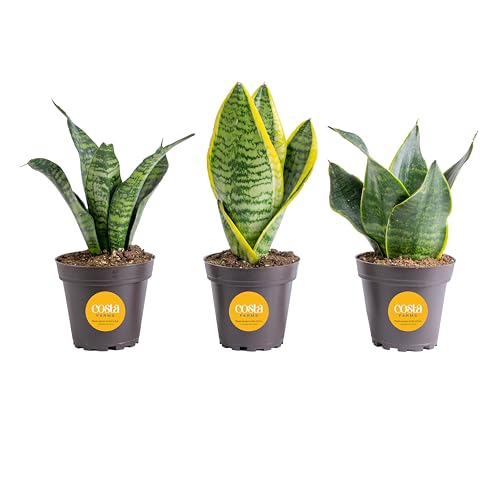
Fast growers like pothos, philodendron, monstera, and spider plants in bright spots can take half-strength feed every 2 weeks. Slower plants like snake plants and ZZ plants do fine with feeding every 4 to 8 weeks.
Fall and winter
In a Chicago apartment, November through February brings short days, weak window light, and dry air from radiators. Most houseplants slow down or pause.
Plants that are not growing cannot use fertilizer, so it just builds up in the soil. Stop feeding by late fall unless a plant is actively pushing new growth under a grow light.
Read the plant, not the calendar
New leaves unfurling every couple of weeks means the plant is using nutrients. No new growth for a month or more means hold off, regardless of the month.
Pale, uniformly yellowing older leaves with healthy roots can signal hunger. Brown tips, wilting in moist soil, or white crust signal the opposite.
| Plant type | Growing season | Winter |
|---|---|---|
| Fast foliage (pothos, philodendron, monstera) | Half strength every 2 to 4 weeks | None, unless under grow lights |
| Slow foliage (snake plant, ZZ, cast iron plant) | Half strength every 4 to 8 weeks | None |
| Flowering (African violet, peace lily) | Quarter to half strength every 2 to 4 weeks | Light feeding only if blooming |
| Succulents and cacti | Quarter strength 2 to 3 times per season | None |
Fertilizer Burn and Salt Buildup: Signs and the Fix
Burn and buildup are the main downsides of Miracle-Gro indoors, and both are fixable if you catch them early. The fix is flushing the soil and pausing feeding.
Signs to watch for
- Brown, crispy leaf tips and edges, often on several leaves at once.
- A white or yellowish crust on the soil surface or around the pot rim.
- Wilting even though the soil is moist.
- Sudden leaf drop or new leaves that come in small and distorted.
- Dark, mushy root tips when you slide the plant out of its pot.
Brown tips can also come from dry winter air or uneven watering. If you have not fertilized in months, look at humidity and watering first.
How to flush a pot
Take the plant to a sink or tub. Slowly pour room-temperature water through the soil, about 2 to 3 times the volume of the pot, letting it drain completely.
Let the pot drain fully before putting it back in its saucer. Skip fertilizer for at least 4 to 6 weeks while the plant recovers.
When to repot instead
If the crust keeps coming back, the soil smells sour, or many roots are brown and soft, repot into fresh mix. Trim dead roots with clean scissors and choose a pot only 1 to 2 inches wider than the root ball.
Do not feed a freshly repotted plant for at least a month. Damaged roots need time to regrow before they can handle any fertilizer.
Prevent it going forward
Flush every pot every 3 to 4 months during the growing season, even without symptoms. Use pots with drainage holes; decorative pots without holes trap salts with nowhere to go.
Sophia’s tip: Scrape off the top half inch of crusted soil and replace it with fresh mix after flushing. It removes the most concentrated salts and makes it easier to see if the crust returns.
Which Houseplants Should Skip It or Get Less?
Most foliage and flowering houseplants handle diluted Miracle-Gro well. A handful need a weaker dose, a special formula, or no synthetic fertilizer at all.
Plants that do well with it
- Pothos, philodendron, monstera, and other aroids.
- Spider plants, peace lilies, and dracaenas.
- Rubber plants, fiddle-leaf figs, and other ficus.
- Ferns, at quarter to half strength in moist soil.
- Calatheas and prayer plants, at quarter strength, since their leaf edges brown easily from salts.
Plants that need a lighter or special approach
Succulents and cacti grow slowly and prefer lean soil. Feed them at quarter strength only a few times in spring and summer, and never in a moisture-retentive mix.
Orchids grow in bark and do better with formulas made for orchids, used weakly and often. Acid-loving plants like gardenias and azaleas prefer an acid-forming fertilizer.
Lucky bamboo growing in water needs only a drop of very diluted liquid fertilizer every month or two. You will find more about it among the houseplants that bring good luck.
Plants that should never get it
Carnivorous plants like Venus flytraps, pitcher plants, and sundews evolved in nutrient-poor soil. Synthetic fertilizer in the soil can kill them, so feed them only insects and use distilled or rainwater.
Air plants can take a special, very weak bromeliad or air plant fertilizer in their soaking water, not standard-strength garden fertilizer.
What about organic alternatives?
Compost, worm castings, and organic liquid feeds release nutrients more slowly and are less likely to burn roots. They support soil life, a topic covered in whether earthworms are good for houseplants.
Some home remedies circulate online, and not all are good ideas. Before trying one, check whether claims like bong water being good for house plants actually hold up. In my opinion, a measured fertilizer is more predictable than kitchen experiments.
Is It Safe Around Pets and Kids?
Diluted fertilizer on soil poses low risk, but the concentrate and crystals should be treated like any household chemical. Store them sealed and out of reach.
What the ASPCA says
The ASPCA notes that most garden and houseplant fertilizers cause mild stomach upset in pets if eaten, such as vomiting and diarrhea. Larger amounts, or fertilizers mixed with insecticides, can cause more serious problems.
If a pet eats crystals, spikes, or a large amount of fertilized soil, call your veterinarian or the ASPCA Animal Poison Control Center right away. Have the package handy so you can read the ingredients.
Practical precautions indoors
- Keep crystals and liquid concentrate in a high cabinet, not on the windowsill next to your plants.
- Wipe up spills promptly; cats can lick residue off their paws.
- Avoid spikes in floor plants if your dog digs in pots.
- Let fertilized soil soak in before a curious cat or toddler can reach the pot.
- Wash your hands after handling fertilizer, and keep kids from helping with mixing.
Pests and fertilizer
Over-fed plants push soft, lush growth that attracts aphids and other sap feeders. Some growers turn to beneficial insects, and you can read whether ladybugs are good for houseplants if you are considering that route.
Moderate feeding produces sturdier growth that resists pests better. It is another reason to stick with half strength indoors.
Your Next Steps
- Check when each plant was last repotted; skip feeding any plant in fertilizer-enriched mix less than 3 months old.
- Look at the soil surface and leaf tips for crust or browning, and flush any pot that shows signs of buildup.
- Mix your fertilizer at half the label rate in a labeled jug, and only apply it to moist soil.
- Set a reminder to feed every 2 to 4 weeks from March to September, then pause for winter unless plants are under grow lights.
- Move fertilizer to a high, closed cabinet away from pets and kids.
- Note which plants need quarter strength or no fertilizer, like succulents, calatheas, and carnivorous plants.
Common Questions About Miracle-Gro for Houseplants
Can Miracle-Gro kill houseplants?
It can if you use it too strong, too often, or on dry soil. Salt buildup damages roots, which leads to browning, wilting, and eventually root rot. Diluting to half strength and flushing pots every few months prevents this.
Should I use Miracle-Gro potting mix for all my houseplants?
It works well for moisture-loving plants like pothos, ferns, and peace lilies. Succulents, cacti, and plants that dislike wet roots do better in a fast-draining gritty mix. Remember that fertilizer-enriched mix already feeds for about 2 to 6 months.
Can I spray Miracle-Gro on houseplant leaves?
Foliar feeding is possible with very dilute solutions, but it adds little benefit indoors and can leave residue or spots. Fuzzy-leaved plants like African violets can mark easily. Feeding through moist soil is simpler and more reliable.
Is it okay to fertilize a sick or wilting houseplant?
No, hold off until you know the cause. Fertilizer stresses damaged roots further, especially with root rot or recent repotting. Fix watering, light, or pest problems first, then resume light feeding once new growth appears.
Why are my leaves turning brown after using Miracle-Gro?
Brown tips and edges usually mean too much fertilizer or salt buildup in the soil. Flush the pot with 2 to 3 times its volume of water and pause feeding for 4 to 6 weeks. Then restart at quarter or half strength.

Hi! I’m Sophia, and I love plants – especially an expert in growing house plants. I stay in Chicago, United States of America, and through my blog and social media platforms, provide tips and tricks on how to grow healthy, vibrant plants indoors. Check out more here.