
You are standing in front of a pothos on a bookshelf, its soil pulled away from the pot edge and a pale crust forming on top, wondering if the bag of mix under the sink is the right one.
Choosing potting soil for houseplants feels confusing because every bag promises the same thing.
The short version: Most houseplants do best in a soilless indoor potting mix that drains well, holds some moisture and lets air reach the roots.
Buy an all-purpose indoor mix for most foliage plants, then add perlite, pumice or bark for plants that need sharper drainage or chunkier structure.
This guide covers what good mix looks like, which ingredients matter, which blend suits which plant, how to make your own, and how to store and reuse it.
At a Glance
| Factor | What it needs |
|---|---|
| Soil | Soilless potting mix that drains, holds some moisture and stays airy |
| Water | Water that soaks in evenly and drains out the bottom within a minute or so |
| Light | Brighter windows dry mix faster, so they suit airier blends |
| Humidity | Dry winter air from forced-air heat dries the top inch quickly |
| Pet safety | Keep bagged mix with fertilizer away from dogs and cats |
| Difficulty | Easy with bagged mix; DIY blends take a few minutes of mixing |
What Makes Good Potting Soil for Houseplants?
Good potting soil for houseplants balances three jobs: it drains excess water, holds enough moisture between waterings and leaves air pockets around the roots. If a mix fails at any one of these, roots either dry out or suffocate.
Drainage Comes First
Roots need oxygen as much as water. When a mix stays soggy for days, air pockets fill with water and roots begin to rot, especially in cool rooms or north-facing windows where pots dry slowly.
A good mix lets water pass through in seconds, with extra running freely out of the drainage hole. If you want to understand how drainage works in detail, the guide on well-drained soil for houseplants breaks down the ratios.
Moisture Without Sogginess
Drainage alone is not the goal. A mix that is all grit dries out within a day near a south window or above a radiator, leaving tropical plants stressed and crispy at the leaf edges.
Spongy materials like peat moss or coco coir hold water inside their fibers while the gaps between particles stay open for air. That is the balance you want: damp, not wet.
Air and Structure
Over time, fine mixes break down and settle into a dense block. Chunky ingredients such as perlite and bark keep the structure open for longer, so roots can spread and breathe.
You can check how a mix is behaving without guessing. Push a finger about 2 inches into the soil, or use a soil moisture meter to see whether the root zone dries out within a reasonable time after watering.
Sophia’s tip: Squeeze a handful of damp mix before you pot with it. It should hold a loose shape and crumble when you poke it; if it drips water or forms a hard ball, add perlite before using it.
How Your Room Changes the Picture
Indoor conditions shift what “good” means. A pot under a grow light or 2 feet from a west window dries far faster than one in a dim hallway.
In winter, forced-air heat and dry air speed up drying on the surface while the bottom of the pot can stay wet. In summer, AC drafts and cooler rooms slow drying. Airier mixes give you more margin for error in both seasons.
Potting Mix vs Garden Soil vs Potting Soil
For indoor pots, use a bagged potting mix and never dig soil from the garden. The terms “potting mix” and “potting soil” are often used interchangeably on bags, but what matters is whether the contents are soilless.

Why Garden Soil Fails in Pots
Garden soil works in the ground because worms, roots and weather keep it loose. Inside a pot, none of that happens, so it compacts into a dense mass that drains poorly.
It can also carry insects, weed seeds, fungus gnat larvae and plant diseases into your home. Even a small scoop from outside can start a problem that spreads across a windowsill of plants.
What “Potting Soil” Usually Means
Some bags labeled potting soil are true soilless mixes, while others contain heavier ingredients meant for outdoor containers. Read the ingredient list rather than relying on the name.
Look for words like peat, coir, perlite, pumice and bark near the top of the list. If the bag mentions topsoil or garden soil, save it for outdoor beds.
Indoor vs Outdoor Container Mixes
Indoor mixes are usually lighter and finer, designed for pots that dry slowly in low light. Outdoor container blends may hold more water to cope with sun and wind.
For houseplants, I recommend sticking with bags labeled for indoor plants. They tend to resist compaction better and are less likely to attract fungus gnats.
| Type | Contains soil? | Best use | Indoor verdict |
|---|---|---|---|
| Indoor potting mix | No | Houseplants in pots | Best choice |
| Bagged “potting soil” | Sometimes | Varies by label | Check ingredients |
| Outdoor container mix | Usually no | Patio pots | Can stay too wet indoors |
| Garden soil or topsoil | Yes | In-ground beds | Never use in pots |
The Main Ingredients and What They Do
Every houseplant mix is a combination of a few core ingredients, each with one main job. Once you know what each does, you can read any bag and adjust it for your plants.
Water Holders: Peat Moss and Coco Coir
Peat moss is the classic base for potting mix. It holds water well and keeps a steady level of moisture, but it can be hard to rewet once it dries out completely.
Coco coir comes from coconut husks and does the same job. It is a renewable alternative to peat, rewets more easily, and works well as a base for both bagged and homemade mixes.
Air Makers: Perlite and Pumice
Perlite is the white, lightweight material you see in most bags. It creates air pockets and speeds drainage, which matters most in low light or cool rooms.
Pumice is a volcanic rock that does a similar job but is heavier, so it helps keep tall plants from tipping. It also does not float to the surface after watering the way perlite sometimes does.
Structure Builders: Bark
Pine bark fines and orchid bark add chunky pieces that keep the mix open. Fine bark suits general blends, while larger orchid bark works best for aroids and epiphytes.

Bark breaks down slowly, which is one reason chunky mixes eventually need replacing. Until then, it lets roots grip and breathe the way they would on a tree trunk.
Gentle Nutrients: Compost and Worm Castings
Compost and worm castings add mild nutrients and improve the texture of a mix. Use them in small amounts, since too much makes the blend heavy and slow to drain.

Many bagged mixes already include slow-release fertilizer. If yours does, feed less for the first few months after repotting to avoid burning tender new roots.
Grit for Desert Plants: Horticultural Sand
Horticultural sand is coarse and washed, and it helps cactus mixes drain fast. Avoid fine play sand or beach sand, which pack down and can hold salts.
| Ingredient | Main job | Notes |
|---|---|---|
| Peat moss | Holds water | Hard to rewet when bone dry |
| Coco coir | Holds water | Renewable alternative to peat |
| Perlite | Air and drainage | Light; may float to the top |
| Pumice | Air and drainage | Heavier; adds stability |
| Pine bark fines | Structure | Good in general mixes |
| Orchid bark | Chunky structure | For aroids and orchids |
| Compost or worm castings | Mild nutrients | Use sparingly |
| Horticultural sand | Fast drainage | For cactus mixes only |
Which Mix for Which Plant?
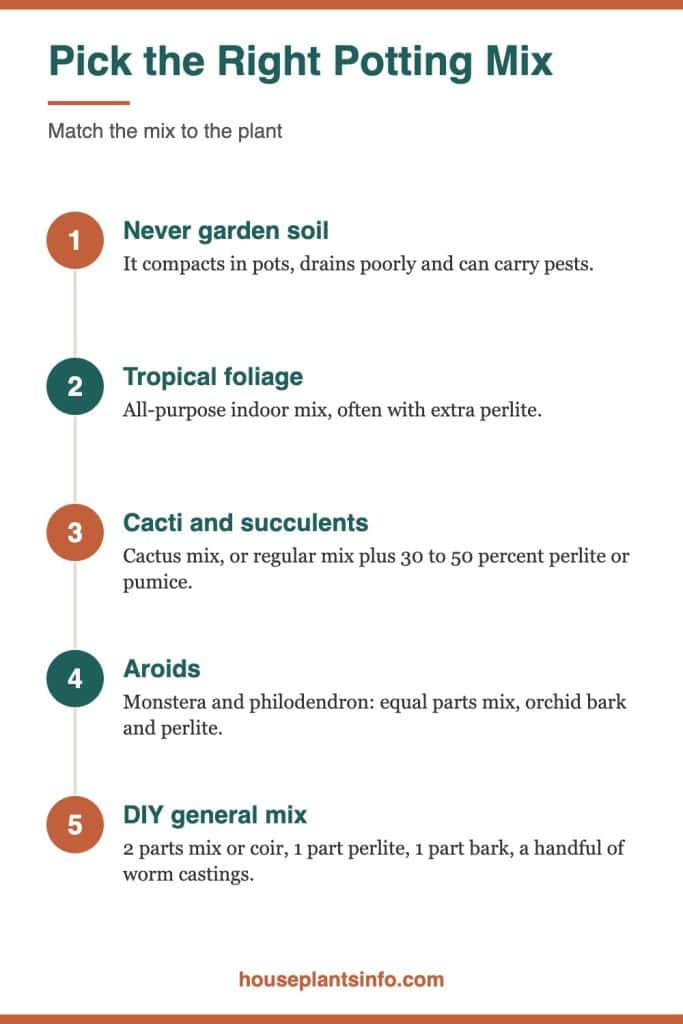
Match the mix to how the plant grows in nature: forest-floor tropicals like moist but airy soil, desert plants want fast drainage, and climbing or tree-dwelling plants like chunky, bark-heavy blends. Most homes only need two or three mixes on hand.
Tropical Foliage Plants
Pothos, peace lilies, dracaenas, calatheas and similar plants grow well in an all-purpose indoor potting mix. Adding extra perlite helps, especially in pots sitting several feet back from a window.
Some foliage plants have their own preferences. For example, the guide to the best soil for a fiddle leaf fig explains why that plant does better with added bark and drainage.
Succulents and Cacti
Succulents and cacti need a mix that drains within seconds and dries out quickly. Use a cactus mix, or a general potting mix with 30 to 50 percent perlite or pumice added.
If you already have both bags at home, read about mixing cactus soil with potting soil to see when blending the two makes sense.
Aroids: Monstera, Philodendron and Anthurium
Aroids have thick roots that rot quickly in dense soil. They thrive in a chunky blend of potting mix, orchid bark and perlite in roughly equal parts.
This airy mix suits the drying patterns of a bright apartment, especially near radiators or under grow lights. Water when the top 2 inches feel dry.
African Violets
African violets need a light, fluffy mix that is slightly acidic. A dedicated violet mix provides that, with plenty of peat and perlite for fine roots.
Orchids
Most popular indoor orchids grow on trees in nature and need a bark mix, not soil. Potting them in regular mix smothers the roots and leads to rot.
Plants in Pots Without Holes
A few plants tolerate containers without drainage, but they still need a careful mix and very measured watering. See the list of houseplants that need no drainage before skipping the hole.
| Plant group | Recommended mix |
|---|---|
| Tropical foliage plants | All-purpose indoor mix, often with extra perlite |
| Succulents and cacti | Cactus mix or general mix plus 30 to 50% perlite or pumice |
| Aroids | Equal parts potting mix, orchid bark and perlite |
| African violets | Light, slightly acidic violet mix |
| Orchids | Bark mix, not soil |
Sophia’s tip: Label each bag or bin of mix with the plant group it is for, using a marker on masking tape. It saves you from potting a succulent in a moisture-heavy tropical blend by mistake.
A Note on Pet Safety
Potting mix itself is not a plant, so it has no ASPCA toxicity rating, but the ASPCA lists fertilizers as a common pet hazard. Store bags with slow-release fertilizer or added meals out of reach of dogs, cats and curious kids.
How to Make Your Own Houseplant Mix
Making your own mix is worth it when you have several plants, want more drainage than a bag offers, or grow aroids that need chunky structure.
A simple general blend is 2 parts potting mix or coir, 1 part perlite, 1 part bark and an optional handful of worm castings.
Gather Your Materials
You need a base (bagged potting mix or coco coir), perlite or pumice, pine bark fines or orchid bark, and worm castings if you want gentle nutrients. A large bin or tarp makes mixing easier.
Use any container as a “part,” such as a small pot or a measuring cup. The ratio matters more than the exact amount.
Prepare the Base
If you use compressed coco coir, soak it in warm water until it expands and breaks apart. Squeeze out excess water so it feels like a damp sponge.
Dry peat-based mix should be lightly moistened before blending. Dry peat repels water and creates dusty pockets that stay dry in the pot.
Mix in Steps
Follow this order for an even blend:
- Add 2 parts damp base to your bin.
- Add 1 part perlite or pumice and stir well.
- Add 1 part bark and mix until the chunks are spread evenly.
- Sprinkle in a handful of worm castings, if using, and blend once more.
Wear a dust mask when handling dry perlite, and work near an open window or outside if possible. The fine dust is irritating to breathe.
Adjust for Your Plants
For aroids, increase bark and perlite until the three ingredients are roughly equal. For succulents, skip the bark and add perlite or pumice until it makes up 30 to 50 percent of the mix.
For a dim north window or a cool room near AC drafts, add an extra half part of perlite. The pot will dry out sooner and lower the risk of root rot.
Test Before Potting
Fill an empty pot with your mix and water it thoroughly. Water should soak in right away and drain from the bottom without pooling on top.
If water sits on the surface, add more perlite. If it rushes straight through and the mix stays dry inside, add more base material.
Signs Your Plant Needs Fresh Soil
Your plant needs fresh mix when water stops soaking in properly, the soil shrinks from the pot edge, a white crust forms, or roots circle the inside of the pot.
Even without obvious signs, mix that is more than 1 to 2 years old is usually worn out.
Water Behaves Strangely
If water runs straight through the pot and out the bottom in seconds, the mix has likely dried into a hard, water-repellent block. The opposite problem, water sitting on top, means the mix has compacted.
Both issues show up faster in apartments with forced-air heat, where mix dries out hard between waterings.
Soil Pulls Away From the Pot
A visible gap between the soil and the pot wall means the mix has shrunk. Water escapes down that gap instead of reaching the roots.
White Crust on the Surface
A white or tan crust usually comes from mineral salts in tap water and fertilizer. It builds up over time and can stress roots, so it is a good reason to refresh the mix.
A fuzzy white growth is different. That is usually mold, and the guide to moldy houseplant soil explains how to deal with it.

Roots Circling the Pot
Slide the plant out and look at the root ball. If roots wrap around the outside or poke through the drainage hole, the plant needs fresh mix and possibly a slightly larger pot.
Time Since Repotting
Most mixes break down within 1 to 2 years as peat and bark decompose. For a full schedule by plant type, see the guide on how often to change the soil in houseplants.
Sophia’s tip: Write the repotting month on the bottom of each pot with a paint marker. When you lift the pot to water, you will see at a glance whether the mix is past the two-year mark.
How to Store and Reuse Potting Mix
Keep bagged mix closed and dry, and refresh used mix with fresh mix and compost before reusing it. Never reuse mix from a plant that had root rot or pests.
Storing Unopened and Opened Bags
Store bags in a cool, dry spot, such as a closet or under a sink away from pipes. Avoid hot spots near radiators, which dry mix out completely.
Once opened, fold the top over and clip it, or pour the mix into a lidded bin. This keeps out fungus gnats and stops the mix from drying into a hard brick.
When Mix Goes Bad
A sour or rotten smell, visible mold throughout the bag, or tiny flying insects are signs to discard it. Mild surface mold on a damp bag may dry out, but heavy growth means the mix is not worth saving.
Reusing Old Mix Safely
Mix from a healthy plant can be reused. Break up clumps, remove old roots, and blend it with roughly equal parts fresh mix plus a little compost to restore structure and nutrients.
Add some extra perlite too, since old mix has usually compacted. Use refreshed mix for sturdy plants rather than delicate seedlings or cuttings.
When Not to Reuse
Do not reuse mix from a plant that had root rot, fungus gnats, mealybugs or other pests. Bag it and throw it out, or add it to outdoor beds far from your houseplants.
Feeding After Repotting
Many bagged mixes include slow-release fertilizer, so feed less for the first months after repotting. Check the bag, then hold off on liquid fertilizer until the plant shows steady new growth.
Your Next Steps
- Check the ingredient list on the bag you already own and confirm it is a soilless indoor mix.
- Push a finger 2 inches into each pot and note which plants have compacted or water-repellent soil.
- Pick up perlite and orchid bark so you can adjust bagged mix for aroids and succulents.
- Mix a small test batch using 2 parts base, 1 part perlite and 1 part bark, then test drainage in an empty pot.
- Mark repotting dates on your pots and plan to refresh any mix older than 2 years.
- Move stored bags to a closed bin away from radiators and pets.
Common Questions About Potting Soil for Houseplants
Can I use the same potting mix for all my houseplants?
An all-purpose indoor mix works for most tropical foliage plants. Succulents, cacti, aroids, African violets and orchids do better with adjusted blends, so keeping perlite and bark on hand lets you tailor one bag to several plants.
Why do fungus gnats keep appearing in my potting mix?
Fungus gnats breed in mix that stays damp at the surface, especially in low light or cool rooms. Let the top inch or two dry between waterings, use an airier mix, and keep opened bags sealed.
Is coco coir better than peat moss?
Both hold water well and make good bases. Coco coir is a renewable alternative and rewets more easily after drying out, while peat holds moisture steadily but can repel water when bone dry.
How much perlite should I add to potting mix?
For general tropical plants, about 1 part perlite to 2 parts mix works well. For succulents and cacti, add enough to make perlite or pumice 30 to 50 percent of the blend.
Do I need to fertilize right after repotting?
Usually not. Many bagged mixes include slow-release fertilizer, so feed less for the first few months and wait until the plant shows steady new growth before starting a regular feeding routine.

Hi! I’m Sophia, and I love plants – especially an expert in growing house plants. I stay in Chicago, United States of America, and through my blog and social media platforms, provide tips and tricks on how to grow healthy, vibrant plants indoors. Check out more here.