
The short answer: no. The ASPCA lists the Christmas cactus as non-toxic to cats, and it has no spines, though a cat that eats a lot of the fibrous segments can vomit or get diarrhea for a day.
The same goes for the Thanksgiving cactus, which is what many stores actually sell under the Christmas name, and for the Easter cactus.
If Your Cat Just Ate Some
- Take what’s left away and look at the plant: a nibbled segment or two is the usual damage.
- Check the cat’s mouth for bits of plant or soil, and offer fresh water.
- Look at the pot for fertilizer granules, spikes or a recent spray; those can matter more than the plant.
- Don’t try to make your cat vomit at home.
- Call your vet if your cat ate a large amount, is a kitten, senior or already sick, or gets the symptoms below.
The ASPCA Animal Poison Control Center is at (888) 426-4435, around the clock, and a consultation fee may apply. The Pet Poison Helpline is (855) 764-7661, with a $99 fee per case.
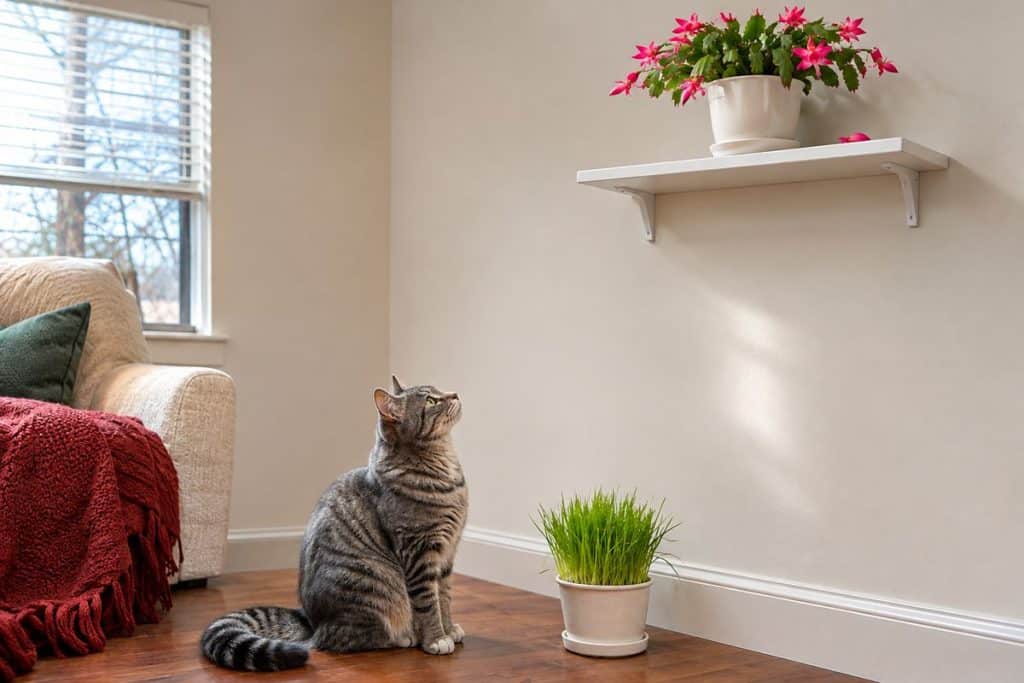
Once your cat has settled, give it something it’s allowed to chew. A pot of cat grass on the floor gives a plant-chewer a better target than your windowsill.

Symptoms to Watch For
Signs usually show within a few hours and fade within a day.
| What you see | What to do |
|---|---|
| One vomit, then normal | Watch at home; offer water |
| Drooling or lip-licking for an hour | Watch at home |
| Soft stool or diarrhea for a day | Watch; call the vet if it continues |
| Vomiting 3 or more times, or blood | Call your vet today |
| Won’t eat for more than 24 hours | Call your vet |
| Repeated retching, no stool, painful belly | Emergency vet now, possible blockage |
Why Your Cat Chews It
Cats chew plants out of boredom, curiosity, or to bring up hair and help digestion. A Christmas cactus is a tempting target: the segments dangle at paw height, snap off with a light bite, and the flowers move in a draft. Kittens and indoor-only cats go for it most.
Offering something better to chew works more often than scolding. A pot of grass on the floor, away from your other plants, gives most cats a legal option, and many leave the cactus alone once they have it.
Keeping It in a Home With Pets
Height beats every spray. A shelf above 5 feet, with nothing a cat can jump from nearby, solves most problems. A hanging planter works even better for a trailing plant, as long as the stems don’t drape within reach of a chair back.

If the plant has to sit lower, a bitter apple spray on the segments discourages chewing for a few days at a time. Test it on one segment and wait 2 days, then reapply every few days, since the taste wears off. More ideas are in how to keep cats from eating houseplants.
Some cats ignore the plant and dig in the pot instead. A layer of large pebbles or pine cones on the soil stops most digging; if the pot is being used as a litter box, see how to keep cats from pooping in houseplants.
Holiday extras cause more trouble than the plant. Tinsel, ribbon and foil pot wrap are much more dangerous than the cactus itself, because they can tangle in the gut. Leave the foil off and skip ribbon on the pot.
Sophia’s tip: chewed segments aren’t a loss. Twist off the damaged ones at a joint, let them dry for a day, and root them; rooting a Christmas cactus in water gives you a backup plant for a high shelf.
What Happens at the Vet
For a cat that has vomited a few times but is otherwise alert, the visit is usually short. Expect a physical exam, a feel of the belly, and questions about how much was eaten and when. Bring a broken segment or a photo of the plant and its tag, plus the name of any fertilizer you used; it saves time.
Treatment, when needed, is supportive, such as anti-nausea medication or fluids for a dehydrated cat, and it is usually brief. An X-ray comes into it only when the vet suspects a blockage, usually because the cat keeps vomiting, won’t eat, or has a tender belly. Kittens and older cats with kidney disease may be watched more closely, because a day of vomiting dehydrates them faster.
Toxic vs Deadly
“Non-toxic” means the plant has no compound known to poison cats. It doesn’t mean cats can digest it. The thick, fibrous segments irritate the mouth and stomach on the way down, which is where the vomiting comes from.
A true blockage is rare and usually needs large pieces swallowed whole. Kittens are at higher risk because their gut is smaller.
The bigger risk in a store-bought plant is often what’s on it. Nursery plants can carry pesticide residue, and fertilizer sitting in the pot is not cat-safe. Rinse a new plant’s segments under the faucet and remove any fertilizer spikes before it goes where your cat can reach it.
Holiday Plants That Are Actually Dangerous
The Christmas cactus is one of the safest holiday plants. These are not:
- True lilies (Easter, Asiatic, tiger and stargazer lilies): even pollen or vase water can cause kidney failure in cats. Keep them out of a cat home entirely.
- Mistletoe and holly: vomiting and diarrhea; large amounts of mistletoe can affect the heart.
- Amaryllis: vomiting, drooling and lethargy, worst from the bulb.
- Poinsettia: mild mouth and stomach irritation; less dangerous than its reputation.
For houseplants beyond the holidays, see which tropical houseplants are poisonous to cats.
Pet-Proofing in Five Minutes
- Move the plant above 5 feet, or into a hanging planter.
- Pull out fertilizer spikes and rinse a new plant’s segments.
- Take off foil wrap and ribbon.
- Put pebbles over the soil if your cat digs.
- Set a pot of cat grass on the floor somewhere else.
- Save (888) 426-4435 in your phone.
Want more pet-safe greenery? Our list of low-light indoor plants safe for cats is a good place to start.

Founder & Lead Writer · 9 years growing houseplants · Chicago, IL
I’m Sophia, founder of HousePlantsInfo.com. I’ve grown plants for as long as I can remember and have spent the last 9 years focused on houseplants, now caring for 75+ of them, from easy snake plants and philodendrons to fussier fiddle leaf figs and calatheas. Every guide here is based on what I’ve grown, lost and brought back in a real apartment through dark, radiator-dry Chicago winters. I trained through Houseplant Masterclass, and I check care and pet-safety details against university extension services and the ASPCA before publishing.