
You are standing in your living room, looking at an empty corner by the window and wondering which plant will actually survive there.
The best indoor plants to buy are the ones that match the light you have, the pets you live with and the time you can give them.
The short version: For low light, buy a pothos, snake plant or ZZ plant. For a bright window, a rubber plant or monstera grows fast and looks full. If you have cats or dogs, start with a spider plant, parlor palm or cast iron plant.
This guide covers 17 reliable plants sorted by light, pet safety and effort, plus what to check at the store and how to settle a new plant at home.
At a Glance
| Factor | What it needs |
|---|---|
| Light | Match the plant to your window direction and distance from the glass |
| Water | Most plants here want the top 1 to 2 inches of soil dry before watering |
| Humidity | Average home humidity works for most; ferns and calatheas want 50% or more |
| Temperature | 60 to 80°F, away from radiators, heat vents and AC drafts |
| Soil | Fresh, well-draining potting mix in a pot with a drainage hole |
| Pet safety | Check ASPCA status before buying if you have cats or dogs |
| Difficulty | Easy to moderate; calathea and fiddle leaf fig are the fussiest |
How Do You Pick the Best Indoor Plants to Buy for Your Light?
Pick the plant after you measure your light, not before. Window direction and distance from the glass matter more than anything else on the plant tag.
Read Your Window
South- and west-facing windows give the strongest light, especially in winter. North-facing windows give soft, steady light all day. East-facing windows get gentle morning sun, and the list of plants for an east-facing window is longer than most people expect.
Light drops sharply as you move away from the glass. A spot 6 feet back from a bright window can get less than a quarter of the light at the sill.
Use a Simple Tool
A light meter, or a free light meter app on your phone, takes the guessing out of it. Check your spot at midday and again in late afternoon.
If the reading is low and you love a bright-light plant, a full-spectrum LED grow light can fill the gap. Set it 12 to 24 inches above the leaves on a timer for 10 to 12 hours a day.
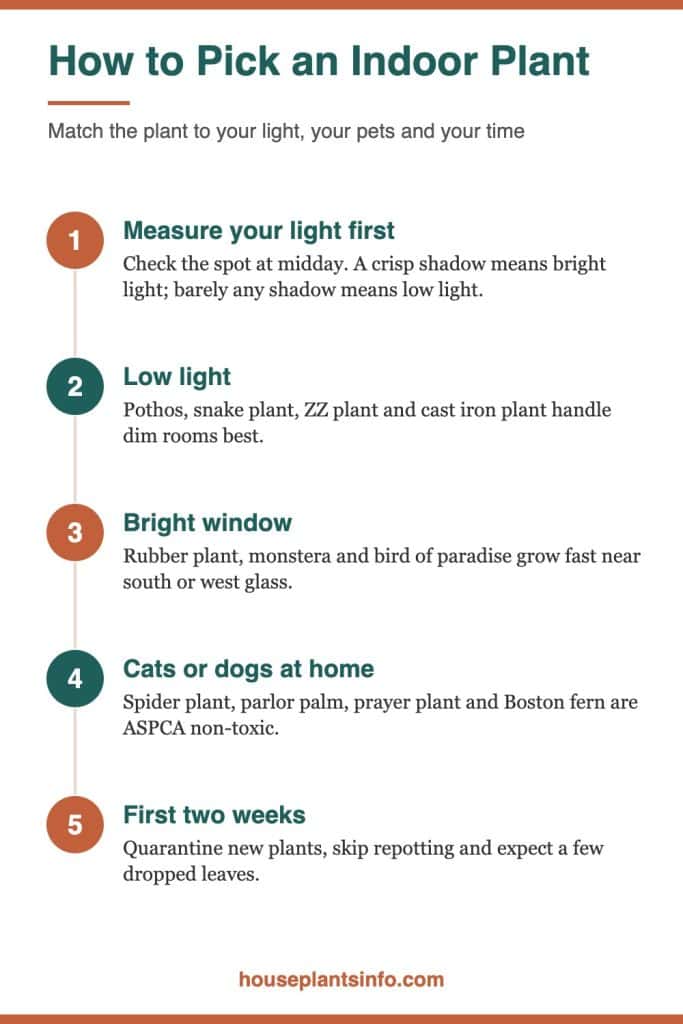
Sophia’s tip: Hold your hand a foot above the spot at noon. A crisp, dark shadow means bright light, a soft fuzzy shadow means medium light, and barely any shadow means low light.
Best Plants for Low-Light Rooms
Pothos, snake plant and ZZ plant are the safest picks for dim rooms. “Low light” still means some daylight, such as a north window or a spot several feet back from a brighter one.

Pothos
Pothos trails or climbs and tolerates dim corners, though its variegation fades in deep shade. Water when the top 2 inches of soil are dry.
It grows fast and roots easily in water, so one plant can become several. The ASPCA lists pothos as toxic to cats and dogs.
Snake Plant
Snake plant handles low light, dry winter air and missed waterings better than almost anything. Let the soil dry completely between drinks, which may mean every 3 to 4 weeks in winter.
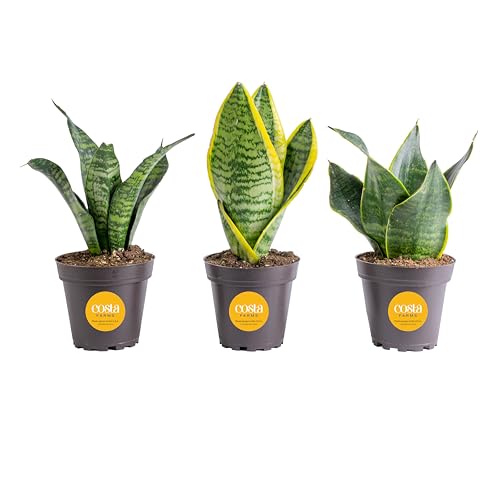
Overwatering is the main way people lose it. The ASPCA lists snake plant as toxic to cats and dogs.
ZZ Plant
ZZ plant stores water in thick underground rhizomes, so it shrugs off forgetful watering. Its glossy leaves stay neat in a north-facing room.
The ZZ plant is not on the ASPCA list, but it contains calcium oxalate crystals. Keep it out of reach of pets and kids.
Heartleaf Philodendron
Heartleaf philodendron has soft, heart-shaped leaves on long vines. It is a little more forgiving of low light than pothos and tells you when it is thirsty by drooping.
Water when the top inch is dry. The ASPCA lists philodendron as toxic to cats and dogs.
Peace Lily
Peace lily blooms in moderate light and survives in lower light with fewer flowers. It wilts dramatically when dry, then perks up within hours of watering.
Keep it away from cold drafts and heat vents. The ASPCA lists peace lily as toxic to cats and dogs.
Cast Iron Plant
Cast iron plant earned its name by surviving dim halls, cool rooms and irregular care. It grows slowly, so buy the size you want.
Water when the top 2 inches are dry. The ASPCA lists cast iron plant as non-toxic to cats and dogs, which makes it a rare low-light, pet-safe pick.
Chinese Evergreen
Chinese evergreen comes in green, silver and pink-splashed varieties. Darker green types handle low light best, while colorful types want medium light.
It dislikes temperatures below 60°F, so keep it off cold sills in a Chicago-style winter. The ASPCA lists Chinese evergreen as toxic to cats and dogs.
Best Plants for Bright Windows
A bright window lets you grow bigger, faster plants with larger leaves. Place these within 3 to 5 feet of a south, west or unobstructed east window.
Spider Plant
Spider plant grows quickly in bright, indirect light and sends out baby plantlets on long stems. It tolerates medium light but gets fuller near a window.
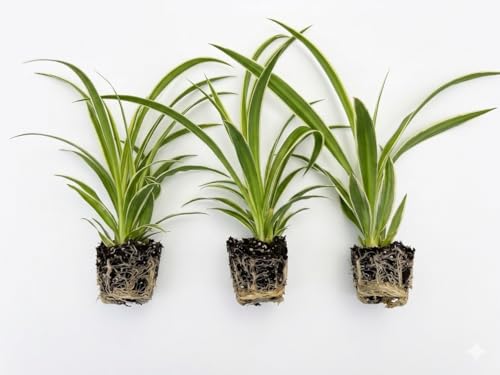
Brown tips usually point to dry air or salts in tap water. The ASPCA lists spider plant as non-toxic to cats and dogs.
Rubber Plant
Rubber plant has thick, glossy leaves in deep green or burgundy. In bright light it grows tall and sturdy, while low light makes it stretch and drop lower leaves.
Wipe the leaves monthly so they catch more light. The ASPCA lists rubber plant as toxic to cats and dogs.
Monstera
Monstera develops its famous split leaves only with enough light, so place it near a bright window. Give it a moss pole if you want larger leaves.
Water when the top 2 inches are dry. The ASPCA lists monstera as toxic to cats and dogs.
Bird of Paradise
Bird of paradise wants the brightest spot you have, ideally a south or west window with some direct sun. Indoors it rarely blooms, but the large paddle leaves are the draw.
Torn leaves are normal and do not hurt the plant. The ASPCA lists bird of paradise as toxic to cats and dogs.
Fiddle Leaf Fig
Fiddle leaf fig needs steady bright light and a consistent routine. It drops leaves when moved, chilled or watered unevenly.
Keep it away from AC vents and drafty doors. The ASPCA lists fiddle leaf fig as toxic to cats and dogs.
Best Pet-Safe Plants to Buy
The ASPCA lists spider plant, parlor palm, prayer plant, calathea, Boston fern, cast iron plant and Christmas cactus as non-toxic to cats and dogs. Spider plant and cast iron plant are covered above, and the rest are below.

If your room is dim, this list of low light plants that are safe for cats narrows the choices further.
Parlor Palm
Parlor palm handles medium to low light and stays a manageable size for years. It adds height without the light demands of larger palms.
Keep the soil lightly moist but never soggy. The ASPCA lists parlor palm as non-toxic to cats and dogs.
Prayer Plant
Prayer plant folds its patterned leaves upward at night. It prefers medium, indirect light and evenly moist soil.
Use filtered or rested tap water if you see crispy edges. The ASPCA lists prayer plant as non-toxic to cats and dogs.
Calathea
Calathea has some of the most striking leaf patterns of any houseplant. It is also fussy about dry air, cold drafts and hard water.
Aim for 50% humidity or higher, especially when forced-air heat runs. The ASPCA lists calathea as non-toxic to cats and dogs.
Boston Fern
Boston fern loves bright, indirect light and steady moisture. It thrives in a bright bathroom where shower steam raises the humidity.
Never let the soil dry out fully. The ASPCA lists Boston fern as non-toxic to cats and dogs.
Christmas Cactus
Christmas cactus is a forest cactus, so it wants more water than desert types. It blooms after cool nights near 55 to 60°F and long dark periods in fall.
Give it bright, indirect light the rest of the year. The ASPCA lists Christmas cactus as non-toxic to cats and dogs.
Sophia’s tip: Non-toxic does not mean edible. Cats that chew any plant can still vomit, so hang spider plants or set ferns on a shelf your cat cannot reach.
Easiest Plants for Beginners and Busy People
Snake plant, ZZ plant and pothos are the easiest plants to start with. They forgive missed waterings and adjust to a range of light.
If you have pets, cast iron plant and spider plant are the easy, non-toxic alternatives. Both handle average home humidity without misting.
Most beginner losses come from watering on a fixed schedule rather than checking the soil. Learning how often to water a houseplant based on light, pot size and season solves most early problems.
Pick for Your Schedule
If you travel often, choose plants that store water, such as snake plant and ZZ plant. Group them away from heat vents before you leave.
For longer trips, a few simple setups make keeping plants alive while you travel easy, even for thirstier plants like ferns.
Skip These at First
I would hold off on fiddle leaf fig, calathea and Boston fern until you have a routine. They are not hard to keep, but they react quickly to small mistakes.
Statement Plants Worth the Price
Monstera, bird of paradise, rubber plant and fiddle leaf fig are the large plants most worth paying for. They grow into floor-to-ceiling focal points if your light supports them.
A larger plant costs more, but it starts with an established root system and fills a space right away. Buy big only if you have a bright spot within a few feet of the window.
Plants That Last
Some plants become long-term companions rather than seasonal decor. Rubber plant, snake plant, cast iron plant and Christmas cactus are among the houseplants that live for decades with basic care.
Where to Save Money
Pothos, philodendron and spider plant grow fast, so a small pot fills out within a season. Spend your budget on slow growers like cast iron plant and ZZ plant, where size takes years.
What to Check at the Store Before You Buy
Inspect the leaves, roots and soil before you pay. A few minutes of checking prevents you from bringing pests or rot home.
Leaves
Turn several leaves over and look underneath. Watch for webbing, sticky residue, white cottony spots or tiny moving dots, which signal spider mites, mealybugs or other pests.
Skip plants with yellow lower leaves, mushy stems or many brown patches. One damaged leaf is fine; a pattern is not.
Roots
Gently tip the plant out of its nursery pot if the store allows it. Healthy roots are white or tan and firm.
Brown, mushy or bad-smelling roots point to rot. Leave that plant behind.
Soil
Press a finger into the soil. Soggy, sour-smelling soil often means the plant has sat too wet for days.
Lightly moist soil is ideal. Bone-dry soil is less worrying than soggy soil, but check that the leaves are not crisping.
Sophia’s tip: In winter, ask the store to wrap your plant in paper or a bag before you carry it outside. Even a short walk below 50°F can damage tropical leaves.
The First Two Weeks at Home
Quarantine your new plant for 2 weeks and leave it in its nursery pot. A few dropped leaves during this time are normal as it adjusts to your light and air.
Quarantine
Keep the new plant in a separate room or at least several feet from your other plants. Check under the leaves every few days for pests that hid at the store.
If you find pests, treat the plant before it joins the others. A wipe with a damp cloth and insecticidal soap handles most light infestations.
Do Not Repot Right Away
The plant is already adjusting to new light, temperature and humidity. Repotting adds stress, so wait until you see new growth, often after a few weeks.
When you do repot, go only 1 to 2 inches wider and use the right potting soil for that plant type.
Expect Some Leaf Drop
Plants grown in bright greenhouses often lose a few lower leaves in a home. This is acclimation, not a sign of failure.
Keep the spot consistent and avoid moving the plant around. Water only when the soil tells you to, and keep it away from radiators and AC drafts.
Your Next Steps
- Measure the light in your chosen spot at midday with a light meter app.
- Decide whether you need a pet-safe plant and check its ASPCA status.
- Pick 1 or 2 plants from the section that matches your light.
- Inspect leaves, roots and soil at the store before buying.
- Quarantine new plants for 2 weeks and hold off on repotting.
- Set a weekly reminder to check soil moisture instead of watering on autopilot.
Common Questions About Buying Indoor Plants
What is the hardest plant to kill indoors?
Snake plant and ZZ plant are the hardest to kill. Both tolerate low light, dry air and weeks without water. Overwatering is the one mistake they rarely forgive.
Which indoor plants are safe for cats and dogs?
The ASPCA lists spider plant, parlor palm, prayer plant, calathea, Boston fern, cast iron plant and Christmas cactus as non-toxic to cats and dogs. Pothos, snake plant, peace lily, philodendron, monstera and fiddle leaf fig are toxic. Keep ZZ plant out of reach because it contains calcium oxalate.
Can I grow a bright-light plant in a dim apartment?
Yes, if you add a full-spectrum LED grow light. Run it 10 to 12 hours a day, 12 to 24 inches above the plant. Without extra light, plants like bird of paradise and fiddle leaf fig will stretch and drop leaves.
Should I repot a plant as soon as I bring it home?
No. Wait 2 weeks or until you see new growth, because the plant is already adjusting to new conditions. Repot sooner only if the roots are rotting or the pot has no drainage hole.
Why is my new plant dropping leaves?
A few dropped leaves in the first weeks is normal acclimation to lower indoor light. Keep the plant in one spot, away from heat vents and drafts. If drops continue past a month, check the roots and your watering routine.

Hi! I’m Sophia, and I love plants – especially an expert in growing house plants. I stay in Chicago, United States of America, and through my blog and social media platforms, provide tips and tricks on how to grow healthy, vibrant plants indoors. Check out more here.