
You notice a dug-up crater in your fiddle leaf fig’s pot, soil scattered across the floor, and a smell that tells you exactly what happened.
Learning how to keep cats from pooping in your house plants starts with understanding why that loose, soft soil looks so inviting to your cat.
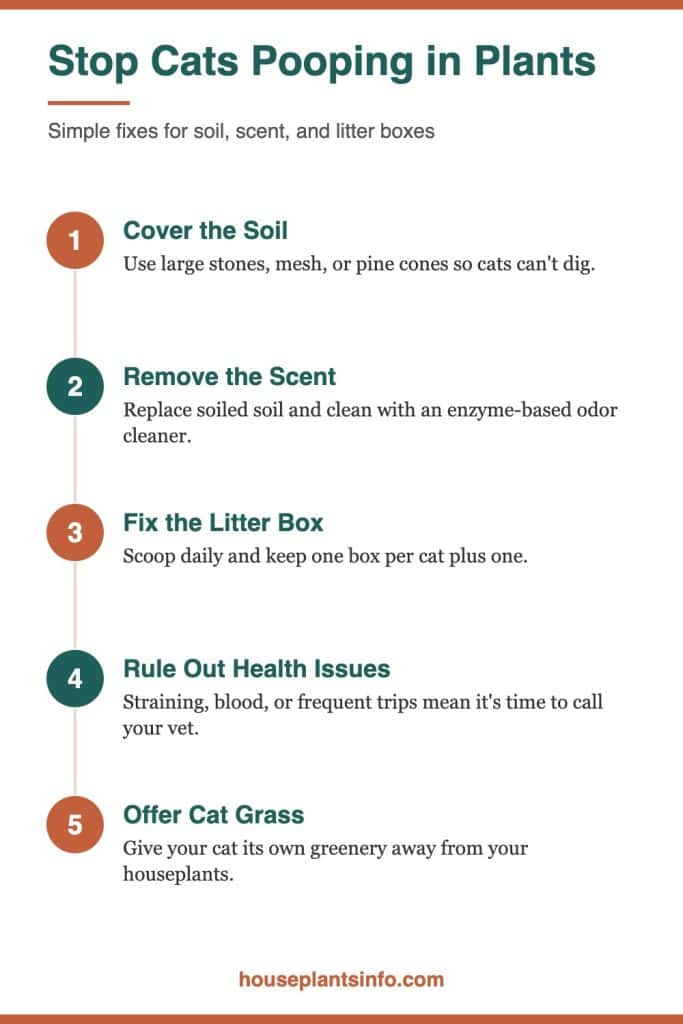
The short version: Cover the soil surface with something a cat can’t dig through, such as large stones, mesh, or pine cones, and clean the pot thoroughly so the scent stops drawing your cat back.
At the same time, fix whatever is wrong with the litter box, because most plant-pot accidents point to a box problem, stress, or a health issue.
This guide covers fast physical fixes, the real reasons cats choose plant pots, health risks and safe cleanup, and how to set up your plants so the habit doesn’t return.
Check These First
- Look at the litter box: is it scooped at least once a day, and is there one box per cat plus one extra?
- Check for recent changes, such as a new litter brand, a moved box, a new pet, a new baby, or a move to a new apartment.
- Notice whether your cat strains, cries, or goes small amounts often, which can signal a medical problem that needs a vet.
- See which pots are targeted. Large floor pots with loose, dry, exposed soil are the usual choice.
- Sniff the soil. If the odor lingers, your cat is likely being drawn back to the same spot by scent.
How to Keep Cats from Pooping in Your House Plants Right Now
The fastest fix is to make the soil impossible or unpleasant to dig, then remove the scent. Do both on the same day, and you’ll break the cycle before it becomes a firm habit.
Block Access to the Soil Surface
Cats need to dig before and after they go. If they can’t scratch a hole, most will give up and look elsewhere, ideally in the litter box.
Cut a circle of hardware cloth or plastic garden mesh to fit inside the rim of the pot, then slit it so it fits around the stem. Lay it right on the soil and push the edges down slightly so it can’t be pawed loose.
You can also top the soil with a layer of large, smooth river stones, at least 2 to 3 inches across. Smaller pebbles and aquarium gravel don’t work as well because cats can scratch through them and may treat them like litter.
Water Without Removing the Barrier
Stones and mesh make it harder to see and feel the soil, which raises the risk of overwatering. A soil moisture meter pushed through a gap in the mesh tells you when the root zone is actually dry.
Pour water slowly through the barrier rather than lifting it each time. Most potted plants do best when the top 1 to 2 inches dry out between waterings, though ferns and calatheas prefer more even moisture.
Sophia’s tip: Leave a 1 inch gap between the stone layer and the stem so the crown stays dry. Stones pressed against the trunk trap moisture and can lead to rot, especially in cool winter rooms.
Remove the Old Scent
Once a cat has used a pot, the smell acts as an invitation. Scoop out the soiled soil plus an extra 1 to 2 inches around it, and replace it with fresh potting mix.
Wipe the pot rim and the floor around it with an enzyme-based pet odor cleaner. Avoid ammonia-based cleaners, because ammonia smells similar to urine and can encourage a cat to return.
Why Do Cats Poop in Potted House Plants?
Cats poop in house plants because loose potting mix feels and smells like natural soil, which is where their instincts tell them to go. In most cases, a deeper problem with the litter box, stress, or health makes the pot more appealing than the box.
The Pull of Natural Instinct
Outdoors, cats eliminate in soft, diggable earth and then bury their waste to hide their scent. Fresh potting mix, with its peat or coir texture, matches that instinct almost perfectly.
Large floor pots are especially tempting. They sit at a comfortable height, hold plenty of loose mix, and often sit in quiet corners where a cat feels safe and hidden.
Dry Indoor Air and Warm Soil
In winter, radiators and forced-air heat dry out potting mix quickly. Dry, crumbly soil is easier to dig and closer to the texture of litter, so many owners see the problem spike during heating season.
Pots near a sunny south or west window, or under a lamp, also stay warm.
If you grow under lights, knowing how long to keep grow lights on house plants helps, since a warm, lit tray of soil running 12 to 16 hours a day can attract a cat looking for a cozy spot.
Scent Marking and Habit
Once a cat uses a pot, its scent stays in the soil. That smell tells the cat this is an approved bathroom, and the behavior can repeat within days.
The longer the habit continues, the harder it is to break. That’s why cleaning the soil quickly matters as much as covering it.
Litter Box Problems and the Fix for Each
The litter box is the most common root cause. If the box is dirty, poorly placed, too small, or filled with litter your cat dislikes, the plant pot becomes the backup option.
Cause 1: The Box Isn’t Clean Enough
Cats are fastidious, and many refuse a box with waste already in it. Scoop at least once a day, and twice a day in multi-cat homes.
Replace all the litter and wash the box with mild unscented soap and warm water every 1 to 2 weeks for clumping litter. Non-clumping litter usually needs a full change more often.
Cause 2: Not Enough Boxes
A common guideline is one box per cat plus one extra. Two cats would need three boxes, ideally in different rooms rather than lined up side by side.
In a small apartment this takes planning, but even one extra box in a second room can stop accidents. Cats that feel crowded or blocked by another cat often choose a plant instead.
Cause 3: Poor Location
Boxes near loud appliances, in high-traffic hallways, or right beside food and water bowls are often avoided. Choose a quiet spot your cat can reach easily at any time.
Avoid moving the box suddenly. If you must relocate it, add the new box first and remove the old one after your cat is using the new location reliably.
Cause 4: Wrong Size or Wrong Litter
Many commercial boxes are too small. A box roughly one and a half times the length of your cat, nose to base of tail, gives enough room to turn and dig.
Most cats prefer fine-grained, unscented clumping litter about 2 to 3 inches deep. Strong fragrances can repel them, and a sudden switch in litter type often triggers accidents.
| Litter Box Issue | Sign You’ll Notice | Fix |
|---|---|---|
| Dirty box | Cat sniffs box, then leaves | Scoop daily, full wash every 1 to 2 weeks |
| Too few boxes | Accidents in multi-cat homes | One box per cat plus one |
| Bad location | Box near noise or food | Move to a quiet, easy-to-reach spot |
| Box too small | Cat perches on the rim | Use a box 1.5 times cat’s length |
| Disliked litter | Shallow digging or none | Unscented, fine litter, 2 to 3 inches deep |
| Covered box | Cat hesitates at entry | Try an open box or remove the lid |
Sophia’s tip: When you change litter brands, mix the new litter into the old over about a week, adding roughly a quarter more new litter each time. A gradual switch keeps your cat from rejecting the box and heading for the ficus.
Stress, Territory, and Health Causes
If the litter box setup is solid and your cat still targets plants, look at stress and health next. These causes need a different approach than a soil cover alone.
Cause 5: Stress or Change at Home
Cats react strongly to change. A move, renovation, new furniture, a new partner, visiting guests, or a new baby can all trigger elimination outside the box.
Keep feeding times and play routines steady. Give your cat a quiet retreat, such as a high shelf or a covered bed, where it can escape noise and activity.
Cause 6: Competition With Other Pets
In multi-pet homes, one cat may guard the litter box or ambush another cat as it leaves. The cat being bullied may switch to a plant pot where it feels less exposed.
Spread boxes across different rooms and make sure each has a clear escape route. A box tucked into a closet corner can feel like a trap to a nervous cat.
Cause 7: Outdoor Cats in View
If your cat sees stray or neighborhood cats through a window, it may feel its territory is threatened. Some cats respond by marking, which can include eliminating in indoor pots.
Temporary frosted window film on the lower panes can block the view. This is especially useful for pots placed near ground-floor windows.
Cause 8: A Medical Problem
Pain, constipation, diarrhea, urinary issues, arthritis, and kidney disease can all cause a cat to avoid the box. Older cats with stiff joints may struggle with high-sided boxes.
Call your vet if you see straining, blood, frequent small trips, crying, or a sudden change in habits. A male cat straining to urinate with little output is an emergency and needs care right away.
For senior cats, a box with one low side, about 3 to 4 inches high, can make a big difference. A plastic storage bin with a section cut down works well.
Which Soil Covers and Deterrents Work Best?
Physical barriers work more reliably than scents or sprays because they stop digging completely. Use one solid barrier on every targeted pot, then add a scent deterrent only if needed.
Physical Barriers
Barriers remove the option to dig, which is what the cat is really after. They also stay in place for months with little upkeep.
| Option | How Well It Works | Notes |
|---|---|---|
| Large river stones (2 to 3 inches) | Very well | Heavy, decorative, allows watering |
| Hardware cloth or plastic mesh | Very well | Cut to fit, nearly invisible under mulch |
| Pine cones | Well | Prickly texture cats dislike, cheap |
| Aluminum foil | Moderately | Effective short term, blocks airflow and looks messy |
| Double-sided tape on rim | Moderately | Deters perching, wears out quickly |
| Plastic forks or skewers pushed into soil | Moderately | Inexpensive, can scratch curious paws |
| Decorative soil cover discs | Well | Fits around stem, easy to lift for repotting |
Scent Deterrents
Many cats dislike citrus. Fresh orange or lemon peels placed on the soil surface can help, but they need replacing every few days before they mold.
Avoid essential oils. Many, including citrus, tea tree, eucalyptus, and peppermint oils, are toxic to cats, and cats can absorb them through their skin or by grooming.
Commercial cat repellent sprays vary widely. If you try one, read the label to confirm it’s labeled safe for use around pets and indoors, and never spray it on the plant’s leaves.
What Doesn’t Work
Punishment, such as yelling or spraying your cat with water, raises stress and can make elimination problems worse. Your cat may start hiding to go, rather than stopping.
Cayenne pepper and other spicy powders can irritate a cat’s eyes, nose, and paws. They’re not a safe choice indoors.
Is Cat Poop in Plant Soil Dangerous?
Yes, it can be. Cat feces may carry parasites, including the one that causes toxoplasmosis, so handle soiled soil carefully and remove it promptly.
Toxoplasmosis and Other Risks
According to the CDC, cats can shed Toxoplasma gondii in their feces, and the parasite becomes infectious 1 to 5 days after it’s passed. Removing waste daily reduces the risk.
Pregnant people and anyone with a weakened immune system should avoid handling cat waste or contaminated soil. If no one else can do it, wear disposable gloves and wash hands thoroughly afterward.
Feces can also carry roundworm eggs and bacteria. Keep kids away from affected pots and wash any toys that roll into the soil.
Will It Hurt the Plant?
Cat waste doesn’t act like fertilizer. Urine in particular is high in ammonia and salts, which can burn roots, cause yellow leaf edges, and leave a white crust on the soil surface.
Repeated use can create a sour smell and soggy, compacted soil. Over time this leads to poor drainage and a higher risk of root rot.
How to Clean Up and Repot
For a single accident, scoop out the waste and the surrounding 1 to 2 inches of soil with gloves on. Seal it in a bag and put it in the trash, not the compost.
If the pot has been used repeatedly or smells of urine, repot fully. Remove the plant, shake off as much old mix as you can, and rinse the roots gently in lukewarm water.
Scrub the pot with hot soapy water, rinse well, and refill with fresh potting mix. Add your barrier right away, before your cat has a chance to investigate the new soil.
Sophia’s tip: After repotting, water once thoroughly and let the excess drain completely before adding stones or mesh. Fresh mix settles by about half an inch on the first watering, and a level surface helps the barrier sit flat.
How to Set Up Your Plants So Cats Leave Them Alone
Smart placement and the right plant choices prevent most problems before they start. Think about pot height, location, and pet safety as a single plan.
Placement That Discourages Digging
Raise targeted plants onto a sturdy plant stand or shelf, ideally 30 inches or higher. Small and medium plants can move to hanging planters near a bright east or west window.
Keep large floor pots out of quiet corners where a cat feels hidden. Pots in open, visible areas of the room get used less often.
Keep pots a few inches back from cold winter glass and away from radiators or AC vents. A healthier plant in steady conditions needs less fussing, which means fewer reasons to disturb the barrier.
Give Your Cat Its Own Plant
Many cats leave houseplants alone when they have their own patch of greenery. A shallow tray of cat grass, usually wheat or oat grass, satisfies the urge to nibble and gives them an approved spot to sniff.
Place it near a favorite window and away from your other plants. If you also want to keep cats from eating houseplants, cat grass is one of the simplest ways to redirect that behavior too.
For more on placement, barriers, and training, here’s how to keep a cat away from a potted house plant in every room.
Choose Plants That Are Safe if Your Cat Gets Curious
A cat that digs in a pot often chews the leaves too. The ASPCA lists spider plant, Boston fern, parlor palm, and calathea as non-toxic to cats, making them safer choices for homes with pets.
The ASPCA lists pothos, philodendron, peace lily, and dieffenbachia as toxic to cats. True lilies, such as Easter and tiger lilies, are extremely dangerous and can cause kidney failure even in small amounts.
If you’re unsure about a specific plant, check which tropical house plant is poison for cats before you bring it home. For dim apartments, these 12 low light indoor plants that are safe for cats work well in north-facing rooms.
Your Next Steps
- Remove soiled soil today, plus 1 to 2 inches around it, and clean the area with an enzyme-based odor cleaner.
- Cover every targeted pot with large river stones, mesh, or pine cones, leaving a 1 inch gap around the stem.
- Scoop the litter box daily and add an extra box so you have one per cat plus one.
- Watch for straining, blood, or frequent trips, and call your vet if you see any of these signs.
- Offer a tray of cat grass near a sunny window and move small pots up to shelves or hanging planters.
- Check every plant against the ASPCA toxic and non-toxic lists before keeping it within your cat’s reach.
Common Questions About Keeping Cats from Pooping in House Plants
How long does it take for a cat to stop pooping in plants?
Many cats stop within a few days once the soil is covered and the scent is gone. If the cause is stress or a litter box problem, it can take 2 to 4 weeks of consistent changes. Keep barriers in place for at least a month before removing them.
Do coffee grounds keep cats out of plant pots?
Some owners use them, but coffee grounds contain caffeine, which is toxic to cats if eaten. Wet grounds can also grow mold on the soil surface. Large stones or mesh are safer and more reliable choices.
Why does my cat poop in plants but pee in the litter box?
Some cats prefer separate spots for urine and feces, a behavior known as a preference split. Adding a second litter box often solves it. A sudden change can also point to constipation or pain, so mention it to your vet.
Can I keep using the plant after my cat pooped in it?
Usually yes, as long as you remove the waste and surrounding soil promptly. If the pot has been used repeatedly or smells of urine, repot the plant into fresh mix. Always wear gloves and wash your hands afterward.
Is it safe to use vinegar to clean a pot my cat used?
Diluted white vinegar can help remove odor from the outside of a pot and from hard floors. Rinse well afterward, since the strong smell fades as it dries. Don’t pour vinegar into the soil, because its acidity can harm roots.

Hi! I’m Sophia, and I love plants – especially an expert in growing house plants. I stay in Chicago, United States of America, and through my blog and social media platforms, provide tips and tricks on how to grow healthy, vibrant plants indoors. Check out more here.