
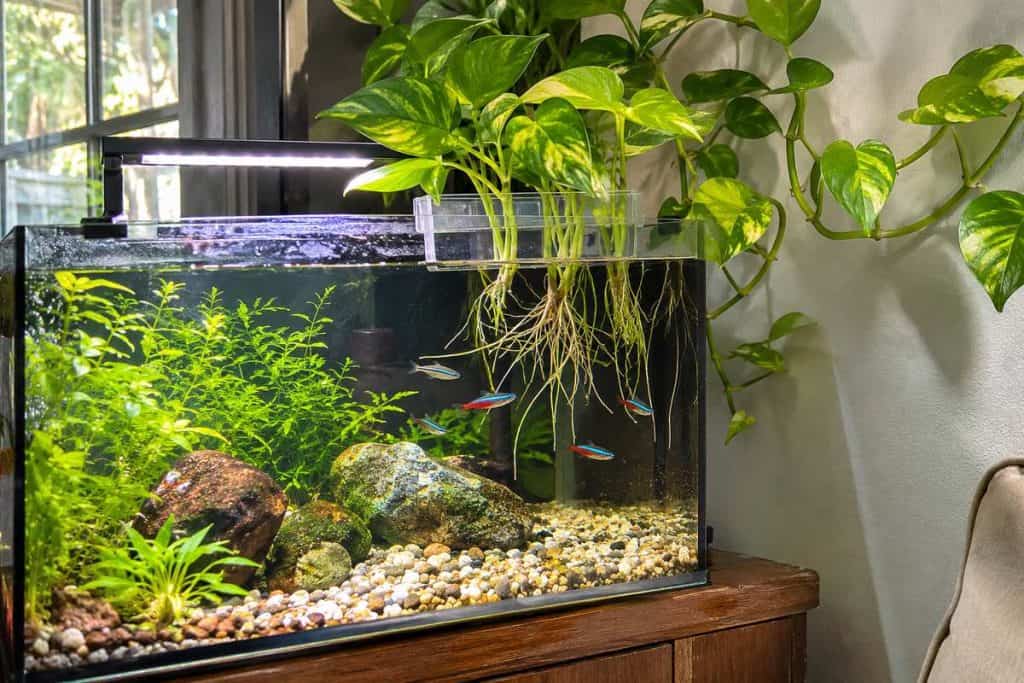
Once a pothos cutting has 1- to 2-inch roots, usually 3 to 4 weeks after you cut it, it can go straight onto the rim of a freshwater tank, and within 2 to 3 months its roots hang 4 to 8 inches into the water while the vines trail outside.
Best method for most homes: root cuttings from your own plant in a jar first, rinse them, then set them in a plant holder that hooks on the tank rim, so only the roots touch the water. Never sink the leaves. Pothos is a land plant, and submerged leaves rot within a week or two.
Set Up First
- 3 to 5 pothos cuttings, 4 to 6 inches long, each with at least one node
- A glass jar for rooting
- A clear plastic plant holder that hooks on the tank rim, or a small mesh net pot
- Clean scissors kept only for the tank
- A freshwater test kit that reads nitrate, if you have one
Use cuttings from a plant you’ve owned for a while, not a brand-new nursery plant. Commercial growers often use pesticides and slow-release fertilizer, and residue in the leaves or soil can harm fish and shrimp. Rinsing helps, but your own older plant is safer. Any time of year works, since the tank stays warm.
An aquarium plant holder is the tidiest option. It hangs on the glass, holds the stems upright and keeps leaves out of the water. A small cup with slots in the bottom lets roots grow through into the tank.

Method 1: Rooted Cuttings in a Rim Holder
- Cut 4- to 6-inch pieces just below a node and remove the lowest leaf.
- Root them in a jar of tap water left out overnight, changing it every 5 to 7 days. Root tips appear in 2 to 3 weeks.
- When the roots reach 1 to 2 inches, rinse the stems under room-temperature water.
- Set the cuttings in the holder so the nodes and roots sit just under the waterline and every leaf stays above it.
- Hook the holder on the back or side of the tank, away from the filter intake.
Use this on any open-top or rimmed tank. Rooted cuttings adjust within days, and most fish ignore them. Success is high, and if something goes wrong, you’ve risked only a few cuttings.
Method 2: Through the Filter
Many hobbyists tuck pothos stems into a hang-on-back filter, where the roots grow into the filter chamber. The constant water flow feeds the roots well, and the filter hides them. It works, but roots eventually fill the chamber and slow the flow. Check monthly and trim back any roots that crowd the media or the impeller, using stainless snips you keep only for the tank. Never let roots reach the intake on the tank side.

Method 3: A Bare-Root Plant on the Rim
If you want a full look right away, take an established pothos out of its pot, wash every bit of soil off the roots in a bucket, and sit the root ball in a net pot or holder on the rim.
Soil in the tank clouds the water and adds nutrients that feed algae, so rinse until the water runs clear. Expect a few yellow leaves in the first 2 weeks while soil roots convert to water roots. It’s faster but riskier than cuttings.
Sophia’s tip: start with three cuttings, not a whole plant. You’ll see how your fish react and how fast the roots grow before committing a bigger plant to the tank.
What Pothos Does for the Tank
Pothos roots take up nitrate and ammonia from the water as fertilizer, the same waste products that feed algae. In a lightly stocked tank, a thriving pothos can help keep nitrate lower between water changes and leave less food for green water and algae. The roots also give small fish and shrimp cover, and fry hide among them.
Keep expectations honest. Pothos supplements water changes; it doesn’t replace them. Keep up your usual schedule, often 25 percent weekly for a community tank, and use a nitrate test kit to see what changes in your own tank rather than trusting big claims. A heavily stocked tank produces more waste than a few cuttings can absorb.
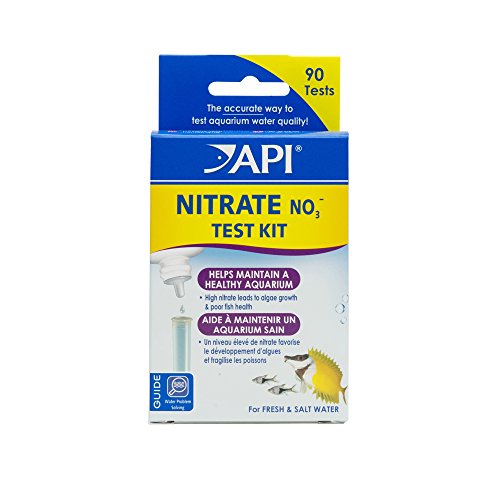
Check the Effect With a Test Kit
You don’t have to take the benefit on faith. Test nitrate the day before you add the pothos, then again at the same point in your water-change cycle every week for 6 weeks. Write the numbers down.
In a tank where the plant grows well, the reading before each water change should creep lower or rise more slowly than it used to. If nothing changes after 6 weeks, the plant is too small for the fish load, and that’s useful to know too.
Most freshwater keepers aim to keep nitrate under about 20 to 40 ppm, and no plant should be the reason you let it climb past that.
Match the Mount to Your Tank
| Tank setup | Best way to add pothos | Watch out for |
|---|---|---|
| Open-top or rimless | Clear holder hooked on the back glass | Leaves drooping into the water |
| Glass lid with a cutout | Stems through the cutout, roots below | Condensation rotting stems |
| Hinged hood with built-in light | Holder at the back corner, hood propped | Heat under the hood |
| Hang-on-back filter | Stems tucked into the filter chamber | Roots slowing the flow |
| Canister filter only | Holder on the rim near the outflow | Nothing much; best flow for roots |
A full lid that closes tight doesn’t work well, because the leaves need open air. If you keep a lid to stop jumpers, cut a small gap at the back for the stems.
How Safe It Is for Fish
Pothos contains calcium oxalate crystals, the same crystals that put it on the ASPCA’s toxic list for cats and dogs. The crystals sit mostly in the leaves and stems, which stay above the water. Healthy roots in the water haven’t been shown to poison fish, and the setup is common among freshwater hobbyists.
The real risks are rotting plant matter and pesticide residue, which is why leaves stay dry and cuttings come from your own plant.
Fish that dig or graze can be a problem:
| Fish | Leaves roots alone? |
|---|---|
| Tetras, rasboras, guppies, platies, bettas | Usually yes; they use roots for cover |
| Corydoras, otocinclus, most shrimp | Yes; shrimp graze film off the roots |
| Goldfish | Often no; they nibble and tear roots |
| Large cichlids, silver dollars, plecos | Often no; they uproot or eat roots |
If your fish shred the roots, move the holder to a hang-on-back filter where they can’t reach. Use pothos only in freshwater tanks; salt and brackish water kill it.
Think about other pets too. A cat that drinks from an open tank will also find dangling vines at the perfect height, so trim vines that hang where a cat or dog can reach them.
Light, Temperature and Feeding
The plant part needs light like any pothos. A tank light alone usually isn’t enough for leaves above the rim, so place the tank within a few feet of a window or add a small grow light above the vines. Tropical tanks at 74 to 80°F suit pothos well, since it grows best between 65 and 85°F. Don’t fertilize the plant; fish waste is its food, and plant fertilizer can harm fish.
The First Three Months
Expect a quiet first week. The roots look unchanged, and one older leaf may yellow as the cutting adjusts to life on the rim. Somewhere in weeks 2 to 4, fresh white root tips push out below the old ones, and the first new leaf unfurls above the tank.
By months 2 to 3, the roots hang 4 to 8 inches into the water and the vines start trailing down the wall or along the stand. After about 4 months, the root mass is thick enough to need its first trim, and from then on it becomes a regular job every month or two.
When It Goes Wrong
Leaves turn yellow in the first weeks. Usually the switch from soil to water, or too little light. Remove yellow leaves so they don’t drop in the tank, and move the tank or add light.
Roots go brown and slimy. That’s rot, often from a stem sunk too deep or stagnant water. Cut off the soft roots with clean snips, raise the stem so only the node is underwater, and check water flow.
Roots are taking over. Healthy roots grow fast. Every month or two, trim them back to 3 to 4 inches with those same tank-only snips. Never use tools that have touched insecticide or neem oil.
Algae coats the roots. Light is hitting the water near the holder. A little is harmless, and snails and shrimp eat it. Move the holder to a shadier corner if it gets heavy.
Fish die after adding the plant. Remove it right away, do a large water change, and test the water. Pesticide residue on a store-bought plant, or rotting roots and soil, are the usual causes.
For other plants that grow this way, see our list of houseplants you can put in an aquarium and our guide to plants that grow in water. Philodendron works too; see growing philodendron in water.
Which Method I’d Pick
- If you have small community fish, use rooted cuttings in a rim holder.
- If your fish dig or graze, route the roots into a hang-on-back filter.
- If you want a full look this week, use a bare-root plant, rinsed well.
- If you keep goldfish or large cichlids, keep the roots in the filter or skip it.
To keep a cat from treating the tank as a water bowl and the vines as a toy, see our tips on keeping a cat away from potted plants.

Founder & Lead Writer · 9 years growing houseplants · Chicago, IL
I’m Sophia, founder of HousePlantsInfo.com. I’ve grown plants for as long as I can remember and have spent the last 9 years focused on houseplants, now caring for 75+ of them, from easy snake plants and philodendrons to fussier fiddle leaf figs and calatheas. Every guide here is based on what I’ve grown, lost and brought back in a real apartment through dark, radiator-dry Chicago winters. I trained through Houseplant Masterclass, and I check care and pet-safety details against university extension services and the ASPCA before publishing.