
A pothos cutting with one healthy node roots in a jar of water in 3 to 5 weeks, and it’s ready for soil once the roots reach 2 to 3 inches.
Best method for most homes: water rooting. You can watch the roots form, it rarely fails, and a jar on the windowsill needs almost no care. Soil rooting works just as well if you’d rather skip the move later.
Set Up First
- Clean, sharp scissors or snips, wiped with rubbing alcohol
- A healthy vine at least 12 inches long
- A clear glass jar or vase, 4 to 6 inches tall
- A 4-inch nursery pot with a drainage hole, for soil rooting or potting up
- Fresh indoor potting mix with a handful of perlite
Pothos is one of the easiest houseplants to grow from cuttings. Spring and summer are best, because the plant is growing fast and cuttings root in about 3 weeks. Winter cuttings still root, but slowly, often in 6 weeks or more, unless they sit near a bright window or under a grow light.
A propagation station holds several glass bulbs in a stand, which keeps cuttings upright and makes it easy to see when the roots are ready.

The key is the node. That’s the small brown bump on the vine where a leaf meets the stem, often with a stubby aerial root. Roots grow only from nodes. A leaf with a bit of stalk and no node may sit in water for months and never root.
Method 1: Water Rooting
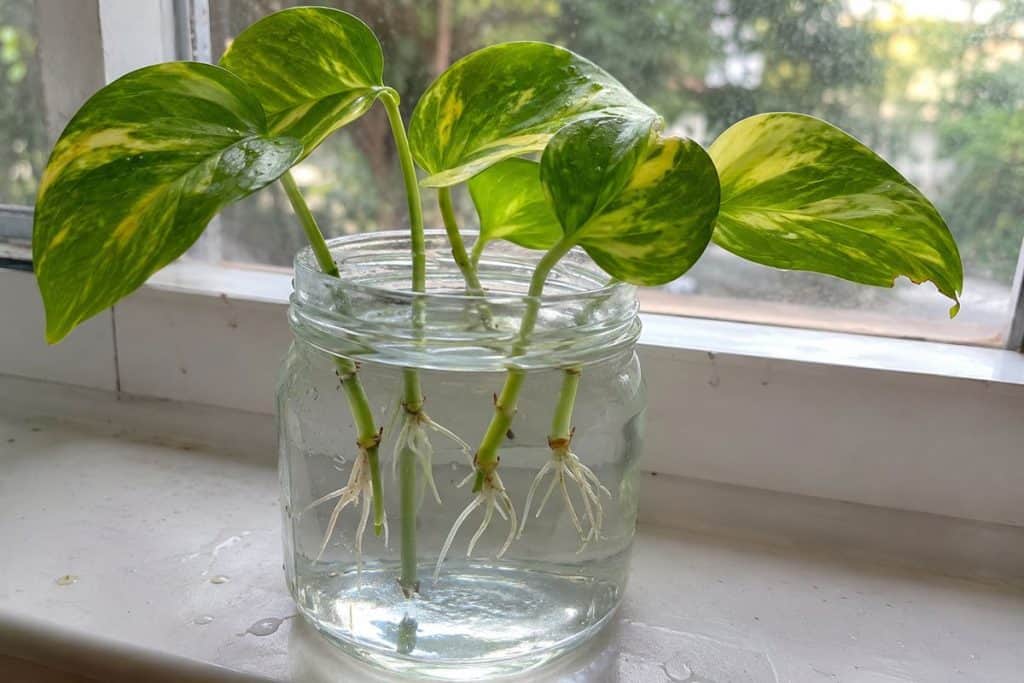
- Cut a 4- to 6-inch piece of vine with 2 or 3 leaves, cutting about 1/4 inch below a node.
- Pull off the leaf nearest the cut end, so one node is bare.
- Stand the cutting in room-temperature water with the bare node under the surface and all the leaves above it.
- Set the jar in bright indirect light, such as an east window, but not in direct afternoon sun, which heats the water.
- Change the water every 5 to 7 days, or sooner if it turns cloudy.
- Pot it up when the roots are 2 to 3 inches long.
This suits beginners and anyone who wants to see progress. Most healthy cuttings root. The one drawback is that roots grown in water are thinner, so the plant takes a week or two to adjust to soil. Don’t leave cuttings in water for months before potting; the longer they stay, the harder the switch. Our list of houseplants that grow in water covers keeping some cuttings in water for good.
Method 2: Straight Into Soil
- Take the same 4- to 6-inch cutting and strip the bottom leaf.
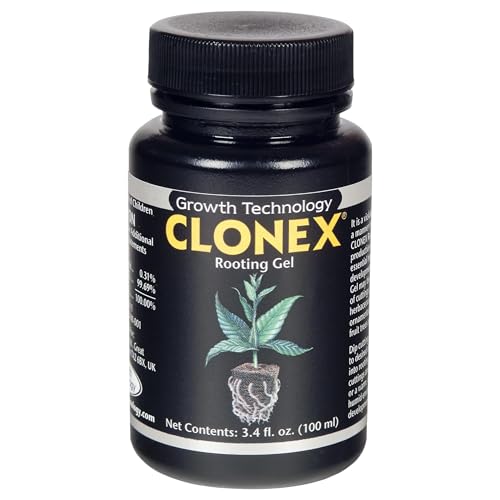
- Dip the bare node in a rooting product if you have one.
- Push the node about 1 inch into damp potting mix, 3 to 5 cuttings per 4-inch pot.
- Keep the mix lightly moist, like a wrung-out sponge, and the pot in bright indirect light.
- After 3 weeks, tug a cutting gently. Resistance means roots.
Pothos roots fine without help, but a dab of rooting gel on the node speeds up slow winter cuttings and seals the cut. Soil rooting skips the transplant step, so the plant keeps growing without a pause. The risk is rot: soggy mix kills cuttings before they root.
Use a pot with a drainage hole and a light indoor potting mix loosened with perlite. Our guide to potting soil for houseplants explains what to look for on the bag.
Method 3: Layering on the Plant
This method roots a vine while it’s still attached to the parent, so it can’t wilt or rot. Set a small pot of damp mix next to the mother plant. Lay a long vine across it and pin one node onto the soil surface with a bent paperclip.
Keep the mix moist. In 3 to 4 weeks, the node roots into the new pot, and you snip the vine free. It’s slow and takes up space, but it’s the safest choice for a rare cultivar or a vine you don’t want to risk.
Potting Up Water Cuttings
When the roots reach 2 to 3 inches, fill a 4-inch pot with moist mix and plant 3 to 5 rooted cuttings together, with the nodes about 1 inch deep. Several cuttings per pot give you a full plant within a season.
Water well, then keep the mix slightly moist for the first 2 weeks while the roots adjust, before going back to watering when the top 2 inches are dry. Expect the first new leaf in 3 to 4 weeks.
Week by Week: What You Should See
| Time | What’s normal |
|---|---|
| Week 1 | No change; the node may swell or turn lighter |
| Weeks 2 to 3 | White root tips 1/4 to 1/2 inch long |
| Weeks 3 to 5 | Roots 2 to 3 inches, branching; ready to pot |
| 3 to 4 weeks after potting | First new leaf, often smaller than the parent’s |
When It Goes Wrong
The stem turns mushy or black. Bacteria rotted it, usually from warm, stale water or a submerged leaf. Cut above the rot to a healthy node and start again in fresh water.
No roots after 6 weeks. The cutting may have no node underwater, or the room is too cold or dark. Check for a node, then move the jar somewhere brighter and above 65°F.
Roots but no new leaf. This is normal for a few weeks. Roots grow first, leaves second. Pot it up and be patient.
Green slime in the jar. That’s algae from light hitting the water. It doesn’t hurt the cutting, but rinse the jar, or use a colored glass.
Sophia’s tip: pothos sap can irritate skin, and pothos is on the ASPCA’s toxic plant list for cats and dogs. Set jars of cuttings on a high shelf, because a cat may drink the water and chew the leaves.
Which Method I’d Pick
- If you want the surest result and like watching roots grow, use water.
- If you want a full pot quickly with no transplant step, use soil, 3 to 5 cuttings per pot.
- If the vine is rare or precious, layer it while it’s still attached.
- If it’s winter, take cuttings anyway, but give them a grow light or your brightest window, and expect roots to take twice as long. The same trick works for propagating philodendron in water.

Founder & Lead Writer · 9 years growing houseplants · Chicago, IL
I’m Sophia, founder of HousePlantsInfo.com. I’ve grown plants for as long as I can remember and have spent the last 9 years focused on houseplants, now caring for 75+ of them, from easy snake plants and philodendrons to fussier fiddle leaf figs and calatheas. Every guide here is based on what I’ve grown, lost and brought back in a real apartment through dark, radiator-dry Chicago winters. I trained through Houseplant Masterclass, and I check care and pet-safety details against university extension services and the ASPCA before publishing.