
The short answer: water a pothos when the top 2 inches of potting mix are dry. In a bright room that’s usually every 7 to 10 days in summer and every 10 to 14 days once the heat is on in winter.
Three things change that number more than anything else: how much light the plant gets, the size and material of the pot, and the season. A plant in a dim corner can go 3 weeks.
| Setup | Summer | Winter (heat on) |
|---|---|---|
| Bright spot, 4-inch plastic pot | Every 5 to 7 days | Every 8 to 10 days |
| Bright spot, 6-inch plastic pot | Every 7 to 10 days | Every 10 to 14 days |
| Bright spot, 6-inch terracotta | Every 5 to 7 days | Every 7 to 10 days |
| Medium light, 6-inch plastic | Every 10 to 12 days | Every 14 to 18 days |
| Low light, any pot | Every 14 to 18 days | Every 18 to 21 days |
| Hanging basket near a ceiling vent | Every 5 to 7 days | Every 6 to 8 days |
Use the chart as a reminder to check, not as a schedule. The soil gets the final say, because the same plant dries at different speeds after a hot week, a cloudy week, or a week with the furnace running.
The Soil Tells You, Not the Calendar
Pothos would rather run a little dry than sit wet. Its roots need air, and soil that stays soggy for days suffocates them, which leads to root rot. That’s why a fixed “water every Sunday” routine causes so many problems.
Before you water, push your index finger into the mix to the second knuckle, about 2 inches. Dry and crumbly means water. Cool and damp means wait.
If the pot is too high to reach, the lift test works: pick it up right after watering to learn its wet weight, then lift it every few days. A light pot needs water.
A moisture meter is the third option, and the most useful one for big pots, because it reads the root zone 4 to 6 inches down where your finger can’t reach. Our guide on how often to water a houseplant explains the lift test in more detail.

Water Deeply, Then Stop
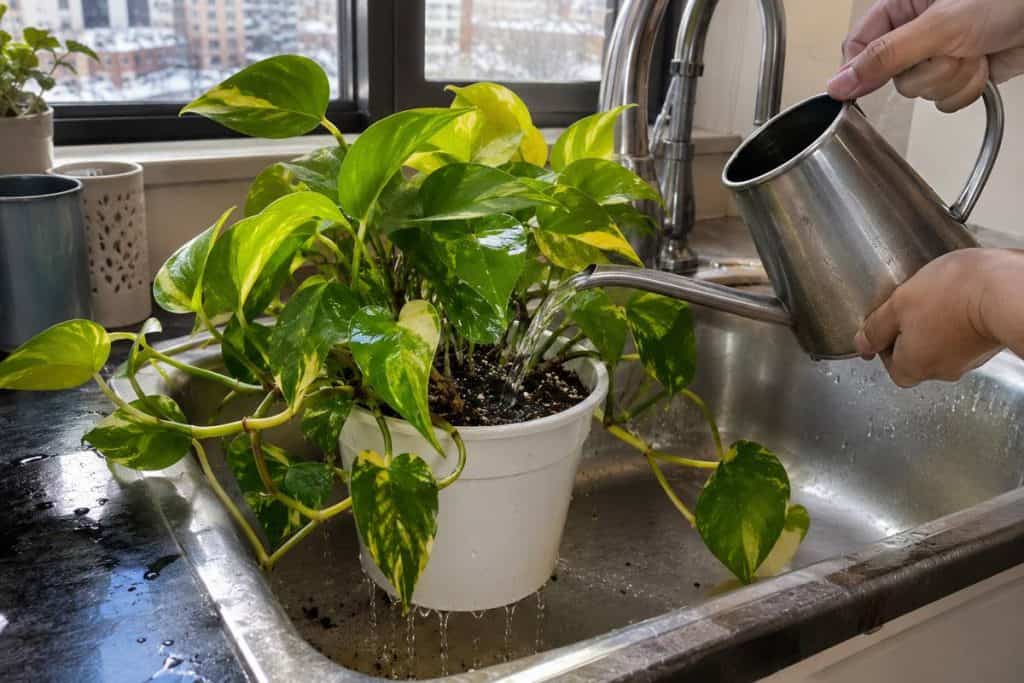
When the soil is dry, give the plant a full drink. Soak the mix until water drips from the bottom, then give it a second pass a minute later so the whole root ball wets evenly. A long-spout watering can puts the water on the soil instead of on the leaves and makes it easy to reach the back of a crowded shelf.
Tip out the saucer or cachepot once it stops dripping. A pot standing in water wicks it back up and keeps the bottom soggy.
Bottom watering also works. Set the pot in a sink or bowl with 2 to 3 inches of water for 10 to 15 minutes, until the surface feels damp, then let it drain. It’s a good fix for a pot that has dried so hard that water runs straight down the sides.
Winter Changes the Math
From November through February, a pothos in a northern apartment grows slowly, because days are short and the light is weak. It drinks less, so the soil stays wet longer, even though the air feels dry. That’s the season when most pothos get overwatered.
The exception is a plant next to a radiator, a heat vent, or high up in a hanging basket where warm air collects. There, the top of the soil can dry in two days while the middle stays wet. Check deeper in winter, not just the surface. Our winter houseplant care guide covers heat sources in more detail.
The Pot Matters More Than You’d Think
Small pots dry faster than big ones. A 4-inch pot can dry in 5 days in summer; a 10-inch pot of the same plant may take 2 weeks. Material matters too. A terracotta pot breathes through its walls and dries out up to twice as fast as plastic, which helps if you tend to overwater or keep the plant in low light. Plastic and glazed ceramic hold moisture longer, which suits a hot, bright window.

Every pot needs a drainage hole. A decorative pot without one turns every watering into a puddle at the bottom. Keep the plant in a plastic nursery pot inside the decorative one and lift it out to water.
Self-watering pots can work for pothos if you let the reservoir run dry for a few days between fills. Our list of houseplants for self-watering pots explains how.
What the Leaves Tell You
- Soft, droopy leaves with dry soil mean thirst; the plant perks up within a day of watering.
- Yellow lower leaves with soil still damp after a week mean too much water, so wait longer between waterings.
- Crispy brown edges with soil pulling away from the pot wall mean it went too dry for too long, or sat in dry heat.
- Droop with wet soil and a sour smell means root rot. Check the roots right away.
Droop alone doesn’t tell you which problem you have. The soil does. See why a houseplant wilts for more on telling thirst from rot.
Sophia’s tip: if you water by habit, keep a small note on the pot or in your phone with the date. After a month, you’ll know your plant’s real interval in your own apartment, which beats any chart.
Tap Water Is Fine, With One Exception
For most homes, tap water left out overnight is fine. Pothos tolerates chlorine well. Hard water and salt-softened water, common in the Midwest, Southwest and Texas, leave minerals that build up as a white crust on the soil and pot. Run a minute of plain water through the pot each season, or use rainwater or filtered water now and then. Our post on using rainwater for houseplants covers collecting it safely.
Watering Before a Trip
A healthy pothos in a 6-inch pot handles a 10-day trip if you water it deeply the day before you leave and move it a few feet back from a hot window. For two weeks or more, run a cotton wick from a jar of water into the soil, or ask a neighbor to check once. See caring for houseplants while on vacation for longer trips.
The Routine I’d Use
- Monday and Thursday: finger test on every pothos.
- Water fully only the ones dry 2 inches down.
- Empty saucers 15 minutes later.
- First week of each month: look at leaf color and soil crust.
- Every 3 months: flush with plain water for a minute.

Founder & Lead Writer · 9 years growing houseplants · Chicago, IL
I’m Sophia, founder of HousePlantsInfo.com. I’ve grown plants for as long as I can remember and have spent the last 9 years focused on houseplants, now caring for 75+ of them, from easy snake plants and philodendrons to fussier fiddle leaf figs and calatheas. Every guide here is based on what I’ve grown, lost and brought back in a real apartment through dark, radiator-dry Chicago winters. I trained through Houseplant Masterclass, and I check care and pet-safety details against university extension services and the ASPCA before publishing.