
The short answer: yes, pothos is toxic to cats, and to dogs, because its leaves and stems are packed with insoluble calcium oxalate crystals that stab the mouth when chewed. The ASPCA lists pothos as toxic to cats, and every type sold in stores, from golden to neon to marble queen, counts.
A bite or two hurts but is rarely dangerous. The pain usually stops a cat after one nibble, so serious poisoning is uncommon.
Why Cats Chew It
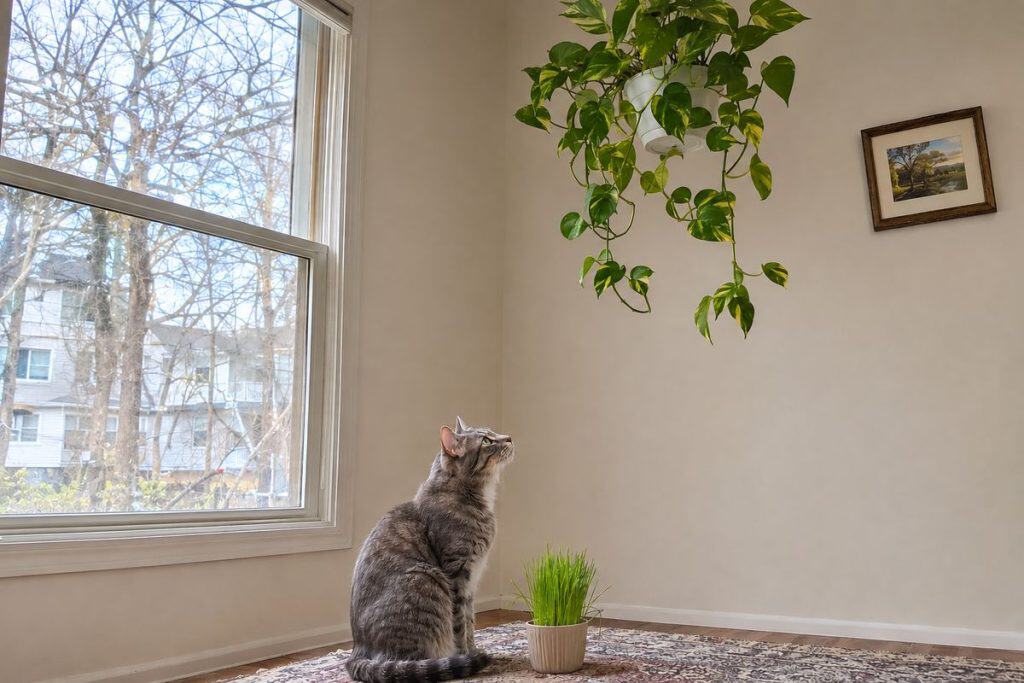
Trailing vines swing and move, which makes them irresistible to a cat at play, and many cats chew greenery when they’re bored or want fiber. Pothos hanging at floor level from a shelf is the most common setup for trouble.
Giving a cat its own pot of cat grass doesn’t guarantee it will ignore your plants, but it redirects a lot of the chewing to something safe. A bitter apple spray on the leaves puts some cats off too, though it wears off and works best as a backup.

If Your Cat Just Chewed It
- Take any leaf pieces out of the cat’s mouth and move the plant out of the room.
- Look at the mouth, lips and tongue for redness, swelling or bits of leaf.
- Gently wipe the mouth with a damp cloth and offer fresh water to rinse.
- Don’t try to make your cat vomit. It doesn’t help with this plant and can cause harm.
- Call your vet or the ASPCA Animal Poison Control Center at (888) 426-4435. A consultation fee may apply. Say what plant it was, how much is missing, and when it happened.
- Go to an emergency vet right away if your cat has trouble breathing or swallowing, or keeps vomiting.
Take a photo of the plant or bring a leaf with you. Vets see pothos cases often, and knowing the plant saves time.
Symptoms to Watch For
Listed from the first to show to the last:
- Within seconds to minutes: pawing at the mouth, head shaking, drooling or foaming, sudden retreat from the plant.
- Within the first hour: red or swollen lips, tongue and gums; refusal to eat.
- Within a few hours: vomiting, trouble swallowing, hiding.
- Rare: swelling in the throat that makes breathing noisy or hard. This is an emergency.
Most signs settle within 12 to 24 hours as the irritation fades. If they last longer, call your vet again.
Toxic vs Deadly
Toxic means a plant causes harm when eaten. It doesn’t mean it’s likely to kill. Pothos crystals work like tiny needles. They cause immediate pain and swelling where they touch, which is why most cats spit the leaf out and stop. Deaths are very rare and are linked to severe throat swelling or a cat that ate a large amount.
That’s different from lilies, where a small amount can cause kidney failure in cats. Pothos is in the “painful, see the vet” group, not the “every minute counts” group, unless breathing is affected. Our list of tropical houseplants that are poisonous to cats sorts other common plants the same way. Philodendron works almost the same way as pothos; see philodendron and cats.
Two questions come up a lot. Brushing past the plant or sniffing it doesn’t harm a cat; the crystals do damage only when the leaf or stem is broken by chewing. A lick of an intact leaf is unlikely to cause more than brief interest.
Sap on fur is different, because a cat will lick it off, so wipe the coat with a damp cloth if a cat knocked the plant over and broke the stems.
Dogs react the same way, with drooling, pawing and vomiting. A dog can swallow more leaf in one go than a cat, so watch large dogs closely and call sooner rather than later.
Keeping It in a Home With Pets
Height is the only method that really works. Hang the pothos in a hanging planter from a ceiling hook, and keep the vine tips at least 2 feet above anything a cat can jump onto. Cats reach shelves, counters and the tops of bookcases easily, so a “high shelf” often isn’t high enough.

Trim the vines often so they never dangle into reach. A room with a closed door, like a home office, also works. Sprays that taste bitter fade within days and some cats ignore them, so don’t rely on them alone. Our guides on keeping cats from eating houseplants and keeping a cat away from a potted plant cover more.
Sophia’s tip: after you trim a pothos, bag the clippings before you set them down. A cut vine on the counter is the easiest pothos a cat will ever find.
Safer Swaps
If your cat won’t leave the pothos alone, these trailing or leafy plants are listed as non-toxic to cats by the ASPCA:
- Spider plant: arching striped leaves and hanging babies; it likes the same light as pothos and its soil a little moister.
- Boston fern: soft, full fronds for a hanging basket; it needs more humidity and steady moisture.
- Hoya (wax plant): thick leaves on trailing vines; water only when the soil is fully dry.
- Peperomia: small, fleshy leaves; trailing types like string of turtles suit shelves and grow slowly.
Even safe plants can upset a cat’s stomach if eaten in quantity. See our list of low-light plants safe for cats for more swaps.
Pet-Proofing in Five Minutes
- Move any pothos below 6 feet to a hook or a closed room.
- Snip vine tips that hang lower than the shelf.
- Put rooting jars inside a cabinet or a room the cat doesn’t enter.
- Sweep up dropped leaves after trimming.
- Save the ASPCA number in your phone: (888) 426-4435.

Founder & Lead Writer · 9 years growing houseplants · Chicago, IL
I’m Sophia, founder of HousePlantsInfo.com. I’ve grown plants for as long as I can remember and have spent the last 9 years focused on houseplants, now caring for 75+ of them, from easy snake plants and philodendrons to fussier fiddle leaf figs and calatheas. Every guide here is based on what I’ve grown, lost and brought back in a real apartment through dark, radiator-dry Chicago winters. I trained through Houseplant Masterclass, and I check care and pet-safety details against university extension services and the ASPCA before publishing.