
The short answer: a Christmas cactus grows best at 65 to 75°F, needs nights of 55 to 60°F in fall to set buds, starts dropping buds below 50°F and dies after a freeze. Above 90°F it stops growing and sheds buds.
Two things change how much it can take: how long the cold lasts, and whether the soil is wet. A dry plant shrugs off a few hours at 45°F. A wet one sitting against cold glass all night does not.
| Temperature | What happens |
|---|---|
| Below 32°F (0°C) | Frost: segments turn mushy and black within a day |
| 32 to 45°F (0 to 7°C) | Chill damage if it lasts overnight; buds drop |
| 45 to 50°F (7 to 10°C) | Survives short spells; buds may drop |
| 50 to 55°F (10 to 13°C) nights | Can set buds even without full darkness, but fewer |
| 55 to 60°F (13 to 16°C) nights | Best range for setting buds in fall |
| 65 to 75°F (18 to 24°C) days | Best range for growth, spring through summer |
| 75 to 90°F (24 to 32°C) | Grows, but warm nights block buds |
| Above 90°F (32°C) | Growth stops; buds drop |
Check It Yourself
The windowsill is often several degrees colder than the room at night, so a digital thermometer that records the overnight low tells you more than the thermostat. Leave it next to the pot for 3 or 4 nights before you decide the spot is safe.

Cool Nights Are What Make It Bloom
Buds form when nights sit around 55 to 60°F for about 6 weeks, combined with 12 to 14 hours of darkness. Cool nights alone, around 50 to 55°F, can trigger buds even without full darkness, though you get fewer. Nights that stay above 70°F block flowering, which is why plants next to a heat vent in a warm apartment often skip a year.
If your plant has pointed, toothed segments, it’s a Thanksgiving cactus, which is what many stores sell. Both need the same temperatures, but the Thanksgiving type wants its cool nights from mid-September and the true Christmas cactus from early October. The full routine is in how to make a Christmas cactus bloom.
Cold Glass Is the Winter Risk
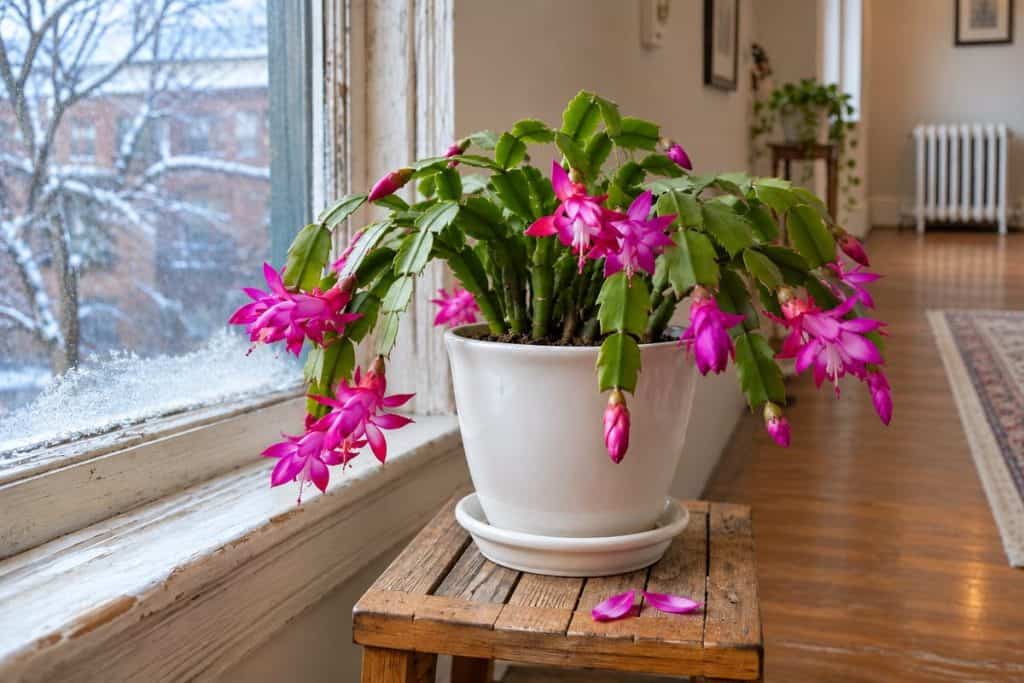
In January, the inside of a single-pane window can drop below 40°F while the room reads 68°F. Segments that touch the glass get chilled first and turn limp or reddish purple. Pull the plant 6 to 12 inches back on cold nights, or slide it onto a plant stand beside the window instead of the sill.
Drafty storm windows are worse, because cold air falls straight onto the plant. A window insulation kit stops most of that draft for a season and costs less than replacing a plant. Cold stress often shows as color first; see why Christmas cactus leaves turn purple.

Heat Dries It Out Faster Than It Cooks It
Radiators and forced-air vents rarely push the plant past 90°F, but they bake the soil and the air around it. Keep the pot at least 3 feet from a radiator or vent. A plant that dries out every 3 days next to a heater is thirsty, not hot, and the segments go limp and wrinkled.
In summer, a west window in direct afternoon sun can heat the leaves well above room temperature. Move it back or give it a sheer curtain once days pass 85°F.
In a Midwest or Northeast winter, dry heat and cold glass usually arrive together. The air beside a radiator can fall to 20 percent humidity while the window a few feet away is close to freezing. A bright spot between the two, at least 3 feet from the heat and 6 inches back from the glass, is the steadiest place for the plant from December to February.
Taking It Outside
It can summer on a porch or balcony in shade once nights stay above 55°F, usually late May or early June across most of the US. Bring it in before nights drop below 50°F, which in the Midwest and Northeast is often mid-September. Only frost-free spots in USDA zones 10b and 11 can keep it outside all year, with cover on nights below 50°F. More on this in can a Christmas cactus be outside.
Carrying a new plant home in December is fine for a few minutes in a closed bag or box. An hour on a cold car seat is not.
If It Got Too Cold
- Bring it into a room around 60 to 65°F, out of direct sun.
- Wait 2 or 3 days; frozen tissue shows itself as soft, dark, translucent segments.
- Twist or cut off the mushy segments back to firm green tissue.
- Water lightly only when the top inch is dry; cold-damaged roots rot easily.
- Skip fertilizer until you see new segments, usually 4 to 8 weeks later.
Firm segments that only turned red will green up over a few weeks. If the base of the stem is mushy, root healthy segments as cuttings instead; they root in water too, as in rooting a Christmas cactus in water.
The Routine I’d Use
- September: bring it in before nights dip below 50°F, then park it in the coolest bright room.
- October to November: nights at 55 to 60°F, no lamps after dark, no moves once buds show.
- December to February: 6 inches back from the glass on the coldest nights, 3 feet from heat.
- Spring to summer: 65 to 75°F, outside in shade only when nights stay above 55°F.
It’s non-toxic to cats and dogs according to the ASPCA, so a cold-damaged segment a pet chews isn’t a worry.

Founder & Lead Writer · 9 years growing houseplants · Chicago, IL
I’m Sophia, founder of HousePlantsInfo.com. I’ve grown plants for as long as I can remember and have spent the last 9 years focused on houseplants, now caring for 75+ of them, from easy snake plants and philodendrons to fussier fiddle leaf figs and calatheas. Every guide here is based on what I’ve grown, lost and brought back in a real apartment through dark, radiator-dry Chicago winters. I trained through Houseplant Masterclass, and I check care and pet-safety details against university extension services and the ASPCA before publishing.