
You walk past the windowsill and notice your Christmas cactus hanging limp over the rim of its pot, its flat green segments soft and drooping instead of arching outward.
The short version: Most wilting comes from a watering problem. Wet soil and mushy segments point to root rot, while dry soil and thin, wrinkled segments point to thirst.
Heat, harsh sun, cold drafts, a cramped or stale root system, and pests cause most of the remaining cases.
This guide walks through each cause, how to tell them apart, and the exact fix for each one.
Check These First
- Push a finger 1 inch into the soil. Is it soggy, bone dry, or pulling away from the sides of the pot?
- Squeeze a drooping segment gently. Mushy and translucent means too much water; thin and wrinkled means too little.
- Look at the base of the stems where they meet the soil. Dark, soft, or collapsing tissue there is an emergency.
- Check the plant’s surroundings. Is it within a few feet of a radiator, heat vent, AC unit, or a drafty door?
- Turn over a few segments and look at the joints. White fluff, brown bumps, or fine webbing means pests.
Why Is My Christmas Cactus Wilting Even Though the Soil Is Wet?
A Christmas cactus that wilts in wet soil almost always has damaged roots from overwatering. Rotting roots can’t move water up into the segments, so the plant droops even while sitting in moisture.
This is the most common cause indoors, especially in winter when the plant uses less water but owners keep the same schedule.
Christmas cactus is an epiphyte that grows on trees in its native forests, so its roots expect air around them, not constantly soggy soil.
Signs It’s Overwatering
- Segments feel soft, swollen, or slightly translucent
- Segments drop off at the joints with a light touch
- The soil smells sour or musty
- The base of the stem looks dark or feels squishy
- Fungus gnats hover around the soil surface
If the segments are soft but you’re not sure why, the guide on christmas cactus leaves soft covers how to separate water stress from rot.

How to Fix It
Stop watering immediately and slide the plant out of its pot. Healthy roots are firm and white to light tan. Rotted roots are brown or black, mushy, and the outer layer slips off when you pull gently.
Trim every soft root back to firm tissue with clean, sharp scissors. Repot into fresh, fast-draining mix in a pot with a drainage hole, and don’t water for 5 to 7 days so the cut roots can seal.
A good mix is roughly two parts regular potting mix to one part perlite or orchid bark. Avoid dense, moisture-holding soil on its own.

Preventing It From Coming Back
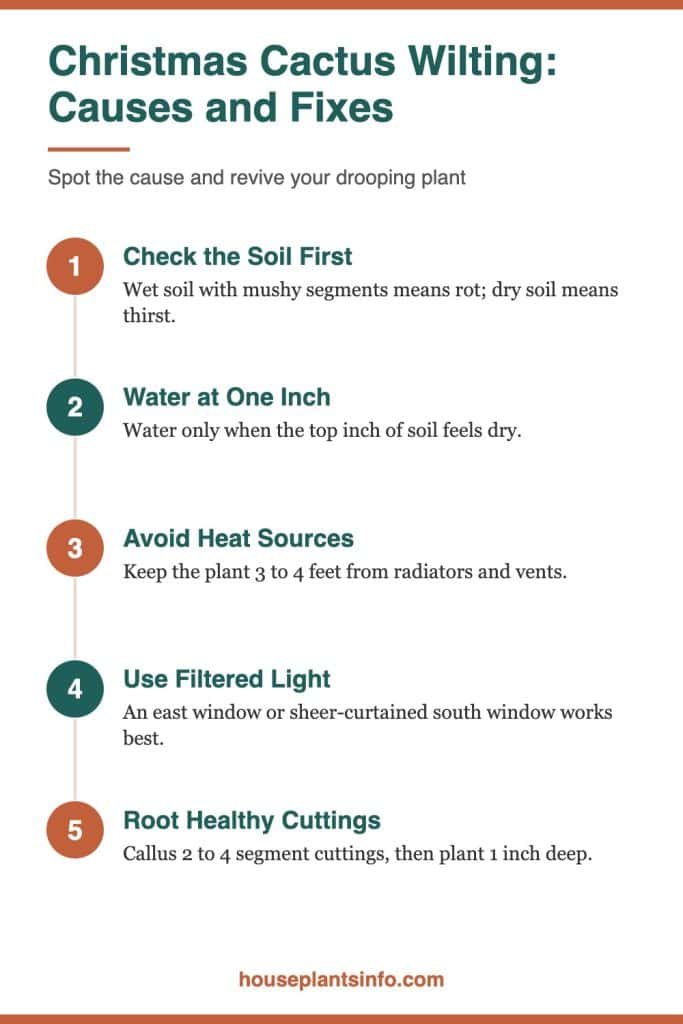
Water only when the top 1 inch of soil is dry, which may be every 1 to 2 weeks in summer and every 2 to 3 weeks in winter.
A soil moisture meter or a plain wooden skewer pushed into the pot gives you a much better reading than the surface alone.

Always empty the saucer or decorative cover pot 15 minutes after watering. Standing water at the bottom of a cachepot is a quiet, common cause of rot.
Sophia’s tip: Lift the pot right after a thorough watering and again when it’s dry. Once you know the weight difference, you can tell whether it needs water just by picking it up.
Underwatering: Thin, Wrinkled, Limp Segments
If the soil is dry and the segments look thin, flat, or wrinkled, your plant is thirsty. Christmas cactus stores some water in its segments, but it’s a forest cactus and needs more moisture than desert species.
How to Recognize Thirst
Dry wilting looks different from rot. The segments are leathery and limp rather than mushy, and they often show fine wrinkles or a dull, slightly reddish tint. The soil may have shrunk away from the pot’s edges.
Peat-based mixes that dry out completely can become water-repellent. When you water, it runs straight down the gap between the soil and the pot and out the bottom without soaking in.
How to Rehydrate It
Bottom-water to resaturate the root ball. Set the pot in a bowl or sink with 2 to 3 inches of room-temperature water for 20 to 30 minutes, until the soil surface feels damp.
Let it drain fully, then return it to its spot. Segments usually firm up within a few days. If they stay wrinkled after a week of proper watering, check the roots, since severe drought can kill fine feeder roots too.
Finding the Right Rhythm
Avoid going from bone dry to soaked over and over. Aim for evenly moist soil that dries in the top inch between waterings. Plants in small terracotta pots, bright south windows, or rooms with forced-air heat dry out fastest.
Heat, Radiators, and Dry Winter Air
A Christmas cactus placed near a heat source can wilt even with correct watering. Hot, dry air pulls moisture from the segments faster than the roots can replace it.
Why Indoor Heat Is So Hard on It
Christmas cactus does best at 60°F to 75°F during the day. Next to a radiator or a forced-air vent, the air around the plant can be far warmer and very dry, and the soil dries unevenly.
Winter indoor humidity often drops to 20 to 30 percent in heated apartments. This plant prefers 40 to 60 percent humidity, closer to the conditions in its native forest.
Moving It to Safer Ground
Keep the plant at least 3 to 4 feet from radiators, baseboard heaters, space heaters, and vents. Don’t place it on top of a radiator cover or a TV, both of which give off steady heat.
To raise humidity, group it with other plants or set it on a tray filled with pebbles and water, keeping the pot base above the waterline. A room humidifier works best in very dry winter air.
Sophia’s tip: Hold your hand where the plant sits for 30 seconds while the heat is running. If you feel warm air moving across your palm, the plant feels it too.
Too Much Direct Sun
Strong direct sun can scorch and dehydrate a Christmas cactus, leaving it limp, pale, or tinged red. It needs bright light, but filtered rather than harsh.
Reading Light Stress
Sun-stressed plants often turn reddish or purplish along the segment edges before they wilt. You can read more about that color change in the guide on why are christmas cactus leaves turning red. Bleached, yellowish patches facing the window are another clue.
Glass magnifies afternoon heat. A plant pressed against a south or west window in summer can get much hotter than the room itself.
Where to Place It
An east-facing window is ideal, giving gentle morning sun. A bright north window works well too. For a south or west window, set the plant 2 to 3 feet back from the glass or behind a sheer curtain.
If your space is dim, a grow light placed 12 to 18 inches above the plant for 10 to 12 hours a day keeps it healthy. Turn it off in early fall if you want blooms, since the plant needs long nights to set buds.

Cold Drafts and Sudden Temperature Swings
Cold air can shock a Christmas cactus into wilting, especially if it drops below about 45°F to 50°F. Drafts from windows, doors, and air conditioners are the usual culprits.
Spotting Cold Damage
Cold-stressed segments may go limp, dark, or water-soaked within a day or two. Buds and flowers often drop at the same time. Damage tends to show first on the side facing the window or door.
Cool nights in the 50°F to 60°F range are fine and even help trigger blooming in fall. The problem is freezing glass, icy drafts, and rapid swings between hot and cold.
Protecting Your Plant
In winter, keep segments from touching window glass, which can be much colder than the room on a Chicago night. Pull the plant back a few inches after dark or close the curtain behind it.
In summer, keep it out of the direct stream of an AC unit or ceiling vent. If you bring a plant home in cold weather, wrap it for the trip, since even a short walk at freezing temperatures can damage it.
Recovery After a Cold Snap
Move the plant to a stable spot around 65°F and leave it alone. Don’t water heavily or fertilize while it recovers. Trim off any segments that turn black and mushy after a week, since they won’t recover.
A Cramped, Stale, or Recently Changed Root System
Roots that have filled the pot or sit in broken-down old soil can no longer take up water well, and the plant wilts. Recent repotting or moving can also cause temporary drooping.
When the Pot Is the Problem
Christmas cactus actually likes to be slightly snug in its pot, so it doesn’t need frequent repotting. Still, after 3 years or more, potting mix breaks down, compacts, and either stays soggy or repels water.
Signs it needs attention include roots growing out of the drainage hole, water running straight through, or soil that has turned dense and dark. Check the guide on when to transplant christmas cactus for the best timing, which is usually spring after blooming ends.
Repotting the Right Way
Move up only 1 to 2 inches in pot diameter. A much larger pot holds extra wet soil that roots can’t reach, which invites rot. Use a pot with a drainage hole and a light, airy mix.
Shake off old soil gently, trim any dead roots, and settle the plant at the same depth it was before. Water lightly, then wait until the top inch dries before watering again.
Transplant Shock
Some drooping for 1 to 2 weeks after repotting is normal while roots settle. Keep the plant in bright, indirect light, away from heat, and resist the urge to water extra. It usually firms up on its own.
Post-Bloom Exhaustion and Fertilizer Problems
After a heavy bloom, a Christmas cactus may look tired and slightly limp because it has spent a lot of energy. Overfeeding, on the other hand, can burn roots and cause wilting.
The Rest After Flowering
Once the flowers fade, the plant benefits from a rest of about 4 to 6 weeks with slightly less water and no fertilizer. This is a normal part of its cycle, not a sign of decline.
The article on what to do with christmas cactus after flowering explains how to handle this stage.
Light pruning at the end of the rest, twisting off 1 to 3 segments per stem, encourages fuller, bushier growth.
When Fertilizer Hurts
Too much fertilizer leaves salts in the soil that damage root tips, and damaged roots can’t supply water. Look for a white crust on the soil surface or pot rim, browning segment tips, and wilting in moist soil.
To fix it, flush the pot by running plain water through the soil for a few minutes, letting it drain fully. Hold off feeding for at least a month.
Feeding Correctly
Feed during active growth in spring and summer with a balanced houseplant fertilizer at half strength every 2 to 4 weeks. Stop in fall as the plant prepares to bloom. The guide on when to fertilize christmas cactus covers the timing in more detail.
Sophia’s tip: Never fertilize a wilting plant. Fix the water or root problem first, then wait until you see new growth before feeding again.
Pests That Drain the Plant
Sap-sucking pests and soil-dwelling larvae can weaken a Christmas cactus until it droops. Infestations often build slowly in warm, dry indoor air before you notice them.
The Usual Suspects
- Mealybugs: white, cottony clusters in segment joints and at the soil line
- Scale: small brown or tan bumps stuck flat to the segments
- Spider mites: fine webbing and tiny pale speckles, worst in dry, heated rooms
- Fungus gnat larvae: tiny worms in constantly wet soil that feed on fine roots
- Root mealybugs: white, waxy patches on the roots when you unpot the plant
Treating an Infestation
Isolate the plant from your other houseplants first. Dab mealybugs and scale with a cotton swab dipped in rubbing alcohol, then spray the plant with insecticidal soap, covering the undersides and joints.
Repeat every 5 to 7 days for at least 3 to 4 weeks to catch newly hatched insects. For spider mites, rinse the plant in the shower and raise humidity. For fungus gnats, let the soil dry out more between waterings.
Staying Ahead of Pests
Check the joints and soil line each time you water. Inspect new plants closely and keep them separate for 2 to 3 weeks before placing them near the others.
Is It Safe Around Pets?
The ASPCA lists Christmas cactus as non-toxic to cats and dogs. A pet chewing on it may still have mild stomach upset, so keep it out of reach of curious animals and kids, and avoid leaving treated plants where pets can lick the spray.
How to Save a Badly Wilted Christmas Cactus
If the roots and stem base have rotted, you can still save the plant by rooting healthy cuttings. Christmas cactus propagates easily, so even a mostly lost plant can become a new one.
Deciding Whether to Rescue or Restart
Unpot the plant and look closely. If at least some roots are firm and the stem base is solid, trim the damage and repot as described above. If the base is soft and dark, the main plant is unlikely to recover.
Rooting Healthy Cuttings
Twist off healthy, firm sections with 2 to 4 segments each. Let them sit in a dry spot for 1 to 2 days so the ends callus over.
Insert each cutting about 1 inch deep into a slightly moist, fast-draining mix. Place it in bright, indirect light at 65°F to 75°F and keep the mix lightly moist, never soggy. Roots usually form within 2 to 6 weeks.
Aftercare for a Recovering Plant
Keep a recovering plant in stable conditions with no fertilizer and careful watering. New segments at the tips are the best sign that roots are working again. Expect full recovery to take several weeks to a few months.
Your Next Steps
- Check the soil 1 inch down and squeeze a segment to sort the problem into wet or dry wilting.
- Unpot and inspect the roots if the soil is wet, trimming anything brown and mushy.
- Move the plant 3 to 4 feet from heat sources and away from drafty glass and AC vents.
- Shift it to an east window or 2 to 3 feet back from a sunny south or west window.
- Inspect the segment joints and soil line for pests, and treat weekly if you find any.
- Root a few healthy cuttings as backup if the stem base looks damaged.
Common Questions About Christmas Cactus Wilting
Can a wilted Christmas cactus recover?
Yes, most wilted plants recover once the cause is fixed, especially if the roots are still firm. Thirsty plants often perk up within a few days, while rot recovery takes several weeks. If the stem base has rotted, rooting healthy cuttings is the most reliable way to save it.
Should I water a wilting Christmas cactus?
Only if the soil is dry 1 inch down and the segments look thin or wrinkled. If the soil is wet, watering will make root rot worse. Always check the soil before reaching for the watering can.
Why is my Christmas cactus wilting after I repotted it?
Mild drooping for 1 to 2 weeks after repotting is normal transplant shock while roots settle. Keep it in bright, indirect light and avoid overwatering during this time. If it gets worse, check whether the new pot is too large or the soil stays soggy.
Does a Christmas cactus wilt when it needs more humidity?
Very dry air can contribute to limp, dehydrated segments, especially near radiators or forced-air heat. It’s rarely the only cause, so check watering and placement too. Keeping humidity around 40 to 60 percent helps the plant stay firm in winter.
How often should I water a Christmas cactus to prevent wilting?
Water when the top 1 inch of soil is dry, which is often every 1 to 2 weeks in summer and every 2 to 3 weeks in winter. The exact timing depends on light, pot size, and indoor heat. Always let excess water drain away completely.

Hi! I’m Sophia, and I love plants – especially an expert in growing house plants. I stay in Chicago, United States of America, and through my blog and social media platforms, provide tips and tricks on how to grow healthy, vibrant plants indoors. Check out more here.