
Your Christmas cactus sits on the windowsill, but the flat green segments have taken on a reddish blush along the edges, or the whole plant looks bronzed.
If you are wondering why Christmas cactus leaves are turning red, the color is a signal worth reading carefully.
The short version: Red segments are almost always a stress response. The plant produces red pigments when it gets too much direct sun, sits in cold air, dries out, has damaged roots, or runs low on nutrients like magnesium.
Fix the stress and new growth comes in green.
This guide covers each cause, how to tell them apart, and the exact fix for your indoor setup.
Check These First
- Feel the soil 1 to 2 inches down. Bone dry or soggy both point to watering or root trouble.
- Touch the window glass. If it feels cold, or if direct afternoon sun hits the plant, light or temperature is likely the cause.
- Look at where the red is. Edges and tips suggest sun or cold, while overall dull red with limp segments suggests roots.
- Check the drainage hole. Roots poking out or water pooling in the saucer both matter.
- Think back over the last month. A move, repotting, or the heat switching on often lines up with the color change.
Why Are Christmas Cactus Leaves Turning Red? Start With Stress Pigments
Christmas cactus segments turn red because the plant builds up anthocyanins, protective pigments that act like sunscreen and antifreeze for the tissue. Bright light, cold, drought, and poor nutrition all trigger them.
What the Color Is Telling You
Anthocyanins shield chlorophyll from damage when the plant cannot use all the light it receives. Anything that slows photosynthesis or water uptake, such as cold roots or a dry pot, makes normal light levels feel excessive to the plant.
That is why one plant can redden from several unrelated problems. The color is a general alarm, not a diagnosis, so you need to check conditions one by one.
Red, Pink, or Purple
The shade varies with the cause and the plant’s genetics. Light stress often looks coppery red, while cold and phosphorus shortage lean darker. If your plant looks more rosy than red, the guide on Christmas cactus leaves turning pink covers that shade in detail.

Gather Simple Data Before Changing Anything
A soil moisture meter takes the guesswork out of whether the root zone is dry, damp, or waterlogged. A min-max thermometer placed beside the pot for a few days shows how cold the windowsill gets overnight, which is often lower than you expect.
With those two readings in hand, most cases sort themselves into one of the causes below. Change one thing at a time so you can tell what worked.
Too Much Direct Sun: Move It Back From the Glass
Excess direct sun is the most common reason for reddened segments. Christmas cactus grows naturally as an epiphyte under a forest canopy, so it wants bright, filtered light rather than hours of hot rays.
How Sun Stress Looks
The red usually shows up first on the segments facing the window. The tips and edges blush, and the color fades toward the shaded side of the plant. Severe cases develop pale, bleached, or tan patches that will not recover.
Plants moved outdoors for summer without gradual adjustment often redden within a week or two. The same happens after moving a plant from a dim room to a sunny sill.
Finding the Right Spot
An east window is ideal, since gentle morning sun gives the plant energy without heat stress. A north window works if it is bright and unobstructed.
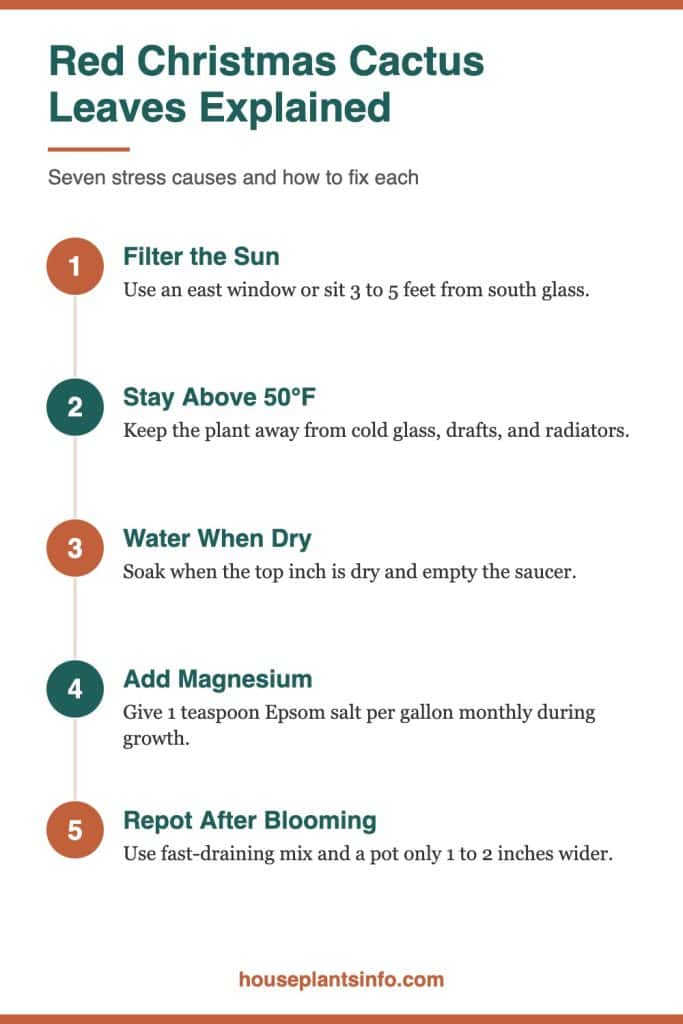
In a west or south window, set the plant 3 to 5 feet back from the glass or behind a sheer curtain.
If you grow under a grow light, keep it roughly 12 to 18 inches above the plant and run it 10 to 12 hours a day. Too close or too long produces the same reddening as a hot window.
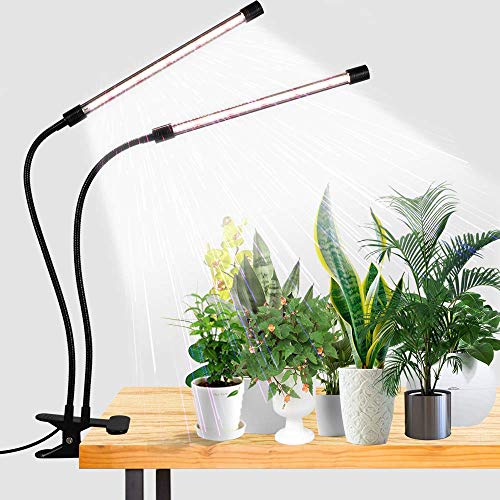
Sophia’s tip: Rotate the pot a quarter turn each time you water. If only one side is red, that confirms light as the cause, and rotating helps the plant even out while you find a better spot.
Recovery Timeline
Mildly reddened segments often regain green over several weeks once light is corrected. Heavily stressed or scorched segments may stay discolored, but new growth will come in green. You can trim damaged segments off after the plant blooms.
Cold Windows and Drafts: Stabilize the Temperature
Cold triggers red pigments quickly, especially when nights drop below about 50°F. In winter, the glass itself chills the air around a windowsill plant, even in a heated apartment.
The Ideal Range
Christmas cactus does best between roughly 60 and 70°F during the day. Cooler nights of about 55 to 65°F in fall actually help set flower buds, so a little coolness is useful. Trouble starts when temperatures dip into the 40s or swing sharply.
A light blush in fall that fades after blooming can simply reflect cool, bud-setting nights. Deep red paired with mushy or shriveled segments means real cold damage.
Drafts From Both Directions
Indoors, stress comes from both cold and hot air. Leaky windows, exterior doors, and AC vents chill the plant, while radiators and forced-air registers blast it with hot, dry air. Both cause stress pigments and can lead to bud and segment loss.
Keep the pot at least a few feet from heat sources and out of direct airflow. If you also see segments falling off, the guide on Christmas cactus dropping leaves explains the overlap between temperature shock and leaf drop.
Quick Fixes for a Cold Sill
- Pull the plant back 6 to 12 inches from the glass on winter nights.
- Do not trap the plant between a closed curtain and the window overnight.
- Set the pot on a cork mat or wood trivet so roots do not sit on cold stone or metal.
- Avoid moving the plant between very different rooms while it is budding.
Watering Problems: Drought Stress and Root Rot
Both underwatering and overwatering can turn segments red. Drought stresses the plant directly, while overwatering rots the roots so the plant cannot take up water at all.
Signs of Underwatering
A thirsty Christmas cactus has red-tinged segments that look thin, wrinkled, or slightly shriveled. The soil pulls away from the pot edges, and the pot feels light when you lift it. Plants near radiators dry out much faster in winter.
Water when the top inch of soil is dry, soaking thoroughly until water runs from the drainage hole. Empty the saucer after 15 minutes. Unlike desert cacti, this plant should never stay bone dry for weeks.
Signs of Overwatering
Overwatered plants often show dull red or yellowish segments that feel soft rather than firm. The base of the stem may darken, and the soil smells sour. If segments feel squishy, read more about Christmas cactus leaves soft to separate mild overwatering from rot.
Drooping is another clue, but it appears with both extremes. The guide on why are the leaves on my Christmas cactus limp helps you decide which direction your plant has gone.
Checking for Root Rot
Slide the plant out of its pot. Healthy roots are firm and white to light tan. Rotted roots are brown or black, mushy, and may slip off when touched.
If you find rot, trim away every damaged root with clean scissors, let the cuts dry for a few hours, and repot into fresh, fast-draining mix. Wait about a week before watering lightly. Badly rotted plants can be saved by rooting healthy segments.
Sophia’s tip: In a Chicago winter with the heat running, check the soil every 4 to 5 days rather than watering on a fixed schedule. Indoor dryness changes week to week, and the soil tells you more than the calendar.
Humidity Matters Too
Christmas cactus prefers moderate humidity, around 40 to 60 percent. Winter indoor air often falls well below that. Grouping plants together or placing the pot on a pebble tray reduces stress without adding water to the root zone.
Low Magnesium or Phosphorus: Fix the Feeding Routine
Nutrient shortages, especially magnesium, are a well-known cause of reddish segments. Christmas cactus has a higher magnesium need than many houseplants, and potting mixes run low after a year or two.
Telling Nutrient Stress Apart
Nutrient-related reddening tends to be even across the plant rather than concentrated on the sunny side. The plant may grow slowly, produce small new segments, or bloom poorly. Light and temperature will check out fine.
Phosphorus shortage tends to push the color toward deep red or purple. For more on that darker shade, see why do Christmas cactus leaves turn purple.
How to Feed Correctly
During active growth, roughly spring through late summer, feed every 2 to 4 weeks with a balanced houseplant fertilizer diluted to half strength. Stop or reduce feeding in fall when buds are forming, and resume after flowering ends.
A common grower practice is a magnesium supplement of about 1 teaspoon of Epsom salt dissolved in a gallon of water, given once a month during the growing season. Do not use it on the same day as regular fertilizer.
Avoid Overcorrecting
More fertilizer will not fix red segments faster. Too much causes salt buildup, which burns roots and creates its own stress coloring. If you see white crust on the soil or pot rim, flush the pot with plain water several times over a few minutes.
Sophia’s tip: If your tap water is very hard, flush the pot thoroughly every couple of months. Mineral buildup can block nutrient uptake even when you feed on schedule.
Root-Bound or Poorly Draining Pot: When and How to Repot
A cramped root system or dense, soggy soil limits water and nutrient uptake, which shows up as red segments. Christmas cactus likes a snug pot, but there is a limit.
Signs It Is Time to Repot
- Roots circle the inside of the pot or grow out of the drainage hole.
- Water runs straight through without soaking in, or sits on the surface for a long time.
- The mix has broken down into a dense, muddy texture.
- It has been more than 3 years since the last repot.
Most plants need repotting every 2 to 3 years. A slightly root-bound plant often blooms well, so do not rush to upsize.
The Right Soil and Pot
Use a light, fast-draining mix. A good blend is about two parts regular potting mix to one part perlite and one part orchid bark, or a cactus mix lightened with bark. The plant’s roots need air as much as moisture.
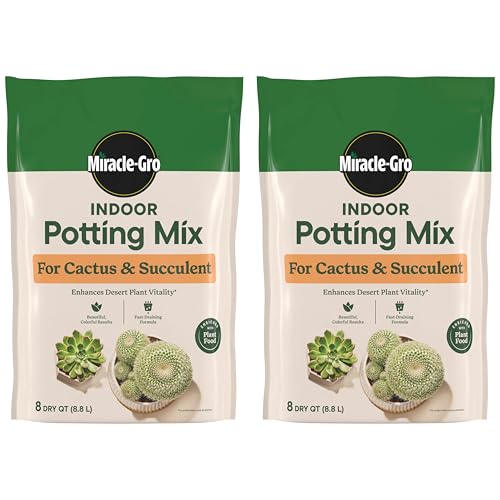
Choose a pot only 1 to 2 inches wider than the current one, always with a drainage hole. An oversized pot holds too much wet soil around the roots, which invites rot.
Timing and Method
Repot in late winter or spring, after flowering has finished. Repotting while the plant is budding often causes bud drop. Loosen the old mix gently, trim dead roots, set the plant at the same depth, and water lightly.
Expect a mild blush for a few weeks afterward as the roots settle. Keep the plant out of direct sun during that time to limit added stress.
Pests and Disease That Mimic Stress Color
Pests and fungal diseases weaken the plant and can trigger reddening, often alongside spots, sticky residue, or collapse. Inspect closely before assuming the color is purely environmental.
Common Pests
Mealybugs look like small white cottony clumps where segments join and around the roots. Scale appears as tan or brown bumps stuck to the segments. Spider mites leave fine stippling and webbing, especially in dry winter air near heat.
Wipe mealybugs and scale off with a cotton swab dipped in rubbing alcohol. Follow up with insecticidal soap every 7 to 10 days for several weeks, covering both sides of the segments and the joints.
Fungal Problems
Root and stem rot fungi thrive in soggy soil and cool temperatures. Early signs include red or yellow segments, a darkened, soft base, and wilting even though the soil is wet. Fungus gnats hovering around the pot often signal overly damp soil.
Prevention is mostly about watering and drainage. Once the base of the stem turns mushy, the best option is to root healthy segments in fresh mix.
Is the Red Ever Normal?
Yes, some red is perfectly healthy. Many Schlumbergera cultivars, especially those with red, magenta, or purple flowers, naturally show a reddish tint along segment edges. New segments may emerge reddish and green up as they mature.
If the plant is firm, growing, blooming, and the color is limited to edges, it may simply be the plant’s genetics.
Pet Safety
The ASPCA lists Christmas cactus as non-toxic to cats and dogs. Chewed segments may still cause mild stomach upset, so keep the plant out of reach of curious pets and young kids.
Your Next Steps
- Check soil moisture and the overnight temperature by the window before changing anything else.
- Move the plant to an east window or 3 to 5 feet back from a south or west window.
- Keep it away from radiators, heat registers, AC vents, and cold glass in winter.
- Water when the top inch of soil is dry, and always empty the saucer.
- Feed at half strength during spring and summer, with a monthly magnesium supplement if the reddening is even across the plant.
- Inspect roots and repot into a fast-draining mix after flowering if the plant is root-bound or the soil stays soggy.
Common Questions About Christmas Cactus Leaves Turning Red
Will red Christmas cactus leaves turn green again?
Mildly reddened segments often turn green within several weeks once the stress is corrected. Segments that are scorched, shriveled, or mushy usually stay damaged. New growth is the best sign that your fix is working.
Should I cut off red segments?
Not unless they are soft, rotting, or badly scorched. Red but firm segments still photosynthesize and help the plant recover. If you want to tidy the shape, prune after flowering by twisting off segments at a joint.
Can too much light cause red leaves even in winter?
Yes, especially in a south or west window where low winter sun shines straight through the glass for hours. Cold roots combined with bright sun make the stress worse. Pulling the plant back from the window usually solves both issues.
Does Epsom salt fix red Christmas cactus leaves?
It can help if magnesium shortage is the cause, which is likely when the reddening is even and light and temperature are fine. Use about 1 teaspoon per gallon of water once a month during the growing season. It will not fix sun, cold, or watering problems.
Is it normal for my Christmas cactus to turn red before blooming?
A light blush in fall is common, since cool nights and shorter days help set buds and can also trigger some pigment. As long as the plant stays firm and buds form, there is no need to worry. Avoid moving it during this period so buds do not drop.

Hi! I’m Sophia, and I love plants – especially an expert in growing house plants. I stay in Chicago, United States of America, and through my blog and social media platforms, provide tips and tricks on how to grow healthy, vibrant plants indoors. Check out more here.