
The last pink and red flowers on your Christmas cactus are wilting on the windowsill, a few have dropped onto the sill, and the plant suddenly looks tired.
The short version: Pinch off the spent flowers, then give the plant a cool, lightly watered rest for about 6 to 8 weeks with no fertilizer. In spring, prune, repot if needed, and resume regular feeding.
In fall, give it long nights and cool temperatures to set new buds.
This guide covers each step from the final bloom to next season’s buds, plus how to handle the problems that often show up after flowering.
At a Glance
| Factor | What it needs |
|---|---|
| Light | Bright, indirect light; an east window or a few feet back from a south or west window |
| Water | Sparingly during the post-bloom rest; when the top third of soil is dry in spring and summer |
| Temperature | 55 to 65°F during rest; 65 to 80°F in the growing season; 50 to 60°F nights to set buds |
| Humidity | Moderate, around 40 to 60 percent; dry radiator heat causes stress |
| Soil | Loose, fast-draining mix, such as cactus mix blended with orchid bark or perlite |
| Pet safety | Non-toxic to cats and dogs according to the ASPCA |
| Difficulty | Easy, as long as you avoid overwatering |
What to Do With Christmas Cactus After Flowering, Month by Month
Knowing what to do with Christmas cactus after flowering mostly comes down to timing. The plant needs a short rest first, then a growing season, then a cool, dark-night period that triggers new buds.
The key thing to understand is that Christmas cactus (Schlumbergera) is not a desert plant. It grows on trees and rocks in tropical mountain forests. It likes more water than a typical cactus, but its roots rot quickly in soggy soil.
The Yearly Cycle in One View
| Time of year | Stage | Your main job |
|---|---|---|
| Late December to January | Flowering ends | Remove spent blooms |
| January to March | Rest | Water lightly, keep cool, no fertilizer |
| March to May | New growth starts | Prune, repot if needed, start feeding |
| June to August | Active growth | Water and feed regularly, bright indirect light |
| September to November | Bud set | Long nights, cooler temps, stop feeding |
| November to December | Blooming | Steady care, no moving the plant |
If your plant blooms closer to Thanksgiving, shift the schedule a few weeks earlier. Thanksgiving cactus and Christmas cactus follow the same cycle, just on slightly different calendars.

Supplies That Make the Season Easier
During the rest period, a soil moisture meter takes the guesswork out of watering. Push the probe into the middle of the root zone and water only when it reads dry to slightly moist.
This matters most in winter, when the surface dries fast from forced-air heat but the bottom stays wet.
A pair of clean pruning snips is also helpful in spring. Most segments twist off by hand, but snips give a cleaner cut on thick, woody stems near the base.
Should You Remove the Spent Flowers?
Yes. Gently remove wilted flowers once they shrivel so the plant stops putting energy into them and the pot stays tidy.
How to Deadhead Without Damage
Hold the segment the flower is attached to with one hand. With the other hand, pinch or gently twist the faded flower at its base where it joins the segment. It should come away easily.
If a flower resists, wait a few days. Pulling too hard can tear the segment or knock off neighboring buds that have not opened yet.
Clean Up the Pot
Pick fallen petals off the soil surface. Decaying flower parts trap moisture and can attract fungus gnats, which are already common indoors in winter.
Check under the leaves as you work. Mealybugs look like small tufts of white cotton tucked into the joints between segments. Dab any you find with a cotton swab dipped in rubbing alcohol.
Don’t Rush the Last Buds
Christmas cactus flowers open over several weeks, not all at once. If some buds are still closed, keep the plant where it is and stick to its normal care until every flower has finished. Moving it now is a common reason buds drop.
How Long Should a Christmas Cactus Rest After Blooming?
Give it about 6 to 8 weeks of rest after the last flower fades. During this time, water less, keep it a little cooler, and skip fertilizer completely.
What the Rest Period Looks Like
A resting plant does not grow much. It may look the same for weeks, which is normal. The segments should stay firm and green, even if slightly duller than usual.
Aim for temperatures around 55 to 65°F if you can. A cool bedroom, a spot near (but not touching) a north or east window, or an unheated sunroom that stays above 50°F all work.
Watering During Rest
Water only when the top half of the soil feels dry. In most apartments, that means every 2 to 4 weeks, depending on pot size, heat, and light.
When you do water, water thoroughly until it drains from the bottom. Empty the saucer after 10 to 15 minutes. Never let the pot sit in standing water.
Keep It Away From Heat and Drafts
Radiators, heating vents, and space heaters dry the plant out fast and stress the roots. Keep it at least 3 feet from any heat source.
Cold glass is the other risk. Leaves pressed against a window in January can chill and turn reddish. Leave a few inches of space between the plant and the pane.
Sophia’s tip: If your apartment runs hot in winter, set the pot on a tray of pebbles with a little water below the pebble line. It adds a small amount of humidity without keeping the soil wet.
When and How to Prune After Blooming
Prune at the end of the rest period, usually in late winter or early spring, when the plant starts showing new growth. Pruning now encourages branching, and more branch tips mean more flowers next season.
Why Pruning Helps
Christmas cactus blooms at the tips of its stems. Each time you remove a segment, the plant usually sends out two or more new segments from that point. A fuller plant gives you more places for buds to form.
Pruning also fixes a plant that has grown lopsided from facing one window or has long, dangling stems that break easily.
How Much to Remove
Remove 1 to 3 segments from the end of each stem. You can cut back as much as a third of the plant in one season, but lighter pruning is gentler and still gives good results.
Twist segments off at the joint, or use clean snips to cut just above a joint. Do not cut through the middle of a segment, since the remaining stub often shrivels.
Turn Cuttings Into New Plants
Pieces with 2 to 4 segments root easily. Let the cut ends dry for 1 to 2 days until they callus over.
Insert the bottom segment about half an inch deep in a small pot of slightly moist cactus mix. Keep it in bright, indirect light and water lightly. Roots usually form in about 3 to 6 weeks.

Sophia’s tip: Plant several cuttings in one small pot, spaced about an inch apart. The new plant fills out much faster and looks fuller by its first bloom.
Should You Repot a Christmas Cactus After Flowering?
Only if it needs it. Christmas cactus flowers best when slightly root-bound, so most plants need repotting only every 2 to 3 years, and spring is the best time.
Signs It Is Time
- Roots are growing out of the drainage hole or circling heavily at the bottom.
- Water runs straight through without soaking in.
- The soil has broken down and stays soggy or smells sour.
- The plant is top-heavy and tips over.
If none of these apply, leave it in its pot. Repotting a healthy plant every year can reduce flowering.
How to Repot
Choose a pot only 1 to 2 inches wider than the current one, with a drainage hole. A pot that is too large holds extra water and raises the risk of root rot.
Use a loose, fast-draining mix. A blend of cactus mix with orchid bark or perlite mimics the airy conditions the plant grows in naturally. Plant it at the same depth it was growing before.
For a step-by-step look at timing and technique, see this guide on when to transplant christmas cactus.
Aftercare
Wait about a week before watering a freshly repotted plant if any roots were damaged. Keep it out of direct sun for a couple of weeks while it settles in.
How to Care for Christmas Cactus in Spring and Summer
Once the rest period ends, treat the plant as an actively growing houseplant. Give it bright, indirect light, regular water, and diluted fertilizer from spring through summer.
Light
An east window is ideal. A south or west window works if the plant sits a few feet back or behind a sheer curtain. Direct afternoon sun can scorch the segments.
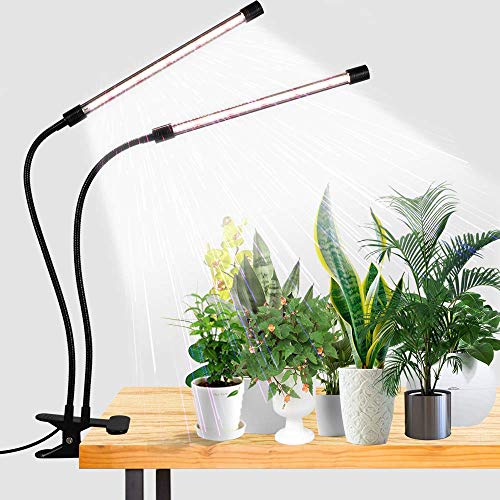
If your only window faces north, a grow light placed about 12 inches above the plant for 10 to 12 hours a day keeps growth compact and green.
Watering
Water when the top third of the soil is dry, usually every 1 to 2 weeks in summer. The plant drinks more as days get longer and warmer.
Air conditioning dries indoor air too. Keep the plant out of the direct stream of an AC vent, which can cause wilting and leaf drop.
Feeding
Start fertilizing when you see new growth. A balanced, water-soluble houseplant fertilizer mixed at half strength every 2 to 4 weeks works well.
Always water the plant first, then fertilize, so the roots are not dry. Stop feeding in late summer so the plant can shift its energy toward setting buds. You can find a full schedule in this guide on when to fertilize christmas cactus.
Summering Outdoors
If you have a balcony or patio, the plant can spend summer outside once nights stay above 50°F. Choose a shady or dappled spot, since full sun will burn it.
Bring it back inside before nights dip below 50°F. Check for pests before moving it indoors.
Common Post-Bloom Problems and the Fix for Each
Many problems show up in the weeks after flowering, usually because winter conditions or watering habits stress the plant. Most are easy to correct once you know the cause.
Limp or Soft Segments
Soft, wrinkled segments usually mean the roots are not delivering water. That happens from underwatering, but also from overwatering, which rots roots so they cannot absorb moisture.
Check the soil. If it is bone dry, soak the plant thoroughly. If it is soggy, unpot it, trim any brown mushy roots, and repot in fresh, dry mix. More detail is in this guide on christmas cactus leaves soft.
Reddish or Purple Tints
Segments that turn red or purple are a stress response. Common causes include too much direct sun, cold glass, low phosphorus or magnesium, and roots that are too crowded or too dry.
Move the plant a few feet back from the window and check its roots and soil. This guide on why are christmas cactus leaves turning red walks through each cause.
Pink Tinged Edges
A light pink blush on the edges often appears during the cool rest period and in bright light. Mild color usually fades as the plant resumes growth in spring.
If the pink spreads or the segments also shrivel, look at light intensity and watering first. Read more about christmas cactus leaves turning pink.
Segments Dropping Off
A few segments falling after bloom is normal. Heavy drop usually points to overwatering, a sudden temperature change, or a draft. Keep conditions steady and let the soil dry more between waterings.
Quick Reference
| Symptom | Likely cause | Fix |
|---|---|---|
| Limp, wrinkled segments | Under or overwatering | Check soil, adjust watering, inspect roots |
| Red or purple segments | Too much sun, cold, root stress | Move back from window, check roots |
| Pink edges | Bright light, cool temps | Usually harmless; reduce direct light |
| Segment drop | Overwatering, drafts | Let soil dry more, keep away from vents |
| White crust on soil | Fertilizer salt buildup | Flush soil with plain water |
How to Get Your Christmas Cactus to Bloom Again
Christmas cactus sets buds in response to long nights and cool temperatures in fall. Give it about 12 to 14 hours of uninterrupted darkness and nights around 50 to 60°F for roughly 6 to 8 weeks, starting in late September or early October.
Long Nights
Lamps, TV light, and streetlights can interrupt the dark period. Move the plant to a room you do not use at night, or cover it loosely with a box from early evening until morning.
Keep it in bright, indirect light during the day. The plant still needs daytime light to have the energy to form buds.
Cool Temperatures
Cool nights alone can trigger buds, even without strict darkness. A spot near a cool window, kept a few inches from the glass, often works well in a Chicago apartment in October.
Avoid temperatures below about 45°F, which can damage the plant. Keep it far from radiators once the heat comes on.
Water Less in Fall
Cut back slightly on watering as fall begins. Let the top half of the soil dry before watering again. Slightly drier conditions help signal the plant to bloom.
Once buds appear, return to regular watering so the buds do not dry and drop.
Protect the Buds
Buds drop easily when the plant is moved, turned, or exposed to drafts or sudden temperature swings. Once buds form, pick a spot and leave it there until flowering ends.
Sophia’s tip: Before buds form, mark the side of the pot that faces the window with a small piece of tape. If you need to move the plant later, you can set it back in the same orientation so the buds are not stressed.
Common Myths
- Myth: It needs total neglect. Truth: It needs regular water in summer, just not soggy soil.
- Myth: More fertilizer means more flowers. Truth: Feeding in fall can cause bud drop.
- Myth: It only blooms once. Truth: A healthy plant can rebloom every year for decades.
Pet Safety
Christmas cactus is listed by the ASPCA as non-toxic to cats and dogs. Chewing on the segments can still cause mild stomach upset, so keep it on a shelf if your pet likes to nibble plants.
Your Next Steps
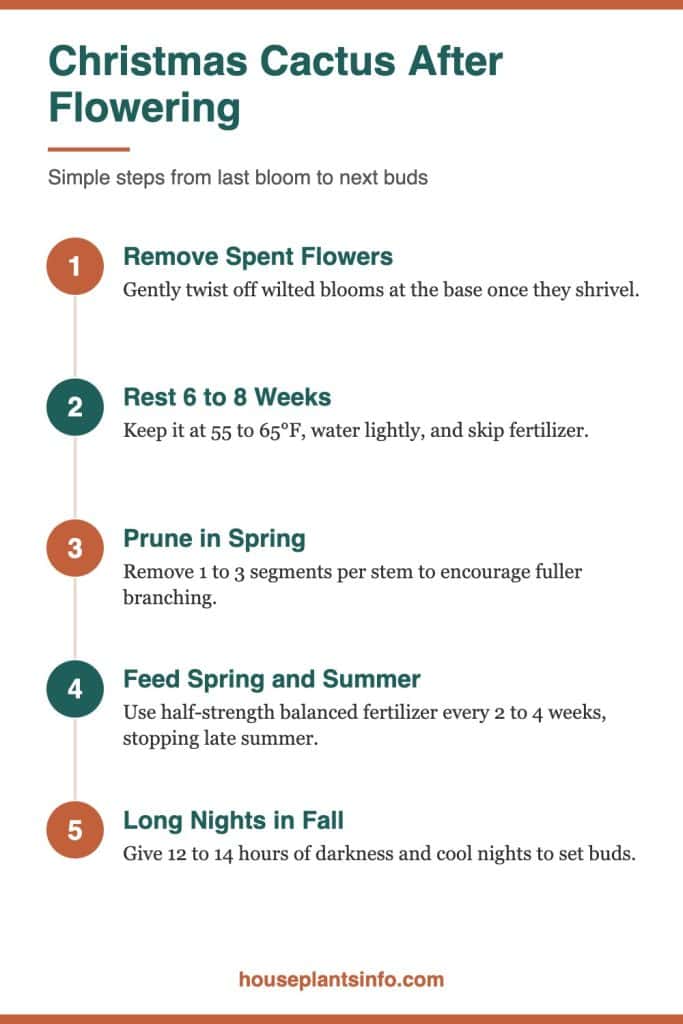
- Pinch off wilted flowers and clear fallen petals from the soil.
- Move the plant to a cool spot around 55 to 65°F, away from radiators and cold glass.
- Water only when the top half of the soil is dry for the next 6 to 8 weeks, with no fertilizer.
- Mark your calendar for early spring to prune 1 to 3 segments per stem and check whether it needs a new pot.
- Start half-strength fertilizer when new growth appears and stop in late summer.
- Set a reminder for late September to begin long nights and cooler temperatures.
Common Questions About Christmas Cactus After Flowering
Should I cut back my Christmas cactus after it blooms?
Yes, but wait until the rest period ends, usually late winter or early spring. Remove 1 to 3 segments from each stem by twisting at the joint. This encourages branching and more flowers next season.
Can a Christmas cactus bloom twice a year?
Sometimes. If conditions stay cool with long nights, a plant may produce a smaller second flush in late winter or spring. You cannot reliably force a second bloom, but a healthy, well-rested plant is more likely to rebloom.
Should I fertilize my Christmas cactus after flowering?
Not right away. Skip fertilizer during the 6 to 8 week rest period after blooming. Resume half-strength feeding every 2 to 4 weeks once new growth appears in spring.
How often should I water a Christmas cactus after it stops blooming?
Water only when the top half of the soil is dry, which is often every 2 to 4 weeks in winter. Water thoroughly and empty the saucer afterward. Overwatering during rest is the most common cause of root rot.
Why did my Christmas cactus not bloom this year?
The most common reasons are too much light at night, temperatures that stayed too warm in fall, or fertilizing too late in the season. Moving the plant after buds form can also cause them to drop. Give it 12 to 14 hours of darkness and cool nights next fall.

Hi! I’m Sophia, and I love plants – especially an expert in growing house plants. I stay in Chicago, United States of America, and through my blog and social media platforms, provide tips and tricks on how to grow healthy, vibrant plants indoors. Check out more here.