
Your Christmas cactus sits on the windowsill with flat green segments and no buds in sight, and you are wondering whether that bottle of plant food under the sink would help.
Feeding at the right time makes a real difference in how full the plant grows and how well it blooms.
The short version: Knowing when to fertilize Christmas cactus comes down to the growing season.
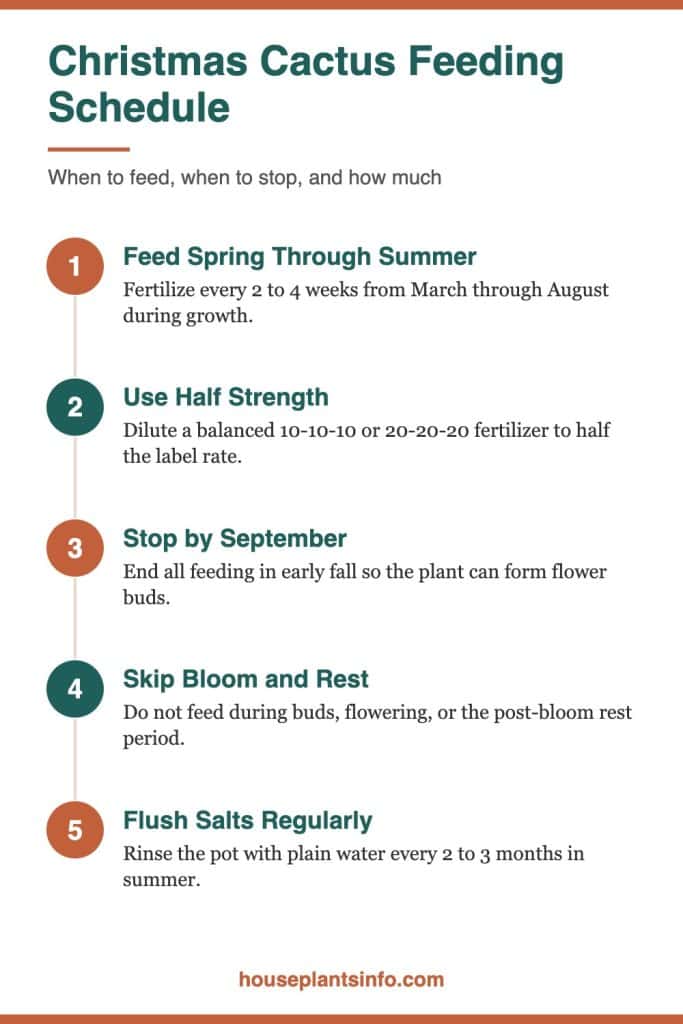
Feed every 2 to 4 weeks from early spring through late summer with a balanced fertilizer at half strength, then stop in early fall so the plant can set buds. Skip feeding during bloom and the short rest that follows.
This guide covers timing, fertilizer choice, dosage, step-by-step feeding, and how to read signs of too much or too little.
At a Glance
| Factor | What it needs |
|---|---|
| Light | Bright, indirect light; an east window or a few feet back from a south or west window |
| Water | Water when the top 1 inch of soil is dry; never let it sit in water |
| Humidity | Moderate, about 40% to 60%; dry winter air from heating slows growth |
| Temperature | 60°F to 70°F most of the year; 50°F to 60°F nights in fall for bud set |
| Soil | Fast-draining, slightly acidic mix, such as cactus mix blended with orchid bark or perlite |
| Pet safety | Non-toxic to cats and dogs according to the ASPCA |
| Difficulty | Easy to moderate; reblooming takes attention to timing |
When to Fertilize Christmas Cactus Through the Year
Fertilize from roughly March or April, when new segments start forming, through late August. Stop by early September so the plant shifts its energy from leafy growth to flower buds.
Christmas cactus is a forest cactus, not a desert one. In nature it grows on trees in humid, shaded forests, so it actively grows through the warm months and slows down in the cool, short days of fall. Your feeding schedule should follow that rhythm.
Before each feeding, check that the plant is actually growing and the soil is evenly moist, not bone dry.
A soil moisture meter pushed a couple of inches into the pot gives you a quick read, and a measuring spoon keeps your fertilizer dose consistent from one feeding to the next.
Spring: Starting Up Again
Once you see small, pale green segments forming at the tips, the plant is ready for food. In a Chicago apartment, this often lines up with longer days in March or April, when the light through an east or south window gets noticeably stronger.
Start with a quarter-strength feeding for the first application. This eases the roots back into regular nutrients after the winter slowdown.
Summer: Peak Feeding Season
June through August is when the plant puts on the most new growth. Feed every 2 to 4 weeks at half strength, depending on how fast it grows and how warm your space is.
A plant in a bright window with steady warmth grows faster and can handle feeding every 2 weeks. A plant in lower light or near an air conditioner vent grows slower, so every 3 to 4 weeks is plenty.
Fall: Time to Stop
Stop fertilizing in late August or early September. This is when the plant needs cooler nights, around 50°F to 60°F, and 12 to 14 hours of darkness each night to form buds.
Continued feeding in fall encourages soft new segments instead of flowers. Plenty of growers who struggle with reblooming are simply feeding too late into the season.
Winter: Bloom and Rest
From bud formation through flowering, skip fertilizer entirely. After the last flowers fade, the plant typically rests for 4 to 8 weeks, and it does not need food during that time either.
For a full breakdown of pruning, watering, and light adjustments in this phase, see this guide on what to do with christmas cactus after flowering.

| Season | Months (approximate) | Feeding |
|---|---|---|
| Early spring | March to April | Begin at quarter strength once new growth appears |
| Late spring to summer | May to August | Half strength every 2 to 4 weeks |
| Early fall | September to October | Stop feeding; focus on cool nights and darkness |
| Late fall to winter | November to January | No feeding during buds and bloom |
| Post-bloom rest | January to March | No feeding; resume when growth restarts |
Which Fertilizer Works Best for Christmas Cactus?
A balanced, water-soluble houseplant fertilizer works well, such as one labeled 10-10-10 or 20-20-20. Diluted to half strength, it gives steady nutrition without the salt buildup that damages fine roots.
Balanced Formulas for Growth
The three numbers on the label stand for nitrogen, phosphorus, and potassium. Nitrogen supports green segments, phosphorus supports roots and flowers, and potassium supports overall health and stress tolerance.
During spring and summer, a balanced ratio covers everything the plant needs. Christmas cactus does not require a special cactus fertilizer, and many desert cactus formulas are weaker than this plant can use during active growth.
Bloom Formulas Late in Summer
Some growers switch to a fertilizer with a higher middle number, such as 10-30-10 or similar, for the last one or two feedings in late summer. The extra phosphorus may support bud development, although a balanced formula alone is enough for most plants.
If you switch, keep it to half strength and still stop by early September. A bloom formula fed into October has the same problem as any late feeding.
Liquid Versus Slow-Release
I recommend liquid fertilizer for Christmas cactus because you control exactly when feeding starts and stops. Slow-release granules keep releasing nutrients for weeks or months, which can carry feeding into the bud-setting window.
If you prefer granules, apply them only in spring and use a light hand. Never add them in late summer or fall.
A Note on Magnesium
Christmas cactus is often described as having a higher need for magnesium than many houseplants. A common practice is to dissolve 1 teaspoon of Epsom salt (magnesium sulfate) in 1 gallon of water and use it once a month during the growing season.
Do not apply it the same week as your regular fertilizer. Alternate them, and skip Epsom salt if your fertilizer already lists magnesium on the label.
Sophia’s tip: Mix your fertilizer in a gallon jug and label it with the dilution and date. Leftover diluted fertilizer can be used at the next watering within a week, which keeps your dosing even and saves measuring every time.
How Much and How Often Should You Feed It?
Use half the strength listed on the label, every 2 to 4 weeks during spring and summer. If the label suggests 1 teaspoon per gallon, use half a teaspoon per gallon instead.
Why Half Strength
Christmas cactus has fine, shallow roots built for life on tree bark, where nutrients arrive in small amounts. Full-strength fertilizer can burn those roots and leave salts in the potting mix.
Half strength still delivers steady nutrition. You will see healthier growth from consistent light feeding than from occasional heavy doses.
Matching Frequency to Your Conditions
Indoor conditions change how fast the plant uses nutrients. Use this as a starting point:
- Bright window or grow light, warm room: every 2 weeks
- Medium light, average room temperature: every 3 weeks
- Lower light, cooler room, or near AC drafts: every 4 weeks
- Small plant in a pot under 5 inches: every 3 to 4 weeks
If you water weekly, an easy pattern is to fertilize at every second or third watering and use plain water in between.
Pot Size and Plant Age
Young plants and newly rooted cuttings need less food than mature plants. For cuttings under a few months old, use quarter strength once a month until they show steady new growth.
Large, older plants in 6 to 8 inch pots can handle every-2-week feeding in summer, as long as they are growing actively and the pot drains well.
| Plant situation | Strength | Frequency |
|---|---|---|
| Mature, actively growing | Half strength | Every 2 to 3 weeks |
| Low light or cool room | Half strength | Every 4 weeks |
| Young cutting | Quarter strength | Monthly |
| Recently repotted | None | Wait 4 to 6 weeks |
| Budding or blooming | None | Stop entirely |
How to Fertilize a Christmas Cactus Step by Step
Water lightly first, then apply diluted fertilizer to moist soil until a little drains from the bottom. Feeding a dry plant is the most common way roots get burned.
Before You Feed
Check the soil with your finger or a moisture meter. If the top inch is dry, give the plant a small drink of plain water and wait about 30 minutes.
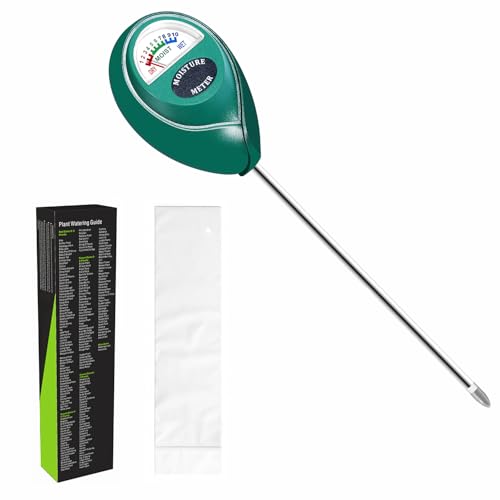
Moist soil spreads fertilizer evenly and protects the roots. Dry soil absorbs nutrients in a concentrated rush.
Applying the Fertilizer
Follow these steps for each feeding:
- Mix the fertilizer at half strength in room-temperature water.
- Pour slowly around the soil surface, avoiding the segments.
- Stop once a small amount runs out of the drainage hole.
- Empty the saucer or cachepot after 10 to 15 minutes.
- Return the plant to its usual spot away from radiators and heat vents.
Cold tap water straight from the faucet can shock tropical roots, especially in a Chicago winter-to-spring transition. Let it sit until it reaches room temperature.
Flushing Out Salt Buildup
Every 2 to 3 months during the growing season, flush the pot with plain water. Pour water slowly through the soil until it runs freely out the bottom for about a minute.
This washes away mineral salts from fertilizer and tap water. A white crust on the soil surface or pot rim is a sign it is time to flush.
Sophia’s tip: Flush in the sink or tub rather than on the windowsill. Let the pot drain fully for 20 to 30 minutes before returning it, so the roots never sit in collected water.
Should You Fertilize During Bud Set and Bloom?
No. Stop feeding by early September and do not resume until the plant has finished blooming and rested.
Why Fall Feeding Backfires
Bud formation depends on cool nights, long hours of darkness, and slightly drier soil. Fertilizer, especially nitrogen, pushes the plant toward leafy growth and works against those signals.
Indoors, the bigger challenge is often light at night. A lamp, TV, or streetlight shining on the plant in the evening can delay buds, even when your feeding schedule is right.
Feeding Can Cause Bud Drop
Changes during bloom, including fertilizer, moving the pot, or sudden temperature swings, can cause buds to drop. Once buds appear, keep everything consistent.
Place the plant away from forced-air heat vents and opening doors. Dry, warm air from a radiator dries buds out quickly.
Holiday Cactus Varieties
Thanksgiving cactus and Easter cactus are close relatives with similar needs but different bloom times. Thanksgiving types bloom in November, so stop feeding them by late August.
Easter cactus blooms in spring and follows a different rhythm. If you are unsure which you have, the safe default is stopping feeding in early fall and resuming once active growth returns.
When to Resume Feeding After Repotting or a Rest Period
Wait 4 to 6 weeks after repotting before fertilizing, and resume after the post-bloom rest only when you see new segments. Fresh potting mix already contains some nutrients, and disturbed roots need time to recover.
After the Post-Bloom Rest
After flowering, cut back on water slightly and keep the plant in bright, indirect light. Signs the rest is ending include small new segments at the tips and slightly faster drying soil.
Begin with a quarter-strength feeding, then move to half strength a few weeks later once growth is steady.
After Repotting
Christmas cactus prefers being slightly root-bound and only needs a new pot every 2 to 3 years. The best timing is usually spring, after the plant has finished blooming and rested.
Learn more about when to transplant christmas cactus to plan around both bloom and feeding.
Pause fertilizer for 4 to 6 weeks after moving it into a new pot. Feeding damaged roots too soon can make limp segments and root rot more likely.
After Stress or Moving
If you just brought the plant home from a store or moved it to a new window, hold off on fertilizer for 2 to 4 weeks. Let it adjust to your light and temperature first.
The same goes for a plant recovering from overwatering or root rot. Fertilizer cannot fix damaged roots and can make things worse.
Signs of Too Much or Too Little Fertilizer
Over-fertilizing usually shows as limp, wilted, or brown-edged segments and a white crust on the soil. Under-feeding tends to show as slow growth, pale or yellowish segments, and weak blooming.
Too Much Fertilizer
Watch for these symptoms:
- White mineral crust on the soil surface or pot rim
- Brown, crispy tips or edges on segments
- Wilting even though the soil is moist
- Segment drop with no other clear cause
- Root tips that look dark or shriveled
If you spot these signs, flush the soil thoroughly with plain water and stop feeding for a month. In severe cases, repot into fresh mix.
Too Little Fertilizer
Underfed plants grow slowly and may produce few or no new segments in summer. Segments may look pale green or yellowish instead of rich green.
Low feeding alone rarely stops blooming entirely, but a well-fed plant through spring and summer usually produces more buds in fall.
Color Changes and Texture Problems
Reddish or purplish tinting is often caused by too much direct sun, cool temperatures, or root stress, but nutrient shortages such as low magnesium can also play a part.
This guide on why are christmas cactus leaves turning red explains how to tell these causes apart.
A softer pink blush has similar triggers, and you can check the details in this guide to christmas cactus leaves turning pink.
If segments feel limp or squishy rather than firm, look at watering and roots before fertilizer. Soft growth usually points to overwatering, underwatering, or root rot, which is covered in this guide on christmas cactus leaves soft.
| Symptom | Likely feeding cause | Fix |
|---|---|---|
| White crust on soil | Salt buildup from fertilizer | Flush with plain water |
| Brown, crispy edges | Too strong or too frequent | Dilute further, feed less often |
| Pale or yellowish segments | Low nitrogen or magnesium | Resume half-strength feeding |
| Slow summer growth | Underfeeding or low light | Feed regularly, improve light |
| Lots of leaves, no buds | Feeding too late in fall | Stop by early September |
Sophia’s tip: Before changing your fertilizer routine, move the plant within 2 to 3 feet of a bright east window for a few weeks. Many feeding problems indoors are really light problems.
Pet Safety
According to the ASPCA, Christmas cactus is non-toxic to cats and dogs. Fertilizer is another matter, so store concentrated fertilizer and Epsom salt out of reach of pets and kids, and wipe up spills promptly.
Your Next Steps
- Check your calendar: if it is between March and August and the plant is growing, start or continue half-strength feeding every 2 to 4 weeks.
- Mark early September as your stop date for all fertilizer, including bloom formulas and Epsom salt.
- Inspect the soil surface for white crust and flush the pot with plain water if you see any.
- Move the plant away from radiators, heat vents, and AC drafts, and place it in bright, indirect light.
- In fall, give the plant cool nights around 50°F to 60°F and 12 to 14 hours of uninterrupted darkness.
- After blooming ends, wait until new segments appear before resuming feeding at quarter strength.
Common Questions About Fertilizing Christmas Cactus
Can I fertilize my Christmas cactus while it is blooming?
No, skip fertilizer from the time buds appear until flowering ends and the plant rests. Feeding during bloom can trigger bud drop and does not improve the flowers. Resume once new growth starts in spring.
Is cactus fertilizer good for Christmas cactus?
It can work, but a balanced houseplant fertilizer at half strength is usually a better fit. Christmas cactus is a forest cactus with different needs from desert species. Many desert cactus formulas are lower in nutrients than this plant uses during active growth.
How often should I use Epsom salt on Christmas cactus?
A common approach is 1 teaspoon per gallon of water, once a month during spring and summer. Alternate it with your regular fertilizer rather than using both in the same week. Skip it if your fertilizer already contains magnesium.
Why is my Christmas cactus not blooming even though I fertilize it?
Blooming depends more on cool nights and long darkness in fall than on fertilizer. Feeding into September or October can actually prevent buds. Stop by early September and keep the plant away from evening lamps and warm heat vents.
Can I use coffee grounds or eggshells instead of fertilizer?
These do not provide balanced, reliable nutrition for a potted plant. Coffee grounds can compact the soil and encourage mold, and eggshells break down too slowly to help. A diluted balanced fertilizer is the dependable choice.

Hi! I’m Sophia, and I love plants – especially an expert in growing house plants. I stay in Chicago, United States of America, and through my blog and social media platforms, provide tips and tricks on how to grow healthy, vibrant plants indoors. Check out more here.