
Your prayer plant’s leaves, usually flat and painted with red veins, are rolling inward along the edges or curling into tubes.
If you’re wondering why your prayer plant leaves are curling, the answer usually comes down to water, air, or light, and most cases can be fixed.
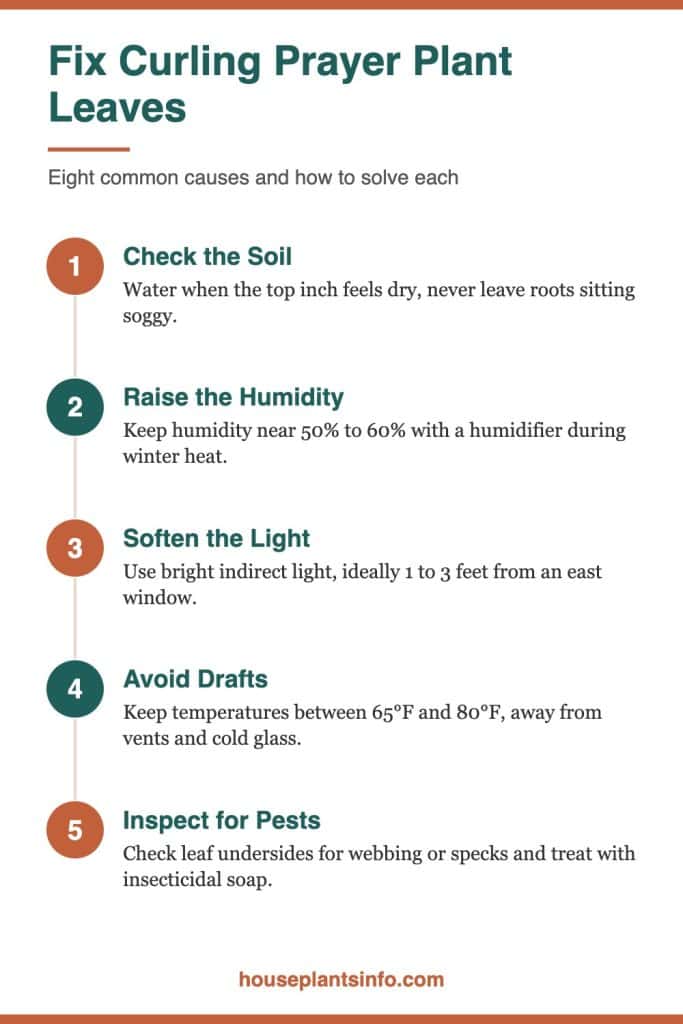
The short version: Prayer plants curl their leaves to reduce water loss. The most common triggers are soil that has dried out too far, dry indoor air, and too much direct sun. Curling can also come from cold drafts, soggy roots, mineral buildup, or pests.
This guide covers how to tell normal movement from stress, the eight main causes, and the exact fix for each one.
Check These First
- Push a finger 1 inch into the soil. If it feels completely dry, thirst is the likely cause.
- Look at where the plant sits. Within a foot of a radiator, heat vent, or AC unit means air stress.
- Check the light. Direct afternoon sun hitting the leaves can curl them within days.
- Flip a few leaves over. Fine webbing, specks, or silvery streaks point to pests.
- Note the time of day. Leaves that fold upward only at night are behaving normally.
Why Are My Prayer Plant Leaves Curling? Normal Movement vs. Stress
Some leaf movement is completely normal, but leaves that roll along their edges during the day are a sign of stress. The key is telling the plant’s daily rhythm apart from a real problem.
The Nightly Fold
Prayer plants (Maranta leuconeura) raise and fold their leaves upward in the evening, then lower them flat in the morning. This movement gives the plant its name. Folded leaves at night look like hands in prayer, not like dry, crispy tubes.
New leaves also emerge tightly rolled and unfurl over several days. A single rolled leaf at the center of a stem is just growth.
If you also spot thin stalks with small white blooms, read about prayer plant flowering, which is a separate and harmless event.

Signs of Real Trouble
Stress curling usually looks different. Leaf edges roll inward lengthwise, leaves stay curled at midday, and the curl often comes with dull color, crispy tips, or drooping stems.
Two simple instruments take the guesswork out of diagnosis. A soil moisture meter shows whether the root zone is dry or soggy below the surface, and a small digital hygrometer tells you the actual humidity next to the plant.

Reading the Pattern
Where the curl shows up is a clue. Curling across the whole plant points to water or humidity. Curling only on the side facing a window suggests light or a draft. Curling on a few leaves with spots or webbing points to pests.
Underwatering and Dry Soil: Cause + Fix
Thirst is the most common reason prayer plant leaves curl. When the soil dries out too far, the plant rolls its leaves to cut down on the surface area losing moisture.
Why It Happens So Fast
Prayer plants have fine, shallow roots and thin leaves. They prefer soil that stays lightly moist, not soaked and not bone dry. A few days of dry soil in a warm apartment can trigger curling, especially in a terracotta pot or a small container.
How to Fix Dry Soil
Water slowly and thoroughly until water drains out the bottom, then empty the saucer after 15 to 30 minutes. If the soil has pulled away from the pot edges, it may repel water at first.
For very dry soil, bottom water instead. Set the pot in a few inches of room-temperature water for 20 to 30 minutes, until the surface feels damp. Leaves often relax within a day.
Keep It From Happening Again
Water when the top 1 inch of soil feels dry. Indoors, that often means every 5 to 10 days in spring and summer and somewhat less often in winter, though your pot size and light will change the schedule.
A plastic or glazed pot holds moisture longer than unglazed clay. A potting mix with peat or coco coir plus perlite stays evenly moist while still draining.

Sophia’s tip: Lift the pot right after a full watering so you learn its heavy weight. When it feels noticeably lighter, check the top inch of soil before you water again.
Low Humidity and Forced-Air Heat: Cause + Fix
Dry air is the second big trigger, and it often causes curling even when the soil is fine. Prayer plants come from humid tropical forest floors and struggle when indoor humidity drops below about 40%.
The Winter Problem
Radiators and forced-air heat can push indoor humidity down to 20% to 30% in winter. The leaves lose water faster than the roots can replace it, so the edges roll and tips may crisp. Air conditioning in summer dries the air too.
Raising Humidity That Actually Works
Aim for 50% to 60% humidity or higher around the plant. A small cool-mist humidifier placed a few feet away is the most reliable fix, especially from October through March.
Grouping plants together creates a slightly more humid pocket. A pebble tray filled with water, with the pot sitting on the pebbles and not in the water, adds a small amount of local moisture.
Bathrooms and kitchens with a bright window are often good spots, since showers and cooking raise humidity. Just make sure the light is adequate.
Skip Constant Misting
Misting raises humidity for only a few minutes and can leave leaves wet for long periods in still air, which can encourage leaf spot. If you enjoy misting, do it in the morning, but don’t rely on it as your only humidity strategy.
Sophia’s tip: Keep a hygrometer at leaf height right next to the plant, not across the room. Readings near a radiator or window can differ from the middle of the room by 10% or more.
Too Much Light or Heat: Cause + Fix
Strong direct sun makes prayer plant leaves curl to protect themselves, and the curl often comes with faded, washed-out color. Moving the plant to softer light is usually all it takes.
What Too Much Sun Looks Like
Sun-stressed leaves may curl, lose their deep green and red patterning, or develop pale or brown scorched patches. The damage is usually worst on the side facing the window.
Prayer plants grow naturally under a forest canopy. They need bright, indirect light, not hours of direct rays.
Where to Place It
An east-facing window is often ideal, with the plant 1 to 3 feet from the glass to catch gentle morning sun. For a south or west window, set the plant 3 to 5 feet back or behind a sheer curtain.
A north window works if it’s bright and unobstructed, especially in summer. In winter, a north window may be too dim, which can lead to slow growth and a prayer plant not growing much at all.
Heat From Lamps and Glass
Grow lights placed too close can curl leaves just like the sun. Keep LED grow lights at least 12 to 18 inches above the foliage and run them about 10 to 12 hours a day.
Window glass also heats up on sunny days. Leaves pressed against hot glass in summer can curl and scorch even when the room feels comfortable.
Cold Drafts and Temperature Swings: Cause + Fix
Cold air makes prayer plant leaves curl, droop, and sometimes darken. These plants are happiest between about 65°F and 80°F and react quickly to temperatures below 60°F.
Common Cold Spots in an Apartment
Winter windows can be far colder than the room, especially at night. Leaves touching single-pane glass or sitting on a cold sill are at risk. Drafty doors and window AC units in summer cause the same stress.
Constant hot and cold swings are also a problem. A plant parked between a cold window and a radiator gets mixed signals, which often shows up as curling.
How to Fix It
Move the plant at least a few inches away from the glass in winter, and pull it back further on very cold nights. Keep it out of the direct path of heat vents, AC units, and exterior doors.
Water with room-temperature water. Cold tap water straight onto warm roots in winter can add to the stress.
What Recovery Looks Like
Mildly chilled leaves usually flatten again within a week or two once conditions are stable. Leaves that turned dark, mushy, or translucent from cold won’t recover and can be trimmed off.
Overwatering and Root Rot: Cause + Fix
Too much water can also cause curling, which surprises many growers. Waterlogged roots can’t take up water properly, so the leaves curl and droop as if the plant were dry.
Telling Wet From Dry
Overwatered prayer plants usually have soil that stays wet for days, along with yellowing lower leaves, limp stems, or a sour smell. If yellowing is your main symptom, the guide on a prayer plant turning yellow covers it in more detail.
Pots without drainage holes and saucers that hold standing water are the usual culprits. Heavy, compacted soil makes the problem worse.
Checking the Roots
Slide the plant out of its pot. Healthy roots are white or light tan and firm. Rotting roots are brown or black, soft, and may slip apart when touched.
How to Fix Root Rot
Trim away all soft, dark roots with clean scissors. Repot into fresh, well-draining mix in a pot with drainage holes that is only slightly larger than the remaining root ball.
Water lightly afterward and let the top inch dry before watering again. Remove leaves and stems that have collapsed; the guide on how to cut dead leaves off prayer plant shows where to make clean cuts.
Repotting Shock
A freshly repotted prayer plant may curl its leaves for a week or two as roots settle. Keep it in bright indirect light, keep humidity up, and avoid fertilizing until new growth appears.
Water Quality and Fertilizer Buildup: Cause + Fix
Prayer plants are sensitive to dissolved minerals and salts. Over time, buildup from tap water and fertilizer can stress the roots and cause curled leaves, often with crispy brown tips.
Tap Water Sensitivity
Many tap water supplies contain chlorine, fluoride, or high levels of dissolved minerals. Prayer plants and their relatives are known to react to these with leaf tip burn and edge curling.
If browning is the main issue, see the guide on prayer plant leaves turning brown.
Using distilled water, filtered water, or collected rainwater can help. Letting tap water sit out overnight lets some chlorine dissipate, though it won’t remove fluoride or minerals.
Fertilizer Burn
Too much fertilizer leaves salts in the soil that pull moisture away from the roots. Look for a white crust on the soil surface or pot rim, along with curling and browning edges.
Feed prayer plants with a balanced liquid houseplant fertilizer diluted to half strength, about once a month in spring and summer. Stop or reduce feeding in fall and winter when growth slows.
Flushing the Soil
To clear buildup, take the plant to a sink or tub and run water slowly through the soil for a few minutes. Use about four times the pot’s volume, then let it drain fully.
Flushing every few months helps prevent buildup. If the soil is heavily crusted, repotting into fresh mix is the faster fix.
Sophia’s tip: Keep a gallon jug of distilled or filtered water next to your watering can so it’s at room temperature and ready to use every time.
Pests That Curl Leaves: Cause + Fix
Sap-sucking pests can curl and distort prayer plant leaves, especially new growth. Spider mites are the most common, and they thrive in the same warm, dry air that already stresses these plants.
Spider Mites
Spider mites are tiny and hard to see. Look for fine webbing between leaves and stems, plus pale stippling or speckling on the leaf surface. Badly affected leaves curl, dull, and may drop.
Thrips, Mealybugs, and Aphids
Thrips leave silvery streaks and black specks and can twist new leaves as they unfurl. Mealybugs look like small cottony clumps in leaf joints. Aphids cluster on new growth and leave sticky residue.
How to Treat Pests
Isolate the plant from your other houseplants. Rinse the leaves, including the undersides, with lukewarm water in the shower or sink to knock pests off.
Then treat with insecticidal soap or horticultural oil, following label directions and coating the undersides of leaves. Repeat every 5 to 7 days for several weeks, since eggs hatch after the first treatment.
Raising humidity helps discourage spider mites from returning. Check the leaf undersides every time you water.
Pet Safety
The ASPCA lists the prayer plant (Maranta leuconeura) as non-toxic to cats and dogs. Even so, keep pets and kids away from leaves treated with soap or oil sprays until they dry, and store treatments out of reach.
Your Next Steps
- Check the soil 1 inch down and water thoroughly if it’s dry, or let it dry out if it’s soggy.
- Place a hygrometer next to the plant and add a humidifier if readings stay below 50%.
- Move the plant out of direct sun and away from radiators, heat vents, AC units, and cold glass.
- Switch to distilled, filtered, or rainwater and flush the soil if you see white crust.
- Inspect leaf undersides for webbing, specks, or cottony clumps and treat any pests right away.
- Trim only fully dead leaves, then give the plant one to two weeks of steady care to recover.
Common Questions About Prayer Plant Leaves Curling
Will curled prayer plant leaves uncurl?
Leaves curled from mild thirst, dry air, or light stress often flatten within a few days to two weeks once the cause is fixed. Leaves that are crispy, brown, or badly damaged usually stay curled. New growth will come in flat once conditions improve.
Is it normal for prayer plant leaves to fold up at night?
Yes, prayer plants raise and fold their leaves upward each evening and lower them in the morning. This is a normal daily rhythm, not stress. Concern starts when leaves roll lengthwise along the edges and stay that way during the day.
Should I cut off curled leaves?
Leave curled leaves in place if they are still green, since they can still feed the plant and may recover. Remove leaves that are mostly brown, yellow, or crispy. Cut close to the base of the leaf stem with clean scissors.
How often should I water a prayer plant to prevent curling?
Water when the top 1 inch of soil feels dry, which is often every 5 to 10 days in warm months. Check rather than following a fixed calendar, since light, pot type, and indoor heat all change how fast soil dries. Always use a pot with drainage holes.
Can a humidifier really stop leaf curling?
A humidifier is one of the most effective fixes when dry air is the cause, especially during winter heating season. Keeping humidity around 50% to 60% reduces water loss through the leaves. It won’t fix curling caused by root rot, pests, or direct sun, so rule those out too.

Hi! I’m Sophia, and I love plants – especially an expert in growing house plants. I stay in Chicago, United States of America, and through my blog and social media platforms, provide tips and tricks on how to grow healthy, vibrant plants indoors. Check out more here.