
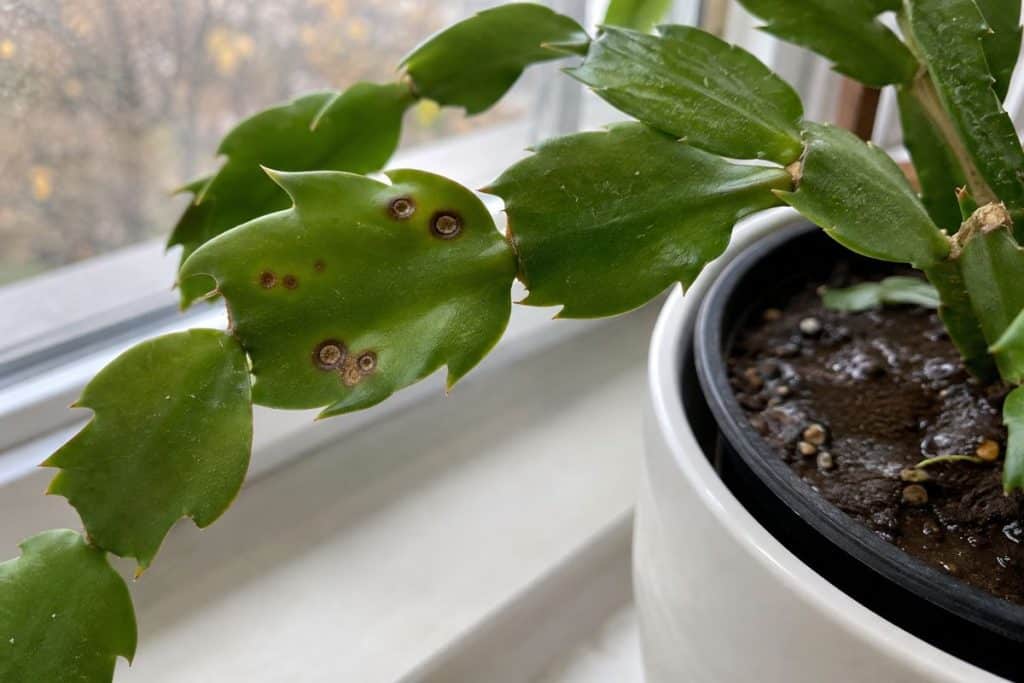
Spots on a Christmas cactus usually start on one or two segments, often the older ones near the soil, and their color and texture tell you most of the story.
Most likely cause: soil that stays wet too long, which lets rot organisms in through the base of the stem and shows up as soft, water-soaked brown or black spots.
Press a spot gently with a fingertip. Soft, dark and wet-looking points to rot. Hard, dry and tan points to sun, cold or old damage. Something that wipes or scrapes off is a pest or mineral residue.
| What you see | Likely cause | Jump to |
|---|---|---|
| Soft brown or black spots, worst near the soil | Stem or root rot | Cause 1 |
| White cotton in the joints, sticky residue | Mealybugs | Cause 2 |
| Small brown bumps that scrape off | Scale | Cause 2 |
| Tiny pale speckles, dull segments, fine webbing | Spider mites | Cause 3 |
| Silver streaks with black dots | Thrips | Cause 3 |
| Bleached, tan or reddish dry patches on the window side | Sunburn or cold glass | Cause 4 |
| Gray fuzz, or dark sunken spots that spread | Fungal spots | Cause 5 |
| Raised, corky, tan blisters | Edema | Cause 6 |
| Chalky white marks or rings | Hard water or fertilizer salt | Cause 7 |
Cause 1: Stem and Root Rot From Wet Soil
How to confirm: the spots look water-soaked and brown or black, they feel soft, and they’re worst at the base of the stem. The soil smells sour, and it’s still damp 3 or 4 days after watering. Slide the plant out of its pot: healthy roots are white or light tan and firm, while rotted ones are dark, mushy and pull apart.
The fix: stop watering. If only a few roots are dark, trim them back to firm tissue with clean scissors and repot into fresh, fast-draining mix in a pot with a drainage hole. Cut off spotted segments at a joint.
Water again only when the top inch is dry; a moisture meter helps, because the surface dries long before the root zone in a heated apartment. If the main stem is soft at the soil line, root healthy segments instead.

How long recovery takes: 3 to 6 weeks for new roots, and new segments by spring. More detail is in overwatered Christmas cactus care.
The organisms behind this are mostly the water molds Pythium and Phytophthora, plus the fungus Fusarium at the stem base, and all of them spread fastest in wet soil. That’s why drying out the pot works better than any spray.
Cause 2: Mealybugs and Scale
How to confirm: mealybugs look like small tufts of white cotton in the joints between segments and on the undersides. Scale insects are flat or domed brown bumps, about the size of a pinhead, that you can lift off with a fingernail. Both leave sticky honeydew, which can turn black with sooty mold.
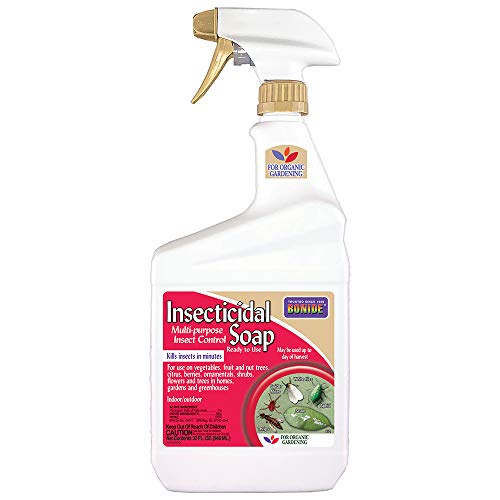
The fix: dab each insect with a cotton swab dipped in 70 percent rubbing alcohol, then spray the whole plant with insecticidal soap, covering the undersides and joints. Repeat every 5 to 7 days for at least 3 rounds, because eggs hatch after the first spray. Isolate the plant from your others until you see no new insects for 2 weeks.
How long recovery takes: the bugs are gone in 3 to 4 weeks; yellowed spots where they fed stay. Our post on whether a Christmas cactus can get mealybugs covers root mealybugs too.
Sophia’s tip: check a new plant’s joints with a flashlight before it joins your collection. Store plants arrive with mealybugs more often than you’d think, and 2 weeks in quarantine is cheaper than treating a whole windowsill.
Cause 3: Spider Mites and Thrips
How to confirm: spider mites leave hundreds of tiny pale speckles that make the segments look dull or dusty, sometimes with fine webbing at the tips. Hold a white sheet of paper under a stem and tap it; moving pepper-sized specks are mites. Thrips leave silvery streaks with tiny black dots, and they distort new growth and buds.
The fix: rinse the plant in a lukewarm shower, then treat with insecticidal soap every 5 to 7 days for 3 weeks. Mites love dry winter air, so keep humidity around 40 to 60 percent. For thrips, add yellow sticky traps to catch the adults.

Thrips can also carry impatiens necrotic spot virus, which may cause dark spots, wilting or no symptoms at all; there is no cure, so a plant that keeps declining is best discarded.
How long recovery takes: 3 to 4 weeks to clear; speckled segments stay marked.
Cause 4: Sunburn and Cold Glass
How to confirm: sunburn shows as bleached, tan or white dry patches on the side facing the window, often after a move to a sunnier spot. A reddish or purple cast across the whole plant is a milder form of light or cold stress, covered in why Christmas cactus leaves turn red. Cold damage shows where segments touched a winter window: translucent patches that turn soft and dark within a few days.
The fix: move it to bright, indirect light, like an east window or 3 feet back from a south or west one. In winter, keep segments at least 6 inches from the glass. Cut off any segment that went mushy from cold.
How long recovery takes: a red tint fades in 2 to 4 weeks. Bleached or scarred tissue stays as it is.
Cause 5: Fungal Spots and Gray Mold
How to confirm: gray mold (botrytis) is fuzzy and gray-brown, usually on fading flowers, buds and the segments they touch, and it spreads in cool, damp, still air. Fungal leaf spots, including Bipolaris and Fusarium, start as small dark, often sunken spots, sometimes with a reddish-brown rim, that grow and join together until the segment rots.
The fix: cut off every affected segment and flower, throw them in the trash, and clean your scissors with rubbing alcohol between cuts. Water at the soil, never over the segments, and give the plant space and moving air. For spots that keep coming back, spray a copper fungicide labeled for houseplants, following the label, and repeat at the interval it gives. Our guide to leaf spot disease on houseplants has more on airflow.
How long recovery takes: if new spots stop appearing within 2 weeks, it’s under control. Spots on existing segments don’t fade.
Cause 6: Edema
How to confirm: raised, corky, tan or brown blisters on the flat surface of the segments, often after a cool, cloudy spell. The plant is otherwise firm and healthy. Edema happens when roots pull in water faster than the segments can release it, so cells swell and burst.
The fix: water less often and only when the top inch is dry, and move the plant somewhere a little warmer and brighter. Check the mix; dense, peaty soil that stays wet makes it worse, so see the right soil for a Christmas cactus.
How long recovery takes: no new blisters within 2 to 3 weeks of watering less. Existing ones stay as corky marks and do no harm.
Cause 7: Hard Water and Fertilizer Salt
How to confirm: chalky white spots or rings that wipe off with a damp cloth, usually where water splashed and dried. Crusty white buildup on the soil or pot rim means salts are building up, and they can cause brown, dry edges on segments.
The fix: wipe the segments with a soft cloth dampened with distilled water. Every 3 months, flush the pot by running water through it for a full minute. Water at the soil, not over the plant, and if your tap water is hard, use filtered or rain water.
How long recovery takes: the marks wipe off right away; salt-burned edges stay.
When a Spot Isn’t a Problem
Old stems turn brown, woody and corky at the base as they age. That is normal and keeps the plant upright. If the corky tissue is hard and dry, leave it alone; worry only if it’s soft or wet.
What Recovery Looks Like
| Time | What to expect |
|---|---|
| Week 1 | No new spots on treated plants; damaged segments look the same |
| Weeks 2 to 4 | Pests gone after repeat treatments; firm segments, drier soil |
| Weeks 4 to 8 | New segments at the tips, clean and unspotted |
| After 8 weeks | Trim badly marked old segments if you want a tidier plant |
Spotted segments never turn clean again. Remove them at a joint once the plant is growing, or leave the mildly marked ones; they still feed the plant. If the main stem is rotting, take 3 or 4 healthy segments as cuttings while you still can, using rooting a Christmas cactus in water.
The plant is non-toxic to cats and dogs according to the ASPCA, but keep pets away while you’re spraying it.
When It’s Not Worth Saving
Give up on the plant itself, though not its cuttings, when the main stem is soft and dark at the soil line, when most roots come away as brown mush, or when dark ring spots keep appearing after thrips.
At that point, cut 3 or 4 clean, firm segments from the top, let them dry for a day, and start over in fresh mix and a clean pot. Throw out the old soil rather than reusing it.
Stopping It From Coming Back
- Water only when the top inch is dry, and empty the saucer within 15 minutes.
- Keep it in bright, indirect light, 6 inches from winter glass.
- Check the joints with a flashlight once a month.
- Pick off fading flowers before they mold.
- Flush the pot every 3 months if you use hard tap water.

Founder & Lead Writer · 9 years growing houseplants · Chicago, IL
I’m Sophia, founder of HousePlantsInfo.com. I’ve grown plants for as long as I can remember and have spent the last 9 years focused on houseplants, now caring for 75+ of them, from easy snake plants and philodendrons to fussier fiddle leaf figs and calatheas. Every guide here is based on what I’ve grown, lost and brought back in a real apartment through dark, radiator-dry Chicago winters. I trained through Houseplant Masterclass, and I check care and pet-safety details against university extension services and the ASPCA before publishing.