
Your Christmas cactus sits on the windowsill with its flat, segmented stems spilling over the pot, and the soil looks dense, dark, and slow to dry.
If you’re wondering what soil does a christmas cactus need, the answer is different from what most people expect for a “cactus.”
The short version: A Christmas cactus needs a loose, airy, slightly acidic mix that holds some moisture but drains fast.
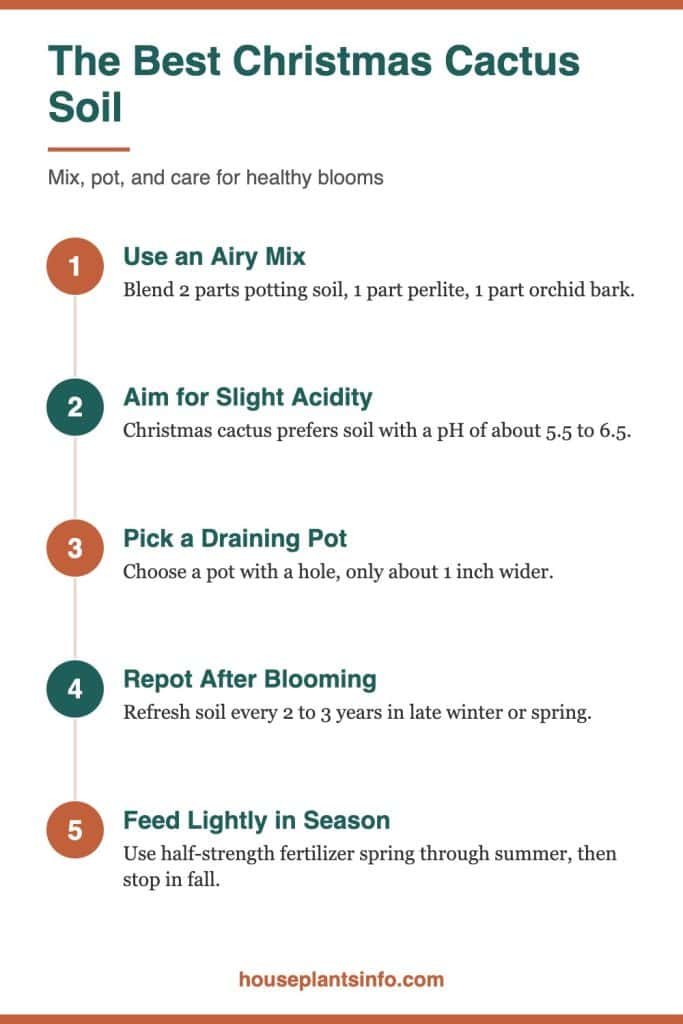
A good recipe is about 2 parts quality potting soil, 1 part perlite, and 1 part fine orchid bark, in a pot with a drainage hole.
This guide covers the ideal mix, how to make it, the right pot, repotting, feeding, growing without soil, and how to fix soil-related problems.
At a Glance
| Factor | What it needs |
|---|---|
| Soil | Airy, fast-draining mix with organic matter; pH about 5.5 to 6.5 |
| Light | Bright, indirect light; an east window or a few feet back from a south or west window |
| Water | Water when the top 1 to 2 inches feel dry; never let it sit in water |
| Humidity | Moderate, around 40 to 60 percent; benefits from help in dry winter air |
| Temperature | 60°F to 75°F most of the year; cooler nights of 50°F to 60°F in fall help set buds |
| Pet safety | Listed by the ASPCA as non-toxic to cats and dogs |
| Difficulty | Easy, once the soil and watering are right |
What Soil Does a Christmas Cactus Need?
A Christmas cactus needs soil that mimics where it grows in the wild: rich in organic matter, loose enough for air to reach the roots, and quick to shed excess water.
It is not a desert plant, so sandy, lean cactus soil alone is usually too dry and gritty.
Why This Cactus Is Different
Christmas cactus (Schlumbergera) is an epiphyte from the coastal mountain forests of southeastern Brazil. In nature it grows on tree branches and mossy rocks, rooting into pockets of decaying leaves and bark.
That habitat tells you what the roots want. They expect frequent moisture, but they also expect to dry quickly and to have plenty of oxygen around them. Dense soil that stays wet for days suffocates the fine roots and invites rot.
The Three Qualities to Aim For
- Drainage: water should run through the pot within seconds, not pool on top.
- Aeration: chunky material creates air pockets so roots can breathe.
- Moisture retention: some organic matter holds enough water to keep the stems plump between waterings.
What pH Works Best
Christmas cactus prefers slightly acidic soil, roughly 5.5 to 6.5. Most peat- or coir-based potting mixes already fall in this range, so you rarely need to adjust it.

If your plant struggles despite good care, a simple soil pH test kit can rule out a pH problem. Pair it with a soil moisture meter pushed about 2 inches deep, and you’ll know exactly when the mix has dried enough to water again.
Indoor conditions change how fast the mix dries. A pot near a radiator or forced-air vent in a Chicago winter may dry in four or five days, while the same pot in a cool, shaded corner might stay damp for two weeks.
How to Mix Your Own Christmas Cactus Soil
Mixing your own soil takes about five minutes and gives you better results than most bagged blends. Start with a standard potting mix and open it up with perlite and bark.

A Reliable Basic Recipe
| Ingredient | Amount | What it does |
|---|---|---|
| Quality indoor potting mix | 2 parts | Holds moisture and nutrients |
| Perlite (coarse if possible) | 1 part | Adds air pockets and drainage |
| Fine orchid bark | 1 part | Mimics the forest floor; keeps the mix chunky |
Measure by volume using any container, such as a cup or a small pot. Mix everything in a bucket or on a sheet of newspaper until the bark and perlite are evenly spread.
Variations for Your Home
You can adjust the recipe based on how fast your apartment dries out a pot.
- Dry, heated rooms: use 3 parts potting mix to 1 part perlite and 1 part bark so the soil holds water a little longer.
- Cool, humid, or low-light spots: go to equal parts of all three so the mix dries faster.
- Heavy-handed waterers: add an extra half part of perlite as insurance.
Some growers swap part of the potting mix for coco coir or add a handful of worm castings. Both work well in small amounts, since coir holds water evenly and castings add gentle nutrition.
Sophia’s tip: Lightly moisten your potting mix before blending it. Bone-dry peat or coir repels water, and a damp mix combines more evenly and won’t leave dry pockets around the roots.
Ingredients to Skip
Avoid garden soil, which compacts in pots and can carry pests. Skip fine beach or play sand, which fills air spaces instead of creating them.
Moisture-control potting mixes with added water-holding crystals also tend to stay too wet for this plant, especially indoors in winter.
Is Regular Potting Soil or Cactus Mix Good Enough?
Neither works well on its own, but both make a good base. Regular potting soil is usually too dense, and cactus mix is usually too lean and fast-drying for an epiphyte.
Using Regular Potting Soil
Straight potting soil holds a lot of water and compacts over time. In a pot without strong airflow or bright light, it can stay soggy long enough to rot the roots.
Fix it by adding perlite and orchid bark using the recipe above. The plant will happily grow in it once it’s opened up.
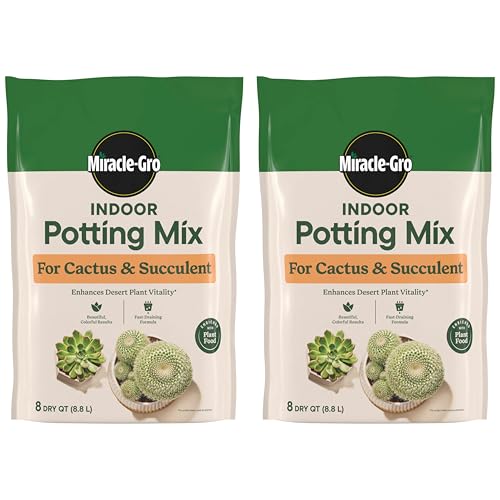
Using Cactus and Succulent Mix
Bagged cactus mix drains well, which is a plus. The downside is that many brands are heavy on sand and grit and light on organic matter, so they dry out too fast and leave the stems thin and wrinkled.
If you already have cactus mix, blend it roughly half and half with regular potting soil. That restores moisture retention while keeping the drainage.
What About Orchid Mix?
Pure orchid bark is too coarse and dries too quickly for most homes. It can work for experienced growers who water often, but a blend of bark and potting soil is easier to manage.
| Soil option | Works alone? | How to fix it |
|---|---|---|
| Regular potting soil | No, too dense | Add perlite and orchid bark |
| Cactus or succulent mix | Sometimes, often too lean | Mix 50/50 with potting soil |
| Orchid bark mix | Rarely, dries too fast | Blend with potting soil |
| Homemade 2:1:1 blend | Yes | Adjust ratios for your room |
Which Pot Works Best With the Mix?
The pot matters as much as the soil. Use a pot with at least one drainage hole, only slightly larger than the root ball.
Drainage Comes First
Even the best mix fails in a pot with no hole. Water collects at the bottom, the lower roots stay wet, and rot follows.
If you love a decorative pot without a hole, use it as a cover. Keep the plant in a plastic nursery pot inside it and empty any water that collects after each watering.
Material Choices
- Terracotta: breathes and dries faster; good for heavy waterers and cool rooms.
- Plastic: holds moisture longer; good for hot, dry rooms near radiators.
- Glazed ceramic: behaves like plastic; fine as long as it drains.
Size and Shape
Christmas cactus blooms best when it’s slightly snug in its pot. A container that’s too big holds extra soil that stays wet long after the roots have taken what they need.
Choose a pot about 1 inch wider than the current one. Shallow, wide pots suit the plant’s relatively short root system better than deep, narrow ones.
Skip the old advice of putting gravel in the bottom of the pot. It actually raises the wet zone of the soil closer to the roots instead of improving drainage.
When and How Should You Repot Into Fresh Soil?
Repot every 2 to 3 years, or when roots fill the pot and the soil breaks down. The best time is late winter to spring, after the plant finishes blooming.
Signs It’s Time
- Water runs straight through without soaking in, or sits on top for a long time.
- Roots poke out of the drainage hole or circle the surface.
- The soil looks compacted, crusty, or smells sour.
- The plant dries out in a day or two even in moderate conditions.
Old potting mix decomposes and compacts, losing the air pockets roots depend on. Fresh soil restores drainage even if the plant doesn’t need a bigger pot.
Timing Around the Bloom Cycle
Avoid repotting while buds are forming or flowers are open, since disturbance can cause bud drop. Learning what to do with Christmas cactus after flowering helps you line repotting up with the plant’s natural rest period.
For more detail on seasons and signs, see this guide on when to transplant Christmas cactus.
Step-by-Step Repotting
- Water lightly a day before so the root ball slides out easily.
- Tip the pot sideways and ease the plant out, supporting the base of the stems.
- Gently loosen the outer roots and shake off old, broken-down soil.
- Trim any black, mushy, or hollow roots with clean scissors.
- Add fresh mix to the new pot so the plant sits at the same depth as before.
- Fill around the roots, tapping the pot to settle the mix without packing it down.
- Wait 3 to 5 days before watering so any damaged roots can seal.
Keep the freshly repotted plant out of direct sun for about a week. Bright, indirect light a few feet from an east window is ideal while it settles.
Sophia’s tip: If a pot is still the right size, just refresh it. Remove the plant, knock off about a third of the old soil, and return it to the same pot with new mix.
Does the Soil Need Fertilizer?
Yes, but lightly. Potting mix nutrients run out within a few months, so regular feeding during the growing season keeps the plant healthy and ready to bloom.
What to Use
A balanced, water-soluble houseplant fertilizer works well, such as one with equal or near-equal numbers. Dilute it to half the label strength, because this plant’s fine roots are sensitive to salt buildup.
Some growers use a bloom formula with slightly higher phosphorus in late summer. Either approach works if you keep it diluted.
When to Feed
Feed every 2 to 4 weeks from spring through late summer, when the plant is actively putting out new segments. Stop feeding in early fall so the plant can shift its energy toward setting buds.
For a month-by-month schedule, read more about when to fertilize Christmas cactus.
Preventing Salt Buildup
Fertilizer salts and hard tap water minerals can collect in the soil and appear as a white crust on the surface or pot rim. Every couple of months, water slowly until it pours freely from the drainage hole to flush them out.
Underfeeding and stress can show up in the stems too. If you notice purple or reddish segments, this explanation of why are Christmas cactus leaves turning red covers light, cold, root, and nutrient causes.
Can a Christmas Cactus Grow Without Soil or Outdoors?
It can grow for a while in other media, and it can spend summer outside in the right conditions. For long-term indoor growing, a well-made soil mix is still the most reliable choice.
Growing in Soilless Media
Because it’s an epiphyte, Christmas cactus can root in long-fiber sphagnum moss, coarse bark, or a blend of the two. These materials hold air well but need more frequent watering and regular feeding, since they supply almost no nutrients.
Cuttings can also root in water. Plant them into soil once roots reach about 1 inch long, since water-grown roots adapt slowly and the plant does better in a solid medium long term.
Taking It Outside for Summer
A summer outdoors can encourage strong growth. Move it out once nighttime temperatures stay above 50°F, and bring it in before they drop below that in fall.
Place it in bright shade, such as under a tree or a covered porch. Direct afternoon sun can scorch and redden the stems quickly.
Outdoors, pots dry faster in wind and heat but can also get soaked by heavy rain. Your fast-draining mix becomes even more important, so make sure water never sits in a saucer.
Planting in the Ground
In-ground planting only works in frost-free climates, roughly USDA zones 10 to 12. There, plant it in a shaded bed amended heavily with compost and bark so the soil drains quickly. In colder regions like Chicago, keep it potted year-round.
Sophia’s tip: Before bringing a summered-outside plant back in, soak the pot in a bucket of water for 15 minutes. It flushes out insects hiding in the soil before they reach your other houseplants.
Soil Problems: Root Rot, Gnats, and Soft Segments
Most Christmas cactus problems trace back to soil that stays wet too long. The fix is usually better drainage, less frequent watering, and fresh mix.
Root Rot: Soggy Soil Is the Cause
Root rot shows up as limp, soft, or translucent segments, a darkened stem base, and soil that smells musty. Fungal organisms thrive in waterlogged, poorly aerated mix.
Fix it by unpotting the plant, cutting away brown or mushy roots, and repotting into fresh, airy soil in a clean pot. If the base is rotted, take healthy stem cuttings and start over.
Soft segments can also come from underwatering or heat stress. This guide on Christmas cactus leaves soft helps you tell the causes apart.
Fungus Gnats: Damp Surface Soil Is the Cause
Tiny black flies hovering around the pot mean fungus gnats, whose larvae live in the top layer of moist, organic soil. They’re more common in winter, when pots dry slowly in cool rooms.
Let the top 1 to 2 inches dry between waterings and place yellow sticky traps near the soil. A thin top layer of coarse sand or fine grit helps keep the surface dry.
Mealybugs and Root Mealybugs: Old Soil Is the Cause
White, cottony clusters in stem joints or on the roots signal mealybugs. Old, compacted soil makes infestations harder to spot and remove.
Dab visible bugs with a cotton swab dipped in rubbing alcohol. For root mealybugs, remove the old soil, rinse the roots, and repot in fresh mix.
Bud Drop: Root Stress Is Often the Cause
Buds falling before opening often come from soil swinging between bone-dry and soaked, or from moving the plant. Keep the mix evenly moist but never wet while buds form, and keep the plant away from drafty doors, AC vents, and radiators.
Pet and Kid Safety
The ASPCA lists Christmas cactus as non-toxic to cats and dogs. Still, a pet chewing the stems may have mild stomach upset, and perlite or bark spilled from the pot is best kept away from curious kids and animals.
Your Next Steps
- Check your current soil by pressing it; if it’s dense, crusty, or stays wet for over a week, plan a refresh.
- Mix a batch of 2 parts potting soil, 1 part perlite, and 1 part orchid bark.
- Confirm your pot has a drainage hole and is no more than about 1 inch wider than the root ball.
- Repot in late winter or spring after blooming, then wait 3 to 5 days before watering.
- Feed with half-strength balanced fertilizer from spring through late summer, then stop in early fall.
- Flush the soil every couple of months to clear salt and mineral buildup.
Common Questions About Christmas Cactus Soil
Can I use succulent soil for a Christmas cactus?
You can, but mix it with regular potting soil first. Succulent mix alone is usually too sandy and dries too quickly for this forest cactus, so a 50/50 blend works much better.
How often should I change Christmas cactus soil?
Refresh or replace the soil every 2 to 3 years. Old mix breaks down and compacts, reducing drainage, so even a plant that doesn’t need a larger pot benefits from new soil.
Do Christmas cacti like coffee grounds in their soil?
Coffee grounds are not necessary and can cause trouble. They compact, hold moisture, and can grow mold on the surface, so a balanced diluted fertilizer is a safer way to feed the plant.
Should Christmas cactus soil stay moist?
It should stay lightly moist during active growth and bud formation, never soggy. Water when the top 1 to 2 inches are dry, and let excess water drain completely.
Is my Christmas cactus soil too acidic or too alkaline?
Most potting mixes sit in the preferred range of about 5.5 to 6.5, so problems are uncommon. If your tap water is very hard, minerals can slowly raise the pH, which regular flushing and repotting help correct.

Hi! I’m Sophia, and I love plants – especially an expert in growing house plants. I stay in Chicago, United States of America, and through my blog and social media platforms, provide tips and tricks on how to grow healthy, vibrant plants indoors. Check out more here.