
You look at your Christmas cactus on the windowsill and notice that its flat, segmented stems have taken on a purple or reddish-purple tint, often starting at the edges.
If you are wondering why do Christmas cactus leaves turn purple, the color is almost always a stress signal rather than a disease.
The short version: Purple segments usually mean the plant is producing protective pigments in response to stress, most often from too much direct sun, cold drafts, inconsistent watering, cramped or damaged roots, or a shortage of nutrients like magnesium or phosphorus.
Fix the underlying condition and new growth comes in green, with older segments often greening up over several weeks.
This guide walks through each cause, how to confirm it, and the specific indoor fix that works.
Check These First
- Touch the stems. Firm, purple segments point to light, cold, or nutrient stress. Soft, wrinkled, or mushy segments point to a water or root problem.
- Note the window. A south- or west-facing window with no curtain, or a pot pressed against the glass, is the most common trigger.
- Feel the soil 1 inch down. Bone dry for weeks or soggy for days both cause color changes.
- Check nearby heat and cold. A radiator, forced-air vent, drafty window, or AC unit within a few feet can stress the plant.
- Look at the drainage hole. Roots poking out, or water that never drains, means the root zone needs attention.
Why Do Christmas Cactus Leaves Turn Purple in the First Place?
Christmas cactus turns purple when stress triggers it to make anthocyanins, the same red-purple pigments found in autumn leaves and red cabbage. These pigments act like sunscreen and antioxidants, protecting the plant’s tissue while it copes with a problem.
What the Pigment Is Doing
Christmas cactus (Schlumbergera) is not a desert cactus. It grows wild as an epiphyte on tree branches in shaded, humid Brazilian forests, so its stems are adapted to filtered light and steady moisture.
When conditions push past what it tolerates, chlorophyll production slows and anthocyanins become visible. The stems are not dying when this happens. They are reacting, and the reaction is usually reversible.
Reading the Pattern
Where the color shows up gives you useful clues. Purple that starts at the rim of each segment and spreads inward often points to light or cold stress. Purple across the whole plant, paired with slow growth, more often points to roots or nutrition.
Purple on one side only usually means one side is facing the window. A plant that is purple and also limp or shriveled has a water or root issue layered on top.
How to Confirm Before You Change Anything
Change one thing at a time so you can tell what helped. A soil moisture meter takes the guesswork out of watering, especially in a pot where the surface dries much faster than the root zone.

If you suspect light, a sheer curtain lets you soften the sun without moving the plant.
If your only bright window is a problem spot, a grow light placed 12 to 18 inches above the plant gives steady, gentle light without the heat of afternoon sun through glass.
Too Much Direct Sun: Move It and Filter the Light
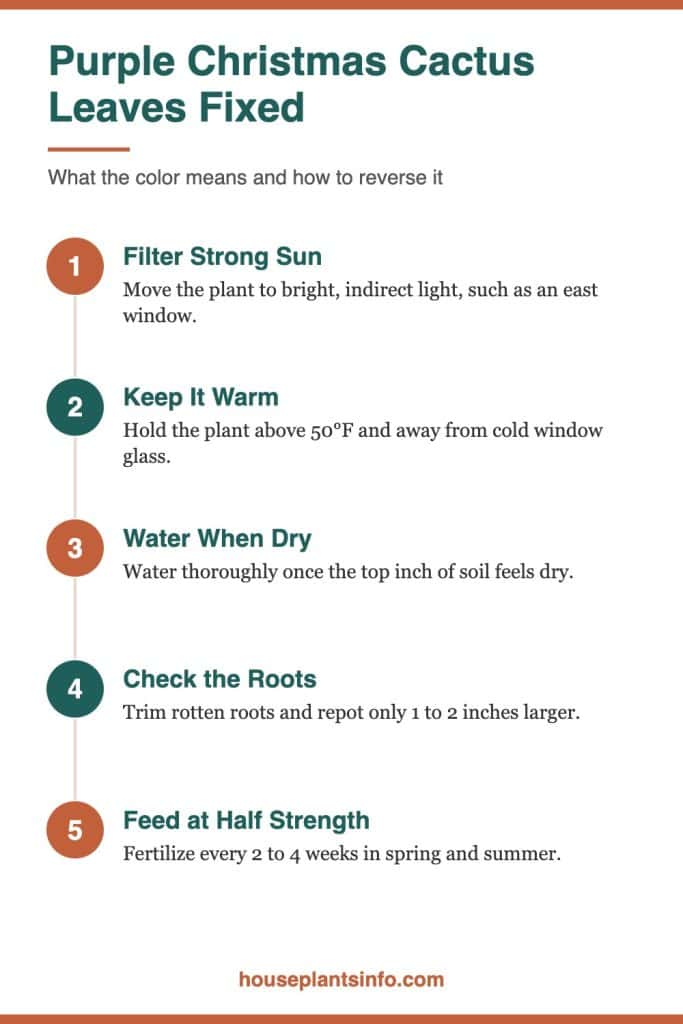
Strong direct sun is the single most common reason for purple segments. Move the plant to bright, indirect light, such as an east window or a few feet back from a south or west window.
Why Sun Through Glass Hits Hard
Window glass concentrates heat, and a pot sitting right against the pane can get much warmer than the room. In summer, a west window can bake the plant for several hours each afternoon.
Christmas cactus prefers bright light that never scorches. Morning sun from an east window is ideal for most homes, and a north window works if it is bright and unobstructed.

Signs Sun Is the Cause
- Purple or red tint appears first on the side facing the window.
- Segments may look slightly bleached, yellowish, or dull in the center.
- The soil and stems feel firm, and watering has been consistent.
- The color deepens in spring and summer when the sun is stronger.
The Fix
Move the plant 3 to 5 feet back from a south or west window, or hang a sheer curtain to diffuse the light. Rotate the pot a quarter turn each week so all sides get even exposure.
Make the change gradually if the plant has been in deep shade before. Sudden shifts in light, in either direction, can cause their own stress and even lead to Christmas cactus dropping leaves.
Sophia’s tip: Hold your hand between the plant and the window at midday. If your hand casts a sharp, dark shadow, the light is direct and probably too strong. A soft, blurry shadow means bright indirect light, which is what this plant wants.
Cold Drafts and Chilly Glass: Warm the Spot Up
Cold stress turns Christmas cactus purple quickly, especially in winter. Keep the plant in a spot that stays roughly 60 to 75°F during the day and no lower than about 50 to 55°F at night.
How Winter Windows Cause Trouble
In a cold-climate apartment, the air right next to the glass can be 10 to 20 degrees colder than the middle of the room. If the stems touch the pane on a freezing night, the tissue can chill enough to discolor.
Drafty window frames, exterior doors, and entryways create the same problem. The plant may look fine at noon and still sit in cold air every night.
Cool Nights Versus Cold Damage
Some cool exposure is actually useful. Nights around 50 to 60°F for several weeks in fall help trigger flower buds, and a light blush of color during that time can be harmless.
The trouble starts when temperatures drop below about 45 to 50°F or when the plant sits in a direct cold draft. Frost or near-freezing temperatures can kill segments, leaving them translucent or mushy.
The Fix
Pull the pot at least 6 to 12 inches back from the glass on cold nights. Close curtains or blinds between the plant and the window after sunset to trap a buffer of warmer air.
Keep the plant away from the opposite extreme too. A spot directly above a radiator or in the path of a forced-air vent dries the soil and stems fast, adding water stress to temperature stress.
In summer, keep it out of the direct stream of an AC unit.
Sophia’s tip: Set an inexpensive digital thermometer next to the pot overnight for a few days in winter. Many people are surprised to find their windowsill drops into the 40s°F while the thermostat reads 68°F.
Watering Stress: Find the Steady Rhythm It Wants
Both underwatering and overwatering can turn segments purple. Water when the top inch of soil is dry, soak until water drains from the bottom, and never let the pot sit in standing water.
When It Is Too Dry
Because it comes from humid forests, Christmas cactus does not like the long dry spells that desert cacti tolerate. A pot that goes bone dry repeatedly will stress the plant, and segments may turn purple, thin, and wrinkled.
Dry winter air and nearby heat make this worse. Forced-air heat can dry a small pot out in just a few days, much faster than in summer.
When It Is Too Wet
Soggy soil starves roots of oxygen. Damaged roots cannot move water or nutrients, so the stems show stress even though the soil is wet, often turning purple, then soft, then dropping.
If segments feel squishy or the base of the plant is dark and mushy, read more about Christmas cactus leaves soft to rule out rot. Drooping stems without mushiness are covered in the guide on why are the leaves on my Christmas cactus limp.
Setting a Schedule That Works
Instead of watering on a fixed calendar day, check the soil every few days. In most homes that works out to every 1 to 2 weeks in spring and summer and somewhat less often in fall and winter.
| Situation | What to Do |
|---|---|
| Top inch dry, pot feels light | Water thoroughly until it drains |
| Top inch still damp | Wait and check again in 2 to 3 days |
| Segments wrinkled, soil bone dry | Water deeply, then keep a steadier routine |
| Soil soggy, segments soft | Stop watering, check roots for rot |
| Water sits in saucer | Empty it within 15 to 30 minutes |
Use a pot with a drainage hole and a loose, fast-draining mix. A blend of regular potting mix with perlite or fine orchid bark, roughly 2 parts mix to 1 part amendment, holds moisture without staying waterlogged.

A Note on Humidity
Christmas cactus does best around 40 to 60 percent humidity. Winter indoor air can drop well below that, so a room humidifier or grouping plants together helps. Misting only raises humidity for a few minutes and is not a reliable fix.
Root-Bound or Damaged Roots: Check Beneath the Soil
If light, temperature, and watering all look right, the roots are the next suspect. Slide the plant out of its pot and look for crowded, circling roots or dark, mushy ones.
Signs Below the Surface
Healthy roots are firm and white to light tan. Roots that circle tightly around the inside of the pot, with very little soil left, mean the plant is root-bound and struggling to take up water and nutrients.
Brown or black roots that feel slimy or pull apart easily indicate root rot. A sour or musty smell from the soil confirms it.
Root-Bound Is Not Always Bad
Christmas cactus actually blooms well when slightly snug in its pot, so it does not need frequent repotting. Most plants only need it every 2 to 3 years, ideally in spring after flowering ends.
Repot when roots fill the container so thoroughly that water runs straight through, or when roots push out of the drainage hole. Go up only 1 to 2 inches in pot diameter.
Handling Root Rot
Trim away all soft, dark roots with clean scissors. Repot into fresh, dry, fast-draining mix in a clean pot with a drainage hole, and wait several days before watering lightly.
If most of the roots are gone, take cuttings of healthy segments. Pieces of 2 to 3 segments root easily in slightly moist mix, so you can save the plant even if the base is lost.
Expect Some Transplant Shock
A freshly repotted Christmas cactus can turn slightly purple for a few weeks while the roots settle in. Keep it in bright, indirect light, hold off on fertilizer for about a month, and avoid moving it around.
Missing Nutrients: Feed Lightly and Watch Magnesium
A shortage of nutrients, particularly magnesium and phosphorus, can cause a purple or reddish cast across the plant. Feed with a balanced houseplant fertilizer at half strength during active growth.
Why Nutrients Run Low
Christmas cactus often stays in the same pot for years. Over time, regular watering flushes nutrients out of the mix, and old potting soil breaks down and holds less of what the plant needs.
Magnesium is a building block of chlorophyll, so when it runs short, green color fades and other pigments become more visible. Phosphorus deficiency is also widely associated with purpling in many plants.
A Simple Feeding Plan
- Spring through late summer: feed every 2 to 4 weeks with a balanced fertilizer diluted to half strength.
- Late summer into fall: stop feeding about 6 weeks before you want buds to form.
- During bloom and winter rest: skip fertilizer or feed very lightly.
- Always water first: never fertilize bone-dry soil, since it can burn roots.
About Epsom Salt
Many growers give Christmas cactus a monthly dose of Epsom salt (magnesium sulfate) during the growing season, about 1 teaspoon per gallon of water. Use it in place of a regular watering, and not in the same week you fertilize.
Do not overdo it. Too much of any salt builds up in the soil and can damage roots, which creates the same purple stress you are trying to fix.
Sophia’s tip: Once or twice a year, water the plant slowly in the sink until water has run through the pot for about a minute. This flushes out mineral and fertilizer buildup, which shows up as a white crust on the soil or pot rim.
Is Purple Ever Normal, and Can It Kill the Plant?
A light purple or reddish blush is sometimes normal, and purple color alone will not kill a Christmas cactus. The danger comes from the underlying stress if it continues for a long time or involves rotting roots.
When the Color Is Natural
Some cultivars naturally carry a reddish or purple edge on their segments, especially varieties with darker flowers. Many plants also blush during the cool, bright days of fall, when shorter days and cooler nights prepare them to bloom.
If the plant is firm, growing, and setting buds, a faint tint is nothing to worry about.
Red tones follow similar logic, covered in the guide on why are Christmas cactus leaves turning red, and paler shades are explained in the article on Christmas cactus leaves turning pink.
When to Take It Seriously
Act quickly if the purple comes with soft or mushy segments, wilting despite moist soil, a dark base, or segments falling off. These signs usually point to root damage or severe cold.
Long-term light or nutrient stress also weakens the plant. It may stop growing, refuse to bloom, and become more vulnerable to pests and rot.
How Long Recovery Takes
Once you fix the cause, new segments should emerge green. Older purple segments often regain green color over 2 to 6 weeks, though severely stressed ones may stay tinted or eventually drop.
Pet Safety
The ASPCA lists Christmas cactus as non-toxic to cats, dogs, and horses. Chewed segments can still cause mild stomach upset, so keep the pot out of reach of pets and kids who like to nibble.
| Cause | Typical Clue | Main Fix |
|---|---|---|
| Direct sun | Purple on window side, firm stems | Bright indirect light, sheer curtain |
| Cold | Appears in winter near glass | Move back from window, keep above 50°F |
| Underwatering | Wrinkled, thin segments | Water when top inch is dry |
| Overwatering or rot | Soft segments, wet soil | Improve drainage, trim rotten roots |
| Root-bound | Roots circling or out of hole | Repot 1 to 2 inches larger |
| Low nutrients | Whole plant tinted, slow growth | Half-strength feed, occasional magnesium |
| Natural blush | Firm, healthy, budding | No action needed |
Your Next Steps
- Check the stems and soil today to sort firm purple (light, cold, nutrients) from soft purple (water or roots).
- Move the plant to bright, indirect light, ideally an east window or a few feet back from a sunny one.
- Keep it at least 6 to 12 inches from cold glass in winter and away from radiators, heat vents, and AC drafts.
- Water only when the top inch of soil is dry, and empty the saucer every time.
- Unpot the plant if problems persist, trim rotten roots, and repot into fast-draining mix if needed.
- Start half-strength feeding in spring and summer, then pause in late summer to encourage blooms.
Common Questions About Purple Christmas Cactus Leaves
Will purple Christmas cactus leaves turn green again?
Often, yes. Once the stress is removed, many purple segments regain their green color over 2 to 6 weeks. Badly damaged segments may stay tinted, but new growth should come in green.
Is a purple Christmas cactus getting too much sun?
Too much direct sun is the most common cause, especially when the purple is strongest on the side facing the window. Move the plant to bright, indirect light and watch whether new growth stays green.
Can cold weather turn my Christmas cactus purple?
Yes. Temperatures below about 50°F or direct cold drafts from windows and doors often cause purple segments. Moving the pot back from the glass and closing curtains at night usually solves it.
Does Epsom salt fix purple Christmas cactus leaves?
It can help when magnesium is low, which is a common cause of purpling. Use about 1 teaspoon per gallon of water once a month during the growing season, and do not use it as a substitute for fixing light, water, or temperature problems.
Should I cut off purple segments?
Usually not. Purple segments are still alive and can recover, so leave them in place unless they are soft, mushy, or shriveled. Remove only damaged segments with clean scissors, and root healthy pieces if you want more plants.

Hi! I’m Sophia, and I love plants – especially an expert in growing house plants. I stay in Chicago, United States of America, and through my blog and social media platforms, provide tips and tricks on how to grow healthy, vibrant plants indoors. Check out more here.