
You are looking at a healthy green Christmas cactus on the windowsill, full of arching segments and not a single flower bud in sight. The plant seems content, but it is clearly not getting the signal to bloom.
The short version: A Christmas cactus sets buds when it gets long, uninterrupted nights and cool temperatures in fall.
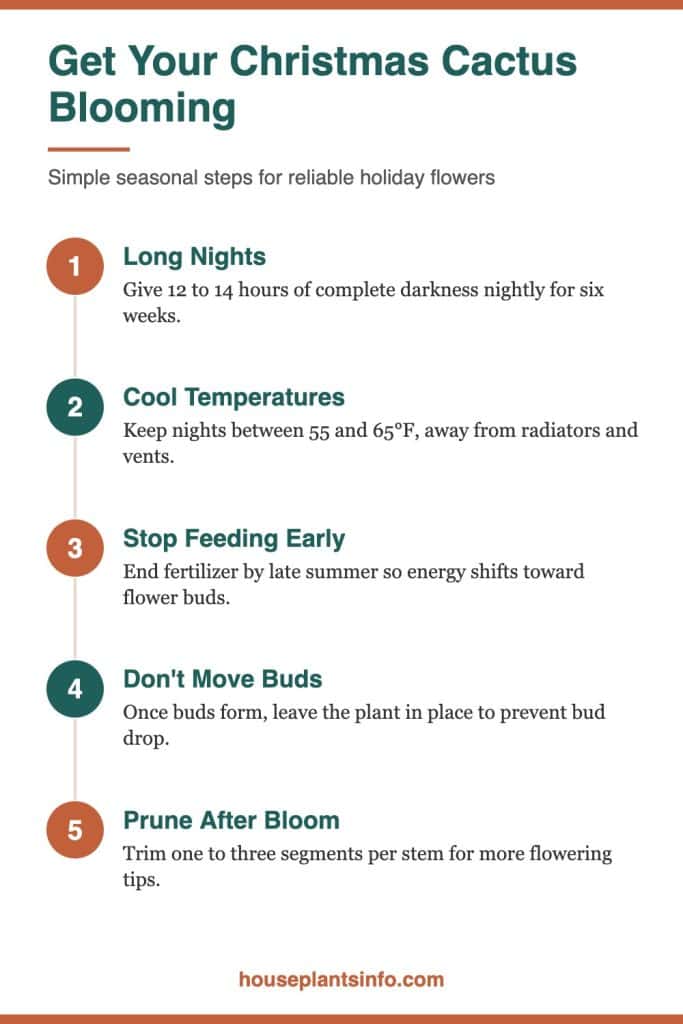
Give it 12 to 14 hours of true darkness each night and keep it around 55 to 65°F for about six weeks, with slightly drier soil. Buds usually appear within three to eight weeks.
This guide covers the bloom trigger, year-round care that supports flowering, and the fixes for bud drop and plants that refuse to bloom.
At a Glance
| Factor | What it needs |
|---|---|
| Light | Bright, indirect light; an east window or a few feet back from a south or west window |
| Water | Water when the top inch of soil is dry; slightly less during the fall bud-setting period |
| Humidity | Moderate, around 40 to 60 percent; dry winter air from radiators can cause bud drop |
| Temperature | 60 to 75°F most of the year; 55 to 65°F at night in fall to trigger buds |
| Soil | Fast-draining mix, such as potting soil blended with perlite or orchid bark |
| Pet safety | Listed by the ASPCA as non-toxic to cats, dogs, and horses |
| Difficulty | Easy to grow; reblooming takes a little seasonal attention |
How to Make Christmas Cactus Bloom: The Long-Night Trigger
Christmas cactus is a short-day plant, which means it forms flower buds when nights grow long and cool. In practice, you need about 12 to 14 hours of complete darkness every night for roughly six weeks, starting in early fall.
Why darkness matters so much
The plant measures the length of the night, not the day. Even a brief burst of lamp light in the evening can reset that count and delay bud formation.
In an apartment, this is the most common reason a plant never blooms. Living room lamps, TV glow, streetlights, and under-cabinet lighting all interrupt the dark period.
How to create long nights indoors
- Move the plant to a spare room, guest bedroom, or closet-adjacent shelf that stays dark from evening until morning.
- Cover it with an opaque box or a dark cloth from about 6 p.m. to 8 a.m., then return it to bright indirect light during the day.
- Keep the routine going for six to eight weeks, or until you see small buds forming at the segment tips.
If you use a grow light to supplement winter sun, plug it into an outlet timer so it shuts off by early evening. A min-max thermometer placed near the plant will also tell you whether night temperatures are dropping into the bud-setting range.

Cool nights can do the job too
Temperature works alongside darkness. When nights stay around 50 to 55°F, the plant will usually set buds even without strict darkness control.
At 55 to 65°F, you need both cool nights and long nights for reliable results. Above roughly 70°F, many plants struggle to set buds at all, no matter how dark the room is.
Sophia’s tip: Start the dark treatment in late September or early October if you want flowers in December. A Thanksgiving cactus started at the same time will often open closer to late November.
Which Holiday Cactus Do You Have, and When Should It Bloom?
Three plants are sold as “holiday cactus,” and each blooms on a different schedule. Knowing which one you have explains why yours might flower in November, December, or spring.
Telling them apart by the segments
Look closely at the edges of the flat stem segments.
| Type | Segment shape | Typical bloom time |
|---|---|---|
| Thanksgiving cactus | Pointed, claw-like teeth along the edges | Late October to late November |
| Christmas cactus | Rounded, scalloped edges | Late November to January |
| Easter cactus | Rounded edges with small bristles at the tips | Late winter to spring |
Most plants sold in stores around the holidays are actually Thanksgiving cactus. They are forced into bloom for December sales, so they may flower earlier the following year at home.
Why the type changes your plan
Thanksgiving and Christmas cactus both respond to the long-night and cool-temperature treatment in fall. The only real difference is timing.

Easter cactus needs a longer cool period, usually from late fall into winter, with nights in the 50s°F. It belongs to a different group of plants and will not bloom at Christmas no matter how you treat it.
How Cool Should the Room Be for Buds to Form?
During the bud-setting period, aim for nights between 55 and 65°F and days no warmer than about 70°F. Steady cool temperatures matter more than any single perfect number.
Finding the right spot in an apartment
Chicago apartments often run warm in fall once the heat comes on. Radiators and forced-air vents can keep a room at 72°F or more, which works against bud formation.
Good options include:
- A bedroom where you keep the thermostat lower at night
- A spot about 6 to 12 inches back from a north or east window, where the glass cools the air slightly
- An enclosed porch or sunroom that stays above 50°F
Avoid placing the plant directly against cold glass when outdoor temperatures drop below freezing. Segments touching icy glass can be damaged.
Temperatures to avoid
Keep the plant above 45°F at all times. Prolonged exposure below that can injure the segments, and frost will kill them.
Also avoid hot, dry spots next to radiators, space heaters, or heating vents. Warm air both prevents bud set and dries out the buds that do form.
How Much Light Does It Need the Rest of the Year?
Christmas cactus wants bright, indirect light for most of the year. Good light from spring through summer builds the energy the plant needs to produce a full set of flowers in fall.
Choosing a window
An east-facing window is ideal, with gentle morning sun and bright light the rest of the day. A north window works if it is unobstructed, though growth may be slower.
South and west windows are fine if the plant sits 2 to 4 feet back from the glass or behind a sheer curtain. Direct afternoon sun through glass can scorch the segments.
Reading the plant’s signals
Pale, yellowish segments or a reddish or purple tint often point to too much sun. If you are seeing that color shift, this guide on why are Christmas cactus leaves turning red walks through the causes, including light stress, cold, and nutrient issues.
Long, thin, pale segments that stretch toward the window suggest too little light. A plant in that condition often produces few or no buds.
Summer outdoors
Many growers move their plants to a shaded balcony or patio in summer. Bright shade with no midday sun works well, and the cooler fall nights outdoors can help trigger buds naturally.
Bring the plant inside before night temperatures fall below about 50°F. Check it for pests before setting it back near your other houseplants.
How Should You Water and Feed for Flowers?
Water when the top inch of soil feels dry, and ease back slightly in fall while buds are forming. Feed during spring and summer, then stop fertilizing by late summer so the plant can shift its energy toward flowering.
Watering through the seasons
Christmas cactus is a forest cactus, not a desert one. In its native habitat it grows on trees and rocks in humid forests, so it needs more moisture than a typical cactus but hates soggy roots.
| Season | Watering approach |
|---|---|
| Spring and summer | Water when the top inch is dry, often every 1 to 2 weeks |
| Early fall (bud setting) | Let the top 1 to 2 inches dry; water a bit less often |
| Buds and blooms | Return to regular watering; keep soil lightly moist |
| After flowering | Water sparingly for about 4 to 6 weeks while the plant rests |
Always water until it drains from the bottom, then empty the saucer. Standing water quickly leads to root rot.
When watering goes wrong
Limp or squishy segments can mean either thirst or root rot from overwatering. Check the soil before you water again, and see this guide on Christmas cactus leaves soft to sort out which problem you have.
Wrinkled, thin segments in dry soil usually mean the plant needs a thorough drink. Mushy, dark segments near the soil line in wet soil point to rot.
Fertilizing for strong growth
Use a balanced houseplant fertilizer at half strength every 2 to 4 weeks from spring through late summer. Some growers prefer a formula slightly higher in phosphorus during summer.
Stop feeding by late August or early September. For a month-by-month breakdown, this guide on when to fertilize Christmas cactus covers timing in detail.
Sophia’s tip: Christmas cactus can show magnesium deficiency as yellowing between the segment veins.
A light monthly dose of Epsom salt, about 1 teaspoon per gallon of water, during the growing season is a common remedy, but never use it in the same week as regular fertilizer.
Humidity in winter
Indoor air in a heated apartment can drop below 30 percent humidity in winter. That dryness contributes to bud drop and shriveled flowers.
Group the plant with other houseplants, or set it on a tray of pebbles and water so the pot sits above the waterline. A small room humidifier nearby also helps.
Do Pot Size, Soil, and Pruning Affect Blooming?
Yes. A slightly snug pot, fast-draining soil, and a light trim after flowering all lead to more flowers the next season.
Keep it a little root-bound
Christmas cactus tends to bloom best when its roots fill the pot. Moving it into a pot that is much too large encourages root and leaf growth at the expense of flowers.
Repot only every 2 to 3 years, or when roots circle the pot and water runs straight through. Go up just 1 to 2 inches in diameter.
For timing advice, see this guide on when to transplant Christmas cactus. Avoid repotting in fall, when it can disrupt bud formation.
The right soil mix
Use a light, airy mix that drains quickly. Good options include:
- Two parts standard potting soil to one part perlite
- Equal parts potting soil, perlite, and orchid bark
- A commercial succulent mix with extra bark added
Choose a pot with a drainage hole. Terracotta dries faster than plastic, which suits growers who tend to overwater.
Pruning for more flower tips
Flowers form at the tips of the segments. More branch tips mean more places for buds to appear.
About a month after flowering ends, pinch or twist off one to three segments from the end of each stem. This encourages the plant to branch, creating a fuller shape with more potential blooms.
Stop pruning by early summer. Trimming later can remove the new growth that would carry next season’s buds.
Why Are the Buds Falling Off, or Not Forming at All?
Bud drop usually comes from sudden changes in temperature, light, or moisture. A plant that never sets buds is almost always getting too much light at night, too much warmth, or both.
Causes of bud drop and the fix for each
- Moving the plant once buds form: Pick its spot before buds appear and leave it there. Even rotating the pot can cause some buds to fall.
- Hot or cold drafts: Keep it away from radiators, heating vents, exterior doors, and AC units.
- Dry soil while budding: Keep soil lightly moist from bud formation through bloom.
- Overwatering: Soggy roots stress the plant, and stressed plants drop buds. Let the top inch dry between waterings.
- Very dry air: Raise humidity with a pebble tray or humidifier.
- Too much warmth: Daytime temperatures above about 70°F can cause buds to shrivel.
A few dropped buds are normal, especially on a plant carrying a heavy load. Losing most of them signals a care problem worth correcting.
Causes of no buds at all
- Light at night: Lamps, TVs, or streetlights break up the dark period. Use a dark room or cover the plant.
- Room too warm: Move it somewhere with nights in the 55 to 65°F range.
- Fertilizing too late: Late-season feeding pushes leaf growth. Stop by late summer.
- Pot too large: Wait until roots fill the container before moving up a size.
- Not enough light during the growing season: A weak plant does not have the energy to flower. Give it brighter indirect light in spring and summer.
- Plant too young: Rooted cuttings often need a year or two of growth before they bloom reliably.
Sophia’s tip: Once you see buds about the size of a grain of rice, you can end the dark treatment and move the plant back to its regular bright spot.
Make that move right away, though, because shifting it after buds swell is far more likely to cause drop.
How Do You Keep It Blooming Longer, and What Comes Next?
Cool temperatures, steady moisture, and bright indirect light help each flower last longer. A healthy plant can stay in bloom for several weeks, with individual flowers lasting about a week.
Extending the show
Keep the blooming plant in a spot around 60 to 70°F, out of direct sun and away from heat sources. Warmer rooms cause flowers to open and fade more quickly.
Water when the top inch of soil dries, and do not let the pot sit in water. Gently pinch off spent flowers to keep the plant tidy.
Planning the year after bloom
Once the last flowers fade, the plant needs a rest. Water less, skip fertilizer, and keep it in a cool, bright spot for about 4 to 6 weeks.
That rest, followed by spring pruning and steady summer growth, sets up the next bloom cycle. This guide on what to do with Christmas cactus after flowering explains each step of that recovery period.
A year-round bloom calendar
| Time of year | What to do |
|---|---|
| January to February | Rest period: less water, no fertilizer |
| March to May | Prune, repot if needed, resume regular watering |
| June to August | Feed every 2 to 4 weeks, bright indirect light |
| Late August to September | Stop fertilizing, reduce watering slightly |
| Late September to November | Long nights and cool temperatures to set buds |
| November to January | Steady care, no moving, enjoy the flowers |
Safe around pets and kids
The ASPCA lists Christmas cactus as non-toxic to cats, dogs, and horses. A pet that chews the segments may still have mild stomach upset, so place it where curious animals and toddlers cannot easily knock the pot over.
Your Next Steps
- Check the segment edges to confirm whether you have a Thanksgiving, Christmas, or Easter cactus.
- Stop fertilizing by late summer and let the top 1 to 2 inches of soil dry between waterings in early fall.
- Starting in late September, give the plant 12 to 14 hours of complete darkness every night.
- Find a spot where night temperatures stay between 55 and 65°F, away from radiators and heating vents.
- Once buds appear, return it to bright indirect light and avoid moving it again until flowering ends.
- Mark your calendar to prune lightly about a month after blooms fade.
Common Questions About Making Christmas Cactus Bloom
How long does it take for a Christmas cactus to bloom after starting the dark treatment?
Buds usually appear within three to eight weeks of consistent long nights and cool temperatures. Flowers typically open a few weeks after the buds become visible. Warmer rooms and inconsistent darkness can slow the process.
Can a Christmas cactus bloom twice a year?
Yes, a healthy plant sometimes reblooms in late winter or spring. This happens when it gets another stretch of cool, long nights after its main bloom. A second flowering is usually lighter than the first.
Should I cover my Christmas cactus at night?
Covering it is a simple way to provide darkness if you do not have a dark room. Use an opaque box or thick cloth from early evening until morning, then uncover it for daytime light. Stop once buds are clearly forming.
Why does my Christmas cactus bloom at Thanksgiving instead of Christmas?
You most likely have a Thanksgiving cactus, which has pointed teeth on its segment edges. It naturally blooms several weeks earlier than a true Christmas cactus. Both need the same care, so only the timing differs.
Is it too late to make my Christmas cactus bloom this year?
Usually not, as long as you start long nights and cool temperatures soon. Starting in late October or November may simply push flowering into January. The plant will still bloom once it gets six or so weeks of the right conditions.

Hi! I’m Sophia, and I love plants – especially an expert in growing house plants. I stay in Chicago, United States of America, and through my blog and social media platforms, provide tips and tricks on how to grow healthy, vibrant plants indoors. Check out more here.