
Your tall, blue-green column near the window has started to look washed out, with yellow creeping up from the base or spreading across one side.
The short version: Most Peruvian apple cactus yellowing indoors comes from overwatering, weak light, or sudden sunburn. Check the soil and the base first, then look at where the yellow appears, because the pattern usually points straight to the cause.
This guide covers how to read the symptoms, the eight common causes, the fix for each, and how to keep new growth green.
Check These First
- Press the base of the stem gently. Soft, squishy, or dark tissue means rot and needs attention today.
- Push a wooden skewer to the bottom of the pot. If it comes out damp or cool, stop watering.
- Note where the yellow sits: at the base, on the window side, at the tip, or across the whole column.
- Look along the ribs and spine clusters for white cotton tufts, brown bumps, or fine webbing.
- Think back over the last month. A move, a repot, a cold snap, or a new heater often explains sudden change.
What Does Peruvian Apple Cactus Yellowing Look Like and What Does It Mean?
The location and texture of the yellow tell you more than the color itself. Soft yellow at the base usually means water trouble, while firm, pale yellow on one side points to light or sun damage.
Reading the Pattern
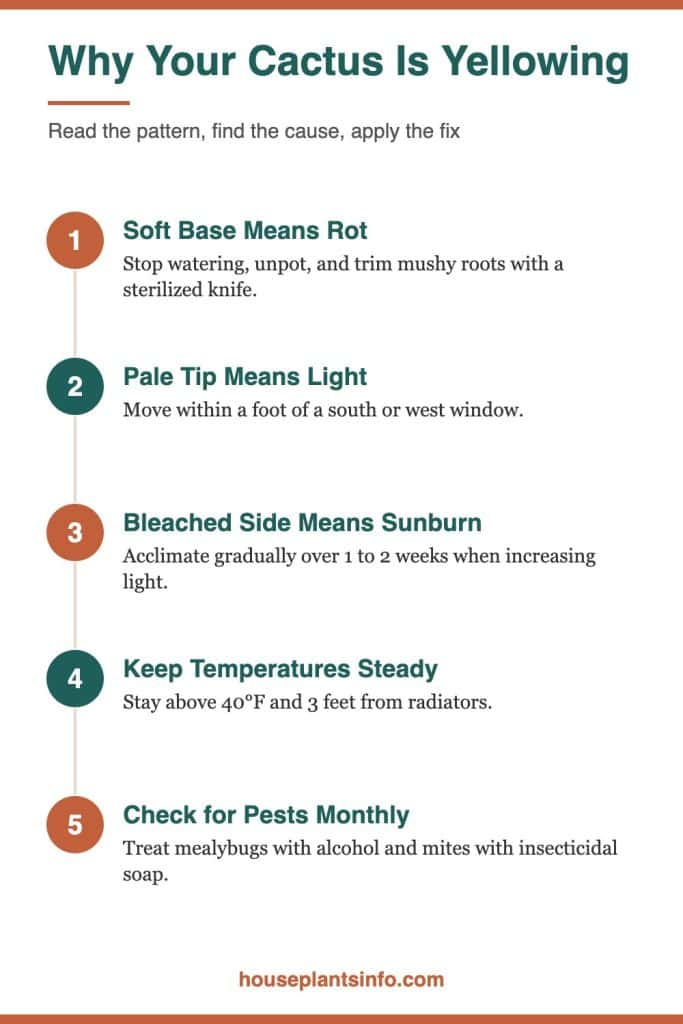
Yellowing that starts at the soil line and feels soft is the most urgent pattern. It often comes with a sour smell or dark streaks and almost always traces back to wet roots.
Yellowing on the side facing the glass, especially with bleached or tan patches, suggests sunburn. Pale, narrow, yellow-green growth at the tip suggests too little light.
Even, dull yellowing across the whole column, with firm tissue, often points to a root-bound plant, exhausted soil, or a long stretch without enough light.
Checking the Roots and Soil
Before you change anything, confirm the soil moisture. A soil moisture meter gives a quick reading in larger pots, but confirm with a wooden skewer, since the bottom of a deep pot can stay wet long after the top dries.

If the yellowing looks like weak light rather than water trouble, a full-spectrum LED grow light is the simplest way to test the theory. Run it 12 to 14 hours a day and watch whether new growth comes in greener.
When Yellowing Is Normal
A little yellowing or tan corking on the oldest growth near the base can be normal on mature plants. That tissue feels hard and dry, not soft, and it does not spread upward quickly.
| Where the yellow appears | Texture | Most likely cause |
|---|---|---|
| Base, at soil line | Soft, mushy | Overwatering or root rot |
| One side, facing window | Firm, bleached or tan | Sunburn |
| New growth at tip | Thin, pale, narrow | Too little light |
| Whole column, gradual | Firm, dull | Root-bound, old soil, low nutrients |
| Scattered speckles | Firm, dull, sometimes webbed | Pests |
| Side near heater or glass | Firm or scarred | Heat stress or cold damage |
Overwatering and Root Rot: Why the Base Turns Yellow and How to Save It
Overwatering is the most common reason a Peruvian apple cactus turns yellow at the base. Wet soil suffocates the roots, they start to rot, and the stem above them loses color and firmness.
How Overwatering Shows Up
Early signs include a slightly translucent, yellow base and soil that stays damp for more than a few days. Later, the base turns soft, brown, or black, and the column may lean or wobble in the pot.
Cool rooms make this worse. In a Chicago-style winter, a cactus watered on a summer schedule can sit in wet soil for weeks while growth has nearly stopped.
Rescuing a Plant With Wet Roots
If the base is still firm, simply stop watering and let the soil dry completely. Empty any saucer or decorative cachepot, and move the plant to the brightest, warmest spot you have.
If the base feels soft, unpot the plant. Shake off the wet soil, trim any brown, mushy roots with a clean knife sterilized in rubbing alcohol, and let the root ball air-dry for several days before repotting into fresh, dry, gritty mix.
When the Base Is Too Far Gone
If rot has moved up into the stem, cut above it into clean, firm green tissue with no discoloration.
The healthy top can be saved; you can then grow a Peruvian apple cactus from a cutting using the same callusing method as a regular stem piece.
Let the cut end callus for 1 to 3 weeks before planting. If the rescued top sits for weeks without growth, this guide on a Peruvian apple cactus not rooting walks through the usual fixes.
Sophia’s tip: After cutting away rot, wipe the knife with rubbing alcohol between every cut. Rot organisms ride along on the blade and can infect the clean tissue you are trying to save.
Too Little Light: Why New Growth Turns Pale Yellow-Green
A Peruvian apple cactus kept too far from the window fades to pale yellow-green and stretches toward the light. This is called etiolation, and it is very common in apartments with east or north windows.
Signs of Weak Light
New growth at the tip becomes narrow, pointed, and lighter in color than the older column. The whole plant may lean toward the window, and the ribs look shallower than before.
Distance from the glass matters more than most people expect. A cactus 4 feet back from a south window gets only a fraction of the light it would get on the sill.
Fixing the Light
Move the plant to an unobstructed south or west window, ideally within about a foot of the glass. Aim for 4 to 6 or more hours of direct sun.
If your best window faces east or north, or buildings block the sky, add a full-spectrum LED grow light positioned 6 to 12 inches above the top of the plant. A simple outlet timer keeps the schedule steady.

Raise light levels gradually over 1 to 2 weeks. A plant that has lived in dim conditions can sunburn if you move it straight into strong direct sun.
What to Expect Afterward
Stretched, pale sections will not thicken or regain full color. New growth above them should come in greener and wider, and you can later trim the thin section to tidy the shape.
Sophia’s tip: Rotate the pot a quarter turn every two weeks, and put a small piece of tape on one side so you remember which way it faced last. Even rotation keeps the column straight and evenly colored.
Sunburn After a Move: Why One Side Turns Yellow or White
Sunburn causes yellow, bleached, tan, or white patches on the side facing the strongest light. It usually happens after a sudden change, like a move from a store shelf to a south window or a trip outdoors without acclimation.
Recognizing Sun Damage
Burned tissue stays firm, not soft. The patch often has a clear edge and sits only on the exposed side, while the shaded side stays a healthy blue-green.
Severe burns can turn tan and corky over time. That scar is permanent, but it does not spread or harm the rest of the plant.
Preventing Further Burn
If the damage is fresh, pull the plant back a foot or two from the glass, or filter the light with a sheer curtain for 1 to 2 weeks. Then move it closer again in small steps.
When taking the plant outdoors for summer, start with a few hours of morning sun or bright shade. Increase the exposure gradually over 1 to 2 weeks before giving it full afternoon sun.
Caring for the Scar
Leave burned tissue alone. Do not cut it off unless it turns soft, since the scarred area still protects the stem underneath. New growth will come in green as long as the light stays consistent.
Cold Damage, Drafts, and Radiator Heat: Temperature Causes and Fixes
Temperature extremes can yellow or scar the side of the cactus closest to the problem. Cold glass, winter drafts, and hot, dry air from radiators are the usual indoor culprits.
Cold Glass and Drafts
Window panes can drop well below room temperature on cold nights. Tissue touching frozen glass may turn yellow, then tan or dark, and can scar permanently.
Keep the column an inch or two away from the pane. The plant handles a cool winter rest of about 50 to 60°F well, but keep it above about 40°F at all times.
Outdoors, this cactus survives year-round only in frost-free climates, roughly USDA zones 9 to 11. If you are on the edge, read about whether a Peruvian apple cactus will grow in zone 8 before planting it outside.
Radiators, Vents, and AC
Radiators and forced-air vents blow hot, dry air that can stress the skin on one side. Keep the cactus at least 3 feet from radiators and out of the direct path of heating or air conditioning vents.
A cool room is not a problem in itself. A constant cold blast from a window AC unit, though, can discolor the tissue nearest the airflow.
Bringing Plants In for Fall
Bring outdoor plants inside before night temperatures drop below 50°F. Check them closely for pests at the same time, since a stressed plant attracts trouble.
Root-Bound Pots, Old Soil, and Nutrient Problems: Slow, Even Yellowing
When the whole column fades slowly and stays firm, the roots or soil are often the issue. A plant that has sat in the same pot for years can run short of space and nutrients.
Signs the Pot Is Too Small
Roots circling the drainage hole or pushing the plant up are clear signs. So is soil that dries out within a few days in summer, or water that runs straight through without soaking in.
Repotting the Right Way
Repot every 2 to 3 years, in spring or early summer when the plant is actively growing. Choose a pot only 1 to 2 inches wider than the root ball, with a drainage hole.
Use cactus mix amended with 30 to 50% pumice or coarse perlite. Unglazed terracotta helps soil dry evenly and steadies a tall column. Wait about a week before watering so small root injuries can seal.
Wear thick gloves and wrap the column in a folded towel or strip of cardboard to handle it safely. Tall plants may need a padded stake until new roots anchor them.
Feeding Without Overdoing It
During spring and summer, feed with a low-nitrogen cactus fertilizer diluted to half strength every 4 to 6 weeks. Apply it to moist soil, never bone-dry soil, to avoid root burn.
Stop fertilizing by late August or September. Feeding a resting plant in winter does not fix yellowing and can damage roots. Too much fertilizer can also cause discoloration, so more is not better.
Pests That Cause Yellow Speckles and Patches
Sap-feeding pests drain the plant and leave yellow, dull, or speckled areas. Mealybugs, scale, and spider mites are the three to check for on a Peruvian apple cactus.
Mealybugs
Mealybugs look like small tufts of white cotton tucked along the ribs and around spine clusters. Dab them with a cotton swab dipped in 70% isopropyl alcohol, then repeat weekly until no new ones appear.
Check the roots during repotting too. Root mealybugs hide in the soil and can cause slow yellowing with no visible pests on the stem.
Scale and Spider Mites
Scale shows up as tan or brown bumps that scrape off with a fingernail. Spider mites leave fine webbing and a dull, speckled, yellowish surface, and they thrive in dry winter air near heaters.
Treat both with insecticidal soap, repeated every 5 to 7 days for several weeks. Isolate the infested plant from your other houseplants during treatment.
Keeping Pests Away
Inspect the ribs and spine clusters monthly with a flashlight. Check any new plant carefully before it joins your collection, and look over outdoor plants before bringing them back inside.
Sophia’s tip: Hold a sheet of white paper under a dull section and tap the stem. Tiny moving specks on the paper usually mean spider mites, which are hard to see on the plant itself.
Natural Aging, Corking, and When Yellow Turns Black
Some yellowing and browning near the base of an older plant is natural corking, not disease. Corked tissue feels hard, dry, and bark-like, and it develops slowly from the soil line upward on mature columns.
Telling Corking From Rot
Press the area firmly. Corking is solid and dry, while rot gives under pressure, looks wet, and often spreads within days.
Corking also tends to look even and textured. Rot usually has irregular, dark, or water-soaked edges and may smell unpleasant.
When Yellow Patches Darken
Yellow tissue that turns soft and black points to rot or a fungal infection, and it needs quick action. If you are seeing dark patches, this guide on a Peruvian apple cactus turning black explains how to tell harmless spots from serious damage.
A Note on Pets and Kids
The ASPCA plant list is the best place to check current toxicity guidance for this cactus. Either way, the spines are the main hazard, so keep the pot where cats, dogs, and toddlers cannot brush against it.
How to Prevent Yellowing Long Term
Steady light, sparse watering, and a gritty mix prevent nearly all yellowing on this cactus. Matching your care to the season keeps the column firm and evenly colored.
A Seasonal Rhythm
In spring and summer, water deeply only when the soil is completely dry, usually every 2 to 3 weeks. In winter, water every 4 to 6 weeks or less, and skip fertilizer entirely.
Forced-air heat dries the soil faster, but the plant still rests with shorter days. Check the soil with a skewer rather than watering on a calendar.
Setting Up the Right Spot
Give the plant the brightest south or west window you have, within about a foot of the glass. Add a grow light from November through February if new growth looks thin or pale.
Normal household humidity of 30 to 50% suits it, and dry winter air is fine. Skip misting and pebble trays, since extra moisture around the stem invites fungal trouble.
For a full routine covering light, soil, and seasonal feeding, see how to care for a Peruvian apple cactus indoors.
| Season | Watering | Feeding | Watch for |
|---|---|---|---|
| Spring | Increase gradually as growth resumes | Half strength every 4 to 6 weeks | Root-bound pots, repot if needed |
| Summer | Every 2 to 3 weeks once dry | Every 4 to 6 weeks | Sunburn when moving outdoors |
| Fall | Gradually reduce | Stop by early fall | Pests before bringing inside |
| Winter | Every 4 to 6 weeks or less | None | Wet soil, cold glass, pale growth |
Your Next Steps
- Press the base and probe the soil with a skewer today to rule out rot first.
- Stop watering until the pot is completely dry, and empty the saucer after every soak.
- Move the plant to a bright south or west window, within about a foot of the glass but not touching it.
- Pull it at least 3 feet from radiators and out of vent airflow.
- Inspect ribs and spine clusters for mealybugs, scale, and webbing, and treat right away if you find any.
- Plan a spring repot into gritty mix and a terracotta pot if the soil stays wet for days.
Common Questions About Peruvian Apple Cactus Yellowing
Can a yellow Peruvian apple cactus turn green again?
Firm tissue yellowed by weak light may regain some color once light improves, but stretched sections stay thin. Sunburned and rotted tissue will not turn green again. Focus on making new growth healthy rather than restoring old tissue.
Should I cut off the yellow part of my cactus?
Cut only if the yellow tissue is soft, mushy, or spreading, which signals rot. Firm yellow areas from sunburn or light stress can stay, since they still protect the stem. When you do cut, go into clean green tissue with a sterilized knife.
Why is my Peruvian apple cactus yellow at the bottom only?
Yellowing at the base is usually caused by overwatering or root rot, especially in cool rooms during winter. Hard, bark-like tissue at the base of an older plant can be natural corking instead. Press it to tell the difference.
Is a yellow Peruvian apple cactus dying?
Not necessarily. Many causes, like weak light, sunburn, or a crowded pot, are fixable and do not threaten the plant. Soft, spreading yellow at the base is the serious sign, and even then the healthy top can often be saved as a cutting.
How long does it take to recover from yellowing?
Changes in light and watering show up in new growth over several weeks during spring and summer. Recovery is much slower in winter, when growth nearly stops. A rescued cutting usually needs 3 to 6 weeks in warm conditions to root.

Hi! I’m Sophia, and I love plants – especially an expert in growing house plants. I stay in Chicago, United States of America, and through my blog and social media platforms, provide tips and tricks on how to grow healthy, vibrant plants indoors. Check out more here.