
A dark patch has appeared near the base of your Peruvian apple cactus, and the once-green column on your windowsill now looks bruised, sooty or streaked with black.
If you are asking why is my Peruvian apple cactus turning black, the cause is usually something you can identify by touch, location and timing.
The short version: Soft, mushy black tissue that spreads from the base or a wound is rot, almost always from overwatering, poor drainage or cold, wet soil.
Hard, dry black or dark brown patches are usually scars from cold, sunburn or old injuries, and a wipe-off black film points to sooty mold from pests.
This guide covers how to tell each cause apart, how to treat it, how to cut away rot and reroot healthy tissue, and how to prevent blackening from coming back.
Check These First
- Press the black area gently. Soft, wet or sunken tissue means rot. Firm, dry tissue usually means a scar.
- Smell the base of the stem. A sour or foul odor confirms active rot.
- Wipe the black spot with a damp cotton swab. If it comes off, it is sooty mold, not damaged tissue.
- Check the pot for a drainage hole and feel the soil 2 inches down. Soil that is still wet days after watering is the most common trigger.
- Look at where the plant sits. Cactus pressed against cold winter glass or a few inches from a south window in summer often shows dark damage on one side.
Why Is My Peruvian Apple Cactus Turning Black?
Your Peruvian apple cactus turns black when its tissue is dying or damaged, or when something dark is growing on its surface. The texture of the black area and where it starts tell you which problem you have.
Peruvian apple cactus stores large amounts of water in its ribbed stem. That makes it tough in drought, but it also means waterlogged soil, cold and wounds can quickly turn healthy green tissue into a soft, dark mass.
Soft Black Versus Hard Black
Soft black is the urgent kind. It means cells are breaking down, usually from fungal or bacterial rot, and it can travel up the column within days or weeks.
Hard black or dark brown that feels like a dry scab is usually old damage. Scars from cold, sunburn, bumps or healed pest feeding do not turn green again, but they also do not spread.
Where the Color Starts
Blackening that begins at the soil line or base points to root and stem rot. Spots that appear high on the stem, along the ribs or around areoles more often come from fungal leaf spot, physical injury or pests.
Damage that sits only on the side facing the window points to environment. That pattern usually means sunburn in summer or cold damage from glass in winter.
Simple Ways to Diagnose It
A soil moisture meter pushed near the base of the stem tells you quickly whether the mix has been staying wet. A reading that stays in the wet range for more than a few days after watering is a strong rot warning.

A clean, sharp knife wiped with rubbing alcohol is the other thing to have ready. You may need it to make a test cut or to remove damaged tissue, and sterilizing the blade keeps you from spreading infection.
| Symptom | Likely cause | Urgency |
|---|---|---|
| Soft, mushy black base, foul smell | Root and stem rot | High |
| Wet, dark sunken spots that spread | Fungal or bacterial infection | High |
| Dark, glassy or collapsed patches after a cold spell | Cold or frost damage | Medium |
| Tan, white or black scabs on the window-facing side | Sunburn scars | Low |
| Black film that wipes off | Sooty mold from pests | Medium |
| Dry, firm brown or black scar | Old physical injury | Low |
Root and Stem Rot From Overwatering: Cause and Fix
Rot from overwatering is the most common reason a Peruvian apple cactus turns black, and it almost always starts at the base. Roots sitting in soggy soil run out of oxygen, die, and let fungi and bacteria move up into the stem.
How Rot Looks and Feels
The base turns dark brown to black and feels soft when you press it. The skin may wrinkle, split or ooze, and the plant can lean or wobble in the pot because the roots no longer anchor it.
As rot progresses, the inside of the stem turns brown, then black and watery. You may also notice a sour smell from the soil.
Why Indoor Plants Rot
Indoors, soil dries far more slowly than it does outside in full sun and wind. A pot watered on a fixed weekly schedule can stay wet for a long time, especially in winter when light is low and the plant is barely growing.
Common triggers include:
- Pots without a drainage hole, or cachepots that hold water around the base
- Regular potting soil that stays wet and compacts
- A pot much larger than the root ball, leaving extra wet soil
- Watering in winter at the same rate as summer
- Cool rooms below about 60°F combined with damp soil
How to Fix Early Rot
If only the roots are affected and the stem is still firm, unpot the plant and shake off the wet soil. Trim any black, soft or hollow roots back to firm, pale tissue with a sterilized knife.
Let the plant sit bare-root in a dry, shaded, airy spot for several days to a week so the cuts can callus. Then repot into dry, gritty cactus mix with 30 to 50 percent perlite or pumice and hold off watering for about a week.
If the black has moved into the stem itself, skip to the rescue section below. Stem rot does not reverse, and the only fix is cutting above it.
Sophia’s tip: In a Chicago-style winter, I water an established Peruvian apple cactus only every 3 to 6 weeks, and only when a moisture meter reads fully dry at the bottom of the pot. Steady winter dryness prevents more rot than any treatment.
Fungal and Bacterial Infections: Black Spots That Spread
Fungal and bacterial infections show up as dark, wet-looking spots that grow larger over time, often starting at a wound, an areole or a damp spot on the stem. They need moisture, poor airflow and a point of entry to take hold.
Fungal Spots
Fungal infections usually appear as round or irregular dark spots, sometimes with a reddish, yellow or brown edge. They may stay small and dry, or sink in and spread if the plant stays humid and crowded.
Spots that stay dry, firm and stop growing are often harmless scars. Spots that widen, feel soft or ooze are active and need treatment.
Bacterial Soft Rot
Bacterial soft rot moves faster than most fungal problems. Tissue turns black, slimy and foul-smelling, sometimes in just a few days, and it often starts at a wound, a pruning cut or a damp base.
Because it spreads quickly through the stem, bacterial soft rot usually calls for cutting well above the visible damage rather than trying to dry the plant out.
How to Treat an Infection
For small, contained spots, use a sterilized knife to cut out the dark tissue plus a thin margin of healthy green tissue around it. Let the wound dry in a warm, airy spot until it forms a firm callus, and keep water off the stem.
Improve conditions so the problem does not return:
- Space plants so air can move around them
- Run a ceiling fan on low or use a small fan nearby to keep air moving
- Water the soil, not the stem, and avoid misting cactus
- Keep the plant away from humidifiers and steamy bathrooms
- Remove fallen debris from the soil surface
A general-purpose fungicide labeled for cactus and succulents can help with stubborn fungal spots on the surface. It will not save tissue that is already soft and rotted, so treat it as a protective step after removing damage.
If the stem also shows pale or washed-out areas alongside the dark spots, our guide on Peruvian apple cactus yellowing covers light and watering stress that often comes before infection.
Cold Damage or Sunburn Scars: Cause and Fix
Black or dark patches that appear after a cold night or a sudden move into strong sun are usually environmental damage, not disease. The tissue dies where it was stressed, then dries into a dark scar.
Cold and Frost Damage
Peruvian apple cactus prefers temperatures above 50°F. Brief exposure near freezing can damage tissue, and a hard freeze kills cells that then turn dark, glassy or mushy within days.
Indoors, cold damage most often happens when a stem touches winter window glass, sits near a drafty door, or spends a cold night on a balcony in fall. Cold injury on wet soil is especially likely to turn into rot.
If damaged tissue stays firm and dries out, leave it alone. If it turns soft, cut it away as you would rot. Move the pot at least a foot back from cold glass at night and bring outdoor plants inside before nights drop below 50°F.
If you are thinking about planting your cactus outside, read will a Peruvian apple cactus grow in zone 8 before you commit, because winter cold is the main limit for this plant.
Sunburn Scars
Sunburn usually starts as pale tan, white or yellowish patches on the side facing the window. Over weeks, badly burned areas can harden into brown or black scabs that do not turn green again.
It happens most often when a plant moves suddenly from a dim spot into direct south or west sun, or from indoors to a sunny balcony in spring. Glass can also intensify heat on a stem pressed against it.
Sunburn scars are permanent but cosmetic. Move the plant 2 to 3 feet back from the glass or behind a sheer curtain, then shift it closer over 2 to 3 weeks so new growth adjusts.
Sophia’s tip: When you move a cactus to a balcony for summer, start it in bright shade for a week, then morning sun for another week before full afternoon sun. That gradual step-up prevents most sunburn scars.
Old Injuries
Bumps, scrapes, pet scratches and bent stems can leave dry, dark brown or black scars. These are firm and stable, and they do not need treatment unless they become soft or start to spread.
Keep an eye on any fresh wound for a week or two. Keep water off it so it can dry and seal before microbes get in.
Pests and Sooty Mold: Black Film on the Stem
A black, powdery or soot-like coating that wipes off with a damp cloth is sooty mold. It grows on the sticky honeydew left by sap-sucking pests, so the real problem is the pests underneath.
Pests That Lead to Black Marks
Mealybugs look like small white cottony clusters tucked into ribs, areoles and around the base. Scale insects look like flat or domed tan, brown or dark bumps stuck to the skin.
Both feed on sap and can leave dark, corky feeding scars over time. Root mealybugs can also hide in the soil and weaken the plant, which makes rot more likely.
How to Clean It Up
- Isolate the cactus from other plants right away
- Dab mealybugs and scale with a cotton swab dipped in rubbing alcohol
- Use tweezers or a soft brush to reach between spines
- Wipe sooty mold off with a damp cloth once the pests are gone
- Check every 5 to 7 days for several weeks, since eggs hatch in waves
For heavy infestations, an insecticidal soap labeled for cactus can help. Test it on a small area first, keep the plant out of direct sun until it dries, and repeat as the label directs.
Checking the Roots
If the plant looks weak and you see no pests on the stem, slide it out of the pot and look at the roots. White, waxy fluff on the roots or soil means root mealybugs.
Wash off the old soil, trim damaged roots and repot in fresh, dry mix.
How to Save a Peruvian Apple Cactus That Is Turning Black
You can save a blackening Peruvian apple cactus as long as some firm, green, clean tissue remains. The method is to cut away every bit of rot, let the healthy section callus, then reroot it in dry soil.
Cut Above the Rot
Put on thick gardening gloves and wrap the stem in folded newspaper or a towel to hold it. Use a sharp, sterilized knife to cut through the stem a few inches above the black area.
Look at the cut face. Healthy tissue is solid green to pale green throughout. Any brown streaks, rings or dots mean infection has traveled further, so cut another inch or two higher and wipe the blade between cuts.
Keep cutting until the cross-section is completely clean. Throw away the rotted section and its soil, and wash the pot with hot, soapy water before reusing it.
Callus the Healthy Section
Set the clean cutting upright or on its side in a dry, shaded spot with good airflow for 1 to 3 weeks. Thin stems may callus in about a week, while thick sections can need closer to 3 weeks.
The cut end is ready when it feels dry, firm and slightly sunken, like a scab. Planting before this point lets moisture back into open tissue, which is how rot starts again.
Sophia’s tip: Mark the top of each cutting with a small piece of tape before it calluses. Cactus sections only root from the bottom end, and after a week or two it can be hard to tell which way is up.
Reroot in Dry Mix
Push the callused end 1 to 2 inches deep into dry, gritty cactus mix in a small terracotta pot with a drainage hole. Prop tall pieces with a stake or a few stones until roots anchor them.
Keep the pot in bright indirect light at 70 to 85°F and wait 5 to 7 days before a light first watering. Roots usually form in 3 to 6 weeks in warm conditions.
For each step in more detail, see how to grow Peruvian apple cactus from cutting.
If the cutting is still firm after two months but has no roots, our guide on Peruvian apple cactus not rooting covers the usual reasons, from cool rooms to low light.
What Happens to the Mother Plant
If the base and roots are healthy and you only removed a top section, the remaining stem will callus over and often sprout new arms below the cut. Keep it on the dry side for a week or two while the wound heals.
If the rot started at the base, the lower plant usually cannot be saved. Your rerooted top section becomes the new plant.
Pets and Kids Around a Rescue
The sharp spines are the main confirmed hazard with this cactus, and fresh cuttings drying on a shelf are easy for pets and kids to knock over.
Check the ASPCA toxic and non-toxic plant list for this species, and keep callusing pieces on a high, stable surface.
How to Keep Your Cactus From Turning Black Again
Prevention comes down to fast-draining soil, infrequent watering, plenty of light and steady warmth. Those four conditions keep the stem firm and make rot far less likely.
Soil and Pot
Use a cactus mix with 30 to 50 percent perlite or pumice, and choose a pot only 1 to 2 inches wider than the root ball. Unglazed terracotta pulls moisture out of the mix and dries faster than plastic.
Never leave the pot sitting in a saucer of water. Empty the saucer 15 to 20 minutes after watering.
Watering by Season
In spring and summer, water thoroughly only when the mix is completely dry, then let the excess drain out. In fall and winter, cut back to every 3 to 6 weeks depending on how warm and bright your room is.
Dry winter air from radiators is fine for this plant. The risk in winter is wet soil in a cool, dim room, not low humidity.
Light and Temperature
Give your cactus at least 4 to 6 hours of direct sun from a south or west window once it is established.
In a north-facing apartment or during short winter days, a full-spectrum grow light 12 to 18 inches above the plant for 12 to 14 hours a day keeps growth strong.
Keep temperatures above 50°F and away from cold glass, drafty doors and AC vents blowing directly on the plant. For a full seasonal routine including feeding and repotting, see how to care for Peruvian apple cactus.
Your Next Steps
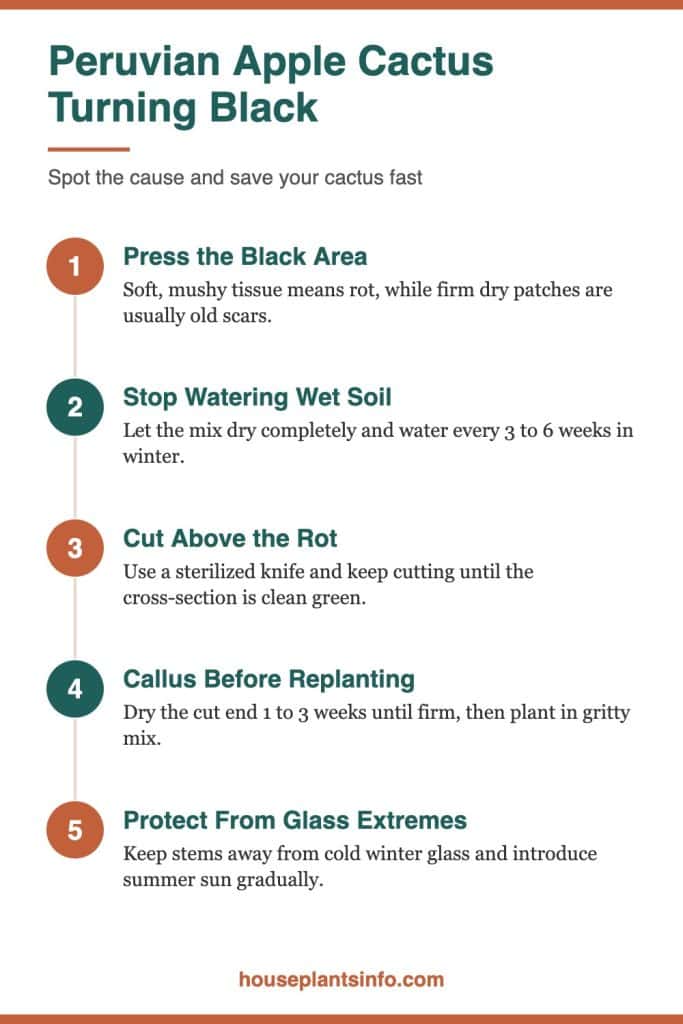
- Press and smell the black area today to decide whether it is soft rot or a dry scar.
- Check the soil 2 inches down and stop watering until it is completely dry.
- Cut any soft black tissue back to clean green, sterilizing your knife between cuts.
- Callus healthy sections for 1 to 3 weeks, then reroot in dry, gritty cactus mix.
- Move the plant a foot or more from cold glass in winter and 2 to 3 feet back from hot summer glass.
- Inspect ribs, areoles and roots for mealybugs or scale every week for a month.
Common Questions About Peruvian Apple Cactus Turning Black
Can black areas on a Peruvian apple cactus turn green again?
No, blackened tissue is dead or permanently scarred and will not turn green again. Dry scars can stay on the plant without harm, while soft black tissue needs to be cut away so it does not spread.
Is a black base always a sign the cactus is dying?
A soft black base usually means rot, and the lower part of the plant often cannot be saved. If firm, clean green tissue remains higher up, you can cut above the rot and reroot that section as a new plant.
Is corking the same as turning black?
Corking is a natural, gradual change where older lower stems turn tan, brown or gray and feel hard and bark-like. It starts at the base and creeps up slowly, while rot is soft, dark and spreads quickly.
Should I use cinnamon or fungicide on cut areas?
A light dusting of a fungicide labeled for cactus can help protect a fresh cut while it calluses. The most important steps are still cutting back to clean tissue and keeping the wound completely dry until it seals.
How fast does rot spread in a Peruvian apple cactus?
Rot can move through the stem within days to a few weeks, especially in cool, wet soil. Bacterial soft rot is often faster, so act as soon as you find soft, dark tissue rather than waiting to see if it dries.

Hi! I’m Sophia, and I love plants – especially an expert in growing house plants. I stay in Chicago, United States of America, and through my blog and social media platforms, provide tips and tricks on how to grow healthy, vibrant plants indoors. Check out more here.