
The cutting has been sitting in its pot by the window for weeks, still green and upright, but a gentle tug tells you nothing is holding it in place.
A Peruvian apple cactus not rooting is one of the most common frustrations with this fast-growing columnar cactus, and the cause is usually simple to correct.
The short version: Most stalled cuttings were planted before the cut end calloused, kept too wet, or kept too cool.
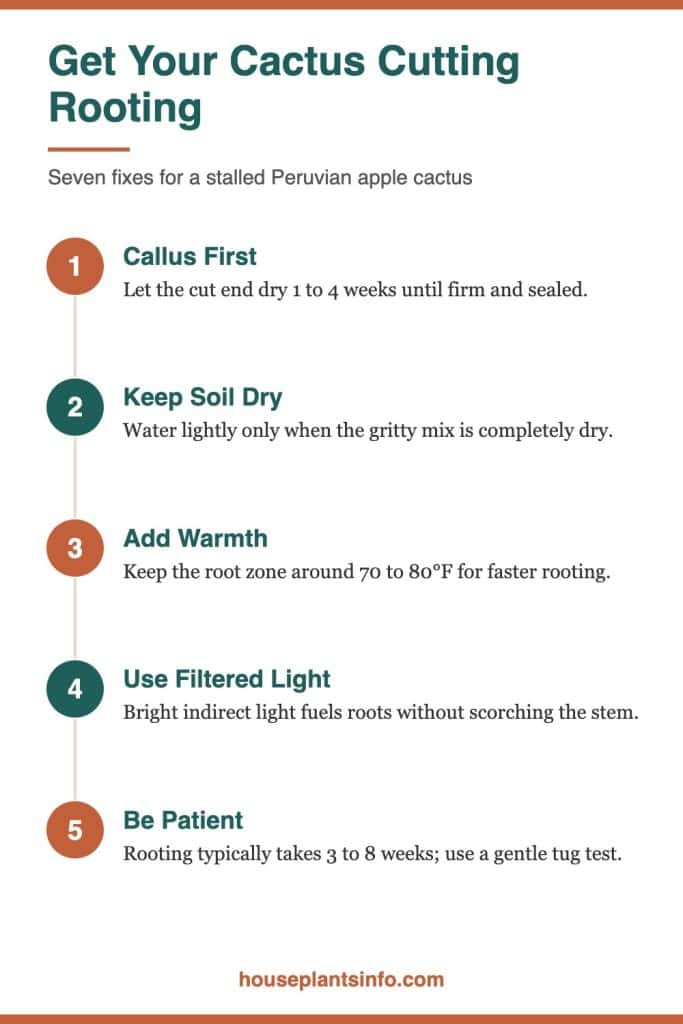
Let the base dry until it forms a firm callus, plant it in a gritty mix, keep it at 70 to 85°F in bright light, and water only lightly once roots begin.
This guide covers each cause, how to tell which one applies to your cutting, and what to do next.
Check These First
- Tug gently on the cutting. Slight resistance means roots have started, even if you can’t see them yet.
- Look at the base. A soft, brown, or black end means rot, not slow rooting.
- Feel the soil 1 to 2 inches down. If it is damp more than a few days after watering, it is too wet for an unrooted cutting.
- Check the room temperature near the pot. Below about 65°F, rooting slows to a crawl.
- Confirm the cutting is right side up. The end that was closest to the original plant’s base must go into the soil.
Why Is My Peruvian Apple Cactus Not Rooting?
A Peruvian apple cactus (Cereus repandus, often sold as Cereus peruvianus) usually stalls for one of a handful of reasons: an uncured cut, too much water, cold, poor soil, the wrong light, or a cutting that is upside down or too small.
Patience matters too, since rooting normally takes 3 to 8 weeks.
How long rooting normally takes
In warm months, most healthy cuttings form roots within 3 to 6 weeks of planting. Thick stems, older woody pieces, and cuttings started in fall or winter can take 8 weeks or longer.
That means a cutting that looks unchanged after three weeks is often perfectly fine. The roots form inside the soil long before you see new growth at the tip.
How to check without damaging the cutting
Start with the tug test. Hold the cutting near the soil line and pull upward very lightly. Any resistance means roots are anchoring it.
For the soil, a soil moisture meter pushed in near the pot edge tells you whether the lower layers are still wet, which is hard to judge by touching the surface.
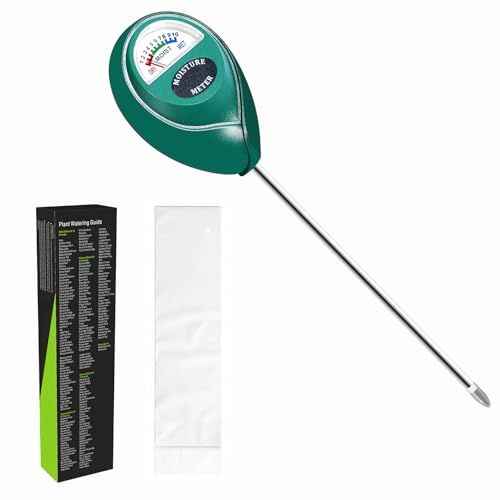
If you want to see roots directly, you can slide the cutting out after 4 weeks, look, and replant it the same day.
Signs your cutting is alive and working
A healthy, slow cutting stays firm and green from base to tip. It may lose a little plumpness and look slightly thinner, which is normal because it is living on stored water.
A failing cutting turns soft, mushy, or discolored, usually starting at the base. If you see that, skip ahead to the rot section.
Cause 1: The Cut End Never Calloused (Fix: Let It Dry Fully)
Cuttings planted while the cut surface is still moist tend to absorb water, invite bacteria, and rot instead of rooting. The fix is to let the base dry until it forms a hard, dry, slightly sunken callus before it touches soil.
How long to let it dry
Thin cuttings, around 2 inches across or less, usually callus in about 1 to 2 weeks. Thicker stems can need 2 to 4 weeks, sometimes more in humid weather.
The callus is ready when the cut face is dry and firm to the touch, often slightly concave, with no moist or green tissue showing. If you press it and it feels tacky, give it more time.
Where to cure it indoors
Set the cutting upright or on its side in a dry, airy spot out of direct sun. A shelf several feet from a bright window works well.
Avoid placing it right next to a radiator or forced-air vent. Very hot, blasting air can shrivel the cutting before it seals evenly.
What to do with a cutting you planted too soon
If you planted an uncured cutting and the base is still firm, pull it out, brush off the soil, and let it dry for another 1 to 2 weeks. Then replant it in dry mix.
If you need a refresher on taking and preparing the stem in the first place, this guide on how to grow peruvian apple cactus from cutting walks through the whole process.
Sophia’s tip: Mark the date you took the cutting on a piece of tape stuck to a nearby shelf. Without a written date, it is easy to plant a cutting days or weeks too early.
Cause 2: Overwatering and Rot (Fix: Dry Soil Until Roots Form)
An unrooted cactus cutting has no roots to take up water, so wet soil simply sits against the base and encourages rot. Plant in dry or barely damp mix and hold off on regular watering until roots form.
The safest watering schedule for unrooted cuttings
After planting, wait about 1 week before giving any water. Then lightly moisten the top inch or so of soil, not a full soak.
Repeat that light watering only when the mix is completely dry, often every 1 to 2 weeks in warm weather and less in cool weather. Once the tug test shows resistance, you can gradually move toward deeper watering.
How to recognize rot early
Rot usually starts at the base and moves upward. Look for softness, a translucent or water-soaked look, brown or black patches, or an unpleasant smell when you lift the cutting.
Yellowing that spreads up from the soil line can be another early warning. This article on peruvian apple cactus yellowing explains how to tell rot-related color changes from other causes.
How to rescue a rotting cutting
Pull the cutting and inspect it. With a clean, sharp knife, cut above the damaged tissue until the cross-section is clean, firm, and evenly pale green with no brown streaks.
Let the new cut callus completely, then start again in fresh, dry mix. If you find dark, spreading damage on the stem itself, the guide to peruvian apple cactus turning black covers what to do next.
Cause 3: Too Cold or Started in Winter (Fix: Add Warmth)
Peruvian apple cactus roots best when the soil stays roughly 70 to 85°F. In a cool apartment or during winter, when the plant naturally slows down, cuttings can sit for months without rooting.
Why winter cuttings stall
Like most cacti, this species grows actively in spring and summer and slows in fall and winter. Shorter days and cooler rooms signal it to conserve energy rather than produce new roots.
A cutting taken in November may not root until temperatures and day length rise again in spring. It is often not dead, just waiting.
Ways to add warmth safely indoors
A seedling heat mat set under the pot is the most reliable way to keep the root zone warm. Aim for soil around 70 to 80°F, and keep the mix on the dry side since warmth plus moisture can speed rot.
Other options include a warm room away from drafts, or the top of a shelf in a heated room. Avoid windowsills in winter, since glass can drop well below room temperature at night.
Drafts to watch for
Cold drafts from leaky windows and doors chill the soil quickly. In summer, AC vents do the same thing.
Move the pot at least a few feet from any vent that blows directly on it. Steady, mild warmth works far better than swings between hot and cold.
If you are also wondering about moving a rooted plant outdoors later, this piece on will a peruvian apple cactus grow in zone 8 explains how cold tolerance plays out in practice.
Sophia’s tip: If you take a cutting in late fall, I recommend letting it callus and then storing it dry and upright in a cool, bright spot until March. Planting it in spring usually gets faster, safer rooting than fighting winter conditions.
Cause 4: Heavy Soil or the Wrong Pot (Fix: Gritty Mix and Drainage)
Dense, peat-heavy potting soil holds water for days, which suffocates the base of a cutting and invites rot. A fast-draining, gritty mix in a pot with a drainage hole gives roots the air they need to form.
What the mix should look like
A good rooting mix is mostly mineral. A simple blend is about half cactus potting mix and half coarse grit such as perlite, pumice, or coarse sand.

When you water it, the water should drain through within seconds. If it pools on top or the mix stays dark and wet for more than a few days, it is too heavy.
Choosing the right pot
Use a pot with at least one drainage hole. Unglazed terracotta is a good choice because it wicks moisture out through its walls and helps the mix dry evenly.
Size matters as well. Choose a pot only an inch or two wider than the cutting’s diameter, since a large volume of soil stays wet much longer.
How deep to plant
Set the callused end about 1 to 2 inches into the mix, deeper for very tall cuttings. The goal is enough depth for stability without burying much of the stem in moist soil.
Some growers lay a thin layer of grit on top of the soil around the stem. It keeps the base drier and helps the cutting stand upright.
Cause 5: Light Too Low or Too Harsh (Fix: Bright, Filtered Light)
Cuttings need bright light to fuel root growth, but strong direct sun can scorch and dehydrate a stem that has no roots to replace lost water. Bright, indirect or filtered light is the sweet spot during rooting.
Best window placement
In a typical apartment, an east-facing window or a spot 2 to 4 feet back from a south or west window works well while the cutting roots. A sheer curtain softens harsh afternoon sun.
North-facing windows are usually too dim for good rooting. A cutting there may stay alive but root very slowly.
Using a grow light
If your windows are limited, a full-spectrum grow light placed about 12 to 18 inches above the cutting can fill the gap. Run it for roughly 12 to 14 hours a day.
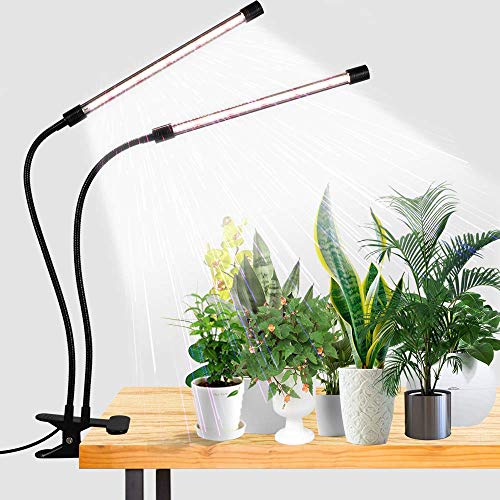
Grow lights are especially helpful in winter, when days are short and window light is weak. Pair the light with warmth for the best results.
Signs of too much sun
A cutting getting too much direct light may turn pale, yellowish, or reddish, or develop tan, crusty patches on the sun-facing side. That is sunburn, and it does not heal.
Move it back from the glass right away. Once it has a solid root system, you can gradually introduce more direct sun over 2 to 3 weeks.
Cause 6: Upside Down, Too Small, or Wobbly (Fix: Correct the Cutting Itself)
Sometimes the problem is the cutting. A piece planted upside down will not root, very small sections struggle, and a cutting that rocks in its pot keeps tearing fragile new roots.
Planted upside down
Cactus stems have a natural top and bottom, and roots only form from the end that faced the base of the original plant. If you cut a long stem into sections, it is easy to lose track.
Look at the spines. On most columnar cacti, spines angle slightly upward toward the growing tip. If yours point down toward the soil, the cutting is likely upside down.
Too small or too weak
Cuttings roughly 6 to 12 inches long tend to root most reliably, since they carry enough stored energy. Very short pieces can still work but are slower and more prone to drying out.
Cuttings taken from stressed, shriveled, or unhealthy plants also root poorly. Whenever possible, take pieces from firm, plump, healthy growth.
Stabilizing a tall cutting
Tall cuttings tip over easily and every movement disturbs the roots trying to form. Prop them up with a small stake, a few stones packed around the base, or by resting the stem against a wall.
Sophia’s tip: Wrap a folded strip of newspaper or cardboard around the stem when handling or staking it. It protects your hands from spines and keeps ties from bruising the skin.
What About Rooting Hormone and Water Propagation?
Rooting hormone is optional for this cactus and can slightly speed things up, but it will not fix rot, cold, or wet soil. Water propagation is generally not recommended, since it raises the risk of rot for a succulent stem.
When rooting hormone helps
Dip the callused end in a light dusting of rooting powder just before planting. It can encourage more even root formation on thick or older cuttings.
Use a light coating only. Heavy clumps of powder do not work better and can trap moisture against the base.
Why water rooting is risky
Some cacti will form roots in water, but those roots are adapted to water rather than soil. Transplanting often causes a setback, and the stem sits in constant moisture the whole time.
For Peruvian apple cactus, rooting directly in dry, gritty mix is the most reliable path.
Caring for the cutting once it roots
When the cutting resists a gentle tug and shows new growth at the tip, it has established itself. Begin watering more deeply, letting the mix dry fully between waterings, and gradually increase light.
For ongoing watering, feeding, and repotting, see how to care for peruvian apple cactus as it matures.
Pet and family safety
I could not confirm an ASPCA toxicity listing for Peruvian apple cactus, so treat it with caution. The spines are the clear hazard for pets and kids, so keep cuttings on a high shelf or out of reach while they root.
Root Problem Diagnosis Table
| What you see | Likely cause | What to do |
|---|---|---|
| Firm, green, no resistance after 3 weeks | Normal slow rooting | Wait up to 8 weeks, keep warm |
| Soft, brown, or black base | Rot from wet soil or no callus | Cut above damage, re-callus, replant dry |
| No change for months in winter | Too cold, dormancy | Add bottom heat or wait for spring |
| Shriveling, thin stem | Too dry for too long or too much sun | Light watering, move out of direct sun |
| Tan or crusty patches on one side | Sunburn | Move back from the window |
| Cutting rocks in the pot | Unstable planting | Stake or pack stones around base |
| Spines pointing toward soil | Planted upside down | Remove, check orientation, replant |
Your Next Steps
- Do the tug test and inspect the base for softness or discoloration today.
- If the base is soft, cut back to clean tissue and let it callus for 1 to 4 weeks.
- Repot healthy cuttings into a gritty mix in a small terracotta pot with a drainage hole.
- Keep the soil warm, around 70 to 80°F, using a heat mat or a warm, draft-free spot.
- Water lightly only when the mix is fully dry, and place the pot in bright, filtered light.
- Recheck with a gentle tug every 2 weeks rather than pulling the cutting out often.
Common Questions About Peruvian Apple Cactus Not Rooting
How long does it take a Peruvian apple cactus cutting to root?
Most cuttings root in about 3 to 6 weeks in warm conditions. Thick stems and cuttings started in fall or winter can take 8 weeks or longer.
Should I water a cactus cutting that has no roots?
Wait about a week after planting, then water lightly only when the mix is completely dry. Heavy watering before roots form is the most common cause of rot.
Can a rotted Peruvian apple cactus cutting be saved?
Often, yes, if healthy tissue remains above the rot. Cut back to clean, firm green tissue, let the new cut callus fully, and replant in dry, gritty mix.
Why is my cactus cutting shriveling but not rotting?
A cutting lives on stored water, so mild thinning is normal while it roots. Severe shriveling usually means too much direct sun, excessive heat, or a very long dry spell, so offer filtered light and a light drink.
Do I need rooting hormone for Peruvian apple cactus?
No, this cactus roots well without it. A light dusting can help thick or older cuttings, but warmth, a full callus, and dry, gritty soil matter far more.

Hi! I’m Sophia, and I love plants – especially an expert in growing house plants. I stay in Chicago, United States of America, and through my blog and social media platforms, provide tips and tricks on how to grow healthy, vibrant plants indoors. Check out more here.