
You have a cactus on the windowsill, a flight booked, and no wish to leave the plant behind or hand it off to a neighbor.
The short version: Yes, you can take a cactus on an airplane within the US, either in your carry-on or in a checked bag, as long as it passes the security screening.
International flights are stricter: many countries ban soil, require a phytosanitary certificate, and treat most cacti as protected species, so check the destination rules weeks ahead.
This guide covers airport security, carry-on versus checked bags, international permits, packing potted and bare-root cacti, temperature risks, and recovery after you land.
At a Glance
| Factor | What it needs |
|---|---|
| Carry-on | Allowed on most US domestic flights if it fits size limits and clears screening |
| Checked bag | Allowed, but needs a rigid box and padding to survive handling |
| Soil | Dry soil is usually fine domestically; often banned on international flights |
| International | Permits, phytosanitary certificate, and protected-species paperwork are common |
| Temperature | Most cacti handle 40 to 90°F for a day; avoid freezing or hot car trunks |
| Pet safety | Christmas cactus is non-toxic to cats and dogs per the ASPCA; spines still injure |
| Difficulty | Easy domestically, moderate to hard internationally |
Can You Take Cactus on an Airplane in Your Carry-On?
Yes, on US domestic flights a cactus is generally allowed in your carry-on bag. Airport security screens plants like any other item, and the final decision rests with the officer at the checkpoint.
What Security Looks For
Screeners care about what is in the pot, not the plant itself. Dry potting mix in a small pot rarely causes problems, but a soaking-wet pot can drip and draw extra attention.
Water the cactus about a week before the trip, then let it dry. If you are unsure whether the soil is dry deep in the pot, a soil moisture meter pushed toward the bottom will tell you faster than guessing from the surface.
Fitting Within the Carry-On Rules
Your cactus counts toward your carry-on or personal item allowance. A small plant can ride inside a tote, while a taller one may need its own bag that fits under the seat or in the overhead bin.
A sturdy cardboard box with ventilation holes works well for cabin travel. It protects the spines, protects your fellow passengers, and keeps the plant upright when the bag tilts.
Domestic Exceptions to Check
Flights to Hawaii, Puerto Rico, and the US Virgin Islands involve agricultural inspection, and plants may be restricted or need inspection. Flights leaving Hawaii are also inspected for plants and soil.
Some states run agricultural checks on certain plants and soil to keep out pests. Before you fly, look up the plant rules for your destination state so nothing gets confiscated at arrival.
Should You Check a Cactus or Keep It in the Cabin?
Keep the cactus in the cabin whenever it fits. You control the temperature, the handling, and how the plant sits, which removes most of the risk.
Why the Cabin Is Safer
Cabin air stays in the comfortable range, usually 68 to 75°F. Your bag also avoids the tossing, stacking, and conveyor drops that checked luggage goes through.
The main cabin hazard is crushing. Place the plant box on top in the overhead bin, or under the seat in front of you where nothing will be piled on it.
When Checking It Makes Sense
Large specimens, multiple plants, or tight carry-on limits may leave checked baggage as the only option. Cargo holds on passenger planes are pressurized and kept above freezing, so the flight itself is rarely the problem.
The real danger is time on the ground. Bags can sit on a tarmac in summer heat or winter cold, sometimes for an hour or more during delays or connections.
How to Make a Checked Cactus Survive
Pack the plant in a rigid box, then put that box inside a hard-sided suitcase surrounded by clothing. Soft luggage gets compressed, and compression snaps cactus stems and pads.
Label the box clearly as a live plant and choose a nonstop flight if you can. Fewer transfers mean less handling and less time exposed to outdoor temperatures.
Sophia’s tip: Wrap a single layer of newspaper around the cactus and secure it with a rubber band before boxing it. Paper holds spines in place, pulls out cleanly afterward, and will not tangle in the spines like bubble wrap or tissue fibers.
What Changes on International Flights?
International flights are a different matter. Expect paperwork, a likely ban on soil, and possible confiscation if you arrive without the right documents.
Phytosanitary Certificates and Import Permits
Most countries require a phytosanitary certificate for imported plants. This is an official document from the exporting country’s agriculture authority confirming the plant was inspected and is free of pests and disease.
Many destinations also require an import permit issued before you travel. Getting both can take several weeks, so start early rather than the week of your trip.
Why Cacti Face Extra Rules
Nearly all cacti are listed under CITES, the international treaty that regulates trade in endangered plants and animals. The whole cactus family falls under its protection, with a small group of rare species under the strictest category.
In practice, this means some cacti need a CITES permit to cross borders. Some artificially propagated hybrids and cultivated forms, including common holiday cacti, are exempt, but you need to confirm your specific plant before relying on that.
Soil Bans and Bare-Root Requirements
Soil can carry insects, nematodes, fungi, and bacteria, so many countries prohibit it entirely. Plants often must arrive bare-root, meaning washed free of all soil.
Even when soil is technically allowed, bare-root plants clear inspection more easily. Declare the cactus on your customs form every time, because undeclared plants can bring fines in addition to confiscation.
Bringing a Cactus Back to the US
Returning travelers face the same kind of checks in reverse. Plants brought into the US from abroad generally need a phytosanitary certificate and must be declared, and protected species may need permits.
If you fall in love with a cactus at a market overseas, ask whether the seller can provide export paperwork. Without it, plan to admire it in photos instead.
How to Pack a Potted Cactus for a Domestic Flight
For domestic trips, keep the cactus in its pot, stabilize the soil, and box it with padding. A well-packed potted cactus usually arrives looking exactly as it did at home.
Prepare the Plant First
Inspect the cactus a few days ahead for white cottony clusters, sticky residue, or tiny moving specks. If you see signs and wonder can cactus get mealybugs, the answer is yes, and treating them before you travel keeps pests out of your destination.
Let the soil dry fully. Dry soil is lighter, does not leak, and reduces the risk of rot if the plant sits in a dark box for a day.
Lock the Soil in Place
Cover the soil surface with a piece of cardboard cut to fit around the stem, or a layer of plastic wrap pulled snug over the pot rim. Secure it with tape or a rubber band so nothing spills when the bag tips.
A plastic nursery pot travels better than ceramic or terracotta. If your cactus lives in a heavy decorative pot, move it into a lightweight plastic one a couple of weeks before the trip so roots can settle.
Box and Pad It
Choose a box slightly larger than the plant on every side. Fill gaps around the pot with crumpled paper so the pot cannot slide, then add a light layer above the plant without pressing on it.
Poke a few small holes in the box for airflow. Mark the top with an arrow and “live plant, this side up” so handlers and screeners know what is inside.
Sophia’s tip: Pack the cactus last and unpack it first. The less time it spends closed in a dark box, the less chance of stretching, sweating, or condensation forming inside the container.
How to Pack a Cactus Bare-Root
Bare-root packing means removing the cactus from its pot, cleaning off all soil, letting the roots dry, and wrapping the plant in dry paper. Cacti handle this better than most houseplants because they store water in their stems.
Remove the Soil Completely
Start with dry soil, which falls away more easily than wet soil. Ease the cactus out of the pot while holding it with folded newspaper or thick gloves to protect your hands.
Gently crumble the soil from the roots with your fingers. Rinse the roots under lukewarm running water until no particles remain, since inspectors may reject a plant with even small traces of soil.
Dry and Trim the Roots
Trim any roots that look black, mushy, or broken with clean scissors. Healthy cactus roots are usually white to light tan and firm.
Set the plant somewhere shaded with good air circulation for two to five days so the roots and any cuts dry and callus. Keep it away from radiators, which can dry roots too fast, and from cold window glass in winter.
Wrap It for Travel
Wrap the roots loosely in dry paper towel or newspaper. Do not add damp moss or wet towels; moisture plus a closed container invites rot in a cactus.
Wrap the whole plant in a few layers of newspaper, place it in a box or a rigid container with air holes, and keep the phytosanitary certificate with your travel documents, not inside the box.
Cuttings Are Even Easier
A cutting travels lighter than a whole plant and is less likely to be damaged. Columnar cacti such as Peruvian apple cactus root readily, and you can grow peruvian apple cactus from cutting once you arrive.
Let the cut end callus for one to two weeks before travel, then wrap it in paper. Cuttings still count as plants for import rules, so the same paperwork applies internationally.
Will Temperature and Pressure Hurt Your Cactus?
Pressure changes during a flight do not harm cacti. Temperature is the real risk, mostly during ground time, car trips, and layovers rather than in the air.
Safe Temperature Ranges
Most common indoor cacti tolerate roughly 40 to 90°F for a day without lasting damage. Desert cacti handle heat better than cold, especially when their soil is dry.
Jungle cacti, such as Christmas and Easter cacti, prefer milder conditions. Try to keep them between about 50 and 80°F during travel.
Winter and Summer Hazards
In a Chicago winter, the walk from a car to the terminal can expose a plant to temperatures well below freezing. Freezing damages cactus tissue quickly, causing soft, translucent, or blackened patches that appear a day or two later.
In summer, a closed car or trunk can climb past 120°F within minutes. Never leave a boxed cactus in a parked car, even briefly while returning a rental.
Light During the Trip
A day or two of darkness in a box does not hurt a cactus. Longer periods can cause pale growth, so unpack the plant as soon as you reach your destination.
Do not move it straight into strong, direct sun after travel. Plants coming out of darkness can scorch, which is also why it helps to know can a christmas cactus take morning sun before choosing its new spot.

Sophia’s tip: In cold weather, carry the boxed cactus inside a tote lined with a folded sweater. That small layer of insulation covers the short dashes between heated car, terminal, and jet bridge.
How to Help Your Cactus Recover After the Flight
Unpack the cactus right away, give it bright indirect light, and hold off on water for a few days. Most cacti settle in within one to two weeks.
The First Few Days
Remove the paper and check for broken stems, bruises, or soft spots. Clean breaks can callus over and often produce new growth later.
Place the plant a few feet from a bright window, out of direct afternoon sun. Keep it away from heating vents and AC drafts while it adjusts to the new home’s humidity and temperature.
Repotting Bare-Root Plants
Pot bare-root cacti in dry, fast-draining cactus mix in a pot with a drainage hole. Choose a pot only an inch or so wider than the root ball.
Wait about a week before the first watering. This gives any damaged roots time to seal, which prevents rot from starting in fresh soil.
Moving Back to Full Light and Normal Care
After one to two weeks, move the cactus gradually toward its usual light. A south or west window suits most desert cacti, while a grow light can fill in during dark Midwestern winters.
Return to normal watering once you see the plant firm and upright. For columnar types, follow the usual routine to care for peruvian apple cactus and similar species.
If a Cutting Will Not Root
Cuttings that traveled may be slow to root, especially in cool rooms or winter light. Warmth around 70 to 80°F and barely damp soil help.
If several weeks pass with no roots, read through the common causes of peruvian apple cactus not rooting to check for rot, overwatering, or a cut end that never fully callused.
Pets and Kids in the New Space
According to the ASPCA, Christmas cactus is non-toxic to cats and dogs, but spiny desert cacti can still cause painful mouth and paw injuries.
Set your cactus on a high shelf or a sill pets and small children cannot reach, especially at a relative’s home or a vacation rental.
Your Next Steps
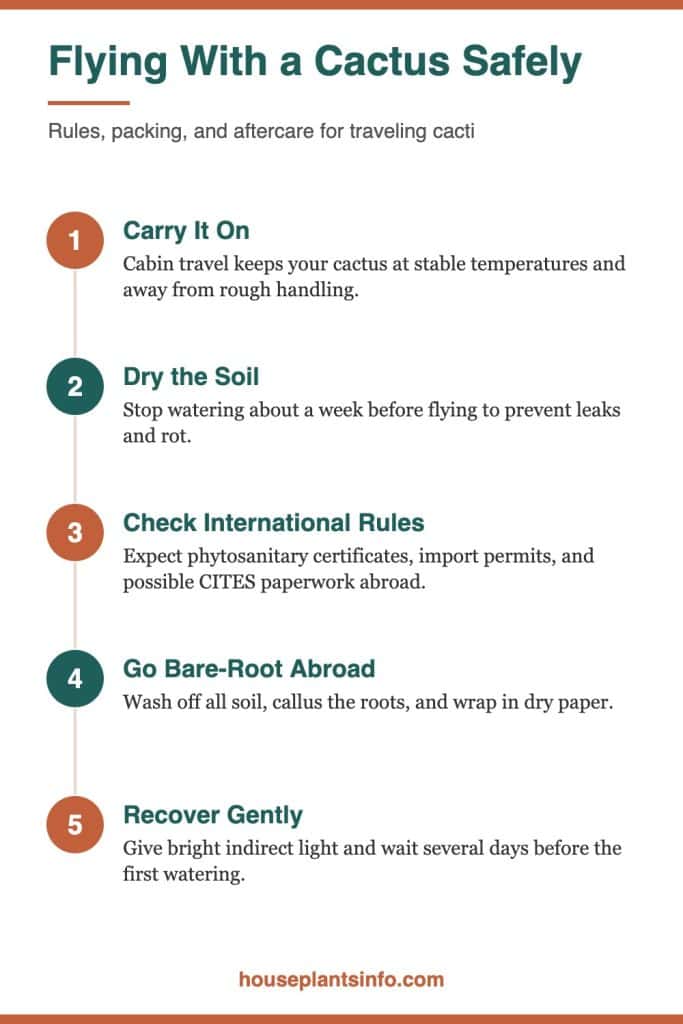
- Look up your airline’s carry-on limits and your destination’s plant rules at least two weeks before departure.
- For international trips, start the phytosanitary certificate, import permit, and protected-species check four to eight weeks ahead.
- Inspect for pests and stop watering about a week before you fly.
- Choose potted packing for domestic flights or bare-root packing for international ones, and gather a rigid box, newspaper, and tape.
- Book a nonstop flight if possible and keep the cactus in the cabin with you.
- Unpack immediately on arrival, give bright indirect light, and wait several days before watering.
Common Questions About Flying With a Cactus
Can I bring a cactus through airport security?
Yes, on US domestic flights cacti are generally allowed through security in carry-on bags. The screening officer has the final say, so dry soil, a tidy box, and a clear label help the check go smoothly.
Do I need a permit to fly internationally with a cactus?
Usually, yes. Most countries require a phytosanitary certificate, many require an import permit, and most cacti are protected under CITES, which can mean additional paperwork.
Will a cactus survive a flight in checked luggage?
It can, since cargo holds are pressurized and kept above freezing. The bigger risks are rough handling and temperature extremes on the tarmac, so use a rigid box inside a hard-sided suitcase.
How long can a cactus stay packed in a box?
Most cacti tolerate two to four days in a dark box without harm, and bare-root cacti can often handle a week or more if kept dry. Unpack as soon as possible to prevent pale growth or rot.
Can I take soil on a plane with my cactus?
Dry potting soil is generally fine on domestic flights, though a few destinations inspect or restrict it. Many countries ban soil on international flights, so bare-root packing is the safer choice abroad.

Hi! I’m Sophia, and I love plants – especially an expert in growing house plants. I stay in Chicago, United States of America, and through my blog and social media platforms, provide tips and tricks on how to grow healthy, vibrant plants indoors. Check out more here.