
You are looking at a windowsill of cacti and noticing the colors don’t match: one is deep green, one is dusty blue, and one is blushing purple at the edges.
The short version: Most cacti are green because their stems hold chlorophyll, but natural cactus colors also include blue-gray, silver, purple, red, and white, depending on waxy coatings, pigments, spines, and hairs.
Bright yellow, orange, and red cacti are usually grafted moon cacti, and neon or rainbow ones are dyed or painted.
This guide covers what colors are cactus in nature, which shades are normal, which signal stress, and how to keep healthy color indoors.
At a Glance
| Factor | What it needs |
|---|---|
| Light | 4 to 6+ hours of direct sun, or a strong grow light 6 to 12 inches above |
| Water | Soak, then let soil dry completely; every 2 to 4 weeks in summer, far less in winter |
| Temperature | 65°F to 90°F in the growing season; 45°F to 60°F winter rest for many species |
| Soil | Gritty, fast-draining cactus mix in a pot with a drainage hole |
| Pet safety | Spines can injure pets; check each species on the ASPCA list |
| Difficulty | Easy, as long as light is strong and watering is sparing |
What Colors Are Cactus Naturally?
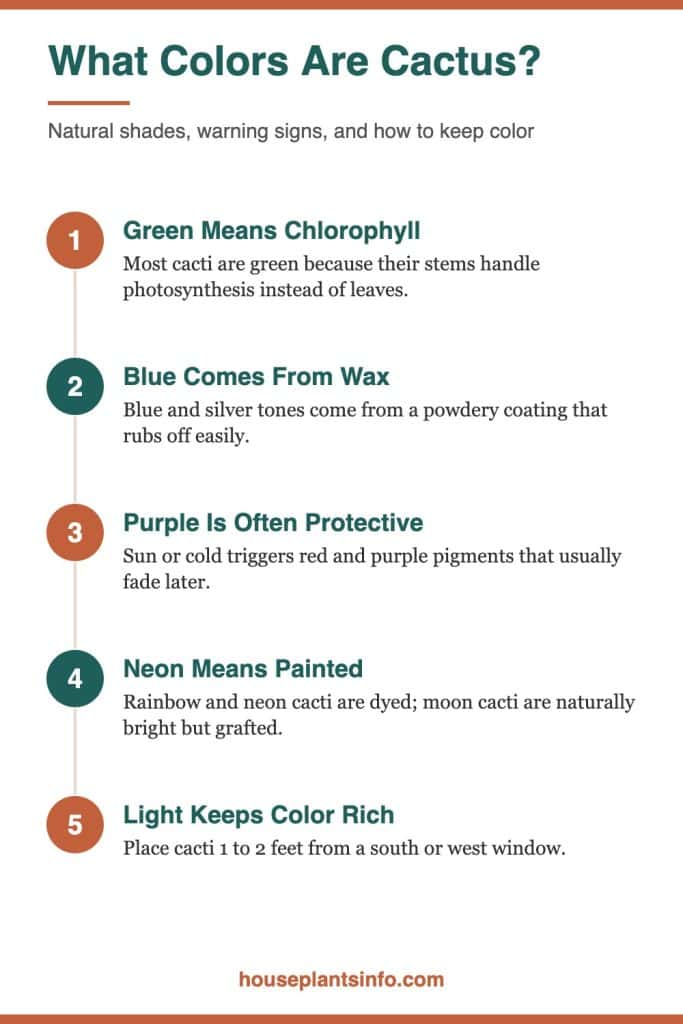
Most cacti are some shade of green, from bright apple green to deep olive. Many also come in blue-green, gray, silver, purple, and reddish tones, while spines, hairs, flowers, and fruit add white, gold, pink, red, and yellow.
Why Green Is the Default
Cacti don’t have typical leaves. Their stems do the work of photosynthesis, so the stem tissue is packed with chlorophyll, the pigment that makes plants green.
That is why a cactus body stays green year-round rather than changing like foliage. The exact shade depends on the species, the thickness of its skin, and how much light it gets.
How Indoor Light Changes the Shade
Light has a bigger effect on color than most people expect. A cactus in a bright south- or west-facing window often looks firmer and more richly colored than the same plant set back in a dim room.
In low light, cacti tend to turn pale, soft green and stretch toward the window. If your apartment lacks strong sun, a full-spectrum grow light placed 6 to 12 inches above the plant for 12 to 14 hours a day helps hold natural color.
A soil moisture meter is useful here too, since overwatering causes color problems that look like light issues. Checking moisture before you water keeps the two causes separate.

The Full Color Range at a Glance
Cactus colors come from a few distinct sources. Knowing which one you are seeing tells you whether a color is permanent, seasonal, or a warning.
| Color | Usual source | Example plants |
|---|---|---|
| Green | Chlorophyll in the stem | Most cacti, Peruvian apple cactus |
| Blue-gray or silver | Waxy coating on the skin | Blue torch cactus, some Cereus |
| Purple or red blush | Stress pigments from sun or cold | Purple prickly pear |
| White | Dense spines or hairs | Old man cactus, feather cactus |
| Gold or yellow | Colored spines | Golden barrel cactus |
| Bright red, orange, yellow body | Missing chlorophyll (grafted) | Moon cactus |
| Neon or rainbow | Dye or paint | Painted cacti sold in shops |
Why Are Some Cacti Blue, Gray, or Silver?
Blue and silver cacti get their color from a powdery wax on the skin, not from a blue pigment. The wax reflects light and protects the plant from intense sun and water loss.
The Waxy Coating Explained
This coating is called a bloom, or a glaucous layer. It sits on top of the green tissue, so the plant looks blue, gray, or frosted even though the cells underneath are green.
Plants from hot, sunny, dry regions often carry heavier wax. Indoors, a blue cactus may look slightly greener if it gets less light, because it tends to produce a thinner coating.
Blue Cacti You Might Recognize
The blue torch cactus is one of the most striking examples, with powder-blue columns. Some Cereus species, including the Peruvian apple cactus, show a blue-green to gray-green tone thanks to a light bloom.
Certain Opuntia pads also look grayish blue. Many Echeveria and Agave plants share this frosted look, but those are succulents, not cacti.
Don’t Wipe It Off
The bloom rubs off easily with fingers, cloths, or water sprays, and it does not grow back on that spot. The plant keeps the bare mark until new growth replaces it.
Sophia’s tip would go here, but first the practical warning: handle blue cacti by the pot or with folded newspaper, and dust them with a soft dry brush rather than a damp cloth.
Sophia’s tip: When you repot a blue cactus, wrap it in a folded strip of newspaper or cardboard instead of gripping it with gloves. Gloves smear the wax, while paper spreads the pressure and leaves the bloom mostly intact.
Which Cacti Are Red, Purple, or Pink?
Some cacti naturally turn purple, red, or pink, usually as a response to bright sun, cool nights, or dry conditions. In most cases this blush is a protective reaction and fades when conditions ease.
Stress Coloring Is Often Normal
Cacti produce pigments called betalains, which can show as red, purple, or magenta. These pigments act like sunscreen, shielding tissue from strong light and temperature swings.
A cactus that moves from a dim spot to a sunny window, or sits near cold winter glass, may develop a reddish or purple tint on the side facing the light. That is usually healthy adaptation, not damage.
Cacti Known for Purple Tones
The purple prickly pear, often sold as Santa Rita prickly pear, is the classic example. Its pads turn violet to plum in cool weather or strong sun and shift back toward blue-green when warmer.
Some Echinocereus and Ferocactus species show reddish skin or spines. Many Mammillaria develop pinkish tones near the top in bright light.
When Purple Means a Problem
Color stress becomes a concern when it shows up with other symptoms. Watch for purple paired with shriveling, softness, or sudden spreading.
- Purple plus wrinkling often points to roots that aren’t taking up water.
- Purple on the side touching the glass in January can mean cold damage.
- Purple plus brown or tan patches may signal sunburn after a sudden move.
Are Yellow, Orange, and Red Moon Cacti Real?
Yes, they are real plants, not dyed. The moon cactus is a mutant form of Gymnocalycium that lacks chlorophyll, so its body shows bright red, orange, yellow, or pink pigments instead of green.
Why Moon Cacti Are Always Grafted
Without chlorophyll, a moon cactus cannot make its own food. Growers graft the colorful top onto a green rootstock, usually a Hylocereus, which feeds it through the joined tissue.
That is why moon cacti look like a colored ball balanced on a green column. The ball depends entirely on the rootstock for survival.
How Long They Last
Moon cacti often live for a few years, though the colored top or the rootstock may eventually decline. The rootstock prefers warmth and dislikes temperatures below about 50°F, so keep them away from cold windows.
Give them bright, indirect light or gentle morning sun. The colored top can scorch in harsh afternoon light because it lacks the green tissue that tolerates heavy sun.
Telling Moon Cacti From Painted Ones
A real moon cactus has even color that continues into new growth and new offsets. A painted or dyed cactus has color sitting on the surface, often with streaks or a crusty feel.
| Feature | Moon cactus | Painted cactus |
|---|---|---|
| Color source | Natural pigment | Spray paint or dye |
| New growth | Same bright color | Plain green |
| Shape | Colored ball on green stem | Any shape |
| Health impact | Normal for the plant | Paint can block light and air |
Are Rainbow and Neon Cacti Natural?
No. Cacti in neon pink, electric blue, glitter, or rainbow stripes have been spray-painted or dyed, and glued-on straw flowers are also common. No cactus grows those colors naturally.
How Painting Affects the Plant
Paint covers the green skin, which reduces the light the plant can use for photosynthesis. Heavy coatings can also clog the pores the plant uses for gas exchange.
Lightly painted cacti can survive, and the color stays only on old tissue. As the plant grows, new green growth appears at the tip and the painted area ages and corks over time.
What to Do With a Painted Cactus
Give it the same bright light and dry-between-watering care as any cactus. Don’t scrub off paint, because that tears the skin and opens the plant to rot.
If glued straw flowers are attached, you can gently twist them off. Leave any glue residue rather than digging at it.
What Colors Do Cactus Flowers and Spines Come In?
Cactus flowers come in white, cream, yellow, orange, pink, magenta, red, and purple, and a few are greenish. True blue flowers are not found in cacti. Spines range from white and gold to red, brown, and black.
Flower Colors by Group
Flowers are often far brighter than the plant body. A plain green Echinopsis can produce huge white or pink blooms, while many Mammillaria form rings of small pink or cream flowers around the crown.
Holiday cacti, such as Christmas and Thanksgiving cactus, bloom in red, pink, magenta, white, orange, and soft yellow. The Peruvian apple cactus produces large white, night-opening flowers followed by red to pink edible fruit.
Getting Indoor Cacti to Flower
Most desert cacti need a cool, dry winter rest to set buds. Many species flower best after weeks at 45°F to 60°F with very little water, followed by bright light in spring.
In a Chicago apartment, a spot near a cool window, away from radiators, often provides that rest. Holiday cacti set buds with cool nights and long, dark evenings in fall.
Spines and Hairs Change the Look
Spines can make a green cactus look white, gold, or red from a distance. The golden barrel cactus appears yellow because of its dense gold spines, though its body is green.
The old man cactus looks white because of long, soft hairs. The feather cactus, Mammillaria plumosa, looks like a white puff because its spines are fine and feathery.
Is Your Cactus Changing Color? Causes and Fixes
A color change usually traces back to light, water, temperature, or pests. Gradual, even shifts are often harmless, while sudden, patchy, or soft discoloration needs attention.
Yellow or Pale Green
Yellowing usually means too little light, too much water, or root trouble. Pale, stretched growth points to light, while yellow paired with softness at the base points to overwatering or rot.
Move the plant closer to a sunny window or under a grow light, and let the soil dry completely before watering. For a column type, this guide to peruvian apple cactus yellowing walks through each cause in detail.

White Patches or Fuzz
Cottony white tufts in crevices or around spines usually mean mealybugs. Bleached white or tan patches on the sun-facing side are more likely sunburn.
If you are unsure, read up on whether cactus can get mealybugs and how to spot them early. Dab visible bugs with a cotton swab dipped in isopropyl alcohol and isolate the plant.
Brown, Black, or Corky Areas
Dry, tan, bark-like tissue at the base of an older cactus is called corking. It is a normal part of aging and gives tall cacti extra support.
Soft, dark brown or black areas that feel mushy are rot. Cut away affected tissue with a clean blade, let the wound dry for several days, and repot in dry, gritty mix.
| Color change | Likely cause | Fix |
|---|---|---|
| Pale, stretched green | Low light | Move to a brighter window or add a grow light |
| Yellow and soft | Overwatering or rot | Stop watering, check roots, repot dry |
| Red or purple blush | Sun or cold stress | Usually fine; acclimate gradually |
| Tan or white scorched patch | Sunburn | Shade slightly; damage stays but won’t spread |
| White fuzz | Mealybugs | Alcohol swab and isolate |
| Hard tan bark at base | Natural corking | No action needed |
| Black and mushy | Rot | Cut out, dry, repot |
Sophia’s tip: Take a photo of each cactus in the same spot and light at the start of every season. Comparing pictures side by side shows slow color shifts you’d miss day to day, and helps you separate normal blush from creeping yellow.
How Do You Keep a Cactus’s Best Color Indoors?
Strong light, sparing water, gritty soil, and a cool winter rest keep most cacti richly colored. Gradual changes in placement prevent sunburn and stress patches.
Get the Light Right
A south- or west-facing window within 1 to 2 feet of the glass is ideal for most desert cacti. East windows work for smaller species, while north windows usually need a grow light.
When moving a cactus to brighter light, do it over 1 to 2 weeks. Start with a few hours of direct sun and increase daily to avoid bleaching.
Water and Soil for Steady Color
Water thoroughly until it drains from the bottom, then wait until the soil is completely dry. In winter, many cacti need water only once a month or less.
Use a gritty mix with plenty of pumice or perlite, in a pot with a drainage hole. Terracotta helps soil dry faster, which protects roots and keeps color even.
Manage Heat, Drafts, and Winter Air
Forced-air heat and radiators create hot, dry pockets that can stress cacti unevenly. Keep plants a few feet from heat sources and away from AC vents in summer.
Dry winter air itself rarely bothers cacti. The bigger risk is cold glass at night, so pull plants a few inches back from the window during deep freezes.
Growing More of the Same Color
If you love a particular shade, propagating keeps it in your collection. Column cacti are especially easy, and you can grow peruvian apple cactus from cutting by letting a section callus before planting.
Cuttings take patience. If yours sits for weeks without roots, the guide to peruvian apple cactus not rooting covers temperature, moisture, and callus problems.
To keep that blue-green tone vibrant long term, learn how to care for peruvian apple cactus through each season.
Sophia’s tip: Rotate each cactus a quarter turn every time you water. Even exposure keeps color uniform and stops one side from blushing or bleaching while the other stays pale.
Keeping Pets and Kids Safe
The ASPCA lists Christmas cactus as non-toxic to cats and dogs. For other cacti, the main danger is physical: spines and glochids can lodge in paws, mouths, and small fingers, so place spiny plants on high shelves.
Your Next Steps
- Identify each cactus’s color source: chlorophyll, wax, stress pigment, spines, or paint.
- Move pale or stretched plants within 1 to 2 feet of a south or west window, or add a grow light.
- Check soil dryness before every watering, and cut back sharply in winter.
- Inspect crevices and spine bases for white fuzz once a month.
- Give desert cacti a cool, dry winter rest away from radiators to encourage flowers.
- Rotate plants a quarter turn at each watering for even color.
Common Questions About Cactus Colors
Can a cactus be naturally blue?
A few cacti look blue, such as the blue torch cactus, but the color comes from a waxy coating over green tissue. There is no true blue pigment in cactus stems. Avoid rubbing the surface, since the wax doesn’t regrow on touched spots.
Why is my green cactus turning purple?
Purple or reddish tones usually come from strong sun, cool temperatures, or dry soil, which trigger protective pigments. If the plant is firm and otherwise healthy, it’s generally fine. If it’s also wrinkled or soft, check the roots and watering.
Do painted cacti die?
Painted cacti can survive, especially if the coating is light, but paint reduces the light the plant can use. New growth will come in green. Give them bright light and careful watering, and never scrub off the paint.
What is the rarest cactus flower color?
True blue doesn’t occur in cactus flowers, and green flowers are uncommon. White, yellow, pink, and magenta are the most common shades. Some species also produce rich orange and red blooms.
Why is my cactus turning white on one side?
A bleached white or tan patch on the window-facing side is usually sunburn from a sudden increase in light. Cottony white spots in crevices are more likely mealybugs. Sunburn scars are permanent, but they won’t spread once light is adjusted.

Hi! I’m Sophia, and I love plants – especially an expert in growing house plants. I stay in Chicago, United States of America, and through my blog and social media platforms, provide tips and tricks on how to grow healthy, vibrant plants indoors. Check out more here.