
You notice small white tufts tucked between the spines of your cactus on the windowsill, and they look a little too much like cotton to be part of the plant.
Cacti are tough, but those fuzzy spots are often a sign of one of the most common indoor pests. If you are asking whether a cactus can get mealybugs, the answer matters, because early action makes treatment much easier.
The short version: Yes, cacti can get mealybugs, and they are among the most common pests on indoor cacti. These sap-sucking insects hide in spine clusters, crevices and even the roots. Rubbing alcohol, repeated treatments and isolating the plant will clear most infestations.
This guide covers how to identify mealybugs, how to find root mealybugs, how to treat both kinds, and how to keep them from returning.
Check These First
- Wipe a white tuft with a cotton swab. If it smears and leaves an orange or pink stain, you are probably looking at mealybugs, not natural cactus wool.
- Look at the joints, the base of spines, the crown and new growth, where mealybugs prefer to settle.
- Touch the soil surface and the pot rim for sticky residue, which points to honeydew from feeding insects.
- Lift the cactus out of its pot and check the root ball for white, powdery patches if the plant looks weak but the stems seem clean.
- Check every plant within a few feet, since mealybugs crawl between pots that touch or sit on the same tray.
Can Cactus Get Mealybugs? Why They Target Cacti
Cacti can get mealybugs, and they are some of the pest’s favorite hosts indoors. The insects feed on sap, and the many folds, ribs and spine clusters on a cactus give them protected places to hide and lay eggs.
What Mealybugs Actually Are
Mealybugs are small, soft-bodied insects related to scale. Adult females are oval, about 1/10 to 1/5 inch long, and covered in a white, waxy powder that repels water. They move slowly and tend to gather in groups.
The females lay eggs inside cottony sacs, often several hundred at a time. Young mealybugs, called crawlers, are tiny and mobile, and they spread across the plant and to neighboring pots before settling down to feed.
Why Indoor Conditions Help Them
Indoor homes stay warm all year, so mealybugs can breed without a winter break. In warm rooms, a generation can mature in roughly 4 to 8 weeks, which lets populations build quickly if no one is checking.
There are no natural predators indoors, and cacti are often watered and handled less often than other houseplants. That means an infestation can go unnoticed for weeks.
A small magnifying glass or hand lens makes it far easier to spot young crawlers and egg sacs early, and a bright flashlight helps you look deep between dense spines.
How They Damage a Cactus
Mealybugs pierce the plant tissue and drink sap. A few insects cause little harm, but large colonies weaken the plant, stunt new growth and can leave yellow or scarred patches.
They also excrete sticky honeydew. That residue attracts ants and can grow a black, sooty mold that blocks light from the stem surface. Heavy, long-term infestations can kill smaller cacti.
How to Identify Mealybugs on a Cactus
Look for white, cottony clusters in sheltered spots, plus sticky residue and slow or distorted growth. The trick with cacti is telling real pests apart from the natural wool and hairs many species produce.
Signs to Look For
- White, fluffy or powdery masses at the base of spines, in areoles, between ribs or at stem joints
- Small oval white insects that move slowly when disturbed
- Sticky honeydew on the stem, pot rim or windowsill
- Black sooty mold on lower stems
- Ants walking on the plant or pot
- Yellowing, puckered or stunted new growth
Check under any overlapping pads or stems as well. On cacti with segmented stems, the joints are a common hiding place.
If you also grow holiday cacti, the same pests show up there, and you can read more about whether Christmas cactus can get mealybugs and how treatment differs for those softer jungle types.

Mealybugs Versus Natural Cactus Wool
Many cacti grow white wool or hairs as protection from sun. Mammillaria species often have woolly areoles and fuzzy crowns, and old man cactus is covered in white hair. These features are part of the plant and stay firmly attached.
The swab test is the simplest way to tell. Natural wool feels dry and stays put or pulls away as fibers. Mealybugs smear, and the crushed insects usually leave a pinkish or orange stain.
Other Pests That Look Similar
Cochineal scale, common on prickly pear, also forms white cottony patches. When crushed, it releases a deep red liquid. It is treated much like mealybugs.
Armored scale looks like small brown, gray or white bumps that do not move and lack the cottony coating. Spider mites cause fine webbing and tan, speckled scarring rather than fluffy clusters.
| Sign | Mealybugs | Natural wool | Cochineal scale | Spider mites |
|---|---|---|---|---|
| Appearance | White, waxy, oval insects and cotton | Dry fibers or hairs | Thick white cotton on pads | Tiny dots, fine webbing |
| Swab result | Smears, pink or orange stain | No stain | Bright red stain | Dusty speckles |
| Sticky residue | Often | Never | Sometimes | No |
| Common location | Areoles, joints, roots | Areoles, crown | Prickly pear pads | Stem surface, new growth |
Root Mealybugs: The Infestation You Cannot See
Root mealybugs live in the soil and feed on cactus roots, so the plant can decline with no visible insects above ground. If a cactus stops growing, shrivels or wobbles in its pot despite correct watering, check the roots.
Symptoms of Root Mealybugs
The main clue is a cactus that looks thirsty even when the soil is moist. Damaged roots cannot take up water, so the stem may wrinkle, soften or lose color.
Other signs include stalled growth through the growing season, a plant that feels loose in the pot, and white powdery residue around the drainage hole or along the inside of the pot wall.
How to Check the Roots
Water the cactus a day or two before checking so the root ball slides out easily. Wear thick gloves or wrap the stem in folded newspaper to protect your hands from spines.
Tip the plant out and look closely at the outer surface of the root ball. Root mealybugs appear as white, waxy patches that look a bit like mold or perlite dust. Unlike perlite, the patches smear when rubbed.
Why They Are Easy to Miss
Gritty cactus mix often contains white perlite or pumice, which hides small white insects well. Many people also repot cacti rarely, so the roots go years without inspection.

Cuttings are a common route for root pests, which is one reason to start fresh. If you plan to grow Peruvian apple cactus from cutting, inspect the cutting closely before it goes into new mix.
Poor root health can also show up as a cutting that refuses to grow roots, so a Peruvian apple cactus not rooting is worth checking for pests as well as moisture problems.
Why Your Indoor Cactus Got Mealybugs
Mealybugs almost always arrive from another plant, a new pot of soil or a crowded growing area. Once inside, warm rooms, crowding and stressed plants help them spread.
New Plants Brought Home
The most common source is a new plant that carried eggs or crawlers. Egg sacs can sit deep in spine clusters or in the soil and go unnoticed at purchase.
Any plant can be a carrier, including succulents, hoyas and other tropical houseplants. Mealybugs feed on many species, not just cacti.
Crowded Windowsills and Shared Trays
Cacti grouped tightly on a sunny windowsill make it easy for crawlers to walk from pot to pot. Shared saucers and trays act like bridges.
Crawlers can also hitch rides on hands, gloves, tools and clothing. If you handle an infested plant and then repot a healthy one, you can move them yourself.
Stress From Indoor Conditions
Healthy cacti are not immune, but stressed plants tend to suffer more damage. Low light, such as a spot several feet back from a north window, produces soft, stretched growth that pests find easy to feed on.
Overfertilizing with high-nitrogen food creates tender new growth that mealybugs favor. Dry winter air from radiators and forced-air heat does not cause mealybugs, but it keeps rooms warm enough for them to breed through the cold months.
How to Get Rid of Mealybugs on a Cactus
Isolate the plant, remove the visible insects with rubbing alcohol, then repeat the treatment every 5 to 7 days for at least 4 to 6 weeks. Repetition is the step most people skip, and it is why infestations return.
Step 1: Isolate the Cactus
Move the plant at least several feet away from other houseplants, ideally to a different room. Keep it in bright light so the cactus does not weaken during treatment.
Check every nearby plant before you start. Wash the windowsill, saucers and any tray with warm soapy water.
Step 2: Remove Visible Mealybugs With Alcohol
Dip a cotton swab in 70% isopropyl alcohol and touch it directly to each mealybug and egg sac. The alcohol dissolves the waxy coating and kills the insect on contact.
A soft, small paintbrush or long tweezers help reach between dense spines. Work from the top down and pay close attention to areoles, joints, the crown and the base of the stem near the soil.
Sophia’s tip: Use a long wooden skewer wrapped with a small wisp of cotton to reach mealybugs hidden deep between spines. Twist the cotton tight so it stays on, and replace it as soon as it gets dirty.
Step 3: Spray the Whole Plant
After spot treatment, spray the cactus thoroughly to catch crawlers you cannot see. A mix of one part 70% isopropyl alcohol to two or three parts water works for most sturdy cacti.
Test the spray on a small area first and wait 24 to 48 hours for any discoloration. Keep the treated plant out of direct hot sun until it dries, since wet surfaces in strong sun can scorch.
Insecticidal soap is another good option. Spray until the stem is fully coated, and follow the label directions for dilution and frequency.
Step 4: Repeat Every Week
Alcohol and soap kill insects on contact but do not reliably reach eggs protected inside their cottony sacs. New crawlers keep hatching for several weeks.
Repeat the swab and spray routine every 5 to 7 days. Continue for at least two weeks after you stop seeing any mealybugs, which usually means 4 to 6 weeks in total.
Step 5: Treat Root Mealybugs
If roots are infested, unpot the cactus and shake or gently brush away all the old soil. Rinse the roots under lukewarm running water to wash off insects and residue.
Trim away any dead, mushy or heavily infested roots with clean scissors. Let the cactus sit bare-root in a shaded, dry spot for several days so cut roots callus over.
Throw out the old soil. Scrub the pot with hot soapy water or use a new pot, then replant in fresh, dry cactus mix and wait about a week before watering.
Sophia’s tip: Mark each treatment date on a piece of tape stuck to the pot. It sounds simple, but it keeps the weekly schedule on track, which matters more than which treatment you choose.
Which Mealybug Treatment Works Best on Cactus?
For most indoor cacti, I recommend rubbing alcohol for spot treatment and insecticidal soap or a diluted alcohol spray for whole-plant coverage. Stronger options are worth considering only for heavy or repeat infestations.
Comparing Your Options
| Treatment | Best for | How often | Notes |
|---|---|---|---|
| 70% isopropyl alcohol on swab | Visible bugs and egg sacs | Every 5 to 7 days | Fast, inexpensive, precise |
| Diluted alcohol spray | Whole-plant coverage | Every 5 to 7 days | Test first; keep out of hot sun while wet |
| Insecticidal soap | Crawlers and light infestations | Per label, often weekly | Must contact insects to work |
| Horticultural or neem oil | Light to moderate infestations | Per label | Can harm waxy cactus skin; test carefully |
| Systemic insecticide | Severe or root infestations | Per label | Use with care around pets and kids |
| Repotting in fresh soil | Root mealybugs | Once, plus follow-up | Remove old soil completely |
Using Oils on Cacti
Neem and horticultural oils smother insects, but they can damage the waxy protective layer on some cacti and cause discoloration. Oil on the stem in strong light or heat raises the risk of burn.
If you use oil, test a small patch first, apply in the evening, and keep the plant out of direct sun until the coating dries.
When to Consider a Systemic Product
Systemic insecticides are absorbed by the plant and kill insects that feed on the sap, including root mealybugs. They can help with stubborn infestations that return despite careful treatment.
Read and follow the label exactly, as the EPA requires. Many systemic products are not meant for indoor use or for homes with pets, so check the label before buying.
When to Discard the Plant
If a cactus is covered in mealybugs, has soft rotting tissue or keeps getting reinfested, it may be safer to throw it out. You can sometimes save a clean top section as a cutting.
Removing a severely infested plant protects the rest of your collection. Seal it in a bag before disposal so crawlers do not escape.
How to Prevent Mealybugs From Coming Back
Quarantine new plants, inspect your cacti regularly and give them strong light and correct watering. Prevention takes a few minutes a month and saves weeks of treatment.
Quarantine Every New Plant
Keep new plants in a separate room for 3 to 4 weeks before placing them near your cacti. Inspect them weekly with a magnifying glass during that time.
Check the roots of any new cactus when you first repot it. This is the easiest moment to catch root mealybugs before they spread.
Inspect on a Schedule
Look over each cactus every two to four weeks, especially in fall and winter when plants are indoors and growth slows. Check the crown, joints, areoles and base.
Repot or slip plants out of their pots once a year to look at the roots. This also helps you catch overwatering problems early.
Sophia’s tip: Rotate each cactus a quarter turn when you water. You get a quick look at every side of the plant, and the stem grows more evenly toward the window.
Keep Your Cactus Strong
Most cacti grow best in a south or west window, within about 1 to 2 feet of the glass. In darker apartments, a full-spectrum grow light placed 6 to 12 inches above the plant for 12 to 14 hours a day keeps growth firm.
Water only when the soil is completely dry, and use a fast-draining cactus mix in a pot with a drainage hole. Feed lightly during spring and summer and skip fertilizer in winter.
Keep cacti away from blowing radiator heat and cold drafts from AC vents or drafty windows. Sudden temperature swings stress plants and slow their recovery from pest damage. For species-specific routines, see how to care for Peruvian apple cactus.
Do Not Confuse Pest Damage With Care Problems
Yellowing can come from mealybugs, but it also comes from overwatering, root rot, too much sun or nutrient issues. Check for pests first, then look at your care routine.
If a columnar cactus is changing color, this guide to Peruvian apple cactus yellowing explains the most common causes and how to sort them out.
Is It Safe for Pets and Kids During Treatment?
Many common cacti are not listed as toxic by the ASPCA, and the ASPCA lists Christmas cactus as non-toxic to cats and dogs. The bigger risks are spines and the treatments themselves.
Spines can injure mouths, paws and fingers, so keep cacti out of reach of curious pets and small children. Not every cactus species has been assessed, so check the ASPCA list for your specific plant.
Isopropyl alcohol is toxic if swallowed by pets. Let treated plants dry fully before returning them to shared spaces, and store alcohol, soaps and insecticides in a closed cabinet. Systemic insecticides deserve extra caution in homes with pets or kids.
Your Next Steps
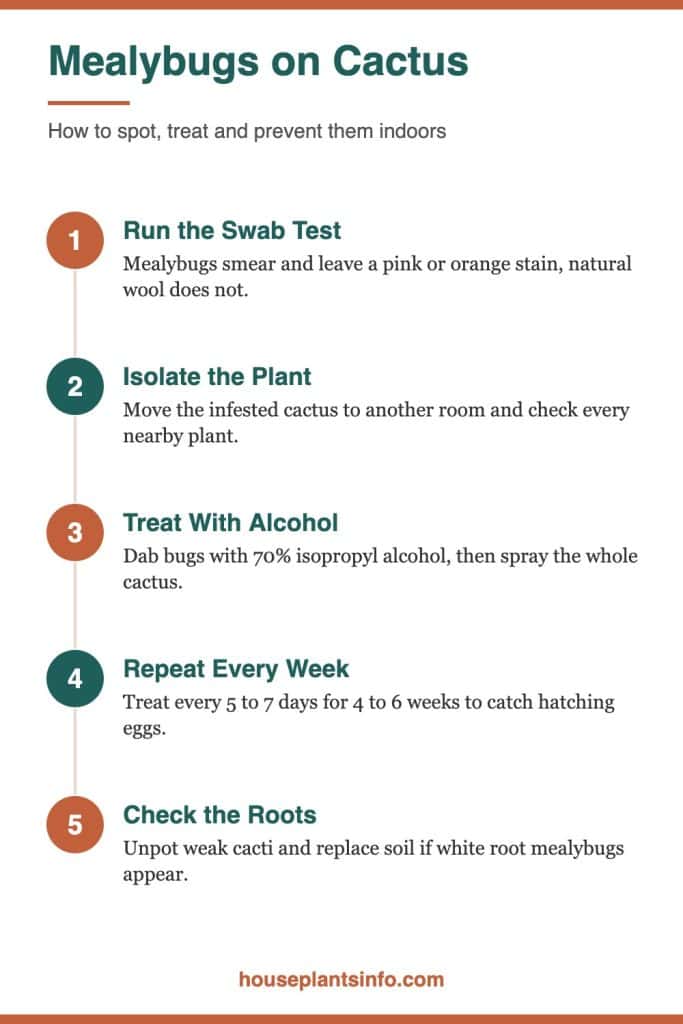
- Run the cotton swab test on any white fuzz to confirm whether it is mealybugs or natural wool.
- Move the affected cactus to a separate room and check every nearby plant.
- Treat visible mealybugs with 70% isopropyl alcohol and spray the whole plant with a diluted alcohol mix or insecticidal soap.
- Unpot the cactus and inspect the roots, then repot in fresh cactus mix if you find root mealybugs.
- Repeat treatment every 5 to 7 days for 4 to 6 weeks, and record each date on the pot.
- Quarantine all new plants for 3 to 4 weeks before adding them to your collection.
Common Questions About Mealybugs on Cactus
Can mealybugs kill a cactus?
Yes, a heavy or long-term infestation can kill a cactus, especially a small one. Root mealybugs are particularly dangerous because they damage the roots before you notice symptoms. Caught early, most cacti recover fully.
How long does it take to get rid of mealybugs on a cactus?
Plan on 4 to 6 weeks of treatment every 5 to 7 days. Eggs keep hatching after the adults are gone, so stopping early often leads to a fresh outbreak. Keep treating for two weeks after the last mealybug is seen.
Will rubbing alcohol hurt my cactus?
Most cacti tolerate 70% isopropyl alcohol applied with a swab or as a diluted spray. Test on a small area first and wait a day or two for any discoloration. Keep the plant out of hot direct sun until it dries.
Can mealybugs spread from my cactus to other houseplants?
Yes, mealybugs feed on many houseplants, including succulents, hoyas and tropical foliage plants. Crawlers move between touching pots and can ride on hands and tools. Isolate any infested plant right away and inspect everything nearby.
Where do mealybugs come from if my cactus has been indoors for years?
They usually arrive on a new plant, a cutting or contaminated soil, then spread to older plants. Eggs and root mealybugs can go unnoticed for weeks. Quarantining new additions is the most reliable way to keep them out.

Hi! I’m Sophia, and I love plants – especially an expert in growing house plants. I stay in Chicago, United States of America, and through my blog and social media platforms, provide tips and tricks on how to grow healthy, vibrant plants indoors. Check out more here.