
Your Christmas cactus sits by the window with plump green segments and plenty of new growth, but there is not a single bud in sight as the holidays approach.
If you are asking why is my christmas cactus not blooming, the answer almost always comes down to a few fixable conditions in your home.
The short version: Christmas cactus sets buds only after several weeks of long, dark nights, cool temperatures, or both. Indoors, lamps, warm rooms, steady watering, and late-season fertilizer often cancel those signals.
Give the plant 6 to 8 weeks of darkness and cool air in fall, and it usually rewards you with buds.
This guide covers the eight most common causes, how to tell which one applies to your plant, and the exact fix for each.
Check These First
- Count the hours of true darkness your plant gets at night. If a lamp, TV, or streetlight reaches it after sunset, that alone can stop buds.
- Check the room temperature at night. Steady readings above about 70°F make bud set much less reliable.
- Look at your watering habits since September. Keeping the soil evenly moist through fall tells the plant to keep growing leaves.
- Think back to your last feeding. Fertilizer given in late summer or fall pushes leafy growth instead of flowers.
- Confirm what you actually have. A Thanksgiving or Easter cactus blooms on a different schedule and may simply not be due yet.
Not Enough Darkness at Night: Give It Long, Uninterrupted Nights
Christmas cactus is a short-day plant, which means it forms flower buds when nights stretch to roughly 12 to 14 hours of uninterrupted darkness. Even a few minutes of light in the middle of that period can reset the signal.
Why Indoor Light Gets in the Way
Outdoors, autumn nights lengthen naturally and the plant responds on its own. Indoors, you turn on overhead lights at 6 p.m., watch TV until 11, and maybe leave a hallway light on overnight. To your cactus, that reads as a long summer day.
Streetlights and neighboring windows matter too. In a city apartment, a plant on a sill facing the street may never experience full darkness at all.
How to Create the Dark Period
Starting in late September or early October, give the plant 12 to 14 hours of darkness every night for about 6 to 8 weeks. You have a few simple ways to do it:
- Move the plant to a spare bedroom, guest room, or closet with a window that nobody uses in the evening.
- Cover it each evening with a box or a piece of opaque fabric, then uncover it the next morning.
- Put any lamp in that room on a plug-in timer so it shuts off at a set hour and stays off.
If you use a cover, remove it during the day. The plant still needs bright light for 10 to 12 hours to fuel the buds it is forming.
Sophia’s tip: Set a phone alarm for 6 p.m. and 8 a.m. during the dark period. Consistency matters more than perfection, and skipping a night here and there is what usually stalls bud set.
Signs It Is Working
Small, pointed buds appear at the tips of the stem segments, often pinkish or reddish at first.
Once you see buds about the size of a grain of rice, you can stop the strict dark routine and return the plant to its normal spot, keeping drafts away.
Rooms That Are Too Warm: Find a Cool Spot in Fall
Cool nights are the second major bloom trigger. Temperatures around 50°F to 60°F at night help the plant form buds, and at the cooler end of that range, buds can form even without perfectly long nights.
What Forced-Air Heat Does
Once the furnace kicks on in October, many apartments hold steady at 70°F to 75°F day and night. That warmth, combined with indoor lighting, sends a clear message to keep growing segments rather than flowers.
Radiators create their own problem. A plant sitting on or above a radiator gets warm, dry air rising around it all evening, which can stop buds from forming and dry out any that do appear.
Where to Put the Plant
Look for a spot that runs cooler than the rest of your home. Good options include:
- A bright windowsill in a room you keep cooler, a few inches back from the glass.
- An enclosed porch or sunroom that stays above about 45°F.
- A room where you can close a heating vent during fall.
Keep the plant away from freezing glass on cold nights. Temperatures below about 45°F risk damage, and contact with frosty window panes can injure segments. Pulling the pot 6 to 12 inches back from the glass after dark usually solves this.
How Long to Keep It Cool
Aim for cool nights for about 6 weeks, or until buds appear. Daytime temperatures in the mid-60s°F are fine. After buds form, keep the plant in a stable spot between roughly 60°F and 70°F so they open steadily.
Watering Too Much or Too Often Before Bud Set
A short, slightly drier period in fall helps trigger flowering. Keeping the soil evenly moist through autumn encourages leafy growth and raises the risk of root rot, which weakens the plant enough to skip blooming.
The Fall Watering Shift
During spring and summer, water when the top inch of soil feels dry. In late September, start letting the soil dry out further, about halfway down the pot, before watering again.
Do not let the plant go bone dry for long stretches, since severe drought can also cause stress.
Christmas cactus is a forest cactus, not a desert cactus. In its native habitat, it grows on trees in humid areas, so it wants more water than a typical cactus but hates soggy roots.

Signs of Overwatering
Watch for these clues that the roots are staying too wet:
- Limp, wrinkled, or translucent segments that feel soft rather than firm.
- Segments dropping off at the joints without much pressure.
- A sour smell from the soil or dark, mushy roots near the base.
If you suspect rot, slide the plant out of its pot. Healthy roots are white or tan and firm. Trim away brown, mushy roots with clean scissors and repot into fresh, well-draining mix.
Sophia’s tip: Water at the sink, let it drain completely for 10 to 15 minutes, then return the pot to its saucer. Never let the pot sit in standing water, especially in fall.
Humidity Still Matters
Dry winter air from forced-air heat can drop indoor humidity below 30 percent. A humidifier nearby or a pebble tray beneath the pot helps keep buds from drying out, without adding water to the soil itself.
Light That Is Too Weak or Too Harsh
Christmas cactus needs bright, indirect light to store enough energy for flowering. A plant in a dim corner often survives for years without ever blooming, while one in harsh afternoon sun becomes stressed and stops growing well.
The Best Window
An east-facing window is ideal for most homes, giving gentle morning sun and bright light the rest of the day. A north window works if it is unobstructed.
South and west windows are fine with a sheer curtain or with the plant set 2 to 3 feet back from the glass.
In winter, a grow light can make up for short, gray days. Keep it on a schedule of 10 to 12 hours, and make sure it shuts off well before the dark period begins in fall.

When Sun Is Too Strong
Too much direct sun turns the segments reddish or purplish and can leave them looking thin. If you want to understand this color change in detail, here is a guide on why are christmas cactus leaves turning red.
A stressed, sunburned plant often puts its energy into survival rather than flowers.
Summer Outdoors
Many growers move their Christmas cactus outside in summer, which can lead to strong fall blooming. Keep it in shade or dappled light, and bring it in before nights drop below about 50°F. Check for pests before it comes back inside.
Fertilizer Timing Is Off
Feeding too late in the season is one of the most common reasons for lush growth without flowers. Fertilizer during active growth helps, but feeding into fall encourages new segments when the plant should be setting buds.
When to Feed and When to Stop
Feed with a balanced houseplant fertilizer diluted to about half strength every 2 to 4 weeks from spring through late summer. Stop entirely by late August or early September. You can find the full schedule in this guide on when to fertilize christmas cactus.
Signs of Too Much Fertilizer
Look for these warnings that the plant has been overfed:
- A white crust on the soil surface or around the drainage hole.
- Brown, crispy tips on the newest segments.
- Lots of new growth but no buds in a season with good light and cool nights.
If you see salt buildup, flush the pot by running plain water through the soil for a minute or two, letting it drain freely. Repeat once a month during the growing season if your tap water is hard.
A Note on Magnesium
Some growers give Christmas cactus a dilute magnesium supplement during the growing season, since the plant is thought to need a bit more magnesium than many houseplants. If you use one, keep it light and stop at the same time you stop regular feeding.
Why Is My Christmas Cactus Not Blooming After Repotting?
Repotting at the wrong time, into a pot that is too large, or into heavy soil can delay blooming for a season. Christmas cactus actually flowers best when it is slightly snug in its pot.
Pot Size and Root Space
When the plant moves into a much larger container, it spends its energy filling that space with roots. Choose a pot only 1 to 2 inches wider than the current one, and always make sure it has a drainage hole.
Most plants only need repotting every 2 to 3 years. The best time is late winter or spring, after blooming has finished. Here is more detail on when to transplant christmas cactus so you avoid disrupting the bloom cycle.
The Right Soil
Standard dense potting soil holds too much water for an epiphytic cactus. A better mix is loose, airy, and slightly acidic. Good combinations include:
- Two parts regular potting mix and one part perlite.
- Equal parts potting mix, orchid bark, and perlite.
- A cactus mix lightened with extra bark or perlite for more structure.
The goal is soil that dries partway within a week indoors but does not stay soggy for days.
Overcrowding in the Pot
Mild crowding helps bloom, but a pot packed with roots and almost no soil can struggle to hold water and nutrients. If water runs straight through and the plant wilts quickly, gently move it up one pot size in spring.
Bud Drop: Buds Form, Then Fall Off
If your plant forms buds but drops them before they open, the cause is usually a sudden change in conditions. Christmas cactus buds are sensitive to temperature swings, drafts, moving the plant, and uneven watering.
Common Triggers Indoors
These are the conditions most likely to cause buds to fall:
- Moving the plant from a cool room into a warm living room once buds appear.
- Cold drafts from a door that opens to the outside or an AC vent.
- Hot, dry air from a radiator or heating vent directly nearby.
- Letting the soil dry completely, then watering heavily.
How to Keep Buds On
Once buds are visible, pick a stable spot and leave the plant there. Avoid turning or rotating the pot, since buds orient toward the light and may drop if repositioned. Keep the soil lightly moist and the temperature steady between about 60°F and 70°F.
Sophia’s tip: If you want the plant in your living room for the holidays, move it there as soon as buds are rice-sized, not once they show color. That gives the buds time to adjust before they open.
A Few Dropped Buds Is Normal
Some plants drop a handful of buds even with good care, especially if they set more than they can support. Losing most buds points to an environmental cause worth fixing.
Plant Too Young, or a Different Holiday Cactus
Sometimes nothing is wrong at all. Young plants from cuttings may need a year or two of growth before blooming, and many plants sold as Christmas cactus are actually Thanksgiving or Easter cactus with different bloom timing.
Telling the Holiday Cacti Apart
Look closely at the edges of the flat stem segments to identify your plant.
| Plant | Segment edges | Typical bloom time |
|---|---|---|
| Thanksgiving cactus | Pointed, claw-like teeth | Late fall, often November |
| Christmas cactus | Rounded, scalloped edges | Early to mid winter, often December |
| Easter cactus | Rounded with small bristles | Spring, often March to May |
Thanksgiving cactus is the most common one sold in stores during the holidays. If your plant has pointed teeth and blooms in November, it is behaving normally.
Young Plants and Cuttings
A cutting rooted this year will usually focus on building roots and segments first. Once the plant has several healthy, branching stems, it typically blooms with the same fall routine.
Rooting other cacti can be slower, and if you are trying a different species, here is help for a peruvian apple cactus not rooting.
After the Flowers Fade
A plant that bloomed well last year but not this year may simply need a better rest and recovery period. This guide on what to do with christmas cactus after flowering covers pruning and care that set up next season’s buds.
Pet Safety
The ASPCA lists Christmas cactus as non-toxic to dogs and cats. Chewed segments can still cause mild stomach upset, and pets or kids knocking the pot around can trigger bud drop, so a stable, out-of-reach shelf is helpful.
Your Next Steps
- Identify your plant by checking the segment edges, so you know which month to expect flowers.
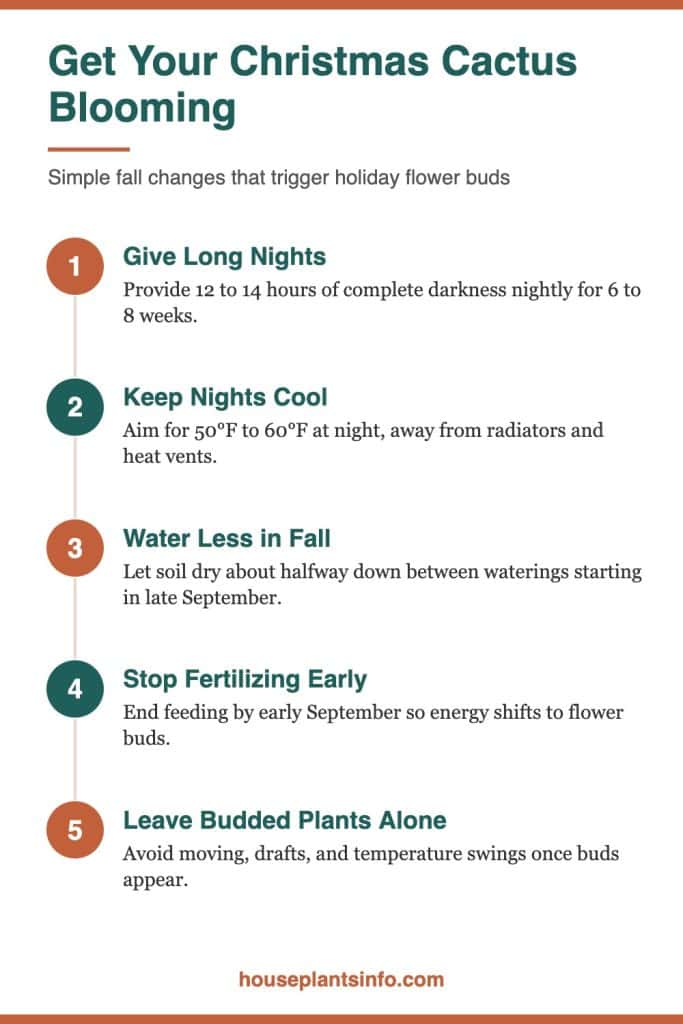
- Stop fertilizing by early September and let the soil dry about halfway down between waterings.
- Starting in late September, give the plant 12 to 14 hours of complete darkness nightly for 6 to 8 weeks.
- Move it to a bright spot with night temperatures near 50°F to 60°F, away from radiators and drafts.
- Once buds appear, keep the plant in one stable location and water evenly.
- Plan any repotting for late winter or spring, using a pot only 1 to 2 inches larger.
Common Questions About Christmas Cactus Not Blooming
How long does it take for a Christmas cactus to bloom after starting the dark treatment?
Buds usually appear about 6 to 8 weeks after you begin consistent long nights and cool temperatures. Once buds form, they generally take another few weeks to open. Starting in late September or early October times blooms for the holidays.
Can a Christmas cactus bloom more than once a year?
Yes, a healthy plant sometimes reblooms in spring if conditions again provide long nights or cool temperatures. The second bloom is usually lighter than the main winter flush. Giving the plant a short rest after the first bloom helps.
Should I put my Christmas cactus in a closet to make it bloom?
A closet works well at night, but the plant still needs bright light during the day. Move it into the closet in the evening and back to its window in the morning. Leaving it in darkness around the clock will weaken it.
Does an old Christmas cactus stop blooming?
Age alone does not stop a Christmas cactus from flowering, and many plants bloom for decades. Older plants that stop flowering are usually overcrowded, in depleted soil, or missing their fall darkness and cool period. Refreshing the soil in spring often helps.
Why does my Christmas cactus only bloom at the tips of a few stems?
Buds form only on mature segment tips, and stems in lower light or warmer spots may not get the signal. Rotating the plant during the growing season, before buds form, encourages even growth. Light pruning after flowering also creates more branch tips for next year.

Hi! I’m Sophia, and I love plants – especially an expert in growing house plants. I stay in Chicago, United States of America, and through my blog and social media platforms, provide tips and tricks on how to grow healthy, vibrant plants indoors. Check out more here.