
Your dragon tree stands by the window with spiky, red-edged leaves. You’re holding a watering can and wondering whether the plant actually needs it today.
Knowing how often to water dracaena marginata matters more than almost any other care step, because this plant tolerates neglect far better than it tolerates soggy soil.
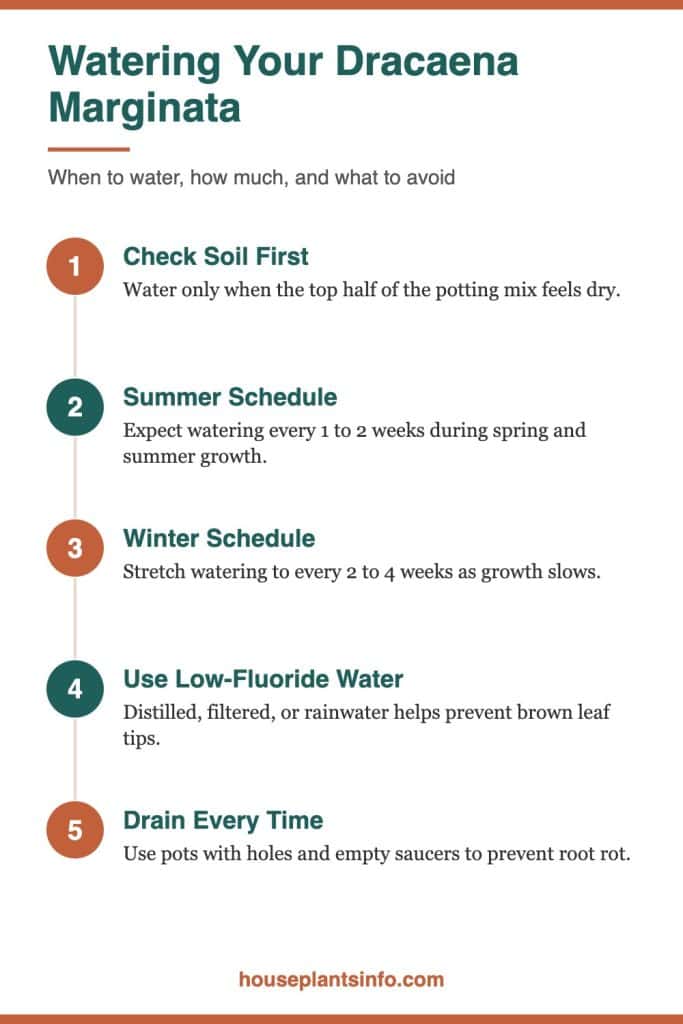
The short version: Water your dracaena marginata when the top half of the soil is dry.
In most homes that works out to every 1 to 2 weeks in spring and summer and every 2 to 4 weeks in fall and winter. Always check the soil first instead of following a fixed calendar.
This guide covers how to check the soil, how light and season change the schedule, which water to use, and how to tell and fix overwatering versus underwatering.
At a Glance
| Factor | What it needs |
|---|---|
| Water | When the top half of the soil is dry; roughly every 1 to 4 weeks depending on season |
| Light | Bright, indirect light; tolerates medium light but grows and drinks less |
| Humidity | Average household humidity (30 to 50 percent) is fine |
| Temperature | 65 to 80°F; keep above 55°F and away from cold drafts |
| Soil | Fast-draining potting mix in a pot with drainage holes |
| Pet safety | Toxic to cats and dogs per the ASPCA |
| Difficulty | Easy, as long as you avoid overwatering |
How Often to Water Dracaena Marginata?
Water when the top half of the potting mix feels dry, not on a set day of the week.
For a typical plant in bright, indirect light, that usually means every 7 to 14 days in the warm months and every 2 to 4 weeks in winter.
Why a Fixed Schedule Fails
Dracaena marginata is a drought-tolerant plant with a woody, cane-like trunk that stores some moisture. Its roots rot quickly if they sit in wet soil for days.
A calendar schedule ignores the things that actually control drying time: light, pot size, room temperature, and the season.
The same plant might dry out in 8 days near a sunny south window in July and take 4 weeks to dry in a dim corner in January. Watering both on the same schedule guarantees one of them gets too much.
The Simple Way to Measure Dryness
For small pots (6 inches or less), push a finger about 2 inches into the soil. If it feels dry at that depth, it’s time to water.
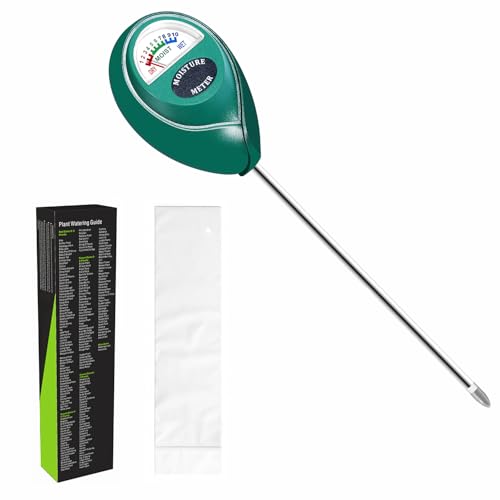
For larger pots, finger testing only reaches the surface layer. A soil moisture meter or a plain wooden skewer gives you a better read deeper in the pot.
Push the skewer most of the way down, leave it for a minute, and pull it out. Damp soil clings to it and darkens the wood.
Sophia’s tip: Leave a wooden chopstick pushed into the pot permanently. Pull it out each week to check moisture, then slide it back in. It costs nothing and saves you from guessing.
For a broader overview beyond watering, see this guide to dracaena marginata care: light, water, soil and common problems.
How Do You Know Your Dragon Tree Is Ready for Water?
The soil tells you first, and the plant tells you second. Check the mix before the leaves start showing stress, because by the time leaves droop, the plant has been dry for a while.
Soil Signs
- The top 2 inches feel dry and crumbly.
- The soil looks lighter in color than it does right after watering.
- A moisture meter reads in the “dry” range at mid-pot depth.
- The soil has started pulling slightly away from the pot’s edge (a sign it’s very dry).
Weight Check
Lift the pot right after a thorough watering and remember how heavy it feels. A dry pot feels noticeably lighter. After a few cycles, you can judge moisture just by tipping the pot.
This works best for pots up to about 10 inches. For heavy floor plants, rely on a skewer or moisture meter instead.
Leaf Signs
Healthy, well-hydrated leaves are firm and arch outward. Mildly thirsty leaves soften and droop slightly, especially the newer ones at the top. Severely dry plants develop crispy brown tips and curled leaves.
Don’t wait for leaf signs as your cue. Water based on the soil, and use the leaves as confirmation that your rhythm is working.
How Light, Pot, and Room Conditions Change the Schedule
The more light and warmth your plant gets, the faster it uses water. Pot material, pot size, and indoor heating also shift drying time by days or even weeks.
Window Direction and Distance
A dracaena marginata within 3 to 5 feet of a bright east or west window, or set back from a south window, uses water steadily. Expect roughly weekly to biweekly watering in summer.
Placed in a north window or 8 or more feet from any glass, the plant grows slowly and drinks much less. It may only need water every 2 to 3 weeks even in summer.
Under a grow light running 10 to 12 hours a day, it behaves closer to a plant in a bright window.

Pot Type and Size
Pot material affects how fast the soil dries:
| Pot type | Drying speed | What it means for watering |
|---|---|---|
| Unglazed terracotta | Fast | Check soil more often; good for people who tend to overwater |
| Plastic | Slow | Water less often; soil stays moist longer |
| Glazed ceramic | Slow to moderate | Similar to plastic; confirm it has a drainage hole |
| Self-watering pot | Varies | Not ideal; keeps roots too consistently damp |
Pot size matters too. A pot much larger than the root ball holds excess soil that stays wet for days, which invites root rot. Choose a pot only 1 to 2 inches wider than the current one when repotting.
Indoor Heat and Air
Forced-air heat and radiators dry out both the air and the soil. A plant sitting near a heat register in January may dry faster than you’d expect for winter, so keep checking rather than assuming.
Air conditioning has the opposite effect on growth. Cool, drafty spots slow the plant down, so the soil stays wet longer. Keep your dragon tree out of direct paths of AC vents and cold winter drafts from doors or leaky windows.
Spring and Summer vs. Fall and Winter Watering
Water more often during the spring and summer growing season and less often in fall and winter. The plant’s growth slows as days shorten, and its water use drops with it.
Spring and Summer
From about March or April through September, dracaena marginata puts out new leaves at the top of each cane. Longer days and warmer rooms mean the soil dries faster.
In most homes, plan to check the soil weekly and water every 7 to 14 days. Plants in bright light, terracotta pots, or warm rooms may lean toward the shorter end.
Fall and Winter
From October through February, growth slows to a crawl. Lower light, especially in northern cities, means the plant uses far less water.
Stretch watering to every 2 to 4 weeks. Let the soil dry deeper than you would in summer, close to two-thirds of the way down. Winter overwatering is the most common way people lose this plant.
Sophia’s tip: In winter, keep the plant at least a foot back from cold window glass. Roots in chilled, wet soil rot faster, so a cold windowsill and a full watering can be a bad combination.
A Seasonal Reference
| Season | Typical interval | How dry before watering |
|---|---|---|
| Spring | Every 1 to 2 weeks | Top half dry |
| Summer | Every 1 to 2 weeks | Top half dry |
| Fall | Every 2 to 3 weeks | Top half to two-thirds dry |
| Winter | Every 2 to 4 weeks | About two-thirds dry |
Treat these as starting points. Your soil check always wins over the table.
What Kind of Water Should You Use?
Use room-temperature water that is low in fluoride and dissolved salts when you can. Dracaena marginata is sensitive to fluoride, which commonly causes brown leaf tips and edges.
Why Fluoride Matters
Many municipal water supplies contain added fluoride. Over time it builds up in the soil and leaf tissue, and dracaenas show it as brown, dead tips with a yellow band behind them.
Letting tap water sit out overnight lets chlorine escape, but it does not remove fluoride. If your plant keeps getting brown tips even with good watering habits, switch water sources.
Better Water Options
- Distilled water
- Rainwater collected in a clean container
- Water from a reverse osmosis filter
- Tap water, used with an occasional thorough flush (see below)
Flushing Out Salt Buildup
Fertilizer salts and minerals from hard water collect in the soil and appear as a white crust on the surface or pot rim. Every few months, run plenty of water through the pot for a minute or two, letting it pour out the drainage holes.
Do this during the growing season so the soil has time to dry afterward. Avoid using cold water straight from the tap, since a sudden chill can stress the roots.
How to Water Dracaena Marginata the Right Way
Water deeply and less often, not a little bit every few days. A thorough soak followed by a dry-down period keeps roots healthy and encourages them to grow through the whole pot.
Step-by-Step Watering
- Check that the top half of the soil is dry.
- Take the plant to a sink or set it on a tray if it’s movable.
- Pour room-temperature water slowly over the entire soil surface.
- Keep going until water runs freely from the drainage holes.
- Let the pot drain completely for 10 to 15 minutes.
- Empty the saucer or cachepot so the roots don’t sit in standing water.
Drainage Is Non-Negotiable
A pot without drainage holes traps water at the bottom where you can’t see it. Even careful watering eventually leads to rot in these containers.
If you love a decorative pot without a hole, use it as an outer cover. Keep the plant in a plastic nursery pot inside it and lift it out to water.
Soil That Supports Good Watering
Use a well-draining potting mix. A standard indoor mix improved with perlite or bark, roughly 2 or 3 parts mix to 1 part perlite, drains well and still holds enough moisture.

Dense, peat-heavy soil compacts over time and stays soggy. If water sits on top for a long time before soaking in, or the soil stays wet for weeks, repot into a fresher, chunkier mix.
Should You Mist or Bottom Water?
Misting isn’t necessary. Dracaena marginata handles average household humidity, and misting does little to raise humidity for long.
Bottom watering works occasionally, but it doesn’t flush out salts. If you bottom water, alternate with top watering every few sessions.
Overwatered or Underwatered? How to Tell the Difference
Overwatering usually shows up as yellowing, soft, or dropping leaves with damp soil. Underwatering shows as crispy brown tips, drooping, and bone-dry soil. Always check the soil before deciding, because some symptoms overlap.
Side-by-Side Symptoms
| Symptom | Overwatered | Underwatered |
|---|---|---|
| Soil | Wet or soggy days after watering | Dry, hard, pulling from pot edges |
| Leaf color | Yellowing, often many leaves at once | Brown, crispy tips and edges |
| Leaf texture | Limp, soft, sometimes mushy at the base | Dry, papery, curled |
| Leaf drop | Many leaves dropping, including upper ones | Lower leaves drying and falling |
| Trunk | Soft, wrinkled, or mushy near the soil | Firm |
| Smell | Sour or rotten odor from the soil | No odor |
| Pests | Fungus gnats flying around the pot | Rarely related |
Normal Leaf Loss vs. a Problem
Dracaena marginata naturally sheds its oldest, lowest leaves as the cane grows taller. A few lower leaves yellowing and falling off now and then is normal and leaves behind the bare trunk this plant is known for.
Worry when you see many leaves yellowing at once, yellowing on new growth at the top, or a soft trunk. Those point to a watering problem.
Other Causes of Brown Tips
Brown tips don’t always mean thirst. Fluoride in tap water, fertilizer buildup, and very dry air near a heater can all cause them. If the soil is moist and tips still brown, review your water source first.
Wet leaves that stay damp in low airflow can develop spots and mold. If you see fuzzy growth or sooty patches, this guide explains how to clean fungus off of a dracaena marginata.
How to Rescue an Overwatered Dracaena Marginata
Stop watering, let the soil dry, and inspect the roots if the plant keeps declining. Caught early, most overwatered dragon trees recover well.
Mild Overwatering
If leaves are only starting to yellow and the trunk is firm, simply let the soil dry out. Move the plant to brighter, indirect light and improve air movement around it.
Don’t water again until the top half to two-thirds of the soil is dry. This may take a couple of weeks.
Serious Overwatering and Root Rot
If the trunk feels soft near the base or the soil smells sour, check the roots:
- Slide the plant out of its pot and gently loosen the soil.
- Healthy roots are firm and light-colored. Rotted roots are brown or black, mushy, and may slip apart when pulled.
- Cut away all rotted roots with clean, sharp scissors.
- Repot into fresh, dry, well-draining mix in a pot with drainage holes.
- Wait about a week before watering lightly, then resume the dry-down routine.
Sophia’s tip: Wipe your scissors with rubbing alcohol before and after cutting rotted roots. It keeps you from spreading rot to healthy tissue or to your next plant.
Saving Healthy Canes
If rot has moved up into the trunk, cut the cane above the soft section into firm, healthy wood. The top can be rooted in water or moist soil, and the remaining stump may sprout new growth. Learn the technique to trim dracaena marginata safely.
For plants in rough shape beyond overwatering, follow these steps to save a dying dracaena marginata (and revive it step by step).
Reviving an Underwatered Plant
A very dry plant is easier to fix. Water slowly and thoroughly until water runs from the bottom. If the soil is so dry that water runs straight through, set the pot in a few inches of water for 20 to 30 minutes, then drain.
Trim crispy brown tips with clean scissors, following the leaf’s natural pointed shape. The damaged parts won’t turn green again, but new growth will come in healthy.
A Note on Pets
Keep the plant out of reach while it recovers, since fallen leaves are easy for pets to chew.
The ASPCA lists dracaena as toxic to cats and dogs, so read more about the dracaena marginata plant toxic to cats if you share your home with pets.
Your Next Steps
- Check the soil today with your finger, a skewer, or a moisture meter before watering again.
- Confirm your pot has drainage holes and empty any standing water from the saucer.
- Set a weekly reminder to check soil moisture in summer and a biweekly reminder in winter.
- Switch to distilled, filtered, or rainwater if your plant keeps getting brown tips.
- Move the plant away from heat vents, AC drafts, and cold winter glass.
- Repot into a chunkier, well-draining mix if the soil stays wet for more than 2 to 3 weeks.
Common Questions About Watering Dracaena Marginata
How long can a dracaena marginata go without water?
A healthy plant can usually go 2 to 4 weeks without water, and sometimes longer in winter when growth slows. It may develop brown tips if left dry too long, but it recovers far more easily from drought than from overwatering.
Should I water dracaena marginata from the top or bottom?
Top watering is best for regular care because it flushes out salts and minerals. Bottom watering is fine occasionally, but alternate it with a thorough top watering every few sessions.
Why are the leaves on my dracaena marginata turning yellow?
A few yellow lower leaves are part of normal growth. Many yellow leaves at once, especially with damp soil or a soft trunk, usually point to overwatering or root rot.
Can I use tap water for my dracaena marginata?
You can, but this plant is sensitive to fluoride, which often causes brown leaf tips. If tips keep browning, switch to distilled, filtered, or rainwater and flush the soil every few months.
Do I need to water dracaena marginata more in a hot apartment?
Yes, warm rooms and dry heat from radiators or forced air make soil dry faster. Keep checking the soil rather than guessing, since a plant near a heater may need water more often than the usual winter schedule.

Hi! I’m Sophia, and I love plants – especially an expert in growing house plants. I stay in Chicago, United States of America, and through my blog and social media platforms, provide tips and tricks on how to grow healthy, vibrant plants indoors. Check out more here.