
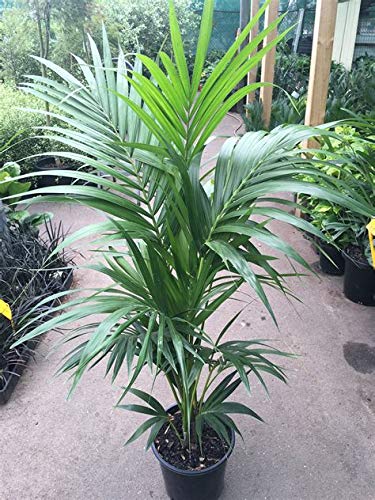
You are looking at two feathery green palms in a plant shop: one a cluster of slim, cane-like stems, the other a tall, upright crown of bright fronds rising from a thick base.
Choosing between a bamboo palm vs majesty palm depends mostly on the light and humidity your home can actually offer.
The short version: Pick a bamboo palm if your room gets low to medium indirect light, or if you want a compact, forgiving palm for a corner, hallway or bedroom.
Pick a majesty palm only if you have a bright south or west window and can keep its soil evenly moist and the air humid.
This guide compares their looks, light, water, humidity, soil, growth, pests, pruning and pet safety so you can choose with confidence.
At a Glance
| Factor | What it needs |
|---|---|
| Light | Bamboo palm: low to medium indirect light. Majesty palm: bright light, ideally a few hours of direct sun |
| Water | Bamboo palm: water when the top inch is dry. Majesty palm: keep evenly moist, never soggy, never fully dry |
| Humidity | Bamboo palm: average indoor air is fine, 40 percent or more is ideal. Majesty palm: 50 percent or more |
| Temperature | Both: 65 to 85°F, keep above 50°F, avoid cold drafts |
| Soil | Both: well-draining potting mix in a pot with drainage holes |
| Pet safety | Both listed by the ASPCA as non-toxic to cats and dogs |
| Difficulty | Bamboo palm: easy to moderate. Majesty palm: moderate to challenging indoors |
Bamboo Palm vs Majesty Palm: Which One Fits Your Home?
For most apartments, the bamboo palm is the easier and more reliable choice. The majesty palm only does well when you can give it strong light, steady moisture and humid air, three things many indoor spaces struggle to provide in winter.
Where Each Palm Comes From
The bamboo palm (Chamaedorea seifrizii, along with a few close relatives sold under the same name) grows in the understory of forests in Mexico and Central America. It evolved under taller trees, so filtered light suits it well.
The majesty palm (Ravenea rivularis) grows along riverbanks in Madagascar. In the wild it has bright sun overhead and wet soil at its roots. That combination explains why it often struggles several feet back from a window in a heated apartment.
How Your Room Decides for You
A bamboo palm can sit a few feet from an east or north window, or well back from a south window, and still look healthy. It is a practical choice for rooms where the light is pleasant but not intense.
A majesty palm wants to be within about 1 to 3 feet of a bright south or west window. In a dim room, it tends to yellow, drop fronds and attract spider mites within a few months.

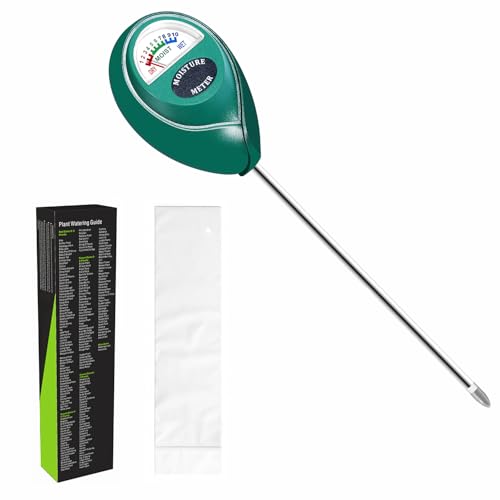
Two simple items make the decision clearer. A digital hygrometer shows your real room humidity, and a soil moisture meter shows whether the root zone is wet or dry.
If your winter humidity reads under 40 percent and you have no humidifier, the majesty palm will likely struggle.
If you are also considering a third palm, the guide to kentia palm vs majesty palm, and which one fits your home, covers another common shelf neighbor.
Who Should Choose Which
Choose a bamboo palm if:
- Your room gets low to medium indirect light.
- You want a palm under about 6 to 7 feet that fits a corner.
- Your winter air is dry from radiators or forced-air heat.
- You prefer moderate, predictable care.
Choose a majesty palm if:
- You have a bright south or west window with some direct sun.
- You can keep the soil evenly moist without letting it dry out.
- You run a humidifier or can keep humidity at 50 percent or higher.
- You want a tall, upright palm at a lower price per foot.
How Can You Tell a Bamboo Palm From a Majesty Palm?
Look at the stems and the base. Bamboo palms grow as a clump of thin, green, cane-like stems with visible rings, while majesty palms have a single swollen base with upright fronds fanning out above it.
Stems and Base
Bamboo palm stems look like slender green bamboo canes, usually less than an inch thick, with ring-like scars where old fronds were attached. Several stems rise together from the soil, giving the plant a full, bushy shape.
Majesty palms develop a thick, bulbous base where the frond stems meet the soil. Even young plants show this swelling, which makes it one of the most reliable ways to identify them.
Frond Shape and Color
Bamboo palm fronds are dark green, with narrow leaflets spaced along each frond. The overall look is airy and layered, with fronds at several heights along the canes.
Majesty palm fronds are brighter green and longer, with many fine leaflets. They stand more upright, giving the plant a vertical, feather-duster shape rather than a bushy one.
Overall Size on the Shelf
Bamboo palms are often sold at 2 to 5 feet tall in pots of 8 to 14 inches. Majesty palms are commonly sold taller, often 4 to 6 feet, because they grow faster in nurseries.
Plant tags can be vague, so trust the canes and the base more than the label. A swollen base means majesty palm. Ringed green canes mean bamboo palm.
How Much Light Does Each Palm Need?
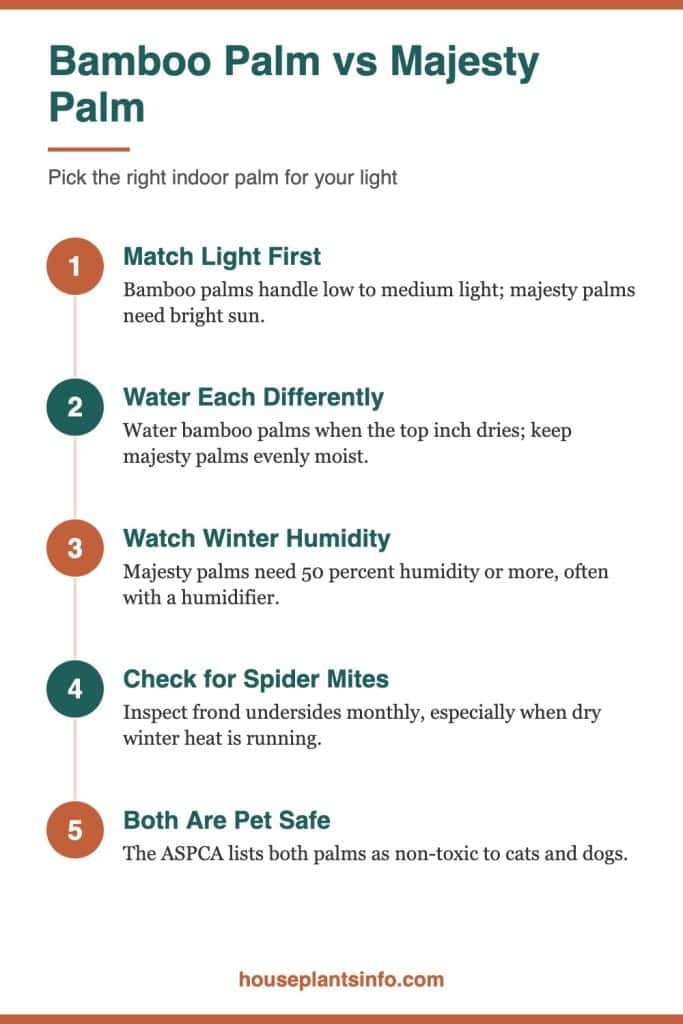
The bamboo palm handles low to medium indirect light, while the majesty palm needs bright light with a few hours of direct sun. Light is the biggest single factor in whether a majesty palm survives indoors.
Placing a Bamboo Palm
A bamboo palm does well 3 to 6 feet from an east or north window, or set back from a south or west window where the direct beam does not reach the fronds. It also tolerates rooms with modest light, though growth slows.
Strong afternoon sun through glass can scorch bamboo palm fronds, leaving pale or brown patches. If your only window faces west, use a sheer curtain or keep the plant out of the direct rays.
In a very dark corner, a bamboo palm will survive for a while but becomes thin and leggy. Moving it closer to a window usually fixes that.
Placing a Majesty Palm
A majesty palm belongs close to a bright south or west window. A few hours of direct sun each day help it hold its color and resist pests.
In a Chicago winter, daylight gets short and weak. Even a sunny window may not be enough, which is why many majesty palms look fine in summer and decline by February.
When a Grow Light Makes Sense
A full-spectrum LED grow light can fill the gap for a majesty palm in a dim room or during winter. Mount it above the plant so fronds do not stretch sideways, and run it 12 to 14 hours a day on a timer.

A bamboo palm rarely needs supplemental light. If it is producing very little new growth, try a brighter spot first.
Sophia’s tip: Stand where the palm will go at midday and look toward the window. If you cannot see open sky from that spot, choose the bamboo palm.
How Should You Water and Humidify Each Palm?
Water a bamboo palm when the top inch of soil is dry, and keep a majesty palm evenly moist but never soggy. The majesty palm also needs humidity of 50 percent or more, while the bamboo palm manages in average indoor air.
Watering a Bamboo Palm
Check the soil with your finger or a moisture meter. When the top inch feels dry, water thoroughly until it drains from the bottom, then empty the saucer.
Bamboo palms dislike both extremes. Constantly wet soil can lead to root rot, while letting the pot dry out completely causes brown tips and yellowing lower fronds. In winter, the soil dries more slowly, so you will water less often.
Watering a Majesty Palm
A majesty palm needs consistently moist soil. Water when the surface just starts to feel dry, and do not let the pot dry out completely, because dry roots show up quickly as browning fronds.
Moist does not mean waterlogged. A pot with drainage holes and an empty saucer keep the roots supplied with both water and air. For a closer look at timing through the seasons, see the guide on how often to water majesty palm.
Water Quality
Both palms can develop brown leaflet tips from salt and mineral buildup in the soil. Flushing the pot with plenty of water every month or two helps clear excess salts.
If your tap water leaves white crust on the pot or soil, try filtered water, rainwater or distilled water. Letting tap water sit out overnight helps it reach room temperature, which roots prefer.
Managing Dry Winter Air
Forced-air heat and radiators can push indoor humidity below 30 percent in winter. A bamboo palm usually tolerates this, though leaflet tips may brown and spider mites become more likely.
A majesty palm reacts to dry air quickly. Run a cool-mist humidifier nearby, keep the plant several feet from heat vents and radiators, and group it with other plants to raise the humidity around it.
Sophia’s tip: Push the moisture meter probe about two-thirds of the way down the pot. Palm roots sit deep, and the surface can feel dry while the root zone is still wet.
What Temperature, Soil and Feeding Do These Palms Need?
Both palms like 65 to 85°F, a well-draining potting mix and light feeding in spring and summer. Their needs here are similar, so the differences in light and moisture matter far more.
Temperature and Drafts
Keep both palms above 50°F, and move them away from drafty doors, single-pane windows and AC vents blowing directly on the fronds. Cold air can leave brown or black patches on leaflets.
If the window glass feels icy on winter nights, pull the palm back a foot or so. In summer, keep it out of the direct stream of an air conditioner.
Soil and Repotting
A quality indoor potting mix with added perlite or bark drains well for both palms. Always use a pot with drainage holes.
Palms like being slightly snug and dislike root disturbance. Repot only when roots crowd the drainage holes, usually every 2 to 3 years, moving up just one pot size, about 2 inches wider. Keep the plant at the same soil depth.
Feeding
Feed both palms with a palm fertilizer or balanced liquid fertilizer at half strength, about once a month in spring and summer. Skip feeding in fall and winter, when indoor growth slows.
Too much fertilizer burns roots and browns frond tips. Palms benefit from fertilizers containing magnesium and micronutrients, which help prevent yellowing between leaf veins. If you prefer simple kitchen options, the guide to homemade fertilizer for majesty palm explains what works and what to avoid.
Which Palm Grows Bigger, Faster and Costs Less?
Majesty palms grow faster and taller, and they usually cost less per foot of height. Bamboo palms stay more compact, typically 4 to 7 feet indoors, and grow at a slow to moderate pace.
Size Indoors
A bamboo palm usually reaches about 4 to 7 feet indoors, occasionally more in a large, bright room. It also spreads as new canes emerge, filling out to roughly 3 to 5 feet wide.
A majesty palm can reach 6 to 10 feet indoors with good light. Its upright form means it takes less floor space than its height suggests, but it needs ceiling room and continued access to the window as it grows.
Growth Rate
A bamboo palm in medium light adds a few new fronds each growing season. In lower light it slows down, which suits a defined spot where you want the plant to stay roughly the same size.
A majesty palm grows quickly in bright, humid conditions. In poor conditions it may lose fronds faster than it makes new ones, so its size can actually shrink.
Price and Value
Majesty palms reach saleable size quickly in nurseries, so they are often the cheaper option at a given height. Bamboo palms are usually moderately priced.
The cheaper palm is not always the better value. If a majesty palm declines in a dim room, you may end up replacing it, while a bamboo palm in the same spot can last for years.
| Situation | Better choice |
|---|---|
| North-facing room | Bamboo palm |
| Bright south or west window with direct sun | Majesty palm |
| Dry winter air, no humidifier | Bamboo palm |
| Corner or hallway away from windows | Bamboo palm |
| Tall, vertical look on a budget | Majesty palm, if light is strong |
| Bedroom or office with medium light | Bamboo palm |
How Do You Prune and Tidy Each Palm?
Prune only fronds that are fully brown or mostly yellow, and never cut the growing tip at the center. Both palms pull nutrients from fading fronds, so removing them too early weakens the plant.
Trimming a Bamboo Palm
Cut dead fronds back close to the cane with clean, sharp pruners. If an entire cane has died or become bare and unsightly, you can cut it off near the soil line, and the clump will continue from the remaining canes.
Cut canes do not regrow from the top, so remove only what is truly dead. New canes emerge from the base over time.
Trimming a Majesty Palm
Remove fronds that are completely brown or yellow by cutting near the base of the frond stem. Leave the newest central spear and the upper fronds untouched.
Majesty palms grow from a single crown, so damaging it can kill the plant. For step-by-step guidance, see how to prune majesty palm fronds without stressing the plant.
Fixing Brown Tips
Brown tips on either palm usually come from dry air, uneven watering, salt buildup or excess fertilizer. Trim them with clean scissors, following the natural angle of the leaflet and leaving a thin edge of brown so you do not cut into healthy tissue.
On a bamboo palm, yellowing of an occasional lower frond is normal aging. On a majesty palm, widespread yellowing usually points to low light, drying soil, low humidity or pests.
Which Palm Has More Pest Problems, and Are They Safe for Pets?
The majesty palm is far more prone to pests indoors, especially spider mites. Both palms are listed by the ASPCA as non-toxic to cats and dogs.
Spider Mites
Spider mites thrive in warm, dry air. Look for fine webbing between leaflets and speckled, dull or bronzed fronds, especially on the undersides.
Majesty palms are the classic target, particularly in winter when the heat is running. Bamboo palms get spider mites too, mainly in dry rooms. Rinsing the fronds in the shower and raising humidity make conditions less friendly to mites on either plant.
Scale and Mealybugs
Scale looks like small brown or tan bumps stuck to stems and frond undersides. Mealybugs look like small white cottony clusters, often where fronds meet the stems.
Wipe both pests off with a cotton swab dipped in rubbing alcohol, then check every week, since new ones often appear after the first round. Insecticidal soap can help with heavier infestations.
Sophia’s tip: Once a month, wipe the undersides of a few fronds with a damp white paper towel. Reddish or brown smears often reveal spider mites before you can see damage.
Pet Safety
The ASPCA lists both the bamboo palm (Chamaedorea seifrizii) and the majesty palm (Ravenea rivularis) as non-toxic to cats and dogs. Chewing on fronds can still cause mild stomach upset, so discourage nibbling.
If you share your home with a curious cat, the guide on whether the majesty palm is safe for cats covers what to watch for. Keep fertilizers and pest treatments out of reach of pets and kids.
Be careful with plant names. Several unrelated plants are called palms, including the sago palm, which is highly toxic to pets. Check the botanical name on the tag before bringing any palm home.
Your Next Steps
- Check the light in your chosen spot at midday, noting the window direction and distance from the glass.
- Place a hygrometer in the room for a few days, especially in winter, to see your real humidity.
- Choose the bamboo palm for low to medium light or dry air, and the majesty palm only for a bright, humid spot.
- Use a moisture meter before each watering for the first few months until you learn the plant’s rhythm.
- Keep the palm away from radiators, heat vents, AC vents and drafty windows.
- Inspect frond undersides monthly for webbing, speckling, cottony clusters or sticky bumps.
Common Questions About Bamboo Palm vs Majesty Palm
Is a bamboo palm easier to care for than a majesty palm?
Yes, for most indoor spaces. The bamboo palm tolerates low to medium light and average indoor humidity, while the majesty palm needs bright light, constant moisture and humidity of 50 percent or more.
Can a bamboo palm grow in a room with no direct sun?
Yes, a bamboo palm handles low to medium indirect light well and does not need direct sun. It will grow more slowly in dimmer spots, but it can stay healthy a few feet from a north or east window.
Why is my majesty palm turning yellow indoors?
Most indoor majesty palms yellow from too little light, soil drying out, low humidity or spider mites, often in combination. Move it closer to a bright window, keep the soil evenly moist and raise the humidity with a humidifier.
Which palm is better for a home with cats or dogs?
Both are listed by the ASPCA as non-toxic to cats and dogs, so either is a reasonable choice. Chewing fronds can still cause mild stomach upset, so discourage nibbling and keep fertilizers out of reach.
How tall do bamboo palms and majesty palms get indoors?
A bamboo palm usually reaches about 4 to 7 feet indoors and spreads as new canes form. A majesty palm can reach 6 to 10 feet with good light, growing faster but needing more space near a bright window.

Hi! I’m Sophia, and I love plants – especially an expert in growing house plants. I stay in Chicago, United States of America, and through my blog and social media platforms, provide tips and tricks on how to grow healthy, vibrant plants indoors. Check out more here.