
You have a cactus sharing a sunny windowsill or a mixed planter with other houseplants, and one of the neighbors is starting to yellow, droop, or rot. It is natural to wonder if the spiny plant is somehow responsible.
The short version: A cactus will not attack or poison its neighbors in any meaningful way. In mixed plantings, though, a cactus can contribute to problems through mismatched watering, root crowding, shading, spine damage, and shared pests.
Nearly every one of these risks is easy to prevent once you know what to look for.
This guide covers each real risk, the myths that do not hold up, and the specific fix for every situation.
Check These First
- Feel the soil 2 inches down in the shared pot. If it stays wet for more than a week, watering is the likely culprit, not the cactus.
- Look under leaves and along cactus ribs for white cottony clumps, tiny webs, or brown bumps that signal pests.
- Check whether a tall cactus now blocks the window light that reached a smaller plant last season.
- Inspect leaves that touch the cactus for puncture marks, tears, or brown spots where spines press in.
- Lift the pot or check the drainage hole. Roots circling the bottom or poking out mean the container is overcrowded.
Can Cactus Kill Other Plants in the Same Pot?
A cactus can contribute to the decline of other plants in the same pot, but it almost never does so directly. The plant itself is not the threat. The conditions created by grouping very different plants together are what usually cause the damage.
Cacti evolved for fast-draining soil, bright light, and long dry spells between waterings. Most common houseplants, such as pothos, ferns, and peace lilies, prefer steady moisture and gentler light. Putting them together forces one of the plants to live in the wrong conditions.
Why Mixed Plantings Struggle
When you water for the leafy plant, the cactus sits in soil that stays damp too long. When you water for the cactus, the leafy plant dries out and wilts.
Either way, something suffers, and the cactus often gets blamed for a problem that really comes from scheduling.
A soil moisture meter takes the guesswork out of shared containers. Push the probe into each plant’s root zone separately, because moisture can vary across a single wide pot.

In a dim Chicago winter, a grow light placed 6 to 12 inches above a mixed planter helps every plant use water faster and reduces rot risk.
When Sharing a Pot Works
Mixed planters succeed when every plant has similar needs. Cacti pair well with other desert succulents like echeveria, haworthia, aloe, and jade, since all prefer gritty soil and infrequent watering.
The combination that causes trouble is cactus plus tropical foliage. If you love that look, grow them in separate pots and group the pots on one tray or shelf instead.
Mismatched Watering: The Most Common Cause and Its Fix
Watering conflicts are the number one reason a plant near a cactus declines. The cactus does not cause the problem, but its care needs pull the whole planting in two directions.
Signs the Watering Schedule Is the Problem
Overwatered plants show yellowing lower leaves, soft or mushy stems, and soil that smells sour. A cactus that gets too much water may turn translucent or brown at the base and feel soft when pressed.
Underwatered neighbors wilt, develop crispy brown leaf edges, and drop leaves. If the pot holds both symptoms at once, the mismatch is clear.
How to Fix It
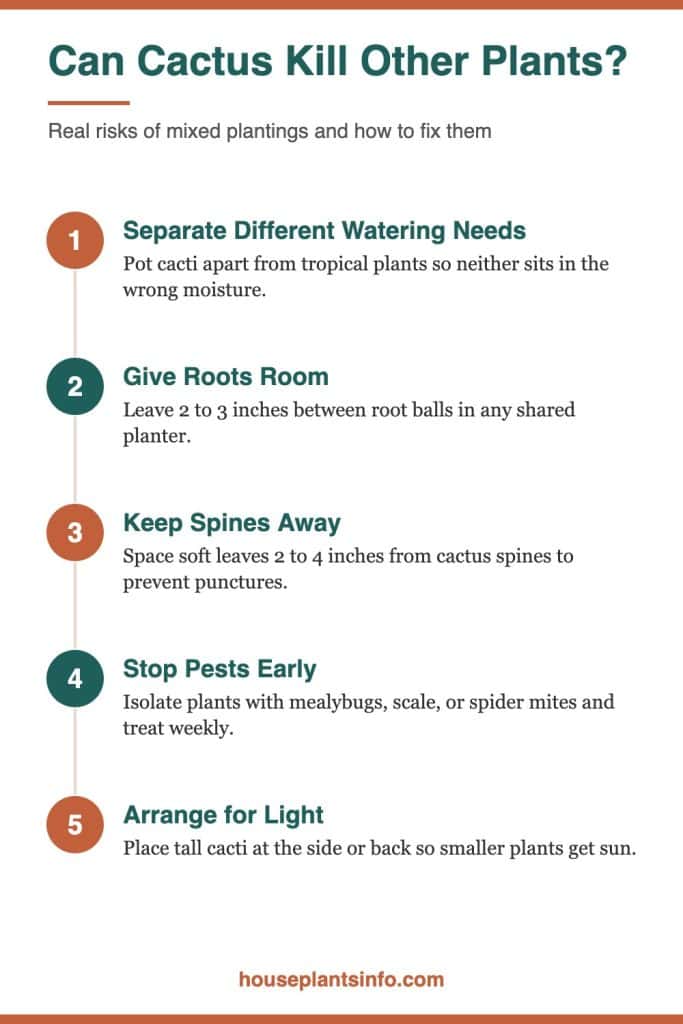
Separate plants with different needs into their own containers. Use a gritty cactus mix with plenty of perlite or pumice for the cactus, and a standard potting mix for tropical plants.
If you must keep a shared pot, choose an unglazed terracotta container with a drainage hole, which dries faster than plastic or glazed ceramic.
Water only when the top 2 to 3 inches of soil feel dry, and favor the needs of the most rot-prone plant.
Indoor heat changes everything in winter. Radiators and forced-air vents dry the top layer of soil quickly while the lower root zone stays wet, which fools many growers into watering again too soon.
Sophia’s tip: Before watering a mixed pot in winter, push a wooden chopstick to the bottom and leave it for 10 minutes. If it comes out dark or with soil stuck to it, wait several more days.
The same mismatch can harm the cactus as well. Constant moisture is one of the fastest ways to accidentally kill a cactus, so a shared pot puts both plants at risk.
Root Competition for Water and Nutrients: Cause and Fix
Cacti do compete with neighbors for water and nutrients, especially in small containers. Many cacti grow wide, shallow root systems designed to soak up moisture quickly after rain, which helps them claim water before other roots can reach it.
How Cactus Roots Behave
In nature, many cacti spread fine roots just below the surface, sometimes far beyond the width of the plant. After rain, they can also grow new fine roots within hours to days to capture moisture quickly.
In a pot, that strategy means a cactus can grab much of the water from a light watering. A small companion with weaker roots may get less than it needs, particularly if the container is crowded.
Nutrient Sharing in Small Pots
Potting soil holds a limited supply of nutrients. When several plants share one pot, the strongest root system tends to take the largest share, and slower growers can show pale leaves or stalled growth.
Cacti are light feeders, so they are rarely the main nutrient competitor. Fast-growing tropical plants often take more than the cactus does. Still, in a crowded pot, every root system reduces what is available to the others.
How to Fix It
Give each plant enough room. A good rule is at least 2 to 3 inches of soil between root balls in a shared planter.
Repot when roots circle the container or grow out of the drainage hole, usually every 2 to 4 years for most cacti.
If one plant is clearly losing, move it to its own pot. Separate containers end root competition completely and let you water and feed each plant correctly.
Do Cacti Poison Nearby Plants Through Allelopathy?
There is no good evidence that common indoor cacti poison neighboring plants. Allelopathy, where a plant releases chemicals that suppress other plants, is real in some species, but it is not a recognized problem with houseplant cacti.
What Allelopathy Means
Some plants, such as black walnut trees, release compounds into the soil that slow or stop the growth of nearby plants. This is a well-documented effect in a handful of outdoor species.
Desert plants are sometimes discussed in this context because bare ground often surrounds shrubs in dry landscapes. However, that spacing usually comes from competition for scarce water, not from chemical warfare.
Why It Is Not a Real Indoor Concern
The cacti most people grow indoors, such as golden barrel, bunny ear, Christmas cactus, and column types, are routinely planted alongside succulents in dish gardens. Those plantings do well when watering and light are correct.

If a plant beside your cactus is declining, look at watering, light, pests, and crowding first. Those causes explain nearly every case without any need for a chemical explanation.
What to Do Instead of Worrying
Treat the symptoms you can see. Yellow leaves point to water or nutrient issues, pale stretched growth points to low light, and spotted leaves point to pests or physical damage. Each has a clear fix covered in this guide.
Spines and Physical Damage: Cause and Fix
Cactus spines can physically injure nearby plants when leaves or stems press against them. This type of damage is common in crowded windowsills and mixed planters.
How Spine Damage Happens
Leaves that grow into a cactus, or plants that shift when you rotate pots, can get punctured or torn. Wounds may turn brown, dry out, or let bacteria and fungi enter, especially in humid conditions.
Movement makes it worse. A fan, an AC vent blowing across the shelf, or a pet brushing past can rub soft leaves back and forth against spines repeatedly.
How to Fix It
Leave at least 2 to 4 inches of space between a cactus and any soft-leaved plant. Trim damaged leaves with clean scissors if they are more than half brown, since they will not recover.
When you rotate or move pots, handle the cactus with folded newspaper, a towel, or thick gloves. This protects you and keeps spines from catching on neighboring leaves as you shift things around.
Sophia’s tip: If your windowsill is narrow, place the cactus at the end closest to the brightest pane and line up softer plants in a row behind it, not beside it.
Pet and Kid Safety Around Spines
Spines pose more risk to curious pets and children than to plants. The main concern with most cacti is physical injury from spines, not poisoning.
The ASPCA lists Christmas cactus as non-toxic to cats and dogs, but its stems can still upset a stomach if eaten in quantity.
If you wonder about the human side of this question, see the separate guide on whether a cactus can kill you. For homes with pets, keep spiny cacti on high shelves or in hanging planters well out of reach.
Shading and Crowding: Tall Cacti Blocking Light
A tall or fast-growing cactus can slowly shade out smaller plants by blocking window light. Over months, the shaded plant may stretch, lose color, and weaken until it declines.
Which Cacti Cause Shading
Columnar types grow the tallest indoors. The Peruvian apple cactus, for example, can grow several feet tall in a bright room and eventually take over a whole window.
If you plan to grow Peruvian apple cactus from cutting, plan its long-term spot before it gets big.
Branching types like bunny ear cactus also spread wide. Their pads can fill the space between a window and a smaller plant within a season or two.
Signs a Plant Is Being Shaded
Watch for leggy stems that lean away from the cactus toward open light, smaller new leaves, and fading variegation. A plant that used to flower but stops is often getting too little light.
Window direction matters. In a south or west window, a tall cactus can block several hours of direct sun. In an east window, it may cut out the only direct light a smaller plant receives all day.
How to Fix It
Place tall cacti at the side or back of a group, not directly in front of the glass where they block others. Keep shorter plants in the front row closest to the window.
If space is tight, add a grow light for the smaller plants or move them to a second window. To keep a tall column healthy without letting it take over, see how to care for Peruvian apple cactus, including when to prune.
Pests Spreading From Cactus to Neighboring Plants
Cacti can host pests that move to nearby plants. Mealybugs, scale insects, and spider mites all infest cacti and readily spread to other houseplants on the same shelf.
Pests to Watch For
| Pest | What It Looks Like on Cactus | Damage to Neighbors |
|---|---|---|
| Mealybugs | White cottony clumps in spine clusters, crevices, or roots | Sticky residue, yellowing, stunted growth |
| Scale | Small brown or tan bumps that do not move | Yellow spots, leaf drop, weak stems |
| Spider mites | Fine webbing, tiny moving dots, dull or speckled skin | Stippled, bronzed, or crispy leaves |
| Fungus gnats | Small dark flies near wet soil | Larvae feed on roots in damp soil |
| Root mealybugs | White waxy patches on roots when unpotted | Slow decline with no visible cause above soil |
Why Indoor Conditions Help Pests
Dry winter air from radiators and forced-air heat favors spider mites. Mealybugs hide easily in cactus ribs and spine clusters, so an infestation can grow unnoticed before it reaches softer plants.
Crowded shelves let pests walk from plant to plant. Leaves that touch form bridges, and shared trays let crawling pests move along damp surfaces.
How to Fix It
Isolate any infested plant right away, at least a room away if possible. Dab mealybugs and scale with a cotton swab dipped in 70 percent rubbing alcohol, reaching deep into spine clusters.
For spider mites, rinse plants in the shower, then treat with insecticidal soap or neem oil, following label directions. Repeat treatments every 5 to 7 days for several weeks, because eggs hatch after the first round.
Quarantine new plants for 2 to 3 weeks before placing them near your collection. Many infestations start with a new arrival from a store or a friend.
Sophia’s tip: Check cactus roots for root mealybugs every time you repot. White fluff on roots is easy to miss but explains many slow, mysterious declines in the whole pot.
Soil pH and Fertilizer Mix-Ups: Cause and Fix
A cactus does not meaningfully change the pH of its soil. Problems in mixed pots usually come from using one soil type or fertilizer for plants with different needs.
The Truth About Cactus and Soil pH
Most cacti prefer slightly acidic to neutral soil, roughly 6.0 to 7.5. Many common houseplants fall in a similar range, so pH conflicts between a cactus and its neighbor are uncommon.
The bigger issue is soil texture. Gritty cactus mix drains too fast for moisture-loving plants, while rich potting soil holds too much water for cacti.
Fertilizer Problems in Shared Pots
Cacti need light feeding, usually a diluted fertilizer during spring and summer only. Heavy feeders like pothos or monstera want more. Feeding a shared pot for the hungriest plant can cause salt buildup and root burn on the cactus.
Salt buildup shows up as a white crust on the soil surface or pot rim. It can damage roots of every plant in the container, not just the cactus.
How to Fix It
Flush shared pots with plain water every few months, letting water run freely out of the drainage hole for a minute or two. Feed at half strength or less in mixed planters, and skip fertilizer in winter when growth slows.
If you want to reuse your cactus feed elsewhere, learn when you can use cactus fertilizer for other plants and when a different formula works better.
Your Next Steps
- Check soil moisture in each shared pot, 2 to 3 inches down, before your next watering.
- Repot any cactus sharing space with tropical plants into its own container with gritty cactus mix and a drainage hole.
- Inspect every plant on the shelf for mealybugs, scale, and spider mites, and isolate anything infested.
- Rearrange windowsills so tall cacti sit at the side or back and shorter plants get front-row light.
- Leave 2 to 4 inches between spines and soft leaves, and move spiny plants out of reach of pets and kids.
- Flush mixed pots with plain water and cut fertilizer to half strength or less.
Common Questions About Cactus and Other Plants
Can I plant a cactus with succulents in the same pot?
Yes, cacti and most succulents make good companions because they share similar light, soil, and watering needs. Use a gritty, fast-draining mix and a pot with a drainage hole. Leave a little space between plants so roots and spines do not crowd each other.
Will a cactus kill a houseplant if they share a windowsill?
Sharing a windowsill is usually fine as long as each plant is in its own pot. Problems come from spines touching soft leaves, a tall cactus blocking light, or pests spreading between plants. Spacing and regular inspections prevent most issues.
Why is the plant next to my cactus turning yellow?
Yellowing usually points to overwatering, underwatering, or low light, not anything the cactus releases. In a shared pot, the watering schedule may suit one plant but not the other. Check soil moisture and light first, then look for pests under the leaves.
Do cactus roots take water from other plants?
In a shared pot, cactus roots can absorb water quickly and leave less for slower-rooted neighbors. This is ordinary competition, not harmful behavior. Giving each plant its own container is the simplest way to avoid it.
Can pests from my cactus spread to other plants?
Yes, mealybugs, scale, and spider mites move easily from cacti to other houseplants. Isolate any infested plant and treat it with rubbing alcohol, insecticidal soap, or neem oil. Quarantine new plants for 2 to 3 weeks before adding them to your collection.

Hi! I’m Sophia, and I love plants – especially an expert in growing house plants. I stay in Chicago, United States of America, and through my blog and social media platforms, provide tips and tricks on how to grow healthy, vibrant plants indoors. Check out more here.