
Your windowsill is crowded with cactus pups, a few columnar cuttings are calloused on a paper towel, and every shelf near the glass is starting to look like a small nursery.
The short version: Yes, you can make money selling cactus, but for most indoor growers it is a modest side income rather than a full salary. The profit comes from fast-growing, easy-to-propagate species, cheap supplies bought in bulk, and healthy stock that ships well.
This guide covers realistic earnings, the best species to grow, indoor propagation, pest control, pricing, shipping rules, and the honest pros and cons.
At a Glance
| Factor | What it needs |
|---|---|
| Light | 4 to 6 hours of direct sun in a south or west window, or 12 to 14 hours under a grow light |
| Water | Soak thoroughly, then let the soil dry completely; every 2 to 4 weeks in summer, far less in winter |
| Soil | Gritty, fast-draining mix with 40 to 60 percent pumice, perlite, or coarse sand |
| Temperature | 65 to 85°F during growth; 45 to 60°F for a dry winter rest |
| Pet safety | Varies by species; spines are the main hazard for curious pets and kids |
| Difficulty | Easy to grow, moderate to sell profitably |
Can You Make Money Selling Cactus From Home?
You can, as long as you treat it like a small production system instead of a collection. Indoor sellers who succeed focus on volume, consistency, and plants that look good in a 2 to 4 inch pot.
What a Home Setup Looks Like
Most apartment sellers start with one or two sturdy wire shelving units placed near a bright window. A full-spectrum LED grow light mounted 6 to 12 inches above the plants fills the gap on cloudy days and during short Chicago-style winters.
Because cacti dislike wet roots, a soil moisture meter helps you check deep pots before watering. It is especially useful in winter, when a pot can look dry on top and stay damp at the bottom for weeks.
Why Cacti Suit Small Spaces
Cacti tolerate the dry air that forced-air heat creates, so you do not need humidifiers or misting. They also survive a missed watering better than most houseplants, which matters when you have dozens of pots.
Their slow pace is the tradeoff. A tray of seedlings can take one to three years to reach a size people will pay for, so your income depends on planning ahead.
Who Tends to Profit
People who already grow cacti well and enjoy repetitive tasks do best. Potting, labeling, photographing, and packing take more hours than the growing itself.
Sophia’s tip: Before you sell a single plant, write down the cost of one pot, one scoop of mix, and one label. That per-plant number tells you your lowest possible price.
How Much Money Can You Realistically Earn?
A part-time indoor seller typically earns somewhere between a few dollars and a few hundred dollars a month after costs. Larger earnings usually require outdoor or greenhouse space, rare species, or a strong local market.
Typical Retail Price Ranges
Prices vary by region, species, size, and how the plant is presented. These ranges reflect common small-seller pricing for healthy, rooted plants.
| Plant type | Typical size | Common price range |
|---|---|---|
| Common seedling or pup | 2 inch pot | $3 to $10 |
| Established common species | 4 inch pot | $8 to $25 |
| Columnar cutting, unrooted | 4 to 8 inches long | $5 to $20 |
| Grafted or variegated plant | 2 to 4 inch pot | $15 to $50 |
| Mature specimen or rare species | 6 inch pot or larger | $40 to $150 or more |
| Mixed arrangement or dish garden | 6 to 8 inch container | $20 to $60 |
Costs That Eat Into Profit
Pots, gritty mix, labels, and grow light electricity are your ongoing expenses. Bulk supplies cut costs significantly, often dropping per-plant material cost to under a dollar for small pots.

Shipping is the biggest margin killer for online sellers. Boxes, padding, and postage for a small plant often run $8 to $15, which is why many sellers set minimum orders or charge shipping separately.
Where the Real Margin Lives
The best margins come from plants you propagate yourself. A single healthy mother plant can produce pups or cuttings repeatedly, each one costing you only soil, a pot, and time.
Buying plants wholesale and reselling them works too, but the markup is thinner and you carry the risk of pests arriving with new stock.
Which Cacti Sell Best and Grow Fastest?
The best sellers combine fast growth, easy propagation, and a recognizable look. Popular species with clean shapes and reliable flowers move faster than obscure plants buyers have never seen.
Fast Growers That Fill Inventory
These species reach sellable size quickly indoors and propagate readily:
- Peruvian apple cactus (Cereus), a columnar species that roots easily from stem cuttings
- Prickly pear (Opuntia), which roots from single pads
- Easter lily cactus (Echinopsis), which produces many offsets
- Fairy castle cactus, a branching Acanthocereus form that sells well as a novelty
- Mammillaria species, which cluster and flower young
Steady Sellers With Strong Appeal
Holiday cacti such as Christmas and Thanksgiving cactus sell well before the winter holidays. They root easily from stem segments and appeal to buyers who want something less spiny.
Bunny ear cactus, moon cactus grafts, and golden barrel cactus are widely recognized. Golden barrels grow slowly, so they are better bought as seedlings than started from seed if you want quick turnover.
Slow Growers Worth the Wait
Astrophytum, Ariocarpus, and many Gymnocalycium species command higher prices because they grow slowly. Some take five years or more to mature, so they suit patient sellers with steady light.
Stick to seed-grown or nursery-propagated plants for these. Many slow-growing species are protected in the wild, and wild-collected plants carry legal risk.
How Do You Propagate Cactus Stock Indoors?
Most indoor sellers rely on three methods: stem cuttings, offsets, and seed. Cuttings and offsets give the fastest return, while seed is cheapest per plant but slowest.
Stem Cuttings
Columnar species are the easiest place to start. You can grow Peruvian apple cactus from cutting by taking a clean 4 to 8 inch section, letting the cut end callus for 1 to 3 weeks, then setting it upright in dry, gritty mix.
Roots typically form in 2 to 6 weeks when temperatures stay between 70 and 80°F. Bright, indirect light works better than harsh direct sun while the cutting has no roots.
If your cuttings sit for months without progress, check common culprits like cold windowsills, wet soil, or an uncallused base. This guide on Peruvian apple cactus not rooting walks through each one.
Offsets and Pups
Clustering species produce small pups around the base. Twist or cut them free once they reach about a third the size of the parent, let them callus for a few days, then pot them.
Offsets usually root faster than seedlings grow, and they look like miniature adults right away. That makes them ideal for 2 inch starter pots.
Growing From Seed
Seed lets you produce hundreds of plants for very little money. Sow on the surface of a fine, sterile, gritty mix, cover the tray to hold humidity, and keep it at 70 to 80°F under a grow light.
Germination usually takes 1 to 4 weeks. Seedlings stay tiny for months, so treat seed as a long-term inventory plan rather than quick income.
Sophia’s tip: Run your grow light on a plug-in timer for 12 to 14 hours a day. Consistent light keeps seedlings compact instead of pale and stretched, which buyers notice immediately.
How Do You Keep Inventory Healthy Enough to Sell?
Healthy stock sells itself, and damaged plants rarely sell at all. Focus on drainage, strong light, careful winter watering, and regular pest checks.
Light and Window Placement
Place cacti within 1 to 2 feet of a south or west window. Plants farther back stretch toward the light, which ruins their shape and lowers their value.
Rotate trays a quarter turn every week so plants grow evenly. Move pots back a few inches in winter if they touch cold glass, since tissue can scar below about 40°F.
Watering Through the Seasons
Water deeply during spring and summer growth, then wait until the mix is completely dry. In winter, cut back to a light watering every 4 to 8 weeks for most species kept cool.
Radiators and forced-air vents dry the air but can also cook pots placed directly above them. Keep stock at least 2 to 3 feet from heat sources and away from AC drafts in summer.
Pests and Discoloration
Mealybugs are the most common pest in crowded cactus collections. If you are wondering can cactus get mealybugs, the answer is yes, and they hide in spines, crevices, and roots.
Inspect every plant before listing it, and isolate new arrivals for two to four weeks. Dab visible insects with cotton swabs dipped in 70 percent isopropyl alcohol and recheck weekly.
Color changes also hurt sales. Learning to care for Peruvian apple cactus and similar columnar species correctly prevents most stress, and this guide on Peruvian apple cactus yellowing explains the usual causes, from overwatering to sunburn.
Pet and Child Safety
Toxicity varies by species. The ASPCA lists Christmas cactus as non-toxic to cats and dogs, but you should check the ASPCA list for each species you sell.

For most cacti, spines are the bigger concern, so keep shelves out of reach of pets and small children.
Where Should You Sell and How Should You Price?
Local sales usually give the best margin because you skip shipping costs. Online sales reach more buyers but demand careful packing and higher prices to cover postage.
Local Selling Options
Farmers markets, craft fairs, and plant swaps reward attractive displays and fair prices. Neighborhood buy-and-sell groups and community boards work well for apartment sellers with limited inventory.
Local coffee shops and gift boutiques sometimes take small plants on consignment. Expect to give up 20 to 40 percent of the sale price in exchange for the shelf space.
Selling Online
Online marketplaces and social media let you reach collectors looking for specific species. Clear photos on a plain background, a ruler for scale, and accurate names build trust.
Label whether each plant is rooted or unrooted, and list the pot size. Vague listings lead to disappointed buyers and refund requests.
Setting Fair Prices
Start by checking what similar plants sell for in your area or online. Then make sure your price covers materials, packaging, fees, and a reasonable amount for your time.
Bundles help small plants earn more. A set of three 2 inch cacti priced together often sells faster than single pots and raises your average order.
Sophia’s tip: Photograph every plant in the same spot, at the same time of day, with the same backdrop. Consistent photos make your listings look professional and save editing time.
What Rules Should You Check Before Selling Cacti?
Plant sales are regulated in many places, especially once you ship plants. Check your state and local rules before you start, because requirements differ widely.
State Nursery Licenses and Inspections
Many states require a nursery or plant dealer license to sell live plants, even in small numbers. Some require periodic inspections to confirm your stock is free of regulated pests.
Your state department of agriculture can tell you what applies to home sellers. Some states exempt very small hobby sellers, while others do not.
Shipping Across State Lines
Certain states restrict plants or soil coming from elsewhere to protect local agriculture. Shipping bare-root plants wrapped in dry paper is a common way to reduce soil-related issues.
Read the destination state’s rules before accepting an order. If a buyer’s state restricts your plant, decline the sale rather than risk seizure.
International Sales and Protected Species
Nearly all cacti are listed under CITES, the international agreement governing trade in protected species. International shipments generally need permits and phytosanitary certificates, which makes cross-border selling impractical for most home growers.
Never sell plants collected from the wild. Buy seeds and parent plants from legitimate propagated sources and keep records of where your stock came from.
Taxes and Business Basics
Income from plant sales is generally taxable, and many places require sales tax collection. A simple spreadsheet tracking costs, sales, and receipts makes tax season far easier.
What Are the Pros and Cons of Selling Cacti?
Selling cacti is low-risk and inexpensive to start, but slow growth and shipping costs limit profits. Weigh both sides against your space, patience, and goals.
Advantages
- Low startup cost, often under a few hundred dollars for supplies and lighting
- Plants tolerate dry indoor air and occasional missed waterings
- Easy propagation means one mother plant can produce many sellable plants
- Small plants ship lighter than most houseplants
- Strong demand for compact, low-care plants among apartment dwellers
Disadvantages
- Slow growth ties up shelf space for months or years
- Shipping costs and damage claims cut into small orders
- Licensing and inspection rules can add paperwork
- Pests spread quickly through crowded shelves
- Spines make handling, packing, and photography slower
Is It Worth It for You?
I think it is worth trying if you already enjoy growing cacti and have strong light. Start small, track every cost, and expand only once you see consistent sales.
If your main goal is maximum income, the numbers rarely compete with other side jobs. If you want a hobby that pays for itself and a bit more, cacti fit well.
Your Next Steps
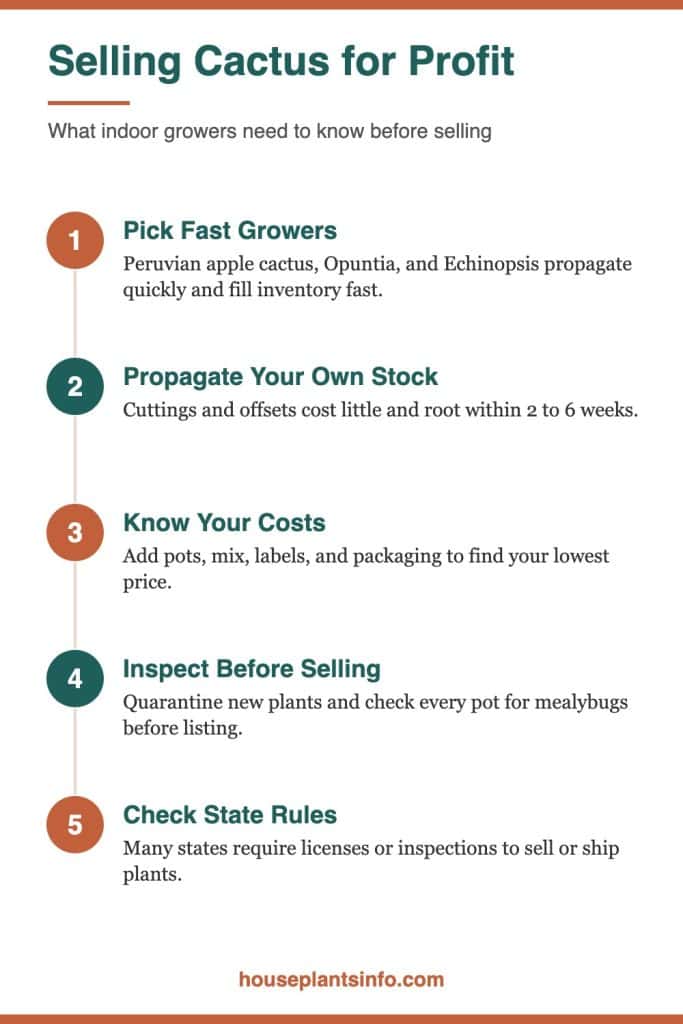
- Choose two or three fast-growing, easy-to-propagate species and build stock from cuttings or offsets.
- Set up a bright south or west window or a timed grow light at 12 to 14 hours per day.
- Calculate your per-plant cost for pots, mix, labels, and packaging before setting prices.
- Contact your state department of agriculture to confirm license and shipping rules.
- Quarantine new plants and inspect every pot for pests before listing it.
- Test one local sales channel for a month before expanding online.
Common Questions About Making Money Selling Cactus
Can you sell cactus from home without a license?
It depends on your state. Some states exempt very small hobby sellers, while others require a nursery or plant dealer license for any sales, so check with your state department of agriculture first.
What is the most profitable cactus to sell?
Fast-growing species that propagate easily, such as Peruvian apple cactus, Opuntia, and Echinopsis, usually give the best return for time spent. Rare, slow-growing species sell for more per plant but take years to reach selling size.
How long does it take to grow a cactus to sell?
Rooted cuttings and offsets can be ready in 1 to 3 months. Seed-grown cacti typically need one to three years to reach a 2 to 4 inch pot size, and slow species can take much longer.
Is it better to sell cactus locally or online?
Local sales usually earn better margins because you avoid shipping costs and damage risk. Online sales reach collectors willing to pay more for specific species, but packaging and postage must be built into your price.
How do you ship a cactus without damaging it?
Let the soil dry, remove the plant from its pot if allowed, and wrap the roots in dry paper. Cushion the spines with several layers of paper or foam, pack it snugly so it cannot shift, and mark the box with the correct orientation.

Hi! I’m Sophia, and I love plants – especially an expert in growing house plants. I stay in Chicago, United States of America, and through my blog and social media platforms, provide tips and tricks on how to grow healthy, vibrant plants indoors. Check out more here.