
You brushed past the cactus on your windowsill, and now there’s a sting in your palm and a few spines you can barely see.
This is how to treat cactus pricks, a guide for the safety of you and your pets, built around the plants most people actually keep indoors.
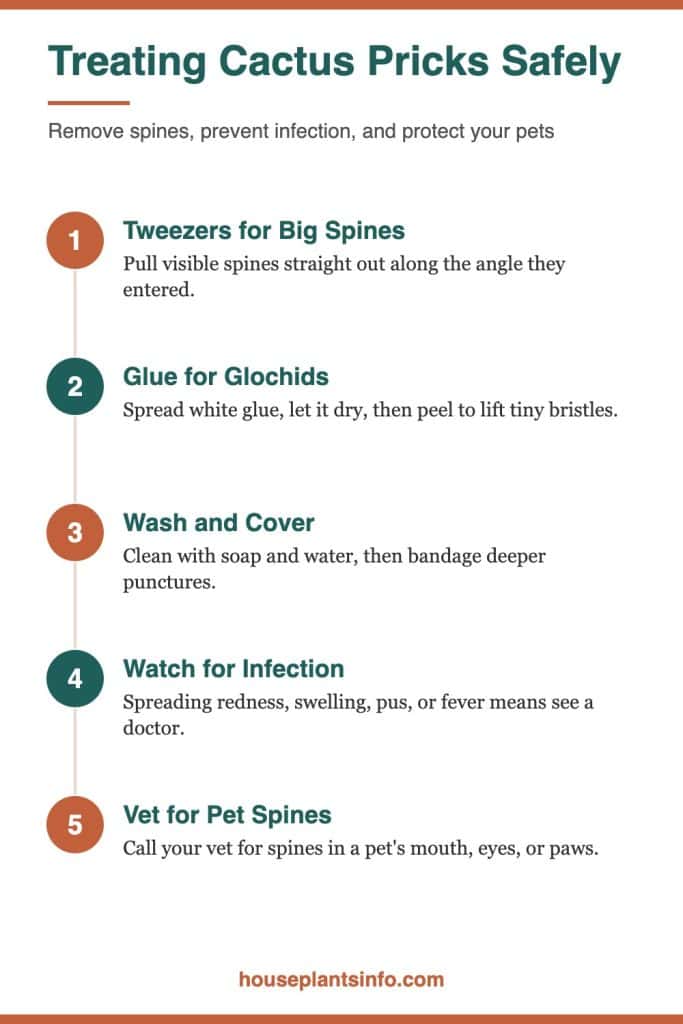
The short version: Pull out visible spines with clean tweezers, then lift tiny hairlike ones with tape or a thin layer of white school glue.
Wash the area with soap and water, keep it clean, and watch for redness, swelling, or pus over the next few days.
If your pet is involved, don’t let them paw at the spines, and call your vet for anything in the mouth, eyes, or paws.
This guide covers removal methods, aftercare, infection warning signs, lingering pain, pet first aid, and how to handle cacti so it doesn’t happen again.
Check These First
- Look for spines still in the skin under bright light. A phone flashlight held at a low angle makes fine spines cast a shadow.
- Don’t rub the area. Rubbing breaks off glochids and pushes them deeper.
- Check your pet’s mouth, nose, and paws if they were near the plant, even if they seem fine.
- Note whether a spine went in deep, near a joint, or near the eye. Those need medical care rather than home removal.
- Confirm your tetanus status if the puncture is deep or the spine was dirty.
How Do You Get Large Cactus Spines Out?
Grip each visible spine close to the skin with clean, fine-tipped tweezers and pull it straight out along the angle it went in. Work slowly, one spine at a time, so the tips don’t snap off below the surface.
Set Up Before You Pull
Wash your hands and the affected skin with soap and lukewarm water first. Wipe the tweezer tips with rubbing alcohol and let them dry.
Sit near your brightest window or under a desk lamp. A handheld magnifying glass makes a real difference with spines thinner than a pencil line, especially in the dim light of a Chicago winter afternoon.
The Right Pulling Technique
Most cactus spines are stiff and straight, so a steady pull along the entry angle removes them cleanly. Yanking sideways tends to snap the tip and leave a fragment behind.
Some cacti, including many Opuntia (prickly pear) and some Mammillaria species, have barbed or hooked spines. These grip the skin and may take a firmer, slower pull. If a hooked spine resists, stop and reassess rather than tearing the skin.
When Not to Do It Yourself
Leave removal to a doctor if a spine is embedded deeply, sits in or near the eye, or is lodged in a joint, tendon area, or under a fingernail. Spines in these spots can break and cause lasting irritation.
Sophia’s tip: Keep a dedicated pair of fine-tipped tweezers and a small roll of wide packing tape in the same drawer as your repotting supplies. When you need them, you’ll need them right away, not after hunting through the bathroom.
How to Remove Tiny Cactus Needles and Glochids You Can’t See
For fine spines and glochids, press tape or a layer of white glue over the area and lift it off. Glochids are the tiny barbed bristles in clusters on prickly pears and related cacti, and they detach at the slightest touch.
Why Glochids Are Different
Glochids grow from the areoles, the small fuzzy bumps on a cactus pad. They are much finer than regular spines and often look like a light brown or yellow fuzz.
They lodge in skin by the dozens and are barbed, so tweezers usually just break them. You may not see them at all, only feel a prickling sensation when something touches the spot.
The Tape Method
Press a strip of duct tape or wide packing tape firmly over the area, then peel it off in one smooth motion. Repeat with fresh strips until the prickling stops.
This works best on flat skin like the palm or back of the hand. It’s less effective in creases between fingers, where the tape can’t make full contact.
The Glue Method
Spread a thin, even layer of white school glue over the area, let it dry completely, about 20 to 30 minutes, then peel it off. The dried glue grips the glochids and pulls them out as a sheet.
Research on glochid removal has found glue followed by peeling removes a high percentage of fine spines, and it tends to outperform tape alone. Combining methods often works best: tweezers for the larger spines, then glue for the rest.
Don’t use superglue or other fast-setting adhesives. They bond to skin and can cause their own injury when removed.
What About Spines You Still Can’t Find?
If you feel a sharp point but can’t see anything, rinse the area gently and look again in a different light. A small fragment may surface on its own over a day or two as the skin pushes it out.
Avoid digging with a needle. Breaking the skin to chase an invisible spine raises the infection risk more than the spine itself usually does.
| Spine type | Common on | Best removal method |
|---|---|---|
| Large, straight spines | Most columnar and barrel cacti | Fine-tipped tweezers, straight pull |
| Hooked or barbed spines | Some Mammillaria, Opuntia | Slow, firm tweezer pull along entry angle |
| Glochids | Prickly pear, cholla | White glue or wide tape, peeled off |
| Broken-off fragments | Any cactus | Wait for skin to push it out, or see a doctor |
How to Treat Cactus Pricks: A Guide for the Safety of You and Your Pets
Once the spines are out, wash the area with soap and water, apply an antibiotic ointment if you like, and cover deeper punctures with a bandage. Most cactus pricks heal within a few days with basic wound care.
Clean the Wound
Wash with mild soap and lukewarm running water for at least 30 seconds. Pat dry with a clean towel.
Skip hydrogen peroxide for routine cleaning. Soap and water clean the wound effectively without irritating healthy tissue.

Protect and Soothe
A thin layer of over-the-counter antibiotic ointment keeps a puncture moist and covered. Use a bandage on spots that rub against clothing or get dirty easily.
For stinging or itching, a cool compress for 10 to 15 minutes helps. An over-the-counter pain reliever can take the edge off if the area is sore.
Check Your Tetanus Status
Tetanus bacteria live in soil, and cactus spines are often dusty or caked with potting mix. The CDC advises a tetanus helper for a dirty or deep wound if your last shot was more than 5 years ago.

If you can’t remember your last helper, call your doctor. It’s a quick question and worth asking after any deep puncture from a potted plant.
Are Cactus Pricks Poisonous?
No, the cacti commonly kept as houseplants do not have venomous or poisonous spines. The problems come from the physical puncture, the bacteria or fungi carried on the spine, and the body’s reaction to fragments left behind.
Irritation Versus Toxicity
Many people get a red, itchy rash after handling glochids. This is mechanical irritation and sometimes an allergic-type skin reaction, not poisoning.
The rash, sometimes called sabra dermatitis, can look like small raised bumps and may last days to a few weeks. It usually resolves once the glochids are fully removed.
Plants That Look Like Cacti but Aren’t
Some succulents sold alongside cacti have irritating sap. Pencil cactus and other Euphorbias are not true cacti, and their milky sap can irritate skin and eyes.
If you get white sap on your skin, wash it off right away with soap and water. Keep it away from your eyes, and seek care if it gets in them.
Is a Cactus Prick Infected? Signs and Treatment
A prick may be infected if redness spreads, the area becomes warm and swollen, pus forms, or pain gets worse after the second day instead of better. Mild redness right around the puncture for a day or two is normal.
Warning Signs to Watch
- Redness that spreads outward or forms red streaks
- Swelling, warmth, or throbbing pain
- Pus or cloudy drainage
- Fever or chills
- A hard, tender lump that appears days to weeks later
Red streaks moving up the arm or a fever mean you should see a doctor the same day.
Home Care for Mild Cases
For mild redness without spreading, keep the area clean and covered. Warm compresses for 10 to 15 minutes, a few times a day, can help a small surface infection drain and heal.
If it doesn’t improve within 2 to 3 days, see a doctor. Cactus wounds can sometimes hide a broken spine, and antibiotics won’t fully clear an infection while the fragment remains.
Rare Fungal Infections
Plant material and soil can occasionally carry fungi that cause skin infections. These typically show up as slow-healing bumps or sores that develop weeks after the injury.
They are uncommon, but a sore that won’t heal or new bumps appearing along the arm deserve a doctor’s visit. Mention that the injury came from a plant.
Sophia’s tip: Wear nitrile or thick leather gloves when you repot or move potted cacti, and keep your sleeves down. Fresh potting mix is where the soil bacteria are, and it sticks to spines during repotting.
Why Does a Cactus Prick Still Hurt Days Later?
Lingering pain usually means a fragment is still in the skin, the area is irritated from glochids, or an infection is starting. Pain that fades steadily is normal; pain that stays the same or grows is not.
A Hidden Fragment
Broken spine tips can sit just under the skin and cause a sharp, pinpoint pain whenever you press the spot. Try the glue method once more, since glochids often survive the first pass.
Soaking the area in warm water for 10 minutes can soften the skin. Sometimes a fragment works its way close enough to the surface to remove gently afterward.
Delayed Lumps
The body sometimes walls off a retained spine and forms a small, firm bump called a granuloma. These can appear weeks or even months after the injury.
They’re usually harmless but can be tender. A doctor can remove the fragment or advise on treatment.
When to Get It Checked
See a doctor if pain lasts longer than a week, a lump forms, or the spot sits over a joint. Spine fragments near joints can cause ongoing inflammation that needs medical attention.
What to Do if Your Pet Gets Cactus Spines
Keep your pet calm, stop them from licking or pawing the area, and remove only the easy, visible spines from fur or skin. Call your vet for spines in the mouth, eyes, nose, throat, or between the toes, or if your pet seems in pain.
First Aid at Home
Gently restrain your pet, ideally with a second person helping. A towel wrapped around a cat works well.
Use tweezers to pull out obvious spines in the fur or skin, pulling straight out. Tape works on short-haired areas, but glue should never be used on pets.
Signs That Need a Vet
- Drooling, pawing at the mouth, or refusing food
- Squinting, tearing, or rubbing an eye
- Limping or licking a paw repeatedly
- Swelling, discharge, or a lump at the site in the following days
Spines in the mouth or throat can break during removal and are hard to see. Vets may sedate the animal to remove them fully and safely.
Is Cactus Toxic to Pets?
Most true cacti are not considered toxic; the danger is mechanical injury from spines. The ASPCA lists Christmas cactus as non-toxic to dogs and cats, while pencil cactus, a Euphorbia, is listed as toxic.

If you’re unsure what your plant is, check its identity before assuming it’s safe. A cat chewing a leaf with irritating sap faces a different problem than one with a spine in its paw.
Sophia’s tip: Move spiny cacti to a high shelf or a sill your cat can’t reach, at least a few inches from the edge. Curious cats often bat at cacti that sit right where they like to perch.
How to Prevent Cactus Pricks at Home
Most pricks happen during watering, cleaning, repotting, or moving a pot, so the fix is better handling. Give spiny plants space, use protective gear, and grip the pot instead of the plant.
Handling and Repotting
Wrap a folded newspaper strip, a towel, or a thick foam band around the cactus to hold it while you lift it from its pot. Kitchen tongs with rubber tips work for small plants.
The same approach applies to taking stem pieces. If you plan to grow Peruvian apple cactus from a cutting, wear gloves when you cut and let the piece callus somewhere out of reach of pets.
Smart Placement
Keep spiny cacti out of walkways, away from couch arms, and away from spots where kids reach for the window. A south- or west-facing sill works well for light, but make sure curtains won’t drag across the spines.
Columnar cacti grow tall and are easy to bump as they lean toward the light. Learning to care for Peruvian apple cactus properly, including rotating it every few weeks, keeps it upright and less likely to tip into you.
Inspect Without Touching
Check your cacti visually rather than running your fingers over them. Use a flashlight to look between ribs and around areoles for problems.
If you notice white, cottony spots between spines, you may wonder whether cactus can get mealybugs. They can, and a cotton swab dipped in rubbing alcohol lets you treat them without putting your hand near the spines.
Troubleshoot From a Distance
When something looks off, investigate before you handle. Cuttings that stay loose in the pot may be a case of Peruvian apple cactus not rooting, and wiggling them repeatedly to check just invites pricks.
Discolored stems are another reason people grab a plant. If you’re seeing Peruvian apple cactus yellowing, look at watering, light, and drainage first, and use tongs or gloves if you need to unpot it to check the roots.
| Situation | Safer approach |
|---|---|
| Repotting | Gloves plus a folded towel or newspaper wrap |
| Moving a pot | Lift by the pot base, not the rim near the plant |
| Cleaning dust | Soft brush or a gentle spray of water |
| Pests on the plant | Cotton swab on a long stick or tongs |
| Pets in the home | High shelf or room the pet can’t enter |
Your Next Steps
- Pull out visible spines with clean tweezers, then use white glue or tape for the fine ones.
- Wash the area with soap and water and cover deeper punctures with a bandage.
- Check whether you need a tetanus helper after a deep or dirty puncture.
- Watch the site for 2 to 3 days for spreading redness, swelling, or pus.
- Look over your pet’s mouth and paws and call your vet if spines are in sensitive areas.
- Move spiny cacti out of walkways and pet reach, and keep gloves with your repotting supplies.
Common Questions About Treating Cactus Pricks
Does Vinegar or Soaking Dissolve Cactus Spines?
No, vinegar and water won’t dissolve cactus spines. A warm soak can soften the skin and sometimes helps a fragment rise closer to the surface, but removal still takes tweezers, tape, or glue.
Will a Cactus Spine Come Out on Its Own?
Small fragments often work their way out over days to weeks as the skin renews. Larger or deeper spines may stay put and trigger irritation or a lump, so it’s better to remove what you can and see a doctor for the rest.
Can a Cactus Prick Make You Sick?
The spine itself isn’t poisonous, but it can carry bacteria or fungi from soil into the skin. Keep the wound clean, check your tetanus status, and see a doctor for fever, spreading redness, or a sore that won’t heal.
How Do I Get Glochids Off My Clothes?
Use a lint roller or wide tape over the fabric, then wash the item separately. Glochids can transfer to your skin later, so avoid shaking the garment out near your face.
What Should I Do if My Dog Ate Part of a Cactus?
Check the mouth and lips for spines, but don’t try to pull spines from the throat or deep in the mouth yourself. Call your vet, especially if your dog is drooling, pawing at its face, or not eating, and confirm the plant’s identity in case it’s a toxic look-alike.

Hi! I’m Sophia, and I love plants – especially an expert in growing house plants. I stay in Chicago, United States of America, and through my blog and social media platforms, provide tips and tricks on how to grow healthy, vibrant plants indoors. Check out more here.