
Your Christmas cactus sits on the windowsill with long, floppy stems spilling over the pot, bare at the base and crowded at the tips.
Learning how to trim a christmas cactus is the simplest way to turn that leggy plant into a dense, branching one that flowers more heavily.
The short version: Trim your Christmas cactus within a few weeks after it finishes blooming, usually late winter to spring.
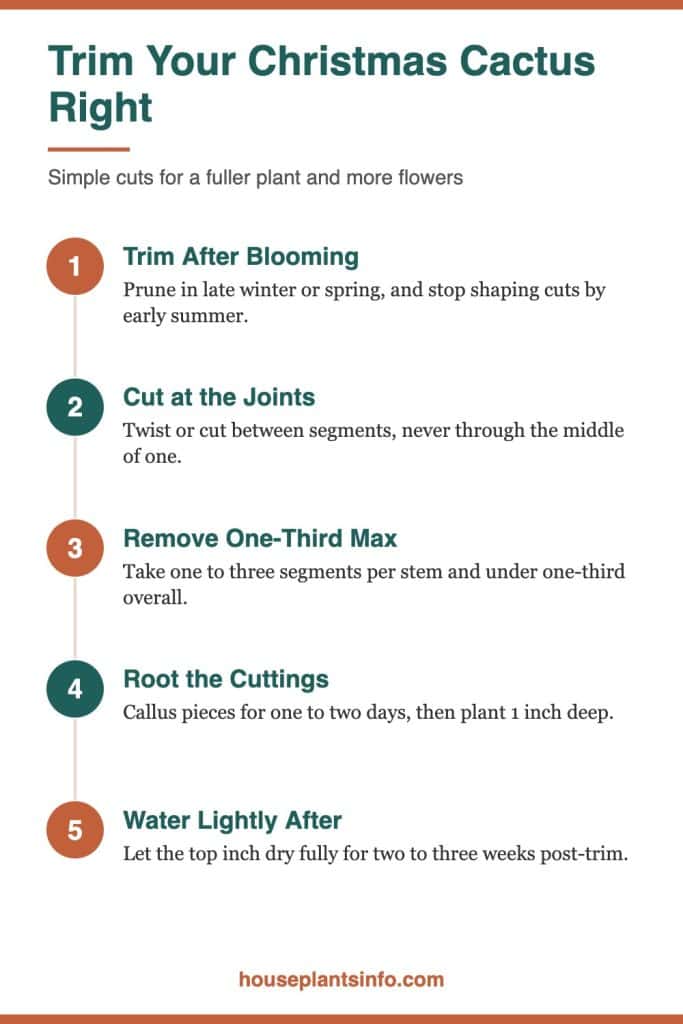
Twist or cut each stem at a segment joint, removing one to three segments per stem and no more than one-third of the plant overall. New branches form at each cut, giving you more tips for next season’s flowers.
This guide covers timing, exactly where to cut, how much to remove, deadheading, rooting the pieces, and aftercare in a typical indoor setting.
At a Glance
| Factor | What it needs |
|---|---|
| Best trim timing | Late winter to spring, after flowers fade; stop by early summer |
| Light | Bright, indirect light; 2 to 4 feet from an east or west window |
| Water | Water when the top inch of soil is dry; lighter for 2 to 3 weeks after trimming |
| Humidity | 40 to 60 percent; dry winter air from radiators stresses it |
| Temperature | 60 to 75°F during growth; cooler nights in fall help set buds |
| Soil | Fast-draining, gritty mix with bark or perlite |
| Pet safety | ASPCA lists it as non-toxic to cats and dogs |
| Difficulty | Easy; very forgiving of pruning mistakes |
When Is the Best Time to Trim a Christmas Cactus?
The best time is right after blooming ends, once the last flowers drop. That window usually falls between late winter and spring, when the plant is shifting from flowering into its natural growth period.
Why After Flowering Works Best
After a Christmas cactus blooms, it rests briefly and then pushes out new segments. Trimming at this stage gives each cut several months to branch and mature before buds form in fall.
If you are unsure what the plant needs in this phase, here is a guide on what to do with christmas cactus after flowering.
Before you start, gather a pair of clean bypass snips or a small sharp paring knife, plus rubbing alcohol on a cotton pad. Wiping the blade before and between plants keeps you from spreading rot or pests through the fresh wounds.
When to Avoid Pruning
Avoid heavy trimming from late summer onward. Christmas cactus sets flower buds in fall in response to longer nights and cooler temperatures, and those buds form at the stem tips you would be cutting.

Also skip trimming while the plant is in bud or flowering. Cutting then removes blooms and can stress the plant enough to drop the remaining buds.
What If You Missed the Window?
A light trim in early summer is still fine, since growth continues through warm months. After about midsummer, limit yourself to removing damaged or rotting segments and save shaping for next spring.
How to Trim a Christmas Cactus Step by Step
Trimming takes about ten minutes for a medium plant. You work stem by stem, removing segments at the joints, then step back and check the overall shape.
Step 1: Look Before You Cut
Turn the pot slowly and look at it from all sides at eye level. Note stems that are much longer than the rest, stems hanging limp over the rim, and any thin or empty areas near the center.
A plant grown on a windowsill often leans toward the glass. Plan to take a little more from the window side so the shape evens out.
Step 2: Clean Your Blade
Wipe your snips or knife with rubbing alcohol and let it dry for a few seconds. If you only twist segments by hand, wash your hands first, since the open tissue can pick up bacteria.
Step 3: Choose Stems to Shorten
Start with the longest, most awkward stems. On each one, decide to remove one, two, or three segments from the tip, depending on how far it extends past the rest of the plant.
Step 4: Remove Segments at the Joint
Hold the stem just below the joint you plan to separate. Twist the top segment gently until it pops free, or make a clean cut straight through the narrow joint with your blade.
Step 5: Thin Crowded or Damaged Growth
Remove any segments that are shriveled, scarred, or growing back toward the center. If the middle is very dense, take out one or two older stems to let light and air reach inside.
Step 6: Rotate and Recheck
Turn the pot again and compare sides. Stop when the plant looks evenly rounded, even if you had planned to cut more. You can always trim again next year.
Step 7: Save the Cuttings
Set healthy pieces aside on a paper towel instead of tossing them. Pieces with two to four segments root easily and can fill thin spots in the same pot.
Should You Twist or Cut the Segments?
Both methods work well, and the choice comes down to the stem. Twisting is fast and clean on young, flexible stems, while cutting is better for older, woody stems near the base.
Twisting by Hand
Christmas cactus stems are made of flat, linked segments called phylloclades. The narrow joint between them is a natural break point, so a gentle twist usually separates them cleanly without tearing.
Grip the segment below the joint firmly so the twisting force stays above it. If the stem bends or the tissue tears instead of popping, switch to a blade.
Cutting With a Blade
Near the soil line, older stems become brown, round, and woody. These will not twist apart neatly, so cut them with your snips or knife at or just above a joint.
Cut cleanly in one motion. Ragged, crushed tissue heals slowly and gives rot an easier entry point.
Never Cut Mid-Segment
Avoid slicing through the middle of a flat segment. The leftover half usually dries out or turns mushy and does not branch well, leaving an unattractive stub.
Sophia’s tip: On stems you want to branch, remove segments so the remaining tip ends with a healthy, full-sized segment. Two new segments often sprout from that end, which is how the plant gets bushier.
How Much Can You Trim Without Hurting It?
You can safely remove up to one-third of the plant in a single session. For routine shaping, taking one to three segments from the longest stems is plenty.
Signs You Have Taken Enough
The plant should still look full and green, just tidier and shorter. If you can see a lot of bare soil or only stubby stems remain, it is time to stop.
What Happens If You Over-Prune
Removing more than about half the plant leaves too little green tissue to make energy. Growth slows, the plant can sit stalled for months, and it will likely bloom poorly or skip a season.
Over-pruned plants also hold soil moisture longer because fewer segments are using water. That raises the risk of root rot if you keep watering on your usual schedule.
Recovering From Too Much Pruning
Do not panic. Move the plant to bright, indirect light, water only when the top inch is dry, and wait. Christmas cactus is resilient and usually fills out again within one growing season.
Rejuvenating an Old, Woody Plant
If the plant is very old and leggy, spread a hard renewal over two years. Cut back about one-third of the stems this spring and another third next spring, rooting the cuttings as you go.
Should You Deadhead Christmas Cactus Flowers?
Yes, deadheading is a good habit, though it is mostly for tidiness. Removing faded blooms keeps the plant clean and prevents soggy petals from sitting on the segments or soil.
How to Deadhead
Once a flower wilts and dries, pinch it off where it meets the segment, or give it a gentle tug. Spent flowers usually release easily when they are ready.
Leave buds and open flowers alone. Deadheading is only for blooms that have clearly finished.
Why It Helps
Fallen petals collecting on damp soil can encourage mold and fungus gnats. Clearing them also lets you see the whole plant clearly, so you can judge when blooming is done and trimming can begin.
Deadheading does not trigger a second bloom the way it can with some flowering plants. Christmas cactus usually blooms once a year, sometimes with a smaller flush later.
How Do You Root the Cuttings You Remove?
Rooting Christmas cactus cuttings is simple and reliable. Let the cut ends dry for one to two days, then set them upright in slightly moist, gritty potting mix.

Preparing the Pieces
Choose pieces with two to four healthy segments. Lay them on a paper towel in a spot out of direct sun for one to two days, until the cut end looks dry and slightly sealed.
This callus helps prevent rot once the piece goes into soil. Skipping it is a common reason cuttings turn mushy.
Planting
Fill a small pot with a mix of regular potting soil and perlite or fine bark. Push each cutting about 1 inch deep, base segment down, so it stands upright.

You can place three to five cuttings in one small pot for a fuller plant. Lightly moisten the mix after planting.
Light and Water While Rooting
Keep the pot in bright, indirect light, a few feet back from a bright window or under a grow light set about 12 inches above the cuttings. Avoid direct afternoon sun, which can scorch unrooted pieces.

Mist or water lightly only when the top of the mix feels dry. Wet soil is far more harmful than slightly dry soil at this stage.
How Long Roots Take
Most cuttings root in about three to eight weeks. A gentle tug that meets resistance, or new segments forming at the tip, means roots have taken hold.
Sophia’s tip: To fill a bare spot in the mother plant, push a callused cutting directly into the same pot near the thin area. It roots there and blends in within a season.
Moving Rooted Cuttings Up
Once the small pot fills with roots, usually after several months, you can shift the young plant into a slightly larger container. For timing details, see this guide on when to transplant christmas cactus.
How Should You Care for It After Trimming?
After trimming, give the plant bright, indirect light, slightly less water than usual for a few weeks, and steady temperatures. The goal is to let the cuts dry and new growth begin without stress.
Light Placement
An east-facing window is ideal, with the plant right near the glass. A west or south window works if the plant sits 2 to 4 feet back or behind a sheer curtain, so midday sun does not scorch fresh growth.
In a dim north-facing apartment, a grow light running 10 to 12 hours a day keeps new segments compact and green rather than stretched.
Watering After Pruning
Trimming removes water-using tissue, so the soil stays wet longer. For the first two to three weeks, water only when the top inch is dry, then return to your normal routine as new growth appears.
Always empty the saucer after watering. Christmas cactus roots rot quickly if the pot sits in standing water.
Temperature and Air
Keep the plant between about 60 and 75°F. Move it away from radiators, forced-air vents, and air conditioner drafts, which dry out segments and can cause sudden wilting.
If winter heat drops indoor humidity below 40 percent, group plants together or set the pot on a tray of pebbles and water, keeping the pot base above the water line.
Feeding New Growth
Hold off on fertilizer for a couple of weeks, then feed lightly through spring and summer to support new segments. Learn more about when to fertilize christmas cactus so you stop at the right time before buds form.
Sophia’s tip: Pinch the tip segment off any new growth that stretches noticeably longer than the rest by early summer. That one small pinch encourages extra branching right before the plant starts preparing for fall buds.
Pet and Child Safety
The ASPCA lists Christmas cactus as non-toxic to cats and dogs. Still, a pet chewing fallen cuttings may get mild stomach upset, so clear trimmings off the floor and keep rooting pots out of reach.
Why Do Segments Look Soft, Red, or Shriveled After Trimming?
Most changes after trimming come from watering, light, or temperature rather than the pruning itself. Look at the soil and the plant’s location first, then adjust.
Soft or Mushy Segments
Soft, limp segments usually mean too much water for the reduced plant, or root rot that was already present. Check whether the soil stays wet for days and whether the base of the stems feels squishy.
Let the soil dry more between waterings, and repot into fresh, gritty mix if roots are brown and mushy. This guide on christmas cactus leaves soft covers the full set of causes.
Reddish or Purple Segments
Red or purple tinting often signals too much direct sun, cold drafts, or root stress after a big trim or repotting. Move the plant out of harsh afternoon light and away from cold glass.
It can also point to a nutrient shortage. For a deeper look at the causes, read why are christmas cactus leaves turning red.
Shriveled or Wrinkled Segments
Thin, wrinkled segments generally mean the plant is too dry, often from a nearby radiator or vent. Water thoroughly, let excess drain, and move it to a spot with steadier air.
If the soil is wet yet segments still shrivel, the roots may be damaged and cannot take up water. Inspect them and repot if needed.
Cut Ends Turning Black
A small dry, tan scar at the cut is normal. A black, wet, spreading area means rot has entered. Trim below the damaged tissue with a clean blade at the next healthy joint.
| Symptom | Likely cause | Fix |
|---|---|---|
| Soft, limp segments | Overwatering, root rot | Water less, check roots, repot in gritty mix |
| Red or purple tint | Strong sun, cold, root stress | Filtered light, steady temperatures |
| Wrinkled segments | Underwatering, dry heat | Water thoroughly, move from radiators |
| Black, wet cut end | Rot entering wound | Cut back to healthy joint with clean blade |
| No new branching | Low light | Brighter window or grow light |
Your Next Steps
- Wait until the last flowers fade, then plan your trim for late winter or spring.
- Clean your snips or knife with rubbing alcohol and gather a paper towel for cuttings.
- Remove one to three segments from the longest stems, at the joints, keeping cuts under one-third of the plant.
- Callus healthy pieces for one to two days and root them 1 inch deep in gritty mix.
- Water lightly for two to three weeks and keep the plant in bright, indirect light away from heat vents.
- Mark early summer on your calendar as your last date for shaping cuts.
Common Questions About Trimming a Christmas Cactus
Can I trim a Christmas cactus while it is blooming?
It is better to wait. Trimming during bloom removes flowers and buds and can stress the plant enough to drop the rest. Only remove clearly damaged or rotting segments until flowering ends.
Will trimming make my Christmas cactus bloom more?
Yes, in most cases. Each cut tip usually branches into two or more new segments, and flowers form at stem tips, so a bushier plant has more places to bloom. Good light and cool fall nights still matter for bud set.
How often should I prune a Christmas cactus?
Once a year after flowering is enough for most plants. You can pinch a few overly long tips in early summer if needed. Older, leggy plants may benefit from a gradual renewal spread over two springs.
Do I need to seal the cuts on the mother plant?
No sealing product is needed. The cut joints dry and callus on their own within a few days. Just keep water off fresh cuts and avoid overwatering while they heal.
Can I put cuttings in water instead of soil?
Yes, cuttings can root in water, with the base segment just touching the surface. Roots grown in water are more delicate, so move them into gritty mix once roots reach about 1 inch long. Soil rooting usually gives sturdier plants.

Hi! I’m Sophia, and I love plants – especially an expert in growing house plants. I stay in Chicago, United States of America, and through my blog and social media platforms, provide tips and tricks on how to grow healthy, vibrant plants indoors. Check out more here.