
Your cat is sitting beside the sago palm in the sunny window, and you notice a frond tip that looks chewed, or a shred of green leaf on the rug. That small detail matters more with this plant than with almost any other houseplant.
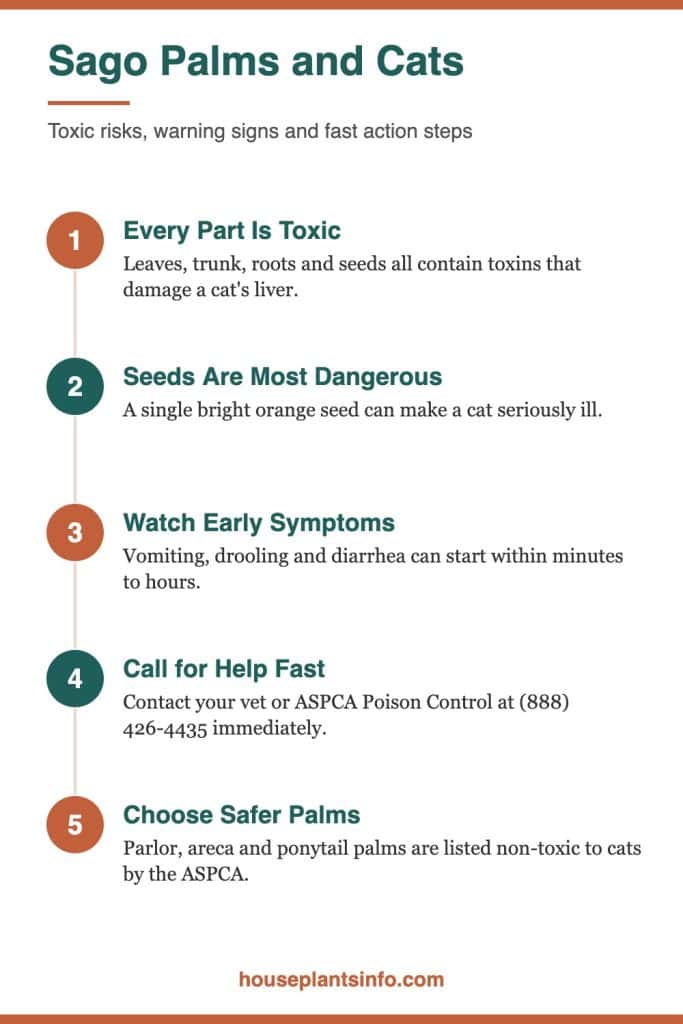
The short version: Yes. The ASPCA lists the sago palm as toxic to cats, and every part of the plant contains toxins that can damage the liver.
If your cat has chewed any part of it, call your veterinarian or the ASPCA Animal Poison Control Center right away, even if your cat seems fine.
This guide covers which parts are most dangerous, the symptoms to watch for, what to do in the first hour, how vets treat it, and how to make your home safer.
Check These First
- Look at your cat’s mouth, whiskers and paws for green plant bits, and check the floor around the pot for chewed leaf pieces or seeds.
- Check the plant itself for fresh bite marks, torn leaflets, or missing soft new fronds at the center.
- Watch for vomiting, drooling, diarrhea or unusual tiredness, and note the time you first noticed anything.
- Find your vet’s number and the ASPCA Animal Poison Control Center number, (888) 426-4435, before symptoms appear.
- Move the plant, or your cat, into a separate room with the door closed so no more chewing happens while you make calls.
Is Sago Palm Toxic to Cats? Yes, and Every Part Counts
Yes, the sago palm is toxic to cats, and there is no safe part of the plant. The leaves, trunk, roots and seeds all contain toxins, and even a small amount can cause serious illness.
What the Plant Actually Is
The sago palm (Cycas revoluta) is not a true palm. It is a cycad, an ancient group of plants that look palm-like, with a stiff rosette of feathery, glossy fronds rising from a rough, pineapple-like trunk.
Indoors it is usually sold as a compact tabletop plant or a small floor plant. It grows slowly, so a plant you bought small may stay within easy reach of a cat for years.
The Toxins Involved
The main toxin is cycasin, which the body converts into compounds that damage liver cells. Sago palms also contain other toxic compounds that can affect the nervous system.
The liver damage is what makes this plant so dangerous. Early stomach upset can fade, while the liver injury keeps developing over the next day or two.
Keeping the Plant Out of Reach
If you choose to keep a sago palm in a home with a cat, height alone is rarely enough, because cats jump.
A wall-mounted plant shelf with no nearby launch points, or a pet-proof plant cage around the pot, is far more reliable than a tall table.
A sago palm also needs bright light, often within 1 to 3 feet of a south or west window. That spot is usually a favorite cat lounging area, so plan placement around both needs.
Which Parts of a Sago Palm Are Most Dangerous?
The seeds are the most toxic part, but the leaves, trunk and roots are all poisonous. Assume any amount of any part is an emergency.
Seeds and Cones
Mature female sago palms produce bright orange to red seeds in a fuzzy cluster at the center of the plant. These seeds carry the highest concentration of toxin, and a single seed can make a pet seriously ill.
Indoor sagos rarely produce seeds, since flowering usually takes many years and mostly happens on outdoor plants in warm climates. Still, seeds can come into your home on gift plants, decorative arrangements, or from someone who collected them outside.
Fronds and New Growth
Mature fronds are stiff and have sharp tips, which discourages some cats. The flush of new growth at the center is different. Those young fronds are soft, pale green and easy to chew.
New fronds usually appear once or twice a year, often in spring or summer. That is the time to watch your cat most closely around the plant.
Trunk, Roots and Fallen Debris
The trunk and roots also contain toxins. Cats that dig in pots can reach roots near the soil surface, and fallen or trimmed leaflets on the floor are easy to bat around and chew.
If you trim old fronds, bag the clippings right away and take them out of the apartment. Do not leave cut fronds in an open kitchen trash can.
Sophia’s tip: Cover the soil surface of the pot with a layer of large, smooth river stones, at least 1 inch deep. It stops digging, keeps roots out of reach, and still lets water drain through.
Why Indoor Cats Chew on Sago Palms
Cats chew plants for several reasons, and a sago palm sitting in a warm, bright window checks a lot of boxes. Understanding the reason helps you choose the right prevention.
Texture and Movement
Long, narrow leaves that move in a draft attract cats the way a toy does. Air from a forced-air heat vent, a radiator’s rising warmth or an AC unit can make fronds twitch, which invites swatting and biting.
Keep the plant away from vents and window AC units. That also helps the plant, since sagos dislike cold drafts and sudden temperature swings.
Boredom and Winter Indoors
Indoor cats often chew more plants in winter, when windows stay closed and there is less to watch outside. Dry winter air from heating does not cause chewing, but long indoor days with little play can.
Daily play sessions, window perches away from the plant, and a pot of cat grass give your cat better options. Cat grass is a common choice because many cats like chewing grass and it is safe for them.
Curiosity About New Plants
A new plant in the home gets inspected. Cats often sniff, rub and test-bite anything that appears in their territory.
The first one to two weeks after bringing a sago palm home are higher risk. If you are not sure how your cat will react, keep the plant behind a closed door during that time.
Signs of Sago Palm Poisoning in Cats
The first signs are usually vomiting, drooling and diarrhea, often within 15 minutes to several hours. Liver-related signs may follow in 2 to 3 days, sometimes after the cat seems to have recovered.
Early Signs
- Vomiting, sometimes repeated
- Drooling or pawing at the mouth
- Diarrhea, which may contain blood
- Loss of appetite
- Lethargy or hiding
Cats are good at hiding illness. A cat that skips a meal and stays under the bed after being near the plant deserves a call to the vet.
Later and Severe Signs
As the liver is affected, signs can include yellowing of the gums, skin or whites of the eyes (jaundice), dark urine, and unusual bruising or bleeding. Bleeding happens because a damaged liver cannot make enough clotting factors.
Some cats develop neurological signs such as weakness, wobbliness, tremors or seizures. These signs mean the poisoning is severe and needs emergency care immediately.
Timeline at a Glance
| Time After Chewing | What You Might See |
|---|---|
| 15 minutes to several hours | Vomiting, drooling, diarrhea, poor appetite |
| 12 to 24 hours | Lethargy, continued stomach upset, possible blood in stool |
| 2 to 3 days | Jaundice, dark urine, bruising, bleeding |
| Several days or more | Liver failure, neurological signs, collapse |
Why “Seems Fine” Is Not Reassuring
A cat can vomit once, look normal by evening, and still develop liver damage later. This delay is the reason vets recommend treatment based on exposure, not on symptoms.
If you saw your cat chew the plant, or you find clear bite marks, treat it as an exposure. Do not wait for symptoms to decide.
What to Do Right Now If Your Cat Ate Sago Palm
Call your veterinarian, an emergency vet clinic, or the ASPCA Animal Poison Control Center at (888) 426-4435 immediately. Fast decontamination at a clinic gives your cat the best chance.
Step by Step in the First Hour
- Separate your cat from the plant and remove any loose plant pieces from the area.
- Gently check your cat’s mouth and wipe away visible plant material with a damp cloth, only if your cat allows it calmly.
- Call your vet or poison control and describe what happened, including the time and which part was eaten.
- Follow their instructions exactly, and head to the clinic if they tell you to.
The ASPCA Animal Poison Control Center charges a consultation fee. They give you a case number, and your vet can use it to consult them during treatment.
What Not to Do
Do not try to make your cat vomit at home. Hydrogen peroxide, salt and other home remedies are not safe for cats and can cause serious harm, including damage to the stomach and esophagus.
Do not give milk, oil, food or any medication unless a vet tells you to. These can delay proper treatment or make things worse.
What to Bring to the Vet
Bring a piece of the plant, or a clear photo of it, in a sealed bag. Note the time of exposure, any symptoms, and your cat’s approximate weight and age.
If your cat vomited, a photo of the vomit can help the vet estimate how much was eaten. It feels unpleasant, but it is useful information.
Sophia’s tip: Save your vet, the nearest 24-hour emergency clinic, and the ASPCA poison control number in your phone today, and tape a copy inside a kitchen cabinet. Searching for numbers during an emergency wastes minutes.
How Vets Diagnose and Treat Sago Palm Poisoning
Diagnosis is based mostly on known or suspected exposure, plus symptoms and blood work. Treatment focuses on removing the toxin quickly and supporting the liver.
How Diagnosis Works
There is no simple blood test that confirms sago palm toxin. Your vet relies on your report of exposure, a physical exam, and blood tests that show how the liver is functioning.
Liver values and clotting times are often checked at the start and again over the next 24 to 72 hours. Rising values tell the vet whether liver damage is developing.
Treatment Steps
If your cat arrives soon after eating the plant, the vet may induce vomiting with medication that is safe for cats. Activated charcoal may then be given to bind remaining toxin in the gut.
Supportive care often includes:
- IV fluids to maintain hydration and support organs
- Anti-nausea medication
- Stomach protectants
- Liver-supporting medications
- Vitamin K or plasma if clotting problems develop
- Seizure control if neurological signs appear
Hospital Stay and Recovery Odds
Many cats need to stay in the hospital for one to several days for fluids and monitoring. Severe cases may need intensive care.
The outlook depends on how much was eaten and how quickly treatment started. Cats treated early, before liver damage sets in, have a much better chance of recovery. Once liver failure develops, the prognosis becomes guarded, and some pets do not survive.
After Your Cat Comes Home
Your vet may recommend follow-up blood tests over the next few weeks to confirm the liver is healing. Some cats go home on medications or a special diet during recovery.
Watch your cat’s appetite, energy, gum color and litter box habits closely. Call the vet if anything changes.
How to Keep a Sago Palm and a Cat in the Same Home
The safest choice is not to keep a sago palm in a home with a cat. If you already have one and want to keep it, it needs to be completely inaccessible, not just harder to reach.
Rehoming or Relocating the Plant
Giving the plant to a cat-free household is the most reliable option. A closed room your cat never enters, such as a home office with a door that latches, is a reasonable second choice.
If you need to move the plant to a smaller or more stable pot first, learn how to transplant a potted sago palm indoors without shocking it.
Wear gloves during repotting, and keep your cat out of the room until all soil and debris are cleaned up.
Making Barriers Work
If the plant stays in a shared space, use a fully enclosed plant cage, a closed glass cabinet with a grow light inside, or a high wall shelf that cats cannot reach from furniture.

Cats can jump 5 to 6 feet or more, so measure from every nearby surface.
Some owners consider dividing a large plant to make it more manageable. Before trying that, read whether it is possible to cut a sago palm in half, because sagos do not respond to cutting the way many plants do.
Healthy Plants Drop Fewer Pieces
A stressed sago sheds more damaged fronds, and fallen leaves are an easy target for curious cats. Good care reduces that debris.
If older fronds are fading, see this guide to a sago palm turning yellow to find the cause.
If pale patches are the problem, learn how to stop sago palm leaves from turning white, since white spots are often linked to scale insects or sun stress.
Sophia’s tip: Check the floor around your sago palm every morning and whenever you water. Pick up any fallen leaflet immediately and wash your hands after handling the plant.
Cat-Safe Palms and Palm Look-Alikes to Grow Instead
Several palms and palm-like plants are listed by the ASPCA as non-toxic to cats. They give a similar tropical look without the liver risk.
Good Swaps for Indoor Light
| Plant | ASPCA Status for Cats | Indoor Light Needs |
|---|---|---|
| Parlor palm (Chamaedorea elegans) | Non-toxic | Medium to bright indirect light |
| Areca palm (Dypsis lutescens) | Non-toxic | Bright indirect light |
| Ponytail palm (Beaucarnea recurvata) | Non-toxic | Bright light, some direct sun |
| Sago palm (Cycas revoluta) | Toxic | Bright light, some direct sun |
The ponytail palm is the closest match for a sunny south or west window, since it handles bright light and dry winter air well. Parlor palms suit east windows or spots several feet back from brighter glass.
Checking Other Palms
Not every plant called a palm has the same status, and common names can be confusing. If you are considering a different variety, check whether the majesty palm is safe for cats and confirm any plant on the ASPCA list before buying.
Non-Toxic Still Means Supervised
A non-toxic plant can still cause mild stomach upset if a cat eats a lot of it. Non-toxic means the plant is not expected to cause poisoning, not that it is food.
Keep chewing to a minimum with the same tricks: play, cat grass, and plant placement away from favorite perches.
Your Next Steps
- Save the ASPCA Animal Poison Control Center number, (888) 426-4435, and your nearest 24-hour emergency vet in your phone.
- Inspect your sago palm and the floor around it for bite marks, torn fronds or fallen pieces today.
- Decide whether to rehome the plant or move it to a room your cat can never enter.
- Cover the pot’s soil with large stones and bag any trimmed fronds immediately.
- Replace the sago palm in shared spaces with a cat-safe option like a parlor palm, areca palm or ponytail palm.
- Offer your cat a pot of cat grass and daily play, especially during the long indoor months of winter.
Common Questions About Sago Palm Toxicity in Cats
How much sago palm does it take to poison a cat?
There is no known safe amount, and even a small bite can cause illness. The seeds are the most toxic part, and a single seed can be dangerous. Treat any chewing as an emergency and call your vet right away.
Can a cat get sick just from touching or sniffing a sago palm?
Brushing against the plant or sniffing it is not the main concern. The danger comes from chewing or swallowing plant material, including fallen leaflets or soil-covered roots. Wash your hands after handling the plant so residue does not end up near food or pet bowls.
Is a dried or dead sago palm frond still toxic?
Yes, dried fronds and plant debris should still be treated as toxic. The toxins do not simply disappear when a leaf dries out. Bag all clippings and dead fronds and remove them from your home promptly.
Should I wait for symptoms before going to the vet?
No, you should not wait. Liver damage can develop over 2 to 3 days, even if early vomiting stops and your cat seems normal. Early treatment, before symptoms worsen, gives your cat the best chance of a full recovery.
Are sago palms also toxic to dogs?
Yes, the ASPCA lists sago palms as toxic to dogs as well as cats. Dogs are more often affected because they tend to chew larger pieces and dig up roots. The symptoms and treatment are similar, so the same emergency steps apply.

Hi! I’m Sophia, and I love plants – especially an expert in growing house plants. I stay in Chicago, United States of America, and through my blog and social media platforms, provide tips and tricks on how to grow healthy, vibrant plants indoors. Check out more here.