
You walk past your kentia palm and notice one frond hanging limp and brown, or several leaflets gone dry and papery at the tips.
Kentia palm dead leaves can mean the plant is shedding an old frond on schedule, or they can signal a watering, light, or root problem.
The short version: One lower frond dying every so often is normal aging. Dead leaves spreading across several fronds, appearing on new growth, or showing up quickly usually point to overwatering, dry air, salt buildup, cold drafts, or pests.
Fix the cause first, then trim only fully dead tissue.
This guide covers how to tell normal shedding from a real problem, the nine common causes, and how to correct each one in an apartment setting.
Check These First
- Push a finger 2 inches into the soil. Soggy soil a week after watering points to root trouble; bone-dry soil points to underwatering.
- Look at where the dead leaves are. Only the oldest, lowest frond is normal; damage on the newest spear or upper fronds is not.
- Check the plant’s surroundings for a radiator, heat vent, AC unit, or drafty window within 3 feet.
- Turn a few leaflets over and look for fine webbing, cottony clumps, or brown bumps along the stems.
- Lift the pot. If water runs out slowly or the drainage hole is blocked by roots, drainage or crowding may be involved.
Is It Normal for Kentia Palm Dead Leaves to Appear?
Yes, in moderation. A healthy kentia palm grows slowly, often adding only one to three new fronds a year indoors, and it lets its oldest frond die off as new ones mature.
What Normal Aging Looks Like
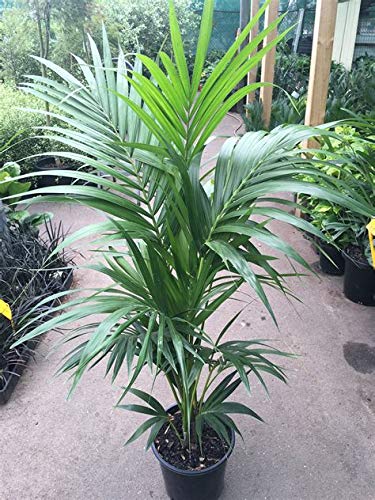
Natural die-off starts on the lowest, outermost frond. It yellows evenly from the tips inward, then turns tan or brown over several weeks while the rest of the plant stays deep green.
The newest growth, the tightly folded spear in the center, keeps rising and opening normally. If that pattern matches your plant, nothing needs fixing.
When Dead Leaves Signal a Problem
Problems look different. Several fronds brown at once, the damage starts on middle or upper fronds, the spear turns brown or pulls out easily, or spots and streaks appear rather than even yellowing.
A soil moisture meter is useful here, since most kentia problems trace back to water. Reading moisture at root depth tells you more than the dry top inch ever will.
Trimming Dead Fronds the Right Way
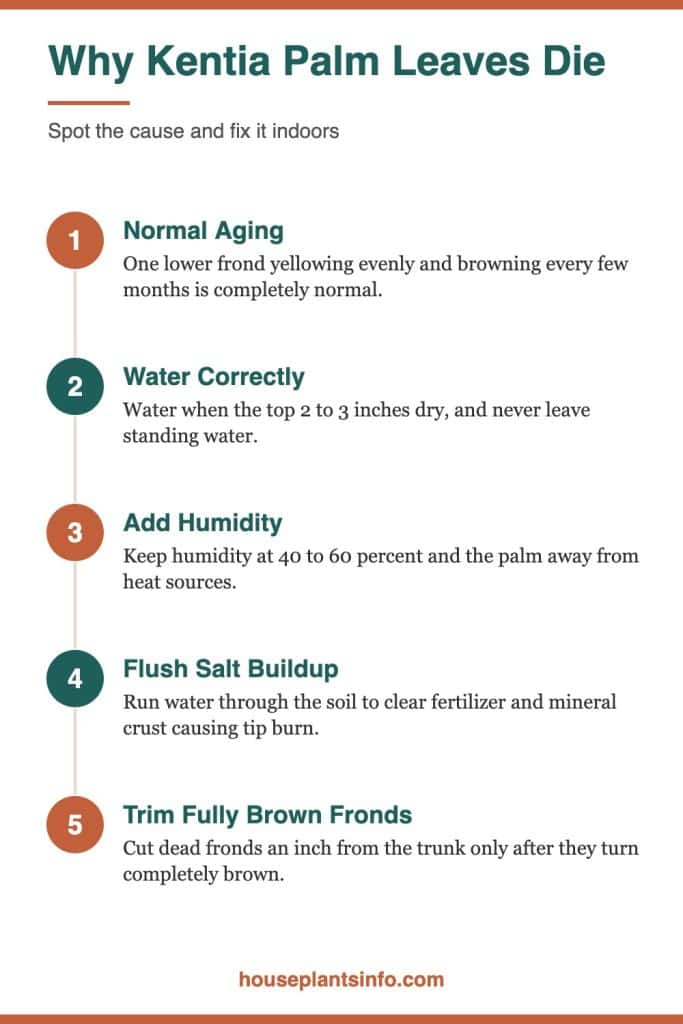
Wait until a frond is fully brown before removing it. Palms pull nutrients back from yellowing fronds, so cutting a half-green frond takes resources from the plant.
Use clean, sharp pruning shears and cut the frond stem about an inch from the main stem. Never tear fronds off by hand, because ripping can wound the stem and open a path for rot.
Sophia’s tip: For brown leaflet tips on otherwise green fronds, trim at an angle that follows the natural leaf point and leave a thin line of brown. Cutting into green tissue just starts a fresh brown edge.
Quick Symptom Guide
| What You See | Most Likely Cause |
|---|---|
| Lowest frond yellows evenly, then browns | Normal aging |
| Yellowing fronds, soggy soil, sour smell | Overwatering or root rot |
| Crispy brown tips across many leaflets | Dry air, underwatering, or salt buildup |
| Brown, burnt edges with white crust on soil | Fertilizer or mineral buildup |
| Translucent spots or orange flecks on older fronds | Potassium deficiency |
| Pale, bleached patches on the window side | Too much direct sun |
| Stippled, dull leaflets with fine webbing | Spider mites |
| Dark, water-soaked patches after a cold night | Chill damage |
If the browning is mostly limited to tips and edges, the separate guide on kentia palm leaves turning brown goes deeper into that specific pattern.
Overwatering or Underwatering: How to Fix the Balance
Watering errors are the most common cause of dead fronds on indoor kentia palms. Water when the top 2 to 3 inches of soil are dry, soak until water drains out the bottom, and never let the pot sit in water.
Signs of Overwatering
Overwatered kentias show yellowing that spreads across multiple fronds, often with brown tips that look dark rather than crisp. The soil stays wet for days, and you may notice a musty smell or fungus gnats.
Kentias grow slowly and use water slowly, especially in a large pot. A big pot of wet soil around a modest root ball stays soggy long enough to suffocate roots.
Signs of Underwatering
Underwatered palms develop dry, crispy brown tips and leaflets that may fold or curl. The soil pulls away from the pot edges, and water runs straight down the gap without soaking in.
Watering Schedule That Works Indoors
In spring and summer, most indoor kentias need water every 1 to 2 weeks. In winter, with less light and slower growth, that often stretches to every 2 to 4 weeks, even with the heat running.
- Water thoroughly until it flows from the drainage hole.
- Empty the saucer or cachepot within 15 to 30 minutes.
- If soil has shrunk from the pot, water slowly in two or three passes so it rehydrates.
- Use a pot with at least one drainage hole, always.
Sophia’s tip: If your palm sits in a decorative cachepot, lift the inner nursery pot out after each watering and check the bottom. Hidden standing water is one of the most common reasons a kentia declines without obvious cause.
Dry Air and Indoor Heat: Why Fronds Go Crispy
Low humidity turns leaflet tips brown and brittle, especially in winter when forced-air heat and radiators dry out indoor air. Aim for 40 to 60 percent humidity and keep the palm away from direct heat.
How Winter Heat Affects Kentias
Kentia palms come from a mild, humid island climate. In a heated apartment, winter humidity can drop to 20 to 30 percent, and fronds lose moisture faster than roots replace it.
The damage usually shows as uniform brown tips across many leaflets rather than whole dead fronds. It won’t kill a healthy palm, but it builds up season after season.
Practical Humidity Fixes
- Run a humidifier near the plant during heating season and check levels with an inexpensive hygrometer.
- Move the palm at least 3 to 5 feet from radiators, baseboard heaters, and supply vents.
- Group it with other plants so their combined moisture raises local humidity slightly.
- Skip pebble trays for large palms, since their effect on a tall plant is minimal.
Misting feels helpful but raises humidity for only a few minutes. A humidifier does far more for a plant this size.
Fertilizer Burn and Salt Buildup
Too much fertilizer, or minerals building up from tap water, burns kentia roots and shows up as brown, dead leaflet tips and edges. Flushing the soil and feeding lightly fixes most cases.
Recognizing Salt Damage
Look for a white or crusty layer on the soil surface or around the pot’s drainage hole. Leaflet tips turn brown with a sharp line between dead and green tissue, often on several fronds at once.
Palms in general are sensitive to soluble salts. Because kentias grow slowly, they use little fertilizer, so excess builds up quickly in the pot.
How to Flush the Soil
Take the plant to a tub or shower and run water slowly through the soil for several minutes. Use roughly two to three times the pot’s volume, then let it drain completely.
Scrape off any visible crust from the top inch of soil first. Repeat the flush every few months if you water with hard tap water.
Feeding Without Burning
- Feed only in spring and summer, about once a month or less.
- Use a balanced or palm-specific liquid fertilizer at half the label strength.
- Never fertilize dry soil; water first, then feed.
- Stop feeding entirely in fall and winter.
If your water is very hard or heavily treated, letting it sit out overnight or using filtered or rainwater can reduce tip burn over time.
Nutrient Deficiency and Soil pH Problems
Palms commonly show potassium and magnesium deficiencies, which damage older fronds first and can make them die early. Fresh potting mix, a palm fertilizer with micronutrients, and a suitable pH correct the issue.
Potassium Deficiency
Potassium deficiency is one of the most common nutrient problems in palms. Older fronds develop translucent yellow or orange spots, then the leaflet tips turn brown and frizzled.
Damaged fronds do not recover, but new growth comes in healthy once the deficiency is corrected. Leave affected fronds until they fully brown, since they still feed the plant.
Magnesium Deficiency
Magnesium deficiency shows as a broad yellow band along the edges of older fronds while the center stays green. It develops slowly and often appears alongside potassium problems.
Soil pH and Old Potting Mix
Kentias tolerate a fairly wide range but do best in slightly acidic to neutral soil, roughly pH 6.0 to 7.5. Mix that drifts too far from that range can lock up nutrients even when fertilizer is present.
Years of watering also break down potting mix, making it dense and poorly drained. If your palm has been in the same mix for three years or more, fresh soil often fixes more than fertilizer does.
Pale new growth is a related but different issue, so check the guide on why kentia palm leaves are turning light green if the color problem shows mostly on new fronds.
Too Little or Too Much Light
Kentias handle lower light better than most palms, but very dim corners slow growth and cause lower fronds to die off faster. Strong direct sun scorches leaflets and leaves bleached, dead patches.
Low Light Symptoms
In a dark corner, a kentia stops producing new fronds while older ones keep dying. Over time the plant thins out and looks sparse at the base.
Moving it closer to a window, or adding a full-spectrum grow light for 10 to 12 hours a day, helps it replace fronds at a steadier pace.

Sunburn Symptoms
Sun-scorched leaflets turn pale, then tan or white in patches, usually on the side facing the window. This often happens after moving a palm outdoors in summer or into an unshaded south or west window.
Best Placement in an Apartment
- An east-facing window is ideal, a few feet back from the glass.
- North windows work if the palm sits close to the glass.
- In south or west windows, keep it 5 to 8 feet back or behind a sheer curtain.
- Rotate the pot a quarter turn every few weeks for even growth.
Kentias tolerate dim rooms better than majesty palms, which need much more light. If you are still choosing a palm, the guide on kentia palm vs majesty palm which one fits your home compares their light and care needs.

Root Rot, Fungal Disease, and Root Damage
When fronds die across the plant despite good watering habits, the roots are often the problem. Root rot, fungal infections, and physical root damage all cut off water and nutrients to the fronds.
Root Rot
Root rot develops in soil that stays wet too long. Healthy kentia roots are firm and pale tan to white; rotted roots are dark brown, mushy, and often smell sour.
To treat it, slide the palm from its pot and rinse the roots. Trim away soft, dark roots with clean shears, then repot into fresh, well-draining mix and water sparingly for several weeks.
Fungal Leaf Spots and Stem Rot
Fungal leaf spot shows up as brown or black spots, sometimes with a yellow halo, that spread and merge until leaflets die. Remove badly affected leaflets and keep water off the foliage.
Stressed palms can also develop stem or bud rot. If the central spear turns brown and pulls out with a gentle tug, the growing point is likely rotted, and the palm usually cannot recover.
Repotting Damage and Root-Bound Plants
Kentia roots are sensitive, and rough repotting often triggers several dead fronds in the following weeks. These palms prefer being slightly crowded and generally need repotting only every 2 to 4 years.
Move up only one pot size, 2 inches wider at most, and disturb the root ball as little as possible. For a step-by-step method, see how to repot kentia palm without shocking it.
Pests That Damage Kentia Palm Fronds
Spider mites, mealybugs, and scale insects feed on sap and cause leaflets to yellow, dull, and die. Catching them early and treating repeatedly keeps them from killing whole fronds.
Spider Mites
Spider mites thrive in dry, warm indoor air, which makes winter their peak season. Leaflets look stippled or dusty, and fine webbing appears where leaflets join the stem.
Rinse the plant thoroughly in the shower, then treat with insecticidal soap or horticultural oil every 5 to 7 days for several weeks. Raising humidity also makes conditions harder for mites.
Mealybugs and Scale
Mealybugs look like small cottony clumps in leaf joints and along frond stems. Scale insects appear as flat or rounded brown bumps that do not wipe away easily.
Both leave sticky honeydew on leaves and surfaces below. Wipe off visible pests with a cotton swab dipped in rubbing alcohol, then follow with insecticidal soap or horticultural oil on a repeating schedule.
Sophia’s tip: Inspect the undersides of leaflets near the base of the plant every time you water. Pests settle in the shaded lower fronds first, so a quick look there catches most infestations before they spread upward.
Cold Drafts and Winter Damage
Kentias prefer temperatures between about 65°F and 80°F, and drops below 50°F can damage fronds. Chill damage looks like dark, water-soaked patches that later dry and turn brown.
Common Indoor Cold Spots
- Single-pane or drafty windows in a Chicago-style winter, where glass can feel near freezing.
- Entryways where the door opens to outside air.
- Spots in direct line with an AC unit or window fan in summer.
- Leaves pressed against cold window glass overnight.
Protecting Your Palm Through Winter
Keep the palm at least a foot from winter windows and make sure no fronds touch the glass. Move it away from exterior doors during cold months.
If you bring a palm home from the store in winter, wrap it for the trip, even if the walk is short. A few minutes in freezing wind can damage fronds that brown weeks later.
Chill-damaged fronds will not turn green again. Leave them until they fully brown, then trim, and keep conditions stable so new growth comes in clean.
A Note on Pet Safety
The ASPCA lists the kentia palm (Howea forsteriana, also called paradise palm) as non-toxic to cats, dogs, and horses. Chewing pets can still damage fronds, so keep it away from cats that like to nibble.
Do not confuse it with sago palm, which is not a true palm and is highly toxic to pets. If you grow both, the article on how to stop sago palm leaves from turning white covers its separate care needs.
Your Next Steps
- Check whether the dead leaves are limited to the oldest lower frond; if so, simply wait and trim once fully brown.
- Test soil moisture 2 to 3 inches down and adjust your watering so the top layer dries between drinks.
- Move the palm 3 to 5 feet from radiators, vents, AC units, and cold windows, and add a humidifier in winter.
- Flush the soil if you see white crust, and feed only at half strength during spring and summer.
- Inspect leaflet undersides for mites, mealybugs, and scale, and begin repeated treatment at the first sign.
- If decline continues, unpot the palm and check the roots for rot or crowding.
Common Questions About Kentia Palm Dead Leaves
Should I cut dead leaves off my kentia palm?
Yes, but only once a frond is fully brown and dry. Cut the stem about an inch from the main trunk with clean shears, and avoid pulling fronds off by hand.
Can a brown kentia palm frond turn green again?
No, dead or brown tissue does not recover its color. The goal is to fix the cause so new fronds grow in healthy, then remove damaged ones once they fully die back.
How many dead leaves is normal for a kentia palm?
Losing one older frond every few months is typical for an indoor kentia. Several fronds dying at once, or browning on new growth, signals a care problem worth investigating.
Why is the new spear on my kentia palm turning brown?
A browning spear often points to rot in the growing point, usually from overwatering or cold damage. If the spear pulls out easily and the base is mushy, the palm is unlikely to recover.
Is a kentia palm safe for cats and dogs?
The ASPCA lists the kentia palm as non-toxic to cats, dogs, and horses. Chewing can still damage the plant, so it helps to place it where curious pets cannot reach the fronds easily.

Hi! I’m Sophia, and I love plants – especially an expert in growing house plants. I stay in Chicago, United States of America, and through my blog and social media platforms, provide tips and tricks on how to grow healthy, vibrant plants indoors. Check out more here.