
You glance at the Birkin on your windowsill and notice the creamy pinstripes on a few leaves have turned papery tan, while the green parts still look healthy.
If you are seeing philodendron Birkin white leaves turning brown, the plant is usually reacting to a specific stress in its indoor environment, and the white tissue is simply the first place it shows.
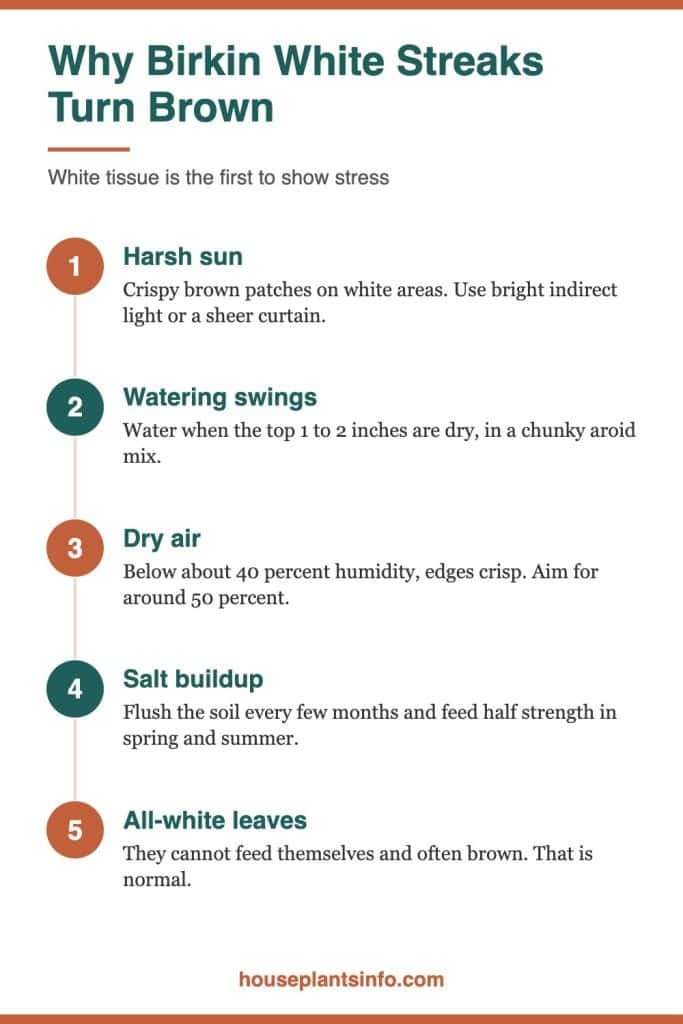
The short version: White sections of a Birkin leaf have no chlorophyll, so they are weaker and brown first when light, water, humidity or fertilizer is off.
Move the plant to bright indirect light, water when the top 1 to 2 inches of soil are dry, and raise humidity to around 50 percent.
This guide walks through each common cause, how to recognize it, and the exact changes that stop new browning.
Check These First
- Feel the soil 2 inches down. Soggy soil points to overwatering; bone-dry soil that pulls away from the pot points to underwatering.
- Check the window. A plant sitting right against south or west glass can scorch, especially in summer afternoons.
- Look at where the brown appears. Crispy tips and edges suggest dry air or salts, while soft patches with yellowing suggest root trouble.
- Scan the soil surface and pot rim for a white crust, a sign of fertilizer or mineral buildup.
- Note nearby vents, radiators and exterior doors. Cold drafts below about 55°F and hot, dry forced air both damage leaves.
Why Do Birkin Leaves With More White Turn Brown?
Leaves with more white brown faster because white tissue contains no chlorophyll and has less energy and resilience to handle stress. The green parts of the leaf do the feeding, and the white parts depend on them.
What Variegation Means for the Leaf
A Birkin’s stripes come from cells that do not produce chlorophyll. Those cells cannot photosynthesize, so they rely on sugars made by the green tissue around them.
Because they have fewer resources, white areas dry out, scorch and break down sooner than green areas. When something in the plant’s care is slightly off, the white streaks act like an early warning system.
That is also why two leaves on the same plant can look so different. A heavily streaked leaf may show brown patches while a mostly green neighbor looks perfect under identical conditions.
Reading the Pattern of Browning
The shape and texture of the brown tell you a lot. Dry, crispy patches on the white stripes facing the window usually mean too much sun. Crispy edges all around the leaf point to dry air or uneven watering.
Soft, darker brown patches with yellowing nearby usually trace back to wet roots. A white crust on the soil plus brown tips suggests salts. Matching the pattern to the cause saves you from changing everything at once.
Measuring Instead of Guessing
A soil moisture meter takes the guesswork out of watering, especially in a pot where the surface dries long before the root zone. Pair it with a finger check until you trust the readings.
A small digital hygrometer placed near the plant shows you the real humidity level. In a heated Chicago apartment in January, the number is often lower than you would expect, and seeing it makes the fix obvious.
What Counts as Normal
Some browning on the white streaks of older, lower leaves is normal. As leaves age, the plant pulls resources away from them, and the weakest tissue fades first.
If only one or two old leaves show light browning and new growth looks clean, you likely do not have a problem. Focus your attention on browning that appears on new or middle-aged leaves.
Is It Too Much Light?
Yes, harsh direct sun is one of the most common reasons white Birkin stripes turn brown and crispy. The white tissue has no pigment to protect it, so it scorches much faster than green tissue.
Signs of Sun Scorch
Sun damage shows up as dry, brown or bleached patches, often on the leaves closest to the glass. The patches tend to sit on the white streaks or in the center of the leaf where light hits directly.
Scorch does not spread like rot. If the browning stopped growing after you moved the plant, light was likely the cause. The damaged spots will not turn green again.
Finding the Right Spot
Birkins want bright indirect light. An east window works well, since morning sun is gentle. With a south or west window, place the plant a few feet back from the glass or behind a sheer curtain.
Hot windows deserve extra care. Glass radiates heat in summer, and a leaf pressed against a sunny pane can cook even when the room feels comfortable.
Sophia’s tip: Hold your hand between the plant and the window at midday. If your hand casts a sharp, dark shadow on the leaves, the light is too direct for a Birkin; a soft, blurry shadow is what you want.
Too Little Light Causes Its Own Problems
Dropping the plant into a dark corner is not the fix. In low light, a Birkin tends to produce darker, less striped leaves, and growth slows.
If your only bright window is harsh, a grow light set a foot or two above the plant gives steady, gentle light. Run it around 12 hours a day, and keep the plant away from the hot afternoon glass.
Watering Problems
Both overwatering and underwatering brown the white stripes, but they look different. Overwatering causes soft brown patches with yellowing, while underwatering causes crispy, dry edges.
When the Soil Stays Wet
Constantly wet soil starves roots of oxygen and leads to root rot. Look for brown patches with yellowing, soft or mushy stems near the soil line, wet soil days after watering, and sometimes a sour smell.
Because the yellowing often comes first, a guide to philodendron leaves turning yellow can help you confirm the problem. If roots are brown and mushy, unpot the plant, trim the rotten roots with clean shears, and repot in fresh mix.
When the Soil Dries Out Too Far
Underwatering or uneven watering shows as crispy brown edges, often starting on the white stripes. The leaves may also droop and the soil may shrink away from the pot sides.
Uneven watering is the sneaky version. A plant that swings between soaked and parched stresses its roots repeatedly, and the white tissue takes the hit each time.
A Steady Watering Rhythm
Water when the top 1 to 2 inches of soil are dry, then water thoroughly until it drains from the bottom. Empty the saucer so the pot is not sitting in water.
How often that happens depends on light, season and pot size, so check rather than follow a calendar. For more detail on timing, see this guide on how often to water a philodendron.
Soil and Pot Choices That Help Roots
Use a chunky, well-draining aroid mix with bark, perlite and some coir or peat. Dense, fine potting soil holds too much water around the roots.
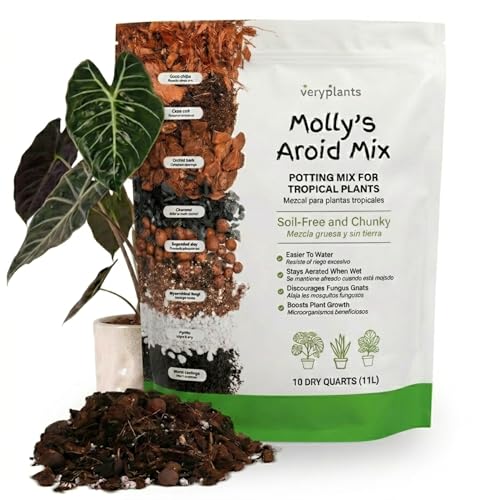
Always choose a pot with drainage holes. A decorative pot without holes can work as an outer sleeve, but lift the plant out to water and let it drain completely.
Low Humidity and Crispy Edges
Low humidity, especially under about 40 percent, causes brown, crispy tips and edges on Birkin leaves. The white streaks dry out first because they are the weakest tissue.
Why Winter Is the Worst
Heated homes are dry. Radiators and forced-air furnaces can drop indoor humidity well below 40 percent during a long Midwest winter, and the browning often appears a few weeks after the heat turns on.
A plant sitting beside a radiator or directly in the path of a heating vent gets the worst of it. The warm, moving air pulls moisture from the leaves faster than the roots can replace it.
Raising Humidity the Practical Way
Aim for around 50 percent. A humidifier placed near the plant is the most reliable way to get there and keep it steady through the heating season.

Grouping plants together helps a little, since they release moisture as a group. Misting does not raise humidity for long and can leave water sitting on leaves, so I would not rely on it.
Sophia’s tip: Put your hygrometer at leaf height next to the Birkin, not across the room. The air beside a window in winter is often colder and drier than the middle of the room, and that is the reading that matters.
Air Movement and Drafts
Air conditioning blowing directly on the plant dries leaves just as heat does. Keep the Birkin out of the direct stream of any vent.
Cold drafts also cause damage. Temperatures below about 55°F, from a leaky window or an exterior door opening in January, can brown leaf edges and stress the plant. A steady 65°F to 80°F suits it best.
Fertilizer and Salt Buildup
Too much fertilizer, or minerals building up in the soil over time, causes brown tips and edges, often with a white crust on the soil surface or pot rim. Fluoride in tap water can add to the problem.

How Salts Cause Browning
Fertilizer leaves mineral salts behind as water evaporates. Over months, these salts collect in the soil and pull moisture away from the roots, which shows up as browning at the leaf tips and margins.
The white stripes, being weaker, often show it first. If you see a crusty white residue on the soil or around the drainage holes, salt buildup is a likely contributor.
Flushing the Soil
Every few months, flush the soil with plain water. Run water slowly through the pot for a few minutes, letting it drain freely, so the extra salts wash out the bottom.
If the crust is heavy, scrape off the top layer of mix and replace it with fresh aroid mix. For severe buildup, repotting into fresh mix resets the soil completely.
Feeding the Right Amount
Feed at half strength once a month in spring and summer only. Skip fertilizer in fall and winter, when growth slows and the plant uses far less.
If your tap water is high in minerals or fluoride, using filtered water or rainwater can reduce tip burn. Water that sits out overnight loses chlorine but not fluoride, so letting it stand does not solve that part.
Too-White Leaves That Can’t Feed Themselves
Leaves that are almost entirely white often brown and die because they cannot photosynthesize enough to support themselves. This is a limit of the leaf itself, not a care mistake you can fully correct.
Why Mostly White Leaves Fail
A leaf needs green tissue to make food. A leaf that is mostly white has very little ability to feed itself, so it depends on the rest of the plant and tends to brown, curl or drop early.
Even with perfect light and humidity, these leaves usually have a short life. Expect them to fade and plan to trim them when they become mostly brown.
Should You Remove Them?
A white leaf that is still mostly firm can stay; it does no harm. Once a leaf is fully brown, trim it at the base with clean shears so the plant does not spend energy on it.
Wipe the blades with rubbing alcohol before and after cutting. This keeps you from moving bacteria or fungus between plants or into the fresh cut.
Variegation Shifts Over Time
Birkin variegation is unstable. A plant can push out very white leaves, normal pinstriped leaves, or fully dark green leaves, sometimes on the same stem.
If you are unsure whether your plant is a Birkin or a similar cultivar with heavier white, this comparison of Philodendron White Measure vs Birkin explains how the leaves differ.
When Green Takes Over
If the plant reverts to dark green, prune back to a well-striped node. New growth from that node is more likely to carry the striping you want.
Reverted green growth is healthier and stronger, so the plant will often favor it. Pruning early keeps the striped growth from being crowded out.
How to Keep Stripes Without Browning
You keep healthy stripes by giving the plant steady bright indirect light, even watering, moderate humidity and light feeding. Stable conditions matter more than any single change.
Balance the Light
Bright indirect light supports good striping without scorching the white tissue. A few feet from a south or west window, or behind a sheer curtain, gives strong light without direct midday sun.
In darker apartments, a grow light fills the gap. Consistent light also helps reduce reversion to all-green leaves.
Keep Conditions Steady
Birkins dislike sudden swings. Moving the plant constantly, letting it dry out completely, then flooding it, or pushing it from a cool window to a hot radiator all add stress that appears on the white streaks.
Pick a good spot and leave it there. Adjust slowly, one change at a time, so you can tell what actually helped.
Sophia’s tip: Rotate the pot a quarter turn each time you water. The plant grows evenly toward the light, and no single side sits in the brightest spot long enough to scorch.
Keep It Clean and Safe
Dust on leaves blocks light, which matters more for a variegated plant with less green to work with. Wipe the leaves gently with a damp cloth every few weeks.
Philodendrons are toxic to cats and dogs, according to the ASPCA. Place the plant on a shelf out of reach of pets and young kids, and drop trimmed leaves straight into the trash.
Spotting Related Problems
Not every brown mark comes from the white stripes. Round brown spots with halos can point to leaf spot or other issues, covered in this guide to brown spots on a Birkin.
If you notice green areas fading to white rather than white areas turning brown, read about philodendron leaves turning white. For a broader look across other plants, see this overview of house plant leaves turning brown.
Your Next Steps
- Check the soil 1 to 2 inches down today and adjust watering to match what you find.
- Move the plant a few feet back from south or west glass, or add a sheer curtain.
- Place a hygrometer beside the plant and run a humidifier if the reading is under 50 percent.
- Flush the soil with plain water and switch to half-strength feeding in spring and summer only.
- Trim fully brown leaves with clean shears and prune green reversions back to a well-striped node.
- Move the plant away from radiators, heating vents, AC streams and drafty doors.
Common Questions About Philodendron Birkin White Leaves Turning Brown
Will brown white stripes turn back to cream?
No, browned tissue is dead and will not recover. Once you fix the cause, new leaves should come in clean, and you can trim damaged leaves once they become mostly brown.
Is it normal for old Birkin leaves to brown on the white parts?
Yes, some browning on the white streaks of older leaves is normal. The plant shifts resources to new growth as leaves age. Browning on new leaves, though, points to a care issue.
Should I cut off a leaf that is only partly brown?
A partly brown leaf still helps feed the plant through its green tissue, so you can leave it. If the look bothers you, trim the brown edge with clean shears, following the leaf’s natural shape.
Can a grow light cause browning on white leaves?
It can if the light sits too close and runs hot or intense. Keep it a foot or two above the leaves and watch the white stripes for scorching. Raise it if you see crispy patches.
Why do my Birkin’s leaves brown only in winter?
Winter heating usually drops indoor humidity below 40 percent, and cold drafts from windows add stress. A humidifier aimed at around 50 percent and a spot away from radiators and leaky glass typically solves it.

Hi! I’m Sophia, and I love plants – especially an expert in growing house plants. I stay in Chicago, United States of America, and through my blog and social media platforms, provide tips and tricks on how to grow healthy, vibrant plants indoors. Check out more here.