
Most cactus roots grow only 4 to 10 inches deep, even on large plants, but they spread sideways a long way, often as far out as the plant is tall or farther.
A few kinds grow a thick taproot that goes deeper, and the biggest desert cacti rarely root much past 2 to 3 feet down.
That shallow, wide pattern is why a cactus in a deep pot of wet soil gets into trouble. The roots live in the top few inches, and the soil below them stays wet with nothing to use the water.
Updated October 2026: rewritten with pot-depth rules by cactus type, a repotting root check and winter root temperature.
| It depends on | Roots go deeper | Roots stay shallower |
|---|---|---|
| Cactus type | Taproot species like Ariocarpus or peyote-type cacti | Most globe, column and pad cacti |
| Growing spot | In the ground, dry sandy soil | In a pot, especially a shallow one |
| Water | Deep, infrequent soaking | Frequent light sips |
Shallow Roots Are How Cacti Catch Rain
In the desert, rain is brief and rarely soaks in far. A root system just under the surface that spreads in every direction catches as much of it as possible before it evaporates.
Cacti also grow “rain roots.” Within hours to a day after a good soaking, fine new roots sprout and start absorbing. When the soil dries out again, those fine roots die back. The thicker roots stay put.
That cycle only works if the soil dries out between soakings. In a pot, that means a fast-draining cactus mix, not the dense, peat-heavy potting soil most houseplants come in.
You can see the same thing in a pot. Unpot a cactus a week after watering and you’ll often find fine white roots near the surface and around the inside edge of the pot.
How Deep Different Cacti Root
| Cactus | Typical root depth | What’s special |
|---|---|---|
| Small globe cacti (Mammillaria, Rebutia) | 2 to 4 inches | Fine roots, very shallow |
| Barrel cacti | 8 to 12 inches | Wide-spreading |
| Prickly pear (Opuntia) | 4 to 12 inches | Spreads wide, roots readily from fallen pads |
| Saguaro | Mostly a few inches, deepest roots about 2 to 3 feet | Lateral roots can spread as far as the plant is tall |
| Taproot cacti (Ariocarpus, Lophophora) | Taproot can be longer than the plant is tall | Stores water in a thick, carrot-like root |
Even a 40-foot saguaro anchors itself mostly with a wide net of shallow roots plus one or a few deeper anchoring roots. That’s one reason big old saguaros can blow over in storms after heavy rain soaks the ground.
What Root Depth Means for Your Pot
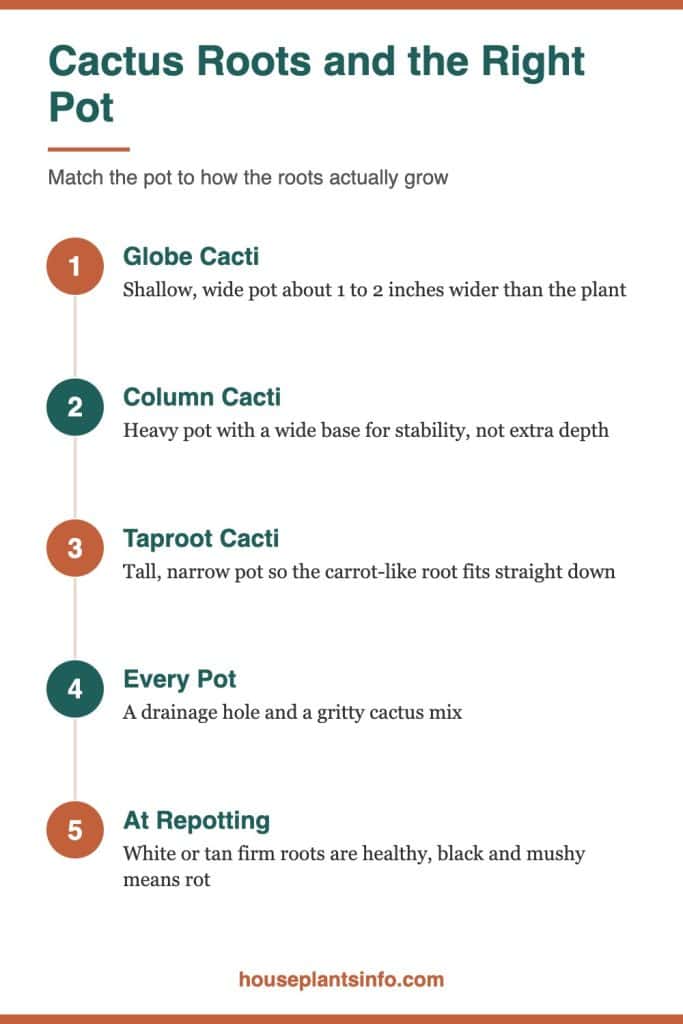
For most cacti, width matters more than depth. A pot about 1 to 2 inches wider than the plant, with a depth roughly equal to its width or a bit less, fits how the roots actually grow.
- Globe cacti: use a shallow, wide pot. A deep pot leaves a layer of soil at the bottom that stays wet for weeks.
- Columnar cacti: choose a heavy pot with a wide base, mostly so it won’t tip over. They don’t need extra depth for their roots.
- Taproot cacti: these are the exception. Use a tall, narrow pot so the taproot can hang straight down without coiling.
- Any cactus: a drainage hole and a gritty mix are non-negotiable. A terracotta pot dries even faster, which suits shallow roots. More on that in are clay pots good for a cactus.
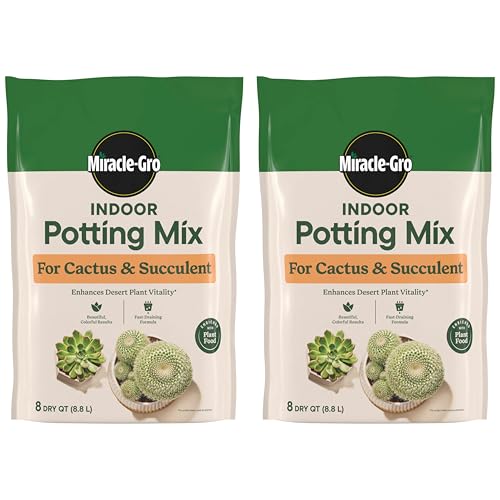
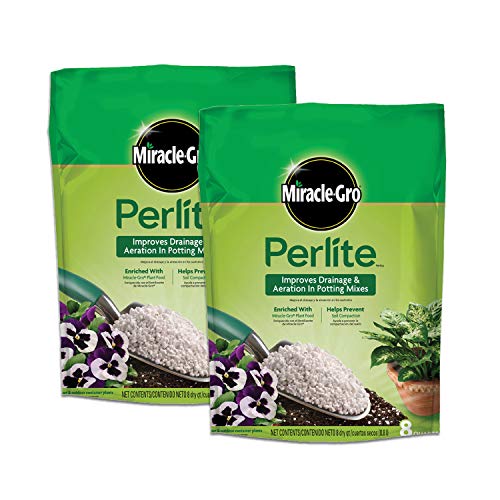
Fill the pot with a gritty cactus mix. If the bag feels heavy and looks dark and spongy, stir in extra perlite or pumice, about one part to three, so the top few inches where the roots live dry out within a week or so.
Skip the old advice to put gravel in the bottom of the pot. It doesn’t improve drainage. It actually makes water sit at the bottom of the soil layer above the gravel, right where the roots are.
Check the Roots When You Repot
Repotting every 2 to 4 years in spring is a good time to look. Wrap the cactus in folded newspaper or a towel, tip it out, and gently loosen the old soil.
- Healthy roots: white, cream or light tan, and firm.
- Dried roots: gray and brittle, snapping like thin twigs. Trim them off. They’re usually from a long dry spell, and the plant will grow new ones.
- Rotten roots: black or dark brown, soft, and they slide off when you pinch them, often with a sour smell. Cut back to clean, firm tissue and let the cuts dry for several days before replanting in dry mix. If the rot has reached the base of the stem, see why is my cactus rotting.
After repotting, wait about a week before watering so broken roots can seal over.
Sophia’s tip: if you can’t tell whether a root is alive, scratch it lightly with a fingernail. Living roots are pale and moist just under the skin. Dead ones are hollow, papery or dark all the way through.
Cold Roots Stop Working
Roots this close to the surface feel every change in temperature. In a US winter, a pot on a cold windowsill or a tile floor can sit 10 to 20 degrees colder than the air around the plant.
Cold, wet roots stop taking up water, and that’s when rot starts.
In winter, keep pots off cold stone or tile, lift them onto a plant stand or a cork mat, and pull them a few inches back from single-pane glass. Water less while it’s cold.
In summer the opposite happens. A small black plastic pot in hot afternoon sun can cook shallow roots. Shade the pot itself, or set it inside a slightly larger clay pot.
Outdoor Cacti and Your Yard
In the ground, the same shallow, wide pattern applies. That has two practical effects.
Spacing: give plants room to spread sideways, about as far apart as their expected mature width. The spacing guide in how far apart to plant cactus has numbers by type.
Removal: because most roots are shallow, digging out a cactus is usually more about handling the spines than digging deep. How to remove cactus from your yard covers safe methods.
Pet safety: most true cacti aren’t on the ASPCA’s toxic plant list, but spines and glochids can injure pets that dig in pots. Keep cats away from fresh soil after repotting.
The Routine I’d Use
- Pot choice: 1 to 2 inches wider than the plant, shallow for globes, heavy for columns, tall only for taproot types.
- Soil: gritty cactus mix, with extra pumice or perlite if it’s a heavy blend. Mixing cactus soil with potting soil explains the ratios.
- Watering: soak until it drains, then let the pot dry all the way down.
- Every 2 to 4 springs: unpot, check the roots, trim the dead ones, repot one size up.
- Winter: keep pots off cold surfaces and water less.
More Cactus Root Questions
Do cacti have a lot of roots?
More than people expect for the size of the plant. They’re thin and spread wide rather than deep, and many are temporary rain roots that come and go.
Can a cactus regrow its roots?
Yes. Healthy stem tissue will grow new roots after you trim off rotten ones. Let the cut end dry and callus, then set it on dry cactus mix. Can a cactus be cut and replanted walks through it.
Can cactus roots damage foundations or pipes?
Rarely. The roots are shallow and fine, not thick and woody like tree roots. Large prickly pear patches can work their way into cracks, but they aren’t a real threat to sound foundations.
Should I cut the roots when I repot a cactus?
Only trim the dead, dry or rotten ones. Leave healthy roots alone, and don’t shorten a taproot.
Why are my cactus roots coming out of the drainage hole?
It’s usually root-bound and ready for a pot one size larger. Repot in spring, and go up only 1 to 2 inches in width.

Hi! I’m Sophia, and I love plants – especially an expert in growing house plants. I stay in Chicago, United States of America, and through my blog and social media platforms, provide tips and tricks on how to grow healthy, vibrant plants indoors. Check out more here.