
A cactus on your windowsill that once stood firm now has a soft, dark patch near the soil line, or it leans and gives slightly when you press it.
If you are asking why is my cactus rotting, the answer almost always starts with water and drainage, but cold, low light, and wounds play a part too.
The short version: Most cactus rot comes from soil that stays wet too long, usually from frequent watering, dense potting mix, an oversized pot, or a container without drainage.
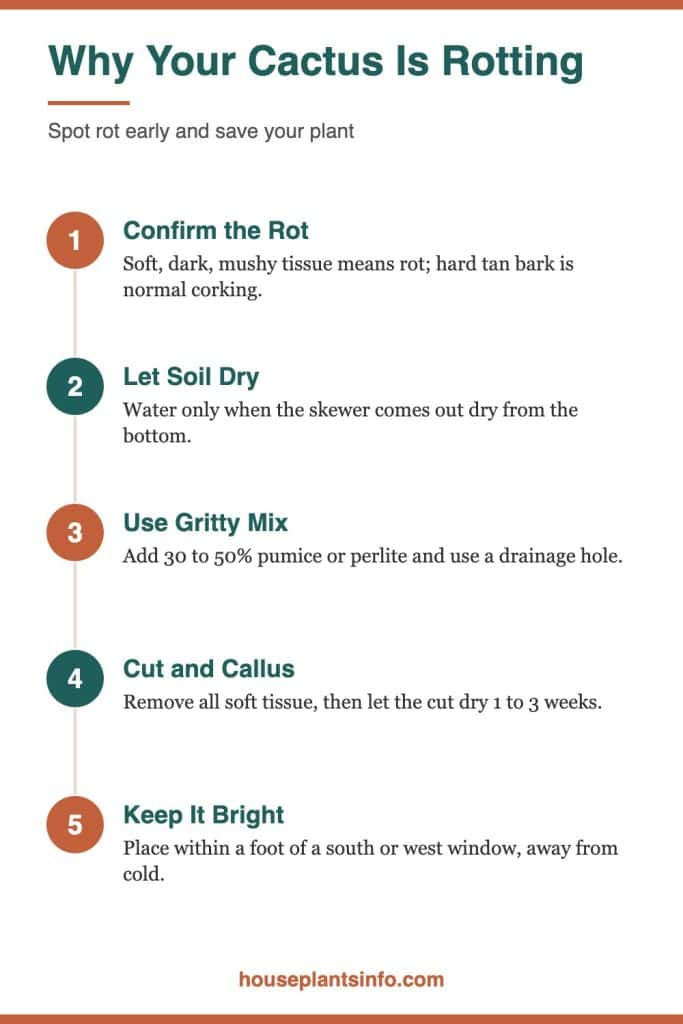
Cut away every bit of soft tissue, let the healthy part dry and callus, then replant in gritty, fast-draining mix and water far less often.
This guide covers how to confirm rot, the eight most common causes, a step-by-step rescue plan, and how to keep it from coming back.
Check These First
- Press the soft area gently. Mushy, wet, or hollow tissue means rot. Hard, dry, tan bark near the base is usually harmless corking.
- Push a wooden skewer to the bottom of the pot. If it comes out damp several days after watering, the soil is staying wet too long.
- Lift the pot and look underneath. No drainage hole, or a saucer holding water, is a common trigger.
- Smell the soil. A sour or musty odor points to root rot below the surface.
- Note the temperature near the plant. A cold window or drafty spot combined with wet soil speeds rot.
How Can You Tell If Your Cactus Is Actually Rotting?
Rotting cactus tissue is soft, discolored, and often wet, and it spreads over days or weeks. Healthy tissue stays firm and green, even when old growth near the base turns brown and woody.
Signs of Base and Root Rot
Root rot usually starts below the soil, so the first visible sign is often a plant that wobbles or leans. As it moves upward, the base turns brown, black, or translucent and feels squishy.
You may also see yellowing that starts at the bottom and climbs. A soil moisture meter can confirm the pot is staying wet, though a plain wooden skewer left in the soil for a minute works just as well.

Signs of Stem and Top Rot
Rot can also start at the top or along the side of a column. Look for sunken, dark spots that feel soft, sometimes with oozing sap or a ring of yellow around the edge.
Top rot often follows water pooling in the growing tip, an injury, or a pest wound. It may spread downward through the core while the outer skin still looks fairly normal.
Problems That Look Like Rot but Are Not
Corking is a natural process where older tissue near the base turns tan or gray and hardens into bark. It feels dry and solid, not soft.
Sunburn causes bleached, white, or tan patches on the side facing the glass, but the tissue stays firm. Thirst makes a cactus wrinkle and shrink, yet the stem still feels dense, not mushy.
| Symptom | Likely Rot? | What It Usually Means |
|---|---|---|
| Soft, black base | Yes | Root or base rot from wet soil |
| Hard, tan bark at base | No | Normal corking on mature growth |
| Wrinkled but firm stem | No | Underwatering or thirst |
| Wrinkled and soft stem | Yes | Roots have rotted and cannot absorb water |
| Bleached patch facing window | No | Sunburn |
| Sunken spot with ooze | Yes | Stem rot, often from injury or infection |
Why Is My Cactus Rotting? Overwatering Is Cause #1
Overwatering is the most common reason a cactus rots indoors. Roots sitting in soil that stays moist for days lose access to oxygen, weaken, and become an easy target for rot-causing fungi and bacteria.
What Overwatering Really Means
Overwatering is about frequency, not the amount poured at once. A deep soak is fine if the soil dries completely before the next one.
The trouble starts with frequent small drinks, watering on a fixed schedule, or watering before the bottom of the pot has dried.
In most homes, a cactus needs water every 2 to 4 weeks in spring and summer and every 4 to 8 weeks, or less, in winter.
The Fix
Stop watering until the soil is dry all the way down. If the plant is still firm and only the soil is soggy, unpot it and let the root ball air-dry for a few days before repotting in fresh, dry mix.
From then on, check the soil before every watering instead of following the calendar. Water slowly until it runs from the drainage hole, then empty the saucer within 15 minutes.
Sophia’s tip: Write the date on a strip of masking tape stuck to the pot each time you water. If the skewer still shows damp soil and the date is under two weeks old, wait.
Cause #2 and #3: Dense Soil and Poor Drainage
Soil that holds water and pots without drainage keep roots wet even when you water carefully. A cactus mix should drain within seconds and dry out within a few days.
Why Regular Potting Soil Causes Rot
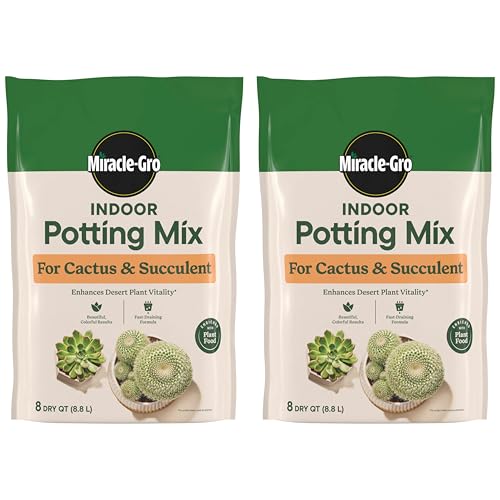
Standard indoor potting soil is built to hold moisture, which suits leafy plants but suffocates cactus roots. Many bagged cactus blends also contain a lot of peat and can stay damp longer than you expect.
Mix bagged cactus soil with 30 to 50% pumice or coarse perlite. A little coarse sand is fine, but avoid fine sand, which packs down and slows drainage.
Drainage Holes and Decorative Pots
A pot without a drainage hole traps water at the bottom where you cannot see it. Decorative cachepots cause the same problem if water collects inside after a soak.
Gravel in the bottom of a pot does not fix this. It actually raises the wet zone higher into the root area, so always use a container with a real drainage hole.
The Fix
Repot into fresh gritty mix and a pot with a drainage hole. Unglazed terracotta breathes and helps soil dry evenly, which makes it a strong choice for most cacti.
Cause #4: A Pot That Is Too Big
An oversized pot holds a large volume of soil that roots cannot reach, so it stays wet long after watering. That damp zone around the roots is where rot often begins.
How to Size the Pot Correctly
Choose a pot only 1 to 2 inches wider than the root ball. For tall columns, pick a heavier pot for stability rather than a wider one.
If your cactus is sitting in a pot several sizes too large, move it down to a snug container during spring or summer. Repotting every 2 to 3 years, or when roots fill the pot, is usually enough.
Causes #5 and #6: Cold Temperatures and Low Light
Cold and dim conditions slow a cactus down, so it uses far less water. Soil that would dry in a week in July can stay wet for three weeks in January, which is when many winter rot cases start.
Cold Windows and Winter Rest
Most cacti tolerate a cool winter rest around 50 to 60°F, but only if the soil is kept fairly dry. Cold plus wet soil is one of the fastest routes to rot.
In a Chicago winter, window glass can drop well below room temperature at night. Keep the plant an inch or two away from the pane, and never let it sit below about 40°F.
Heat Sources and Drafts
Radiators and forced-air vents dry the surface of the soil quickly, which can trick you into watering while the lower soil stays wet. Keep cacti at least 3 feet from radiators and out of direct vent airflow.
Constant cold blasts from an air conditioner in the same window can also slow drying. Move the pot a little to the side of the airflow.
Light and Water Use
A cactus several feet back from a window gets a fraction of the light it would on the sill. With less light, it grows slowly and drinks less, so the soil stays moist longer.
Place cacti within about a foot of an unobstructed south or west window. If you only have east or north light, run a full-spectrum grow light 6 to 12 inches above the plant for 12 to 14 hours a day.

Sophia’s tip: From November through February, cut watering to once a month and check with a skewer first. A slightly wrinkled cactus in late winter is safer than a plump one sitting in wet soil.
Causes #7 and #8: Wounds, Pests, and Infections
Any break in a cactus’s skin gives fungi and bacteria an entry point. Scrapes, pest damage, fresh cuts, and water left sitting on the plant can all lead to rot even when watering is correct.
Physical Damage
Bumps from pets, vacuums, or moving the pot can bruise or split tissue. Broken roots from rough repotting are also vulnerable, especially if you water right away.
After repotting, wait about a week before watering so small root injuries can seal. Wrap tall plants in folded newspaper or a towel when handling them to avoid crushing the stem.
Pests That Open the Door
Sap-feeding pests leave tiny wounds and weaken the plant. If you have wondered can cactus get mealybugs, the answer is yes, and they often hide in spine clusters and along the base where damage is easy to miss.
Root mealybugs feed underground and can stress roots enough to invite rot. Scale and spider mites also weaken plants, especially in dry winter air near heaters.
Water on the Stem
Misting a cactus or splashing water into the crown leaves moisture sitting on the skin. In cool, still air, this can lead to fungal spots and top rot.
Water at the soil line instead of over the plant. Skip misting and pebble trays entirely, since normal household humidity of 30 to 50% suits cacti well.
How to Save a Rotting Cactus Step by Step
You can save most rotting cacti if some firm, healthy tissue remains. The goal is to remove every bit of infected tissue, let the clean part callus, and give it a fresh start in dry, gritty mix.
Step 1: Unpot and Inspect
Wear thick gloves and lift the plant out of its pot. Shake off the old soil and look closely at the roots and base.
Healthy roots are firm and white to tan. Rotted roots are black or brown, mushy, and may slide off when you touch them.
Step 2: Cut Away All Soft Tissue
Sterilize a sharp knife with rubbing alcohol. Remove every soft root and slice away rotted stem tissue until the cut surface shows clean, firm, evenly colored flesh with no brown streaks.
Wipe the blade with alcohol between cuts so you do not spread infection. If the core shows discoloration, keep cutting until it is completely clean.
Step 3: Decide What to Save
If only some roots rotted, trim them and keep the plant whole. If the base has rotted, cut above the damage and treat the healthy top as a cutting.
For column cacti, the process is the same one used to grow Peruvian apple cactus from a cutting. A healthy section at least 6 inches long gives you the best chance.
Step 4: Let It Callus
Set the trimmed plant or cutting upright in a dry, shaded spot with good airflow. Let the cut end dry for 1 to 3 weeks, until it forms a firm, dry seal.
Thicker stems need longer. Do not rush this step, since planting an unsealed cut is a common reason the rot returns.
Step 5: Replant and Wait
Plant the callused end 1 to 2 inches deep in dry, gritty cactus mix in a clean pot with drainage. Use a stake for support if the cutting is tall.
Keep it in bright, indirect light and wait about a week before watering lightly. Roots usually form in 3 to 6 weeks in warm conditions around 70 to 75°F.
When Rooting Stalls
Cuttings in cool rooms, wet soil, or winter often sit without progress. If yours shows no resistance after a gentle tug for many weeks, this guide on a Peruvian apple cactus not rooting walks through the usual reasons.
Sophia’s tip: Before replanting a rescued cactus, press the cut end with your thumb. If it gives at all or feels tacky, give it another week to callus.
When the Plant Cannot Be Saved
If rot has spread through the entire stem and the core is discolored everywhere, the plant usually cannot be recovered. Discard it along with the soil, and scrub the pot with hot, soapy water before reusing it.
How to Prevent Your Cactus From Rotting Again
Prevention comes down to dry soil between waterings, fast drainage, strong light, and stable temperatures. Once those are in place, rot becomes rare.
Build a Rot-Resistant Setup
- Use a gritty mix with 30 to 50% pumice or coarse perlite.
- Choose a pot with a drainage hole, 1 to 2 inches wider than the root ball.
- Place the plant within about a foot of a bright south or west window, or add a grow light.
- Keep it away from radiators, heating vents, and cold glass.
Adjust Care by Season
Water every 2 to 4 weeks in spring and summer when the soil is fully dry. Cut back in fall and water monthly or less during winter rest.
Feed with a low-nitrogen cactus fertilizer at half strength every 4 to 6 weeks in spring and summer only. Stop by early fall.
Watch for Early Warning Signs
Check the base, spine clusters, and soil every few weeks. Catching a small soft spot early means a minor trim instead of a full rescue.
Color changes are often the first clue. Learn what different patterns mean in this guide to Peruvian apple cactus yellowing, since the same logic applies to many column cacti.
For a full routine covering light, water, and repotting, see how to care for Peruvian apple cactus indoors.
Pet Safety
The ASPCA lists Christmas cactus as non-toxic to cats and dogs, but status varies by species, so check the ASPCA plant list for your exact cactus. Spines are the main hazard, so keep pots where pets and kids cannot brush against them.
Your Next Steps
- Press the soft area and check the soil with a skewer to confirm rot.
- Unpot the plant and cut away every soft root and stem section with a sterilized knife.
- Let the healthy part callus for 1 to 3 weeks in a dry, shaded spot.
- Replant in gritty mix in a snug pot with a drainage hole.
- Move the cactus close to a bright south or west window, away from radiators and cold glass.
- Water only when the soil is dry all the way down, and cut back sharply in winter.
Common Questions About Cactus Rot
Can a cactus recover from rot on its own?
No, rot does not reverse once tissue turns soft. It usually keeps spreading, so you need to cut out the damaged parts and let the healthy section dry and callus before replanting.
How fast does cactus rot spread?
Rot can spread through a cactus in a few days to a few weeks, depending on temperature and moisture. Cool, wet conditions tend to speed it up, so act as soon as you find a soft spot.
Should I use cinnamon or sulfur on the cut?
Some growers dust fresh cuts with powdered sulfur or cinnamon, but the most reliable step is a clean cut and a full callus. Focus on removing all soft tissue and keeping the cut dry until it seals.
Why is my cactus rotting from the top?
Top rot often starts where water sat in the growing tip, at an injury, or around pest damage. Water at the soil line, skip misting, and inspect the crown for pests or wounds.
Is it safe to reuse the pot and soil?
Throw out the old soil, since it may hold rot-causing organisms. Scrub the pot with hot, soapy water and let it dry fully before using it again.

Hi! I’m Sophia, and I love plants – especially an expert in growing house plants. I stay in Chicago, United States of America, and through my blog and social media platforms, provide tips and tricks on how to grow healthy, vibrant plants indoors. Check out more here.