
Your rabbit is hopping around the living room, and a potted cactus sits on a low windowsill just a few inches from a curious, twitching nose.
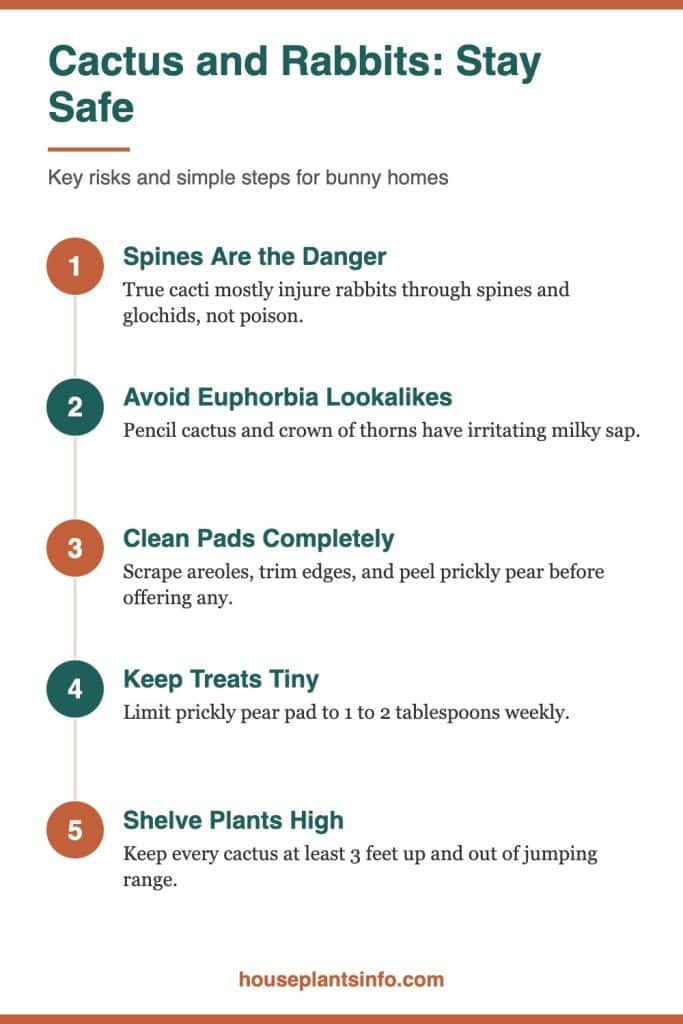
The short version: Are cactus bad for rabbits? Most true cacti are not considered poisonous, but their spines and tiny barbed hairs can injure a rabbit’s mouth, eyes, and paws, and several popular “cactus” plants are actually toxic lookalikes.
Despined prickly pear pads can be an occasional treat for some rabbits, but cactus should never be a regular part of the diet.
This guide covers the real risks, which plants to worry about most, what to do after a spine incident, how to offer prickly pear safely, and how to set up your home so your rabbit and your cactus can share space.
Check These First
- Look at your rabbit’s lips, nose, chin, and front paws for tiny hair-like spines or redness.
- Confirm whether your plant is a true cactus or a lookalike such as a pencil cactus or crown of thorns, which have milky sap.
- Check whether your rabbit is eating hay normally and producing plenty of round droppings.
- Move any cactus off the floor and off any surface your rabbit can reach by jumping, usually anything under about 3 feet.
- If your rabbit has stopped eating or seems hunched and still, call an exotic-animal vet right away.
Are Cactus Bad for Rabbits? The Real Risks Indoors
The main danger from a true cactus is physical injury, not poison. Spines, glochids, and the occasional toxic lookalike create risks that matter much more indoors, where a bored rabbit has hours to investigate whatever sits at nose level.
Spines and Glochids
Large spines can puncture lips, gums, and the delicate skin around the eyes. Glochids are worse in some ways. These are the tiny, barbed hairs found on prickly pear and other Opuntia species, and they detach at the lightest touch.
A rabbit that nudges an Opuntia pad can end up with dozens of glochids embedded in its muzzle. They are hard to see, they irritate for days, and they can cause infections if left in place.
Keep a pair of fine-tipped tweezers and a bright flashlight near your plant shelf so you can inspect and remove glochids quickly if your rabbit ever gets too close.
Digestive Upset
Rabbits have a sensitive hindgut that depends on a steady supply of fiber, mainly from hay. Large amounts of any unfamiliar, watery, or sugary food can upset the balance of gut bacteria.
Rabbits also cannot vomit. Whatever goes in has to pass all the way through, so even mildly irritating plant material deserves caution.
Toxic Lookalikes
Many plants sold as “cactus” are not cacti at all. Pencil cactus and crown of thorns are euphorbias with a milky, irritating latex sap that can cause mouth pain, drooling, and digestive upset. These plants pose a far bigger risk than a true cactus.
Pots, Soil, and Top Dressings
Rabbits dig and chew. Gritty cactus mix, decorative pebbles, and fertilizer residue are not food, and a rabbit that digs in a pot may swallow some. Plastic nursery pots and saucers are also tempting to chew.
Can Rabbits Eat Cactus at All?
Some rabbits can eat small amounts of despined prickly pear pads, but cactus is never a necessary food. Your rabbit gets everything it needs from hay, fresh leafy greens, a small portion of pellets, and clean water.
What Wild Rabbits Do
In desert regions, wild rabbits and hares do eat prickly pear, especially in dry seasons when it supplies water. That is a survival behavior in a harsh environment, not proof that cactus suits a pet rabbit living on a balanced diet.
Why Domestic Rabbits Are Different
Pet rabbits often have more sensitive digestion, less exercise, and a higher risk of obesity than wild ones. A food that helps a wild rabbit get through a drought can simply add unneeded calories, water, and minerals to a pet’s diet.
Which Parts Are Edible
The young pads of Opuntia species, called nopales, are eaten by people and are the only cactus part commonly offered to rabbits. The fruit, called tuna or prickly pear fruit, is sweet and should be treated like other fruit: rare and tiny.
Other cacti, including most columnar, barrel, and ornamental globe cacti, are not grown as food. Skip them entirely. Some, such as peyote and San Pedro cactus, contain psychoactive alkaloids and must never be offered.
A Note on Oxalates
Prickly pear pads contain calcium oxalate. Rabbits absorb calcium very efficiently and excrete the excess in their urine, so rabbits prone to bladder sludge or stones should not get extra oxalate-rich foods. If your rabbit has any urinary history, skip cactus completely.
Which Cactus and Lookalikes Are Most Dangerous for Rabbits?
The most dangerous plants are the euphorbias sold as cactus, followed by heavily glochid-covered Opuntia species. Smooth, low-spined cacti such as holiday cacti carry the lowest risk, though no houseplant should be a chew toy.
| Plant | True cactus? | Main risk to rabbits | Risk level |
|---|---|---|---|
| Pencil cactus (Euphorbia tirucalli) | No | Irritating milky sap, mouth and gut irritation | High |
| Crown of thorns (Euphorbia milii) | No | Irritating sap plus sharp thorns | High |
| African milk tree (Euphorbia trigona) | No | Irritating milky sap | High |
| Bunny ear cactus (Opuntia microdasys) | Yes | Dense glochids in mouth, nose, eyes | High |
| Prickly pear (Opuntia species) | Yes | Glochids and spines; pads edible only when fully cleaned | Moderate |
| Barrel and golden barrel cactus | Yes | Large, stiff spines | Moderate |
| Peyote and San Pedro cactus | Yes | Psychoactive alkaloids | High |
| Christmas and Thanksgiving cactus | Yes | Mild stomach upset if eaten in quantity | Low |
The Bunny Ear Problem
Bunny ear cactus looks soft and fuzzy, which makes it one of the riskiest plants in a rabbit home. Those polka-dot tufts are pure glochids, and they come loose at a touch. Despite the cute name, keep it far away from your rabbit.
How to Spot a Euphorbia
If a broken stem or leaf leaks white, milky sap, the plant is almost certainly a euphorbia, not a cactus. True cacti have clear, watery sap. Euphorbias also tend to have spines in pairs rather than growing from fuzzy cushions called areoles.
Sophia’s tip: Before buying any spiny plant for a rabbit home, check the label for a botanical name. If it starts with “Euphorbia,” place it in a room your rabbit never enters, or skip it.
Holiday Cacti
Christmas and Thanksgiving cacti have no real spines, which makes them the friendliest choice for pet homes. If you also have allergy concerns in your household, read Christmas cactus and allergies: what to know before you buy.

What Does the ASPCA Say About Cactus and Pets?
The ASPCA’s toxic plant database lists effects for dogs, cats, and horses, not rabbits. That means there is no official ASPCA rabbit rating for any cactus, so use the dog and cat listings only as a rough guide.
Listings You Can Rely On
The ASPCA lists Christmas cactus as non-toxic to dogs and cats. It lists pencil cactus and crown of thorns as toxic to dogs and cats because of their irritating sap. Rabbits are small and sensitive, so treat anything toxic to cats or dogs as off-limits.
When Several Pets Share the Space
Many rabbit homes also have a dog or cat. Each animal interacts with plants differently, so it helps to know the specifics. See whether cactus are bad for dogs and whether cactus are bad for cats before deciding where each plant lives.
Who to Call
If your rabbit chews a euphorbia or any unknown plant, call an exotic-animal vet. The ASPCA Animal Poison Control Center is another option, and having the plant’s name or a photo ready will speed up advice.
Spines and Glochids: Signs of Injury and What to Do
If your rabbit gets spines or glochids in its face or paws, remove what you can see gently and watch closely for pain or changes in eating. Anything near the eyes, inside the mouth, or deeply embedded needs a vet.
Signs Your Rabbit Got Too Close
- Pawing or rubbing at the face repeatedly
- Shaking the head or sneezing more than usual
- Drooling or wet fur around the chin
- Squinting, tearing, or a cloudy eye
- Reluctance to eat hay or pellets
- Tiny visible hairs or spines on the nose, lips, or paws
Safe Removal at Home
Work in good light near a bright window or under a lamp. Wrap your rabbit snugly in a towel so it feels secure and cannot kick. Use fine-tipped tweezers to pull each spine straight out in the direction it entered.
For glochids, gently pressing a strip of masking tape on fur-free areas like the nose pad can lift some hairs. Avoid tape on fur, since it can pull out tufts and stress your rabbit. Never pull anything from the eye or inside the mouth yourself.
When It Becomes an Emergency
Call an exotic vet right away if your rabbit stops eating, stops producing droppings, sits hunched, or grinds its teeth loudly. These are signs of pain or gastrointestinal stasis, which can become life-threatening within a day.
Eye injuries also need prompt care. Even a small scratch to the cornea can ulcerate quickly in rabbits.
How to Offer Prickly Pear Pads Safely
If you want to offer cactus, use only young Opuntia pads intended for eating, remove every spine and glochid, and introduce a tiny piece slowly. Never cut pads from a decorative houseplant that may have been treated with pesticides or systemic insecticides.
Choosing the Pads
Pick young, tender pads, usually 4 to 8 inches long, with bright green color and firm texture. Grocery nopales are often sold already despined, which saves time and lowers risk, but still inspect them carefully.
Avoid pads from ornamental plants, roadside patches, or anything sprayed. Houseplants are often treated with chemicals that are not safe for animals to eat.
Cleaning Step by Step
- Wear thick kitchen gloves and hold the pad with tongs.
- Use a sharp knife to scrape off every areole, the small bumps where spines and glochids grow.
- Trim about 1/4 inch from the entire edge of the pad, where glochids cluster.
- Rinse under running water while rubbing with a vegetable brush.
- Run your gloved fingertips over the pad and look at it in bright light from several angles.
- Cut into small cubes, about 1/2 inch.
Introducing It the First Time
Offer one small cube alongside your rabbit’s usual greens. Then wait 24 hours and watch the droppings. They should stay round, firm, and plentiful.
If you see soft stools, smaller droppings, or a drop in appetite, stop and do not offer it again. Some rabbits simply do not tolerate it.
Sophia’s tip: Peel off the thin outer skin with a vegetable peeler after removing the areoles. It removes any glochids you missed and leaves only the inner flesh.
How Much Cactus Can a Rabbit Have?
Think of prickly pear pad as an occasional treat, roughly 1 to 2 tablespoons for an average 5-pound rabbit, no more than once or twice a week. Fruit should be even smaller, about 1 teaspoon now and then.
Where Cactus Fits in the Diet
A healthy adult rabbit diet is built on unlimited grass hay, which should make up most of what your rabbit eats. Fresh leafy greens come next, roughly 1 packed cup per 2 pounds of body weight daily. Pellets and treats fill only a small share.
| Food | Approximate amount for a 5 lb adult rabbit | Frequency |
|---|---|---|
| Grass hay | Unlimited, about a body-sized pile | Daily |
| Leafy greens | 2 to 3 packed cups | Daily |
| Plain pellets | About 1/4 cup | Daily |
| Prickly pear pad, despined | 1 to 2 tablespoons | Once or twice weekly at most |
| Prickly pear fruit | About 1 teaspoon | Rarely |
Rabbits That Should Skip Cactus
- Babies under about 12 weeks, whose digestion is still developing
- Rabbits with a history of bladder sludge or stones
- Rabbits with frequent soft stools or past GI stasis
- Overweight rabbits that need fewer extras
Better Treat Options
If you want a crunchy, watery treat, many rabbits enjoy herbs like cilantro, basil, mint, and dill. Small pieces of bell pepper or a thin slice of apple without seeds also work. These are easier to prepare and carry no spine risk.
How to Rabbit-Proof Your Cactus Collection
The safest setup keeps every cactus out of reach and out of jumping range. Rabbits can leap surprisingly high, so a low windowsill or coffee table is not safe enough.
Choose High, Bright Spots
Cacti need strong light, which works in your favor. A south- or west-facing window with a sturdy shelf mounted above rabbit level gives your plants 4 to 6 hours of sun. Keep pots within 1 to 2 feet of the glass for best growth.
In north-facing rooms, a grow light on a high shelf can replace window light. Set it on a timer for 12 to 14 hours daily and hang it 6 to 12 inches above the plants.
Watch for Winter Hazards
Chicago-style winters bring forced-air heat and dry air. Avoid placing cacti on top of radiators, and keep cords for grow lights and space heaters out of reach, since rabbits chew wires.
Shelves near cold glass can drop below 50°F at night, which many cacti dislike. Moving plants a few inches back from the window on frigid nights helps without lowering them into rabbit territory.
Barriers That Work
- Use an exercise pen to define your rabbit’s roaming zone away from plant shelves.
- Close doors to rooms where low plants live.
- Put hanging planters on secure hooks, well above jumping height.
- Sweep up fallen spines, pads, and soil promptly.
Keep Pests in Check
Cacti that sit near a sunny window sometimes attract ants, especially if mealybugs or aphids are present. Learn whether ants are bad for cactus and treat the plant with methods that won’t leave residue where your rabbit roams.
Sophia’s tip: Do a quick floor check under your plant shelf each evening. A dropped Opuntia pad or broken spine on the rug is exactly what a rabbit will find first.
Placement Beyond Safety
If you also care about how plants affect the feel of a room, placement matters for more than pets. You can read about whether cactus are bad for feng shui when deciding where your spiny plants look and feel best.
Your Next Steps
- Identify each “cactus” you own and move any euphorbia to a room your rabbit never enters.
- Raise every remaining cactus to a high, stable shelf at least 3 feet off the floor and away from jumping launch points.
- Keep fine-tipped tweezers, a flashlight, and your exotic vet’s phone number in one easy spot.
- If you choose to offer prickly pear, buy food-grade nopales, clean them thoroughly, and start with one small cube.
- Watch your rabbit’s appetite and droppings daily, since changes are the earliest sign of trouble.
Common Questions About Cactus and Rabbits
Is cactus poisonous to rabbits?
Most true cacti are not considered poisonous to rabbits, but their spines and glochids can cause painful injuries. Lookalikes such as pencil cactus and crown of thorns have irritating sap and should be treated as toxic. Psychoactive species like peyote must never be offered.
Can rabbits eat prickly pear cactus?
Some rabbits can eat small amounts of young prickly pear pads once every spine and glochid is removed. Offer about 1 to 2 tablespoons at most, once or twice a week. Skip it entirely for rabbits with urinary or digestive problems.
What should I do if my rabbit ate part of my cactus?
Check the mouth, nose, and paws for spines, and identify the plant to rule out a euphorbia. Watch closely for drooling, pawing at the face, reduced eating, or fewer droppings. Call an exotic-animal vet if any of those appear or if the plant had milky sap.
Is a Christmas cactus safe around rabbits?
Christmas cactus has no real spines, and the ASPCA lists it as non-toxic to dogs and cats. It is one of the lowest-risk choices for a rabbit home. Eating a lot of it could still cause mild stomach upset, so keep it out of reach anyway.
Can rabbits eat cactus fruit?
Prickly pear fruit is high in sugar and covered in glochids, so it should be a rare, tiny treat if offered at all. Peel it completely and give no more than about a teaspoon of flesh. Remove the hard seeds, which offer no benefit to a rabbit.

Hi! I’m Sophia, and I love plants – especially an expert in growing house plants. I stay in Chicago, United States of America, and through my blog and social media platforms, provide tips and tricks on how to grow healthy, vibrant plants indoors. Check out more here.