
You brushed past the bunny ears cactus on your windowsill, and now your fingers prickle, sting, and itch even though you can’t see a single spine.
The short version: Yes. Cacti can cause itching, usually from tiny barbed hairs called glochids, broken spine tips left in the skin, or irritant sap from cactus look-alikes such as euphorbias.
Most cases clear within days once the fragments are removed, though embedded pieces can keep skin irritated for weeks.
This guide covers why the itch happens, how to remove what’s causing it, when to get medical help, and how to handle cacti so it doesn’t happen again.
Check These First
- Look at your skin under bright light with a magnifier. Fine, hair-like fibers or tiny dots mean glochids.
- Check which plant you touched. Prickly pear and bunny ears (Opuntia) cause most indoor itching cases.
- Notice whether the plant bled white, milky sap. That points to a euphorbia, not a true cactus.
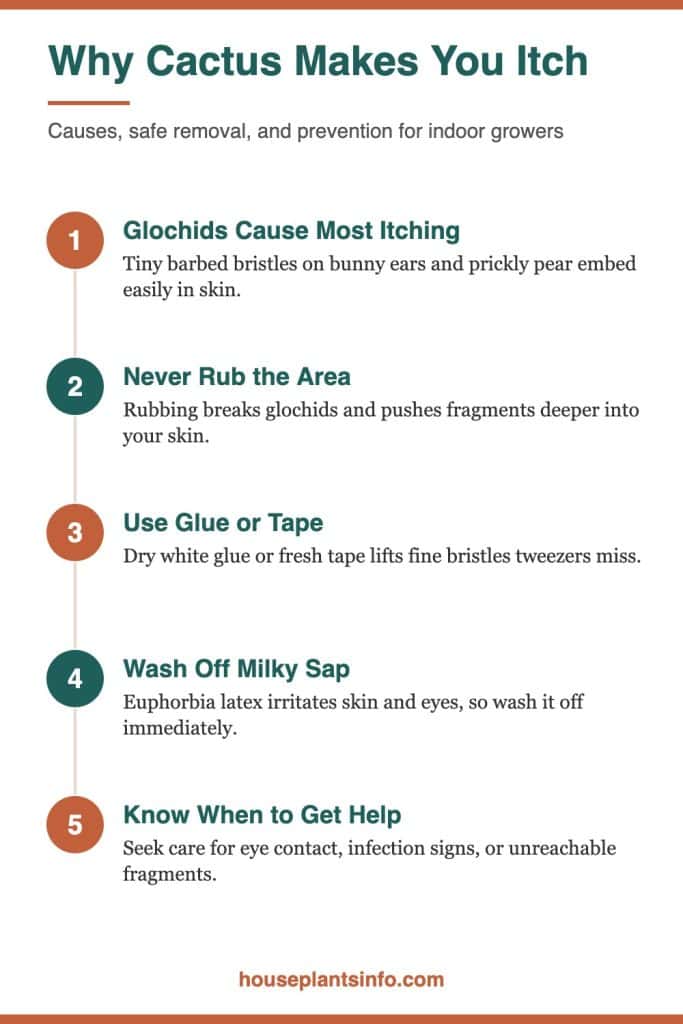
- Stop rubbing the area. Rubbing breaks glochids and pushes them deeper.
- Watch for spreading redness, warmth, pus, or eye contact. Those need medical care, not home treatment.
Can Cactus Cause Itching? Here’s Why It Happens
Cactus itching is almost always mechanical irritation from spines or glochids lodged in the skin, not a true allergy. Less often, it comes from plant sap or a genuine contact allergy.
Your skin reacts to anything foreign stuck in it. Even a fragment too small to see can trigger inflammation, which shows up as itching, stinging, small red bumps, or a burning feeling when you touch the spot.
The fastest way to confirm the cause is to look closely. A handheld magnifying glass and a bright lamp, or a phone flashlight held at a low angle, will reveal glochids that are invisible from a normal distance.
For removal, a pair of fine-tipped tweezers and a bottle of white school glue handle most situations. You’ll find the exact method in the removal section below.
Spines Versus Glochids
Spines are the larger, stiff needles you can see and avoid. They hurt immediately, but they usually come out whole.
Glochids are short, hair-like bristles clustered in the areoles, the fuzzy dots on a cactus pad. They detach at the slightest touch and carry backward-facing barbs, so they grip skin and resist removal.
Why the Itch Can Show Up Later
Some people feel the itch hours after contact. Small fragments work slightly deeper as you move your hands, and inflammation builds gradually around them.
That delay often confuses people into thinking they developed an allergy. Usually it’s the same fragments, just causing a slower reaction.
Glochids on Prickly Pear and Bunny Ears: Cause and Fix
Glochids are the most common reason a cactus makes you itch. The fix is to lift them out with glue or tape instead of rubbing or scratching.
Opuntia species are the main offenders indoors. That includes bunny ears cactus (Opuntia microdasys), prickly pear, and many cholla relatives. Bunny ears looks soft and fuzzy, which is exactly why people touch it.
How Glochid Irritation Looks
Expect a cluster of tiny red bumps, a prickling sensation with pressure, and itching that worsens when clothing rubs the area. The rash often matches the exact shape of the contact point, like a fingertip or the side of a palm.
This reaction has a name among people who harvest prickly pears: sabra dermatitis. It’s an irritant response to embedded glochids and can last from a few days to several weeks if fragments remain.
The Fix
- Don’t rub or wipe the area with a towel.
- Remove visible bristles with tweezers first.
- Use the glue or tape method for the fine ones.
- Wash gently with soap and lukewarm water afterward.
Sophia’s tip: Keep a dedicated roll of duct tape and a pair of tweezers in the same drawer as your cactus soil. When glochids hit, you won’t be tempted to rub your hand while hunting for supplies.
Glochids Travel
Glochids cling to gloves, sleeves, newspaper, and kitchen towels. Shaking out a towel used during repotting can land bristles on your forearms or face.

Bag or wash anything that touched an Opuntia right away. Wipe countertops with a damp paper towel and throw it out.
Broken Spine Tips Under the Skin: Cause and Fix
A spine that snaps off below the skin surface can cause lingering itching, a sore bump, and redness. The fix is careful removal, and if you can’t reach it, letting a clinician take it out.
Larger spines on columnar cacti, barrel cacti, and fishhook types sometimes break when you pull your hand away quickly. Hooked spines in particular resist pulling straight out.
Signs a Fragment Is Still There
- A tender spot that hurts when pressed
- A tiny dark dot visible under the skin
- Itching that persists after the surrounding rash fades
- A small firm bump forming weeks later
That last sign can be a granuloma, a small nodule the body builds around a foreign object it can’t clear. These may linger for weeks to months and sometimes need medical removal.
The Fix
Pull visible spines out at the same angle they went in, using tweezers close to the skin. Don’t dig with a needle unless the tip is right at the surface and you’ve cleaned the needle and skin with rubbing alcohol.

If you can’t see the fragment, stop. Repeated digging damages skin and raises infection risk more than leaving it for a professional.
Euphorbia Sap From Cactus Look-Alikes: Cause and Fix
Many plants sold as “cactus” are euphorbias, and their milky latex sap irritates skin and can seriously injure eyes. Wash the sap off with soap and cool water immediately.
Common examples include pencil cactus (Euphorbia tirucalli), African milk tree (Euphorbia trigona), and crown of thorns (Euphorbia milii). They look cactus-like but belong to a completely different plant family.
How to Tell Them Apart
| Feature | True Cactus | Euphorbia |
|---|---|---|
| Sap when cut | Clear, watery | White, milky latex |
| Spine base | Grows from fuzzy areoles | Often paired, no areole |
| Main skin hazard | Spines and glochids | Irritant sap |
| Eye risk | Physical injury | Chemical burn from sap |
Symptoms From Sap
Sap contact can cause redness, burning, itching, and sometimes blistering. Reactions may appear within minutes or develop over several hours.
Sap in the eyes can cause intense pain, swelling, and vision problems. Rinse with lukewarm water for at least 15 minutes and seek urgent care.
The Fix
Wash skin with soap and cool water right away. Avoid touching your face until your hands are clean, and wear gloves and eye protection when pruning or taking cuttings.
Sophia’s tip: When you prune a euphorbia, lay it on a sheet of newspaper and dab the cut ends with a damp paper towel to slow the bleeding sap. Wear safety glasses, since stems can flick sap when they snap.
Contact Allergy or Irritation? How to Tell the Symptoms Apart
Most cactus reactions are irritation from fragments or sap. A true allergy is less common and usually shows up as a broader, itchier rash that keeps returning with each contact.
Telling them apart helps you choose the right response. Irritation stays where the plant touched you and fades once the cause is removed. Allergy can spread beyond the contact area.
| Sign | Mechanical Irritation | Sap Irritation | Allergic Reaction |
|---|---|---|---|
| Location | Exact contact spot | Contact spot, sometimes streaks | Can spread beyond contact |
| Timing | Immediate or within hours | Minutes to hours | Often 12 to 72 hours |
| Feel | Prickling, stinging | Burning, itching | Intense itching |
| Visible clue | Tiny bristles or dots | Redness, possible blisters | Widespread rash, swelling |
Swelling Around the Contact Area
Mild puffiness around a spine wound is common and usually settles in a day or two. If you’re seeing more swelling than expected, the guide on whether a cactus can cause swelling explains what’s normal and what isn’t.
People Who React More
Anyone with sensitive skin, eczema, or a history of contact dermatitis may react more strongly. Dry winter air from radiators and forced-air heat can leave skin more easily irritated too.
How Do You Remove Glochids and Spines Safely?
Take out large spines with tweezers first, then lift the fine glochids with glue or adhesive tape. Work in good light and avoid rubbing between steps.
Step-by-Step Removal
- Sit near a bright window or lamp and use a magnifier.
- Pull large spines with tweezers, at the angle of entry.
- Spread a thin layer of white school glue over the area.
- Let it dry fully, roughly 20 to 30 minutes.
- Peel the glue off slowly, lifting glochids with it.
- Repeat once or twice if bristles remain.
- Wash gently with soap and water, then pat dry.
Duct tape or packing tape works well as a second choice. Press it firmly, then lift it off. Use fresh tape each time, since used tape just redistributes bristles.
What Not to Do
- Don’t rub with a towel, sponge, or your other hand.
- Don’t squeeze the area to push fragments out.
- Don’t use razors or scrape the skin.
- Don’t bite or suck at spines in your fingers or lips.
Soothing the Itch Afterward
Once fragments are out, a cool compress can calm the area. Over-the-counter hydrocortisone cream or an oral antihistamine may ease itching for some people, following package directions.
Keep the area clean and watch it for a few days. Itching should fade steadily, not get worse.
Sophia’s tip: If you get glochids on fabric, a lint roller pulls many of them off. Roll it over the cloth outdoors or over a trash bag so loose bristles don’t settle on your couch.
When Should You See a Doctor?
See a clinician if you notice infection signs, can’t remove a fragment, get sap or spines in your eye, or the itching worsens after several days. Fast care matters most for eyes and deep punctures.
Get Urgent Care For
- Any spine, glochid, or sap in the eye
- Difficulty breathing or swelling of the face, lips, or throat
- A deep puncture near a joint or tendon
- Red streaks spreading from the wound
- Fever after a cactus injury
Book an Appointment For
- Pus, warmth, or increasing redness
- A firm lump that forms weeks later
- Itching or rash lasting more than about two weeks
- A rash spreading beyond where you touched the plant
Keep your tetanus vaccination current, as you would with any puncture wound from soil-covered plants. A clinician can tell you if a helper is due.
How to Handle, Repot, and Place Cacti Without Getting Stung
Prevention comes down to barriers, smart tools, and placing spiny plants where nobody brushes against them. A few habits prevent nearly all cactus itching at home.
Protective Gear and Tools
Thick leather or nitrile-dipped gloves block spines better than cloth gardening gloves, which glochids pass right through. For Opuntia, avoid fuzzy gloves entirely, since bristles embed in the fibers.
Folded newspaper, a strip of cardboard, or a rolled towel wrapped around the plant lets you lift it without touching it. Kitchen tongs with rubber tips work well for small pots.
Repotting and Propagating
Repotting is when most people get stung. Water lightly a few days ahead so the root ball holds together, then tip the pot and slide the plant out with a paper wrap around the stem.
Columnar types like Peruvian apple cactus carry stiff spines along every rib. If you plan to grow Peruvian apple cactus from cutting, hold the cutting with a folded paper collar while it calluses.
Healthy plants need less handling, which means fewer chances to get poked. Getting light and watering right as you care for Peruvian apple cactus keeps the stems upright and stable.
If a cutting sits for weeks without roots, resist poking and pulling at it to check. The guide on Peruvian apple cactus not rooting covers warmth, moisture, and timing so you can check less often.
Pests That Add to the Mess
White fuzz in areoles isn’t always natural. If you’re inspecting cotton-like patches up close, find out whether your cactus can get mealybugs before reaching in bare-handed.
Use a cotton swab dipped in rubbing alcohol to treat spots between spines. That keeps your fingers well away from glochid clusters.
Smart Placement Indoors
Place spiny cacti where people don’t reach past them. Avoid the edge of a desk, a narrow hallway shelf, or the sill behind a curtain you open every morning.
A south- or west-facing window suits most cacti, set a few inches back from the glass. Keep them out of the path of AC vents and away from the tops of radiators, which can scorch or stress the plant.
Kids and Pets
Spiny cacti belong on high shelves or in rooms kids and pets don’t use unsupervised. Bunny ears looks touchable to children, so treat it as a top-shelf plant.
The ASPCA lists Christmas cactus as non-toxic to cats and dogs, and pencil cactus as toxic to them. Even non-toxic cacti can injure a pet’s mouth, nose, and paws with spines.
If a pet gets glochids in its muzzle or paws, don’t try the glue method. Call your veterinarian for safe removal.
Your Next Steps
- Inspect the itchy area under bright light and a magnifier to identify spines, glochids, or sap.
- Pull large spines with tweezers, then lift glochids with white school glue or fresh tape.
- Wash sap off immediately with soap and cool water, and rinse eyes for 15 minutes if exposed.
- Wash or bag any towels, gloves, and sleeves that touched an Opuntia.
- Move spiny cacti and euphorbias to spots out of reach of kids, pets, and daily foot traffic.
- See a clinician for eye contact, infection signs, or fragments you can’t remove.
Common Questions About Cactus Itching
How long does cactus itching last?
Itching from glochids usually fades within a few days once the bristles are removed. If fragments remain in the skin, irritation can linger for several weeks, and firm bumps called granulomas may last longer.
Can you be allergic to cactus?
True cactus allergy exists but is uncommon. Most itching comes from physical fragments or irritant sap, which affect almost anyone who touches the plant.
Does bunny ears cactus really hurt?
Yes. Bunny ears looks soft, but its fuzzy dots are dense glochid clusters that detach easily and embed in skin, causing prickling and itching.
Why does my skin still itch when I can’t see anything?
Glochids are often too fine to see without magnification and light from a low angle. Try the glue method even if you see nothing, and see a clinician if itching lasts more than about two weeks.
Is it safe to use a needle to remove a cactus spine?
Only for a spine tip sitting right at the surface, using a needle cleaned with rubbing alcohol. Don’t dig for deep fragments, because that damages skin and raises infection risk.

Hi! I’m Sophia, and I love plants – especially an expert in growing house plants. I stay in Chicago, United States of America, and through my blog and social media platforms, provide tips and tricks on how to grow healthy, vibrant plants indoors. Check out more here.