
You brushed against the cactus on your windowsill, and now a fingertip or the back of your hand looks puffy, pink, and tender to the touch.
The short version: Yes, a cactus can cause swelling. Most of it comes from spines or tiny glochids lodged in the skin, which trigger local irritation and sometimes infection.
Mild swelling usually settles within a few days once the spines are out, but spreading redness, fever, or swelling near the eyes or a joint needs medical care.
This guide covers why swelling happens, each common cause and its fix, which cacti are most likely to injure you, and how to handle your plants safely indoors.
Check These First
- Look at the area under bright light with a magnifier. Fine hairs or dark specks in the skin mean spines or glochids are still there.
- Note when the swelling started. Same-day puffiness points to irritation, while swelling that grows after 1 to 3 days suggests infection.
- Check for red streaks, warmth that spreads, pus, or fever. Any of these needs a doctor’s visit.
- Identify the plant. Prickly pear and bunny ears shed glochids, and pencil cactus has irritating sap.
- Watch for facial or throat swelling, hives, or trouble breathing. Call 911 right away, since this can signal a serious allergic reaction.
Can Cactus Cause Swelling? What Happens Under the Skin
Swelling is your body’s normal response to a foreign object or an irritant in the skin. Cactus spines carry plant material and soil bacteria into the wound, and your immune system sends fluid and white blood cells to the spot.
Why a Small Prick Can Puff Up
Many cactus spines have tiny barbs or a rough surface that hold them in place. When a spine breaks off below the skin, the tip stays behind and keeps the area irritated. That steady irritation produces redness, warmth, and a raised bump.
Fingertips and palms swell more noticeably because the skin there is dense and packed with nerves. Even a single spine in a fingertip can feel tight and throb for a day or two.
What You Need to Inspect the Area
A pair of fine-point tweezers and a magnifying glass make the first check far easier. Work near a bright south or west window in daylight, or under a strong desk lamp at night, since many spines are pale and hard to see against skin.
Wash your hands and the tweezer tips with soap and water first. Wiping the tweezers with rubbing alcohol lowers the chance of pushing bacteria deeper while you work.

How Long Normal Swelling Lasts
Mild swelling from a clean puncture usually fades within 1 to 3 days after the spine comes out. Tenderness can linger a little longer, especially on a fingertip you use often.
If swelling stays the same or gets worse after 3 days, something is still in the skin or an infection has started. The sections below help you tell which.
Spines Left in the Skin: Cause and Fix
Retained spines are the most common reason a cactus injury swells. The fix is to remove every visible spine as soon as possible, then keep the area clean.
Spotting a Hidden Spine
A retained spine often shows as a dark dot, a tiny raised point, or a spot that stings when you press it. Run a fingertip from the opposite hand lightly across the area. A sharp catch usually marks the spine.
Large spines from barrel or columnar cacti are easy to see. Smaller spines from mammillaria or other clustering cacti may only show at an angle, so tilt the skin under the light.
Removing Spines Safely
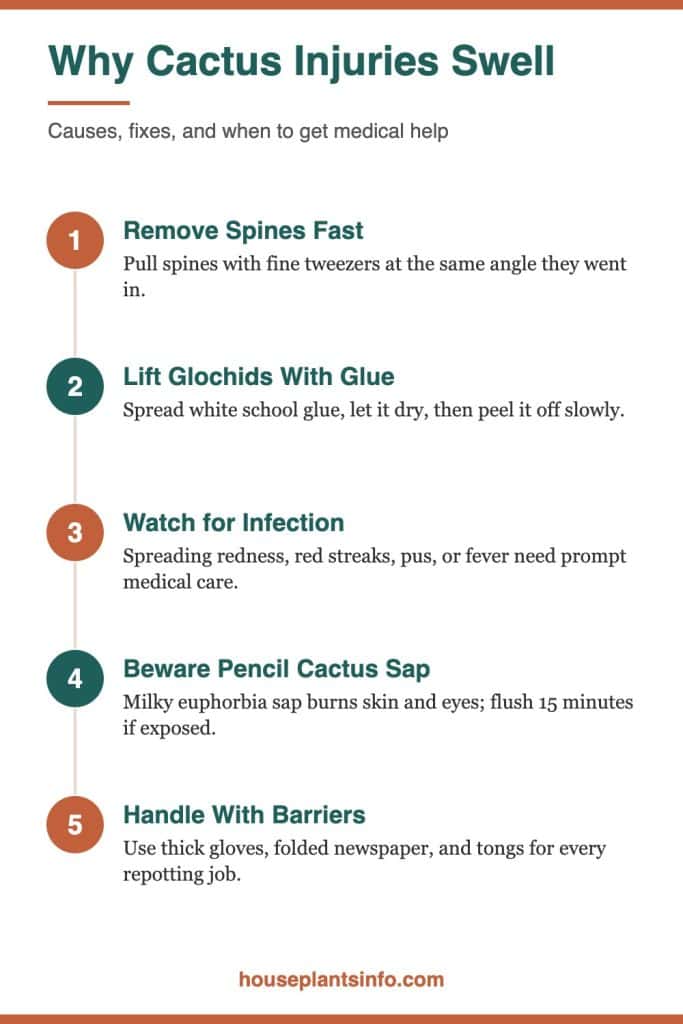
Grip each spine close to the skin with fine-point tweezers. Pull it out slowly at the same angle it went in, so the tip does not snap off below the surface.
- Wash the area with soap and warm water before and after.
- Remove the largest spines first so they do not snag on cloth or tape.
- Avoid squeezing the skin around a spine, which can push it deeper.
- Apply a thin layer of antibiotic ointment and a bandage if the puncture bleeds.
Do not dig with a needle or knife at home if a spine is deep. Probing tends to break the tip and adds to the damage.
When Removal Needs a Professional
Some spines go too deep to reach, especially in the palm, the sole of the foot, or near a knuckle. A doctor or urgent care clinic can remove them with proper tools and lighting.
Get help for any spine in or near the eye, in a joint, or in a spot where the swelling is severe. Eye injuries need same-day care, so do not try to remove anything from the eye yourself.
Glochids From Prickly Pear and Bunny Ears: Cause and Fix
Glochids are tiny, hair-like barbed bristles that grow in tufts on Opuntia cacti such as prickly pear and bunny ears. They detach at the slightest touch and cause itchy, bumpy swelling that can last for days or even weeks if left in.
Why Glochids Are So Irritating
Each glochid is barbed along its length, so it resists being pulled out. Dozens can lodge in your skin from one brush against a pad, creating a patch of small red bumps.
The rash from glochids often itches as much as it swells. If itching is the bigger problem for you, read more about whether a cactus can cause itching and how to calm it.
The Glue and Tape Method
Tweezers alone miss most glochids because they are so fine. A layer of white school glue or a strip of strong adhesive tape pulls many out at once.
- Spread a thin, even layer of white school glue over the area.
- Let it dry completely, usually 20 to 30 minutes.
- Peel it off slowly in one piece, against the direction the glochids entered.
- Repeat with tape if you still feel prickling.
After removal, wash gently with soap and water. Skip rubbing or scrubbing, which breaks off remaining glochids and spreads them.
Keeping the Rash From Spreading
Glochids cling to gloves, sleeves, and kitchen towels long after contact. Shake out fabric outdoors or run it through the wash before touching it again.

Avoid rubbing your eyes or face while working with Opuntia. Glochids that reach the eyelid or face can cause swelling that is harder to treat and needs a doctor.
Sophia’s tip: Keep a roll of wide packing tape near your cactus shelf. Pressing and lifting it across gloves and sleeves after repotting removes loose glochids before they reach your skin or the sofa.
Infection After a Puncture: Cause and Fix
A spine that breaks the skin can carry bacteria from soil and the plant surface into the wound. Infection usually shows as swelling that grows over 1 to 3 days, along with warmth, pain, and sometimes pus.
Signs the Wound Is Infected
Normal irritation peaks within a day and then eases. Infection works the other way, getting more painful and swollen with time.
- Redness spreading out from the puncture
- Skin that feels hot and tight
- Pus, a yellow center, or a throbbing ache
- Red streaks moving up the hand or arm
- Fever, chills, or feeling unwell
Red streaks, fever, or fast-spreading redness need prompt medical care, since a skin infection can travel deeper. A doctor may prescribe antibiotics and check for a retained spine.
Caring for the Wound at Home
For a puncture with mild swelling and no signs of spreading infection, clean it twice a day with soap and water. Apply antibiotic ointment and a clean bandage, and change it when it gets wet.
Raise a swollen hand above heart level when resting. A cool compress for 10 to 15 minutes at a time can ease puffiness and pain.
Checking Your Tetanus Status
Any puncture that involves soil carries a small tetanus risk. The CDC recommends a tetanus helper every 10 years, and a doctor may advise one sooner for a dirty or deep wound.
If you cannot remember your last shot, call your doctor or a pharmacist. This matters most when the spine came from a pot of soil or an outdoor plant.
Delayed Lumps Weeks Later: Cause and Fix
A firm, small bump that appears weeks after a cactus injury is often a foreign-body reaction. The body walls off a spine fragment it cannot remove, forming a hard nodule called a granuloma.
What These Lumps Look Like
Granulomas are usually small, firm, and skin-colored or slightly pink. They can be itchy or sore when pressed, and they tend to sit right where the spine went in.
They may appear anywhere from a couple of weeks to several months after the injury. Many people forget the original prick by then, so think back to recent repotting or plant cleanup.
What to Do About Them
Small, painless bumps sometimes fade on their own as the body breaks down the fragment. Keep the area clean and avoid picking at it.
See a doctor if the lump grows, stays painful, drains, or sits on a joint or tendon. A doctor can confirm the cause and may remove the fragment if it does not settle.
Sap Reactions From Plants Sold as Cactus: Cause and Fix
Some plants sold as cactus are not true cacti, and their sap can cause swelling on contact. The most common example indoors is pencil cactus, a euphorbia with milky sap that irritates skin and eyes.
Pencil Cactus and Other Euphorbias
Euphorbias such as pencil cactus, African milk tree, and crown of thorns release a white, milky latex when cut or broken. This sap can cause redness, burning, blistering, and swelling where it touches skin.
Sap in the eye is a medical emergency. It can cause painful swelling and damage to the eye surface, so flush with clean running water for at least 15 minutes and get care right away.
What to Do After Sap Contact
Wash skin promptly with soap and plenty of cool water. Remove any rings, since swelling on a finger can make them hard to take off later.
- Wear nitrile or rubber gloves and eye protection when pruning euphorbias.
- Lay newspaper under the plant to catch drips.
- Wash pruners right after use so dried sap does not transfer later.
Allergic Reactions
True allergic reactions to cactus are uncommon, but they can happen. Hives, swelling away from the contact spot, or swelling of the lips, face, or throat point to an allergy rather than a simple irritation.
Trouble breathing or throat tightness needs emergency care immediately. Call 911 instead of waiting to see if it improves.
Which Cacti Are Most Likely to Cause Swelling?
Cacti with glochids, long spines, or dense spine clusters cause the most injuries. Smooth or nearly spineless types rarely cause swelling, though any plant handled roughly can scratch.
| Plant | Main hazard | Typical reaction |
|---|---|---|
| Prickly pear (Opuntia) | Glochids and spines | Itchy, bumpy swelling, sometimes lingering rash |
| Bunny ears cactus | Dense glochids, few true spines | Patch of tiny bumps, prickling for days |
| Cholla | Barbed spines on detachable joints | Deep, painful punctures, notable swelling |
| Barrel cactus | Thick, hooked spines | Deep puncture, local swelling |
| Peruvian apple cactus | Sharp spines along ribs | Puncture and local swelling |
| Mammillaria | Small, dense, sometimes hooked spines | Small punctures, hidden spine tips |
| Pencil cactus (euphorbia) | Milky sap | Burning, redness, blistering, eye injury |
| Christmas cactus | Few or no spines | Rarely causes swelling |
Columnar Cacti on the Windowsill
Tall columnar cacti like Peruvian apple cactus lean toward the glass and sit right where you reach to open blinds or windows. Their ribs carry rows of sharp spines, and arms can catch sleeves easily.
If you grow Peruvian apple cactus from cutting, wrap the stem in folded newspaper while cutting and moving it. Fresh cuttings are top-heavy and tend to tip toward your hands.
Pet Safety Around Spiny Plants
Spines and glochids can injure pets’ paws, noses, and mouths, causing the same swelling they cause in people. The ASPCA lists Christmas cactus as non-toxic to cats and dogs, and pencil cactus as toxic to both. Keep spiny and sap-bearing plants on high shelves.

How Do You Handle Cactus Without Getting Hurt?
Most cactus injuries happen during repotting, cleaning, or pest checks, when your hands get close to the spines. Thick gloves, a barrier between you and the plant, and a calm, slow pace prevent nearly all of them.
Gear for Repotting and Pruning
Thick leather gardening gloves stop most spines, though fine glochids can still work through fabric seams. For Opuntia, wear gloves with a smooth coated surface and long sleeves.
- Fold newspaper or a towel into a thick band and wrap it around the stem.
- Use kitchen tongs to lift small cacti and fresh cuttings.
- Keep a dedicated pair of tongs and gloves just for cactus work.
Work at a table with a clear surface so fallen spines are easy to sweep up. A dark towel underneath shows pale spines better than a light one.
Sophia’s tip: Do repotting on a sunny afternoon at a table about 2 to 3 feet from a bright window. Good side light makes pale spines visible, and you can check your gloves before taking them off.
Placement That Prevents Brushes
Set spiny plants where people do not walk past or reach across. Avoid the edge of a sill beside curtains you open daily, or a spot beside a radiator knob you adjust in winter.
Rotate pots with tongs or by the pot rim, never by the stem. When you care for Peruvian apple cactus or any tall species, give it enough clearance that arms do not touch the window frame.
Pest Checks and Cuttings
Checking for pests means looking closely between ribs and areoles, where spines are densest. Use a flashlight and a cotton swab on a long stick rather than your fingers when you look for whether a cactus can get mealybugs hiding in the crevices.
The same care applies to cuttings. Resist the urge to pull a cutting up to look at the base. If you suspect a Peruvian apple cactus not rooting, tip the pot with gloves on and look at the drainage hole instead.
Sophia’s tip: Keep tweezers, a magnifier, white school glue, and bandages together in one small box on your plant shelf. Having them in reach means you remove spines within minutes, before swelling sets in.
Your Next Steps
- Inspect the swollen area under bright light with a magnifier and remove visible spines with fine-point tweezers.
- Use white school glue or adhesive tape to lift glochids from prickly pear or bunny ears.
- Clean the area with soap and water twice daily and watch for spreading redness, red streaks, or fever.
- Check when you last had a tetanus shot, and call your doctor if you are unsure.
- Seek medical care for eye injuries, deep or joint spines, sap in the eye, or any swelling that worsens after 3 days.
- Move spiny plants out of walkways and away from blinds, radiator controls, and pets.
Common Questions About Cactus Swelling
How long does swelling from a cactus spine last?
Mild swelling usually fades within 1 to 3 days once all spines are removed. Swelling that lasts longer or grows often means a fragment is still in the skin or an infection has started. See a doctor if it is not clearly improving by day 3.
Can a cactus spine work its way out on its own?
Very small spines and glochids sometimes push out as skin sheds and renews over days to weeks. Larger or deeper spines often stay put and can cause a firm lump later. Removing them early is the safer choice.
Is cactus swelling dangerous?
Most cactus swelling is minor and local. It becomes serious with signs of infection such as red streaks or fever, with injuries to the eye or a joint, or with an allergic reaction. Swelling of the face or throat or trouble breathing needs emergency care.
Why is my hand swollen days after touching a prickly pear?
Glochids from prickly pear are tiny and barbed, so many stay in the skin unnoticed and keep it irritated. Try the glue or tape method to remove what remains. If the swelling turns hot and painful, have a doctor check for infection.
Should I put ice on a cactus spine injury?
A cool compress for 10 to 15 minutes at a time can ease pain and puffiness after the spines are out. Wrap ice in a cloth rather than placing it directly on the skin. Cold helps symptoms but does not replace removing the spines.

Hi! I’m Sophia, and I love plants – especially an expert in growing house plants. I stay in Chicago, United States of America, and through my blog and social media platforms, provide tips and tricks on how to grow healthy, vibrant plants indoors. Check out more here.