
You are holding a packet of seeds no bigger than ground pepper and wondering how anything that tiny turns into a spiny, sculptural cactus on your windowsill.
Learning how to germinate cactus seeds is mostly about getting moisture, warmth, and light right at the same time, then keeping them steady.
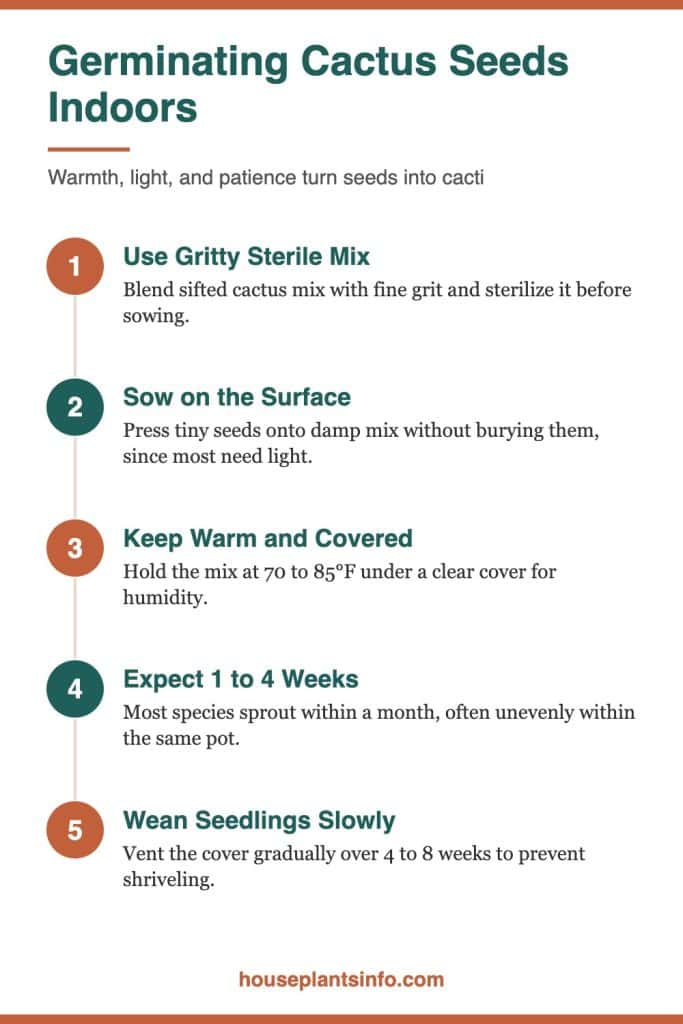
The short version: Sow cactus seeds on the surface of a fine, gritty, pre-moistened mix, cover the container to hold humidity, and keep it at 70 to 85°F under bright, indirect light or a grow light.
Most species sprout in 1 to 4 weeks. Then you slowly remove the cover over several weeks while the seedlings harden off.
This guide covers supplies, soil, a step-by-step sowing method, light and heat, timing, troubleshooting, seedling care, and transplanting.
At a Glance
| Factor | What it needs |
|---|---|
| Light | Bright, indirect light or a grow light for 12 to 14 hours a day; no harsh direct sun on young seedlings |
| Water | Mix kept evenly damp, never soggy; bottom water or mist the surface |
| Humidity | High during germination under a clear cover, then reduced gradually over 4 to 8 weeks |
| Temperature | 70 to 85°F during the day for germination; a slight drop at night is fine |
| Soil | Fine, gritty, fast-draining mix, sifted and sterilized |
| Pet safety | The ASPCA lists Christmas cactus as non-toxic; check your exact species, and keep spiny plants away from curious pets |
| Difficulty | Easy to moderate; patience matters more than skill |
What Do You Need Before You Sow Cactus Seeds?
You need fresh seeds, a shallow container with drainage holes and a clear cover, a fine gritty mix, and a warm, bright spot. Gathering everything first means you can sow, cover, and set the tray in place within minutes.
Choosing Seeds
Freshness matters more than almost anything else. Many cactus seeds stay viable for a few years, but germination rates usually drop as they age. Seeds collected from your own plant’s fruit or bought within the past year tend to sprout most reliably.
Some species are much easier than others. Mammillaria, Echinopsis, Gymnocalycium, and Peruvian apple cactus (Cereus repandus) are forgiving choices for a first sowing. Slower genera like Ariocarpus can take years to reach a decent size.
If you clean seeds from fresh fruit, rinse away all the pulp and let them dry on a paper towel for a few days. Leftover pulp encourages mold once the seeds are sown.
Containers and Covers
Shallow pots 2 to 4 inches deep work well because seedlings have tiny roots at first. Square pots pack neatly into a clear plastic storage box or a seed tray with a humidity dome. A clear plastic bag over a single pot also works.
Heat and Light Setup
In a Chicago apartment, winter windowsills often sit in the low 60s°F near the glass, which slows germination. A seedling heat mat under the tray keeps the mix in the 70s and 80s°F without warming the whole room.
Pair it with an LED grow light on a timer, and your results stop depending on the weather.

A kitchen thermometer placed in the mix lets you confirm the actual temperature. Heat mats can run hotter than expected, so check it during the first day or two.
Sophia’s tip: Label every pot with the species and sowing date using a plastic plant marker and a pencil. Marker ink fades under a dome, and cactus seedlings look nearly identical for months.
Which Soil Mix Works Best for Cactus Seed Germination?
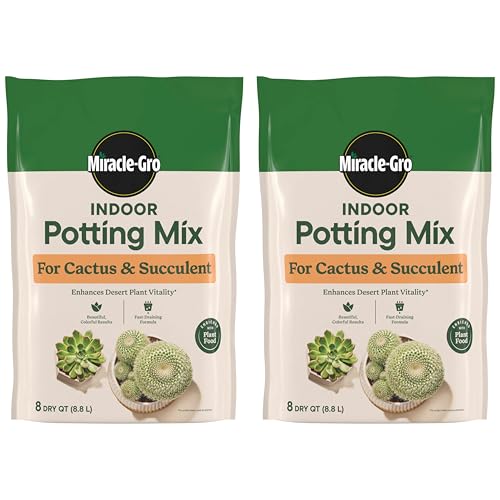
Use a fine, gritty mix that holds light moisture at the surface but drains freely below. Regular potting soil stays too wet and invites rot and fungus, while coarse cactus mix leaves gaps that tiny seeds fall into.
A Simple Seed Mix
A reliable blend is roughly half cactus potting mix and half fine mineral grit, such as small perlite, pumice, or coarse sand. Sift the cactus mix through a kitchen sieve to remove bark chunks and large pieces.
Some growers use a finer layer on top: about a quarter inch of sifted mix or fine grit sits over a coarser base. Seeds contact the fine layer, while the coarse layer below drains excess water.
Sterilizing the Mix
Fungal problems cause most early seedling losses, so sterilizing the mix is worth the effort. Moisten it, place it in an oven-safe dish, cover with foil, and heat at about 180 to 200°F for 30 minutes. Let it cool completely before sowing.
You can also microwave damp mix in a covered container for a few minutes until it steams. Either method reduces fungal spores, fungus gnat eggs, and weed seeds.
Mixes to Avoid
- Plain peat or coir, which stays wet too long and can turn sour under a cover.
- Garden soil, which compacts and carries pests and pathogens.
- Mixes with added fertilizer granules, which can burn tender roots.
How to Germinate Cactus Seeds Step by Step
Pre-moisten the mix, press the seeds onto the surface, cover the container, and place it somewhere warm and bright. Then leave it alone except for daily checks.
Steps 1 to 4: Prepare and Sow
- Fill each pot to about half an inch below the rim with your sterilized mix.
- Set the pots in a tray of water until the surface darkens from moisture, then let them drain for 10 to 15 minutes.
- Sprinkle seeds evenly on the surface, leaving roughly a quarter inch between them if you can. Folding a piece of paper into a crease helps you tap them out slowly.
- Press the seeds gently into the surface with a flat object, such as the bottom of a clean cup. Most cactus seeds need light to germinate, so do not bury them.
Very small seeds should stay fully exposed. Larger seeds, like those of Opuntia or Cereus, can get a light dusting of fine grit just thick enough to hold them in place.
Steps 5 to 8: Cover and Set Up
- Mist the surface lightly to settle the seeds.
- Cover the pots with a dome, clear box, or plastic bag to hold humidity.
- Place the tray on a heat mat or in a warm spot, 70 to 85°F.
- Position it under a grow light or in bright, indirect light, away from direct midday sun.
Optional Seed Soaking
Soaking seeds in room-temperature water for a few hours to overnight can soften the coat and speed germination for some species. Hard-coated seeds like Opuntia often need more, such as lightly sanding the seed coat with fine sandpaper before soaking.
Sophia’s tip: If you grow under a clear cover, check for condensation each morning. Light fogging is ideal, but heavy droplets running down the sides mean the mix is too wet, so crack the lid open for an hour.
What Light and Temperature Do Cactus Seeds Need?
Cactus seeds germinate best at 70 to 85°F with bright, indirect light for 12 to 14 hours a day. Direct sun through glass can overheat a covered tray within an hour, so filtered light or a grow light is safer.
Window Light
An east-facing window gives gentle morning sun that suits most seed trays. With a south or west window, set the tray a few feet back from the glass or behind a sheer curtain. North windows rarely give enough light in a Chicago winter.
Watch for cold glass in winter and AC drafts in summer. Both can drop the mix temperature well below the germination range, even when the room feels comfortable to you.
Grow Lights
An LED grow light is the most consistent option for apartment growers. Hang it about 4 to 8 inches above the cover and set a timer for 12 to 14 hours. If seedlings stretch, look pale, and lean, lower the light or increase the hours.
If seedlings turn reddish or purple, the light is likely too strong. Raise the fixture a few inches. A mild blush is a normal stress response, but deep color means you should back off.
Heat Sources Indoors
Radiators and forced-air vents seem like easy warmth, but they create uneven, drying heat. A pot on a radiator can swing from warm to scorching. A heat mat with steady, gentle warmth works far better.
A modest night drop of 5 to 10°F is fine and may even help some species. Just avoid letting the mix fall below about 65°F for long periods during germination.
How Long Does It Take for Cactus Seeds to Germinate?
Most cactus seeds sprout within 1 to 4 weeks, with some appearing in as little as 3 to 5 days. Slower species can take 6 weeks or longer, and germination is often staggered across the same pot.
Typical Timelines
| Cactus Group | Typical Germination Time |
|---|---|
| Mammillaria | 5 days to 3 weeks |
| Echinopsis and Trichocereus | 5 days to 3 weeks |
| Cereus (Peruvian apple cactus) | 1 to 3 weeks |
| Gymnocalycium | 1 to 4 weeks |
| Astrophytum | 3 days to 2 weeks |
| Opuntia | Several weeks to months, often uneven |
| Ariocarpus | 1 to 4 weeks, very slow growth after |
What Sprouting Looks Like
New cactus seedlings look like tiny green or reddish beads, often with two small seed leaves. They barely resemble cacti at first. Within a few weeks, the first spines or fuzzy areoles appear at the top.
Do not throw out a pot just because a few seeds sprouted and others did not. Keep conditions steady for at least 6 to 8 weeks before deciding the rest will not germinate.
Seeds vs. Cuttings
Seed-grown cacti take patience. A Peruvian apple cactus from seed might be only an inch or two tall after a year. If you want a sizable plant faster, it makes sense to grow Peruvian apple cactus from cutting instead.
Cuttings have their own quirks, though. If yours sits for weeks without roots, this guide on a Peruvian apple cactus not rooting walks through the usual causes.
Seeds Not Sprouting or Seedlings Dying? Causes and Fixes
Most failures come from four things: cold mix, old seeds, buried seeds, or fungus from too much moisture. Each has a clear fix once you identify it.
No Sprouts After Several Weeks
- Cold mix: Measure the temperature at soil level. Add a heat mat if it reads below 70°F.
- Old seeds: Germination drops with age. Sow fresh seeds alongside to compare.
- Buried seeds: Most small seeds need light. Resow on the surface.
- Hard seed coat: Opuntia and similar seeds need scarification or longer soaking.
Mold, Algae, and Damping Off
White fuzz on the surface is usually mold, often growing on leftover fruit pulp or organic bits. Remove it with a cotton swab, increase airflow by venting the cover, and sprinkle a thin layer of fine grit over bare areas.
Green film is algae. It is not directly harmful, but it signals constant wetness and strong light. A grit top layer and slightly drier surface usually slow it.
Damping off is the serious one. Seedlings collapse at the soil line, turn translucent, and die within a day or two. Remove affected seedlings immediately, vent the cover, and let the surface dry slightly between mistings.
Stretching and Pests
Tall, thin, pale seedlings are reaching for more light. Move the tray closer to the window or lower the grow light gradually.
Fungus gnats thrive in damp seed mixes, and their larvae can chew tender roots. Sticky traps and a grit top layer help.
Older seedlings can also attract sap-sucking pests; if you see white cottony clusters, read up on whether can cactus get mealybugs and how to treat them early.
How Do You Care for Cactus Seedlings in the First Year?
Keep seedlings slightly more humid and evenly moist than adult cacti for the first few months, then slowly shift toward normal cactus care. The goal is gradual change in every condition: humidity, light, and watering.
Removing the Cover
Once most seeds have sprouted and show their first spines, start venting the cover. Open it for an hour a day, then a few hours, then most of the day over 4 to 8 weeks.
Dry winter air from forced-air heat makes slow weaning especially important.
If seedlings start to shrivel after you open the cover, close it partway again for another week. Slight wrinkling means they lost moisture faster than their roots could replace it.
Watering Young Cacti
Bottom water whenever the top quarter inch of mix feels dry. Unlike mature cacti, seedlings have almost no stored water and cannot tolerate long drought. After about 6 months, let the mix dry more between waterings.
Light and Feeding
Increase light slowly over several weeks. A sudden move into direct sun can scorch seedlings white or tan within a day. Under grow lights, lower the fixture an inch at a time.
Start feeding after 2 to 3 months with a balanced or cactus fertilizer diluted to a quarter strength, about once a month during spring and summer. Skip feeding in winter, when growth slows.
Sophia’s tip: Run a small clip fan on low across the room, not pointed at the tray, once the cover comes off. Gentle air movement reduces fungal problems and helps seedlings grow sturdier.
Pets and Kids
Seedlings in open trays are easy to knock over or nibble. Keep them on a high shelf or in a closed room.
The ASPCA lists Christmas cactus as non-toxic to cats and dogs, but check your exact species, and remember that spines on older plants can injure paws and mouths.
When and How Should You Transplant Cactus Seedlings?
Transplant cactus seedlings when they are crowded or about the size of a pea to a marble, usually 6 to 12 months after sowing. Many growers leave them together for the first year because groups of seedlings stabilize each other’s moisture.
Signs It Is Time
- Seedlings press against each other or the pot edges.
- Roots appear at the drainage holes.
- Growth slows despite good light and regular water in spring or summer.
How to Transplant
Water lightly a day before so the mix holds together. Use a spoon, chopstick, or small fork to lift a clump, then gently separate seedlings, keeping as much root as possible. Folded paper or soft tweezers protect your fingers from early spines.
Plant each seedling in a 2 to 3 inch pot with standard gritty cactus mix, at the same depth it grew before.
Wait 3 to 5 days before watering so any broken roots can callus, and keep them out of direct sun for about a week.
Moving to Adult Care
After their first transplant, young cacti gradually move to a mature routine: deep watering when the mix dries fully, more direct light, and a cooler, drier winter rest.
Peruvian apple cactus growers can follow a full guide on how to care for Peruvian apple cactus once seedlings outgrow their first pots.
Yellowing at this stage usually points to overwatering, sudden light changes, or root trouble. If your young Cereus shows it, the article on Peruvian apple cactus yellowing explains how to tell the causes apart.
Your Next Steps
- Check your seed packet date and choose an easy species if this is your first sowing.
- Sift and sterilize a gritty mix, then pre-moisten it before sowing.
- Set up a heat mat and grow light on a timer, and confirm the mix reads 70 to 85°F.
- Sow seeds on the surface, cover the pots, and check condensation every morning.
- Begin venting the cover once most seedlings show spines, over 4 to 8 weeks.
- Mark your calendar to evaluate transplanting at 6 to 12 months.
Common Questions About Germinating Cactus Seeds
Do cactus seeds need light to germinate?
Most cactus seeds germinate better with light, which is why they are sown on the surface rather than buried. Bright, indirect light or a grow light for 12 to 14 hours a day works well. Larger seeds can take a very light dusting of grit.
Can I germinate cactus seeds in a plastic bag?
Yes, a clear plastic bag sealed over a pot holds humidity effectively. Keep it out of direct sun, since bags trap heat quickly. Open it briefly each day if heavy condensation builds up.
Why are my cactus seedlings turning red?
Red or purple tones usually mean the light is too intense. Raise your grow light a few inches or move the tray farther from a sunny window. A faint blush is normal and harmless.
How often should I water cactus seeds before they sprout?
Keep the mix evenly damp but never soggy, usually misting the surface every day or two under a cover. Bottom watering works if the surface starts to lighten in color. A sealed cover often means you rarely need to add water at all.
Can I germinate cactus seeds in winter?
Yes, as long as you provide warmth and light. A heat mat and grow light make winter sowing reliable even in a cold apartment. Keep the tray away from drafty windows and radiators.

Hi! I’m Sophia, and I love plants – especially an expert in growing house plants. I stay in Chicago, United States of America, and through my blog and social media platforms, provide tips and tricks on how to grow healthy, vibrant plants indoors. Check out more here.