
You are looking at a cactus on your windowsill that has grown too tall, dropped a pad, or sprouted a cluster of pups, and you are wondering if those pieces could become new plants.
They can, and this step-by-step guide for growing cactus from cuttings walks you through the process from the first cut to the first watering of a rooted plant.
The short version: Cut a healthy stem, pad, or offset with a clean, sharp knife, then let the cut end dry for several days to a few weeks until it forms a firm callus.
Set it in a dry, gritty cactus mix in bright indirect light, and hold off on regular watering until roots form, usually in 2 to 6 weeks.
This guide covers which cacti root easily, the best timing, how to cut, the full rooting process, troubleshooting, and aftercare.
At a Glance
| Factor | What it needs |
|---|---|
| Light | Bright indirect light; an east window or 2 to 3 feet back from a south or west window |
| Water | None until roots form, then a deep soak only when the mix is fully dry |
| Temperature | 70 to 80°F for fastest rooting; keep above 60°F |
| Soil | Fast-draining cactus mix with 30 to 50 percent added perlite or pumice |
| Humidity | Normal room humidity; dry winter air is fine |
| Pet safety | Varies by species; spines are a physical hazard for pets and kids |
| Difficulty | Easy for most common species |
Which Cacti Can You Grow From Cuttings?
Most columnar, jointed, and clumping cacti root readily from cuttings or offsets. Solitary globe cacti that never branch are better grown from seed, and grafted cacti need special handling.
Before you start, gather a clean, sharp knife or pruning saw, rubbing alcohol to sterilize the blade, and a small terracotta pot with a drainage hole.
Thick leather gloves, kitchen tongs, or a folded strip of newspaper keep spines out of your hands while you work.
Easy Choices for Beginners
These cacti root reliably and forgive small mistakes:
- Prickly pear and bunny ear cactus (Opuntia), grown from whole pads
- Christmas, Thanksgiving, and Easter cactus, grown from 2 to 3 segment pieces
- Peruvian apple cactus and other Cereus species, grown from stem sections
- Hedgehog and Easter lily cactus (Echinopsis), grown from offsets
- Many Mammillaria species, grown from the pups that form around the base
- Orchid cactus (Epiphyllum), grown from flat leaf-like stems
Cacti That Need More Care or a Different Method
Slow, solitary globes such as many Ferocactus and Astrophytum species rarely produce material you can safely cut. Removing the top would leave the parent scarred and may not produce a viable cutting.
Grafted moon cacti are a special case. The colorful red or yellow top has little or no chlorophyll, so it cannot feed itself on its own roots and must stay grafted to a green rootstock.
A Note on Pet Safety
The ASPCA lists Christmas cactus as non-toxic to cats and dogs, but toxicity varies by species, and some plants sold as “cactus” are not true cacti. The pencil cactus, a Euphorbia, is listed by the ASPCA as toxic.

For any spiny species, set drying cuttings well out of reach of curious pets and kids.
When Is the Best Time to Take Cactus Cuttings?
Late spring through early summer is the best time, because cacti are actively growing and warm temperatures speed root formation. Cuttings taken in this window often root weeks faster than winter cuttings.
Why Spring and Summer Work Best
Indoors, longer days and warmer rooms wake cacti from their winter rest. Active plants heal their cut surfaces quickly, and the cutting has stored energy to put into new roots.
The parent plant also recovers faster in the growing season. New growth or offsets typically appear near the cut within one season.
When to Hold Off
Avoid taking cuttings in these situations:
- During winter dormancy, roughly November through February in most homes
- When the parent is stressed, wrinkled, discolored, or recently repotted
- When the plant shows signs of pests, rot, or fungal spots
- During a heat wave above 90°F, when the cut can scorch before it heals
- Right before or during flowering for holiday cacti, which bloom in cool months
Can You Propagate in Winter Indoors?
You can, especially if your apartment stays warm. Place the cutting in a bright spot away from cold window glass, or under a grow light set to run 12 to 14 hours a day.

Expect slower rooting. Keep cuttings away from radiators and forced-air vents, which can overheat and dry the tissue unevenly.
How Do You Take a Cactus Cutting Without Hurting the Parent?
Make one clean cut at a natural joint or at least a few inches above the base, using a sterilized blade. Clean cuts heal faster and are far less likely to rot than torn or crushed tissue.
Cutting Columnar and Branching Cacti
Choose a healthy stem section at least 4 to 6 inches long. Cut straight across or at a slight angle, and leave enough of the parent behind to regrow.
Some growers bevel the edge of the cut stem into a shallow point, like sharpening a pencil. This helps the cut end callus evenly and reduces the chance of the center sinking in as it dries.
Removing Pads, Segments, and Offsets
For prickly pear and bunny ear cactus, twist or cut the pad off at the joint where it meets the pad below. Holiday cacti separate cleanly with a gentle twist between segments.
Offsets, also called pups, can be wiggled free or cut where they attach to the mother. If a pup already has a few roots, keep them; it will establish even faster.
Sophia’s tip: Before you cut a tall columnar cactus, draw a small arrow pointing up on the stem with a soft pencil or a piece of tape.
Stem cuttings must be planted right side up, and pieces look identical once they are lying on a table.
Caring for the Parent After Cutting
Keep the parent dry for about a week so its own wound can callus. Return it to its usual spot, but avoid direct afternoon sun on the fresh cut.
Most parents respond by sprouting new branches near the cut. That is a nice bonus if your plant was getting lopsided or leaning.
A Step-by-Step Guide for Growing Cactus From Cuttings
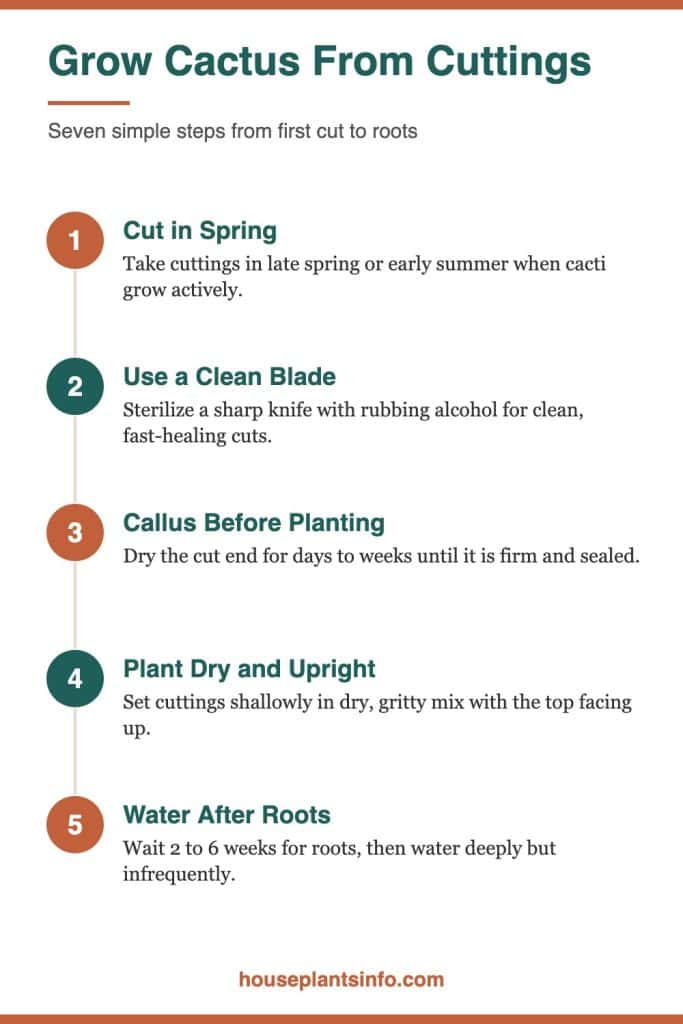
The process comes down to drying, planting dry, waiting for roots, and only then watering. Follow these steps in order and most common species will root without trouble.
Step 1: Let the Cutting Callus
Lay the cutting on a paper towel or tray in a dry, shaded, well-ventilated spot. Small pads and segments usually callus in 3 to 7 days, while thick stems can take 2 to 4 weeks.
The cut end is ready when it looks dry, firm, and slightly sealed, with no wet or sticky surface. Large columnar cuttings can rest upright in an empty pot so they dry straight.
Step 2: Prepare a Gritty Mix and Pot
Use a commercial cactus mix and add 30 to 50 percent perlite or pumice for extra drainage. Pick a pot only slightly wider than the cutting, with a drainage hole.
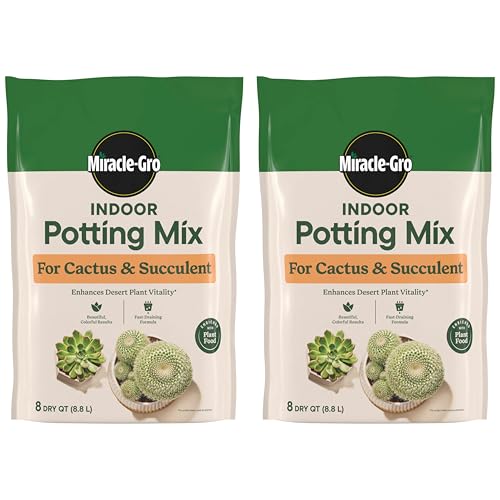
Terracotta is a good choice because it wicks moisture away from the root zone. Fill the pot and leave the mix dry.
Step 3: Dip in Rooting Hormone (Optional)
Rooting hormone powder can speed root formation, but most cacti root well without it. If you use it, dust only the callused tip and tap off the excess.
Step 4: Plant Shallowly and Upright
Set the callused end about 1 to 2 inches deep, just enough to hold the cutting upright. Pads go in edge-down, with about a quarter to a third of the pad buried.
Tall or top-heavy cuttings may need support. Prop them with small rocks, a few chopsticks, or a stake loosely tied with soft twine.
Step 5: Place in Bright Indirect Light
An east window works well, as does a spot 2 to 3 feet back from a south or west window. Without roots, the cutting cannot replace water lost to strong sun, so avoid direct midday rays on the glass.
Under a grow light, position the light about 12 inches above the cutting. Keep the room between 70 and 80°F if you can.
Step 6: Hold Off on Watering
Do not water the mix for the first 1 to 3 weeks. The cutting lives on stored water, and wet soil around an unrooted stem is the most common cause of rot.
If your air is very dry in winter, you may lightly mist the soil surface once a week. Never soak the pot at this stage.
Step 7: Check for Roots, Then Water
After 2 to 3 weeks, give the cutting a very gentle tug. Resistance means roots have formed, and you can give the pot a light first watering.
If you are working with a columnar species, the process for how to grow Peruvian apple cactus from cutting follows the same steps with a few size-specific details.
Rooting in Water: Does It Work?
Some people root cactus cuttings by suspending the callused tip just above water. It can work for holiday cacti and some Opuntia, but water roots are fragile and adapt poorly to soil.
I recommend dry rooting in a gritty mix for nearly all cacti. It is simpler and has a lower risk of rot.
How Long Does It Take for a Cactus Cutting to Grow Roots?
Most cactus cuttings grow roots in 2 to 6 weeks under warm, bright conditions. Large columnar cuttings or cuttings taken in winter can take 2 to 3 months or longer.
Typical Rooting Times by Type
| Cutting type | Callus time | Typical rooting time |
|---|---|---|
| Holiday cactus segments | 1 to 3 days | 2 to 4 weeks |
| Opuntia pads | 5 to 10 days | 3 to 6 weeks |
| Offsets and pups | 2 to 7 days | 2 to 4 weeks |
| Thin columnar stems | 1 to 2 weeks | 4 to 8 weeks |
| Thick columnar stems | 2 to 4 weeks | 6 to 12 weeks |
What Speeds Up or Slows Down Rooting
Warmth is the biggest factor. Cuttings near a cold window in a Chicago January may sit for months, while the same cutting at 75°F roots quickly.
Bright light, a well-formed callus, and a healthy parent all help. Cool temperatures, low light, and overwatering slow everything down.
Sophia’s tip: Set rooting pots on a seedling heat mat set to about 75°F if your apartment runs cool. Keep the mat away from radiators so the soil does not overheat.
Signs Your Cutting Has Rooted
The clearest sign is new growth at the tip, a new pad, or fresh spines emerging. A rooted cutting also feels anchored when you nudge it.
A cutting may shrivel slightly while rooting. Once roots form and you start watering, it should plump back up within a week or two.
Why Is My Cactus Cutting Rotting, Shriveling, or Not Rooting?
Rot almost always comes from moisture before the callus or roots are ready. Shriveling and stalling usually mean the cutting is too cold, too dark, or simply slow.
Soft, Black, or Mushy Base: Rot
Cause: The cutting was planted before it callused, or the mix stayed wet. Cool temperatures make rot more likely.
Fix: Remove the cutting, cut above the rotted area into clean, firm green tissue, and sterilize the blade between cuts. Let it callus again and replant in fresh, dry mix.
Wrinkled or Thin Cutting: Dehydration
Cause: Some shriveling is normal, but severe wrinkling means the cutting has used its stored water. Strong sun, radiators, or forced-air heat speed this up.
Fix: Check gently for roots. If roots are present, water lightly; if not, move the pot to a cooler, brighter spot out of direct sun and wait.
Weeks With No Change: Stalled Rooting
Cause: Low temperatures, winter dormancy, or weak light. Very thick cuttings are also slow by nature.
Fix: Move the pot somewhere warmer, add a grow light, and be patient. As long as the cutting is firm and green, it is still alive.
Leaning, Stretching, or Pests
Cuttings in dim spots often lean toward the window, the same issue behind a cactus growing sideways. Rotate the pot a quarter turn weekly and improve the light.
Pads that come out thin and elongated point to low light, a problem covered in this guide on bunny ear cactus growing long and skinny.
Pests can also travel on cuttings, so if you spot white cottony tufts, read up on whether can cactus get mealybugs and how to treat them.
How Do You Care for a Newly Rooted Cactus?
Treat a newly rooted cactus like a young adult plant: deep, infrequent watering, bright light, and a gradual move toward stronger sun. Wait about a month before repotting or fertilizing.
Watering After Rooting
Water thoroughly until it drains from the bottom, then let the mix dry completely before watering again. Indoors this usually means every 1 to 3 weeks in spring and summer.
In winter, cut back to every 3 to 6 weeks, or less in a cool room. Empty saucers so the pot never sits in water.
Moving Toward Brighter Light
Over 2 to 3 weeks, move the cactus closer to its permanent window. A south or west window suits most desert species, while holiday cacti prefer an east window or filtered light.
Sudden full sun can scorch young tissue, leaving pale or tan patches. Gradual exposure lets it build tolerance.
Sophia’s tip: Keep new cactus plants at least 6 inches from the window glass in summer if you run the AC, and in winter if the glass gets cold. Both drafts and cold surfaces can stress young roots.
Feeding and Repotting
After about a month of steady growth, feed with a cactus fertilizer diluted to half strength once a month in spring and summer. Skip feeding in fall and winter.
Repot only when roots fill the pot, usually after a year or more. For species-specific advice, here is how to care for Peruvian apple cactus as it matures.
Your Next Steps
- Pick a healthy, well-hydrated parent cactus and plan your cut for late spring or early summer.
- Sterilize a sharp knife with rubbing alcohol and mark the top of any stem cutting.
- Let the cutting callus fully in a dry, shaded spot before planting.
- Plant it upright and shallowly in dry, gritty cactus mix in a terracotta pot.
- Place it in bright indirect light at 70 to 80°F and wait 2 to 3 weeks before the first gentle watering.
- Check for roots with a light tug, then shift to deep, infrequent watering.
Common Questions About Growing Cactus From Cuttings
Can I plant a cactus cutting right away without letting it callus?
It is risky, because an open wound absorbs moisture from the soil and rots easily. Holiday cactus segments are a partial exception and only need a day or two of drying. For all other cacti, wait until the cut end is dry and firm.
Should I water a cactus cutting after planting it?
No, keep the mix dry until roots form, usually 1 to 3 weeks after planting. The cutting relies on stored water during this time. Once you feel resistance with a gentle tug, give it a light first watering.
Can I grow a cactus from a broken piece?
Yes, as long as the piece is firm, green, and free of rot. Trim the break into a clean cut with a sterilized knife, then callus and plant it like any other cutting. Pieces that are soft, translucent, or discolored should be discarded.
Does a cactus cutting need sunlight to root?
It needs bright light but not harsh direct sun. An east window or a spot a few feet back from a south or west window works well. A grow light running 12 to 14 hours a day is a good substitute in dark winter months.
Why is my cactus cutting turning yellow?
Yellowing at the base often signals rot from too much moisture, while overall paling can mean too much direct sun. Check the base for softness first. If it is firm, move the cutting to softer light and keep the mix dry.

Hi! I’m Sophia, and I love plants – especially an expert in growing house plants. I stay in Chicago, United States of America, and through my blog and social media platforms, provide tips and tricks on how to grow healthy, vibrant plants indoors. Check out more here.