
You glance at the fiddle leaf fig by your window and notice the big violin-shaped leaves look flat, gray, and faintly dusty instead of deep green and glossy.
If you are wondering how to make fiddle leaf fig leaves shiny again, the answer is simpler and gentler than most shine products suggest.
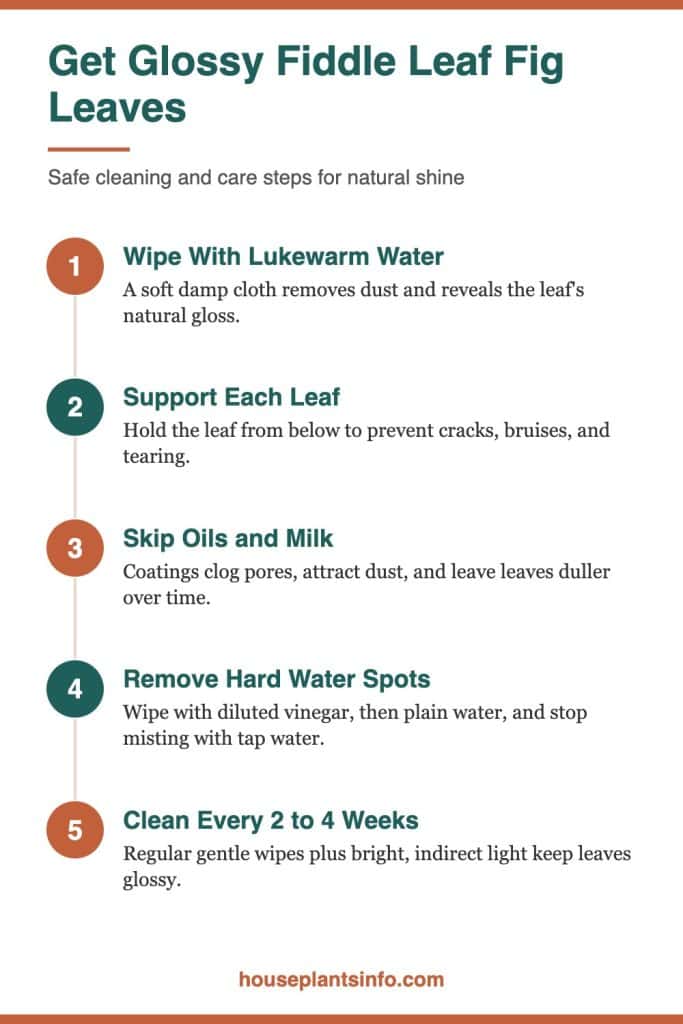
The short version: Wipe each leaf with a soft cloth dampened in lukewarm water, supporting the leaf from below, and dry off any standing drops.
A healthy fiddle leaf fig has a naturally waxy, glossy surface, so removing dust usually restores the shine. Skip oils, milk, and heavy shine sprays, which can clog the leaf surface and attract more dust.
This guide covers why leaves go dull, the safest cleaning methods, what to avoid, how to deal with water spots and pests, and the care habits that keep the gloss coming back.
At a Glance
| Factor | What it needs |
|---|---|
| Light | Bright, indirect light; a few feet from a south or west window, or right at an east window |
| Water | Water when the top 1 to 2 inches of soil are dry; drain fully |
| Humidity | 40 to 60 percent is ideal; tolerates average indoor air |
| Temperature | 60°F to 85°F; keep away from drafts and radiators |
| Soil | Chunky, fast-draining potting mix in a pot with drainage holes |
| Pet safety | Ficus sap is irritating; the ASPCA lists ficus species such as weeping fig as toxic to cats and dogs |
| Difficulty | Moderate; dislikes sudden changes |
Why Do Fiddle Leaf Fig Leaves Lose Their Shine?
Most dull fiddle leaf fig leaves are simply dusty. The large, flat, upward-facing leaves act like shelves, collecting dust, pet dander, cooking residue, and lint from the air.
Dust and Household Film
Forced-air heat and AC both move a lot of fine dust through an apartment. Over a few weeks, that dust settles into a gray film that hides the natural gloss.
A quick test: run a clean microfiber cloth across one leaf. If the cloth comes away gray and the wiped stripe looks greener, dust is your main problem.
Mineral Residue From Water
If you mist with tap water or splash leaves while watering, the drops can dry into white or chalky spots. Hard water leaves calcium and magnesium deposits that build up into a dull, crusty layer over time.
Stress and Pests
Sometimes dullness comes from the plant itself. Spider mites cause a fine stippled, bronzed look, and scale leaves sticky honeydew.
A plant short on light or water may also grow smaller, thinner, less glossy leaves. Before you clean, look closely at the leaf with a small magnifying glass, especially along the veins and undersides.
Age of the Leaf
New leaves often emerge a lighter, softer green and develop their full gloss as they mature. Very old lower leaves may naturally lose some luster before they drop. That is normal, and no cleaning method will fully reverse leaf age.
How to Make Fiddle Leaf Fig Leaves Shiny With Water and a Soft Cloth
The most reliable method is a gentle wipe with lukewarm water and a soft cloth. It removes dust without stripping the leaf’s natural waxy layer, and it costs nothing.
What You Need
- A soft microfiber cloth or a clean cotton cloth
- A bowl of lukewarm water, ideally filtered, distilled, or rainwater
- A second dry cloth
- An old towel or sheet to protect the floor
Filtered or distilled water is worth using if your tap water leaves white marks on faucets or glasses. Cold water can shock the leaf surface, so aim for room temperature or slightly warmer.
The Step-by-Step Wipe
- Dry-dust first. Lightly brush off loose dust with a dry cloth or soft brush so you are not just smearing mud.
- Dampen the cloth. Dip it in water and wring it out until it is barely damp, not dripping.
- Support the leaf. Place one hand flat under the leaf so it does not bend or crack at the stem.
- Wipe from stem to tip. Use slow, gentle strokes along the direction of the veins.
- Clean the underside. Wipe the back of the leaf too, since pests hide there.
- Dry the leaf. Pat off any standing water with the dry cloth.
- Rinse your cloth often. Swap to a clean section every few leaves so you are not moving dust around.
For more methods and detail, see these ways to clean fiddle leaf fig leaves.

Adding a Mild Soap When Needed
If plain water does not cut a sticky or greasy film, especially near a kitchen, add a few drops of mild, unscented liquid dish soap to about a quart of water.
Wipe with the soapy cloth, then follow with a plain-water cloth so no residue stays on the leaf.
Sophia’s tip: Clean in the morning so leaves dry fully before evening. In a cool apartment with the heat off at night, damp leaves sitting for hours are more prone to spotting.
Should You Shower or Rinse the Whole Plant?
A lukewarm shower works well for smaller fiddle leaf figs or a plant with heavy dust on dozens of leaves. Larger plants are usually easier and safer to wipe by hand.
When a Shower Makes Sense
Showering is useful if the plant is short enough to move, has many small leaves, or has a light pest problem you want to knock back. A gentle spray rinses both sides of every leaf in a few minutes.
How to Do It Safely
- Use lukewarm water and a gentle shower setting, never a hard jet.
- Cover the soil with a plastic bag or wrap to avoid soaking the root ball, unless the plant is due for watering anyway.
- Tilt the plant slightly so water runs off the leaves.
- Let the pot drain completely in the tub before returning it to its spot.
- Pat leaves dry, or let the plant air-dry in bright, indirect light, out of direct sun.
When to Skip the Shower
Skip it for tall plants over about 4 feet, which are awkward to move and easy to damage at the trunk. Fiddle leaf figs also dislike being relocated, and repeated moves can trigger leaf drop.
If your plant has just shed leaves after a move, let it settle for a few weeks first.
Do Leaf Shine Sprays, Oils, or Milk Work?
They can make leaves look glossy for a short time, but most of them do more harm than good. A clean, healthy leaf is already shiny, so added coatings are rarely needed.
Why Coatings Cause Problems
Leaves exchange gases and release moisture through tiny pores called stomata, located mostly on the leaf underside. Oils, waxes, and residues can clog these pores and coat the surface. Sticky films also catch dust faster, so leaves end up duller sooner.
Common Home Remedies Compared
| Method | Short-term look | Risk | Verdict |
|---|---|---|---|
| Plain lukewarm water | Restores natural gloss | Very low | Best choice |
| Water plus mild soap, then rinse | Cuts grease | Low if rinsed | Good for kitchen grime |
| Diluted neem oil | Light sheen | Can burn leaves in sun or heat | Use only for pests, sparingly |
| Mayonnaise or vegetable oil | Very shiny | Clogs pores, attracts dust, can turn rancid | Avoid |
| Milk and water | Mild sheen | Residue, odor, possible mold | Avoid |
| Banana peel rub | Slight gloss | Sticky residue, attracts fruit flies | Avoid |
| Commercial leaf shine spray | Shiny | Waxy buildup, can damage new leaves | Rarely, and only if labeled safe |
If You Still Want Extra Gloss
If you use a commercial leaf shine, choose one labeled for indoor foliage plants, apply a very light amount to the upper surface only, and avoid new, soft leaves.
In my opinion, the risk is not worth it for a plant whose leaves are glossy on their own.
Sophia’s tip: Never wipe or spray leaves while the plant sits in direct afternoon sun. Water or oil droplets on warm leaves can leave scorch marks, especially on south and west windows.
Dull Leaves From Hard Water Spots: Cause and Fix
White spots or a chalky haze usually mean mineral deposits from tap water. The fix is a mild acidic wipe, followed by changing how you water and mist.
Removing the Spots
Mix about 1 tablespoon of white vinegar or lemon juice into 1 quart of lukewarm water. Dampen a soft cloth, wipe the spotted areas gently, then wipe again with plain water. Dry the leaf afterward.
Do not scrub hard. Fiddle leaf fig leaves bruise and scratch easily, and brown marks from rough handling are permanent.
Preventing New Spots
- Water at the soil, not over the leaves.
- Stop misting with tap water. Misting raises humidity only briefly and mostly leaves residue.
- Use filtered or distilled water for cleaning.
- If you want higher humidity, use a humidifier a few feet from the plant instead.
Dull Leaves From Pests or Disease: Cause and Fix
If cleaning does not restore the shine, check for pests. Spider mites, scale, mealybugs, and thrips can all leave leaves dull, speckled, or sticky.
Signs to Look For
- Spider mites: tiny pale speckles, a bronzed look, and fine webbing on undersides. They thrive in dry winter air near radiators.
- Scale: small brown or tan bumps along stems and veins, plus sticky honeydew.
- Mealybugs: white, cottony clusters in leaf joints and along veins.
- Thrips: silvery streaks, black specks, and distorted new growth.
Treating the Problem
- Isolate the plant from other houseplants.
- Wipe both leaf surfaces with a cloth dampened in mild soapy water.
- Remove scale and mealybugs with a cotton swab dipped in rubbing alcohol.
- Follow with insecticidal soap or diluted neem oil according to the label, repeating every 5 to 7 days for several weeks.
- Keep the plant out of direct sun while treated leaves are wet.
Damage that has already happened will not heal, and some pests leave small holes or torn spots behind. If that is what you see, read about fiddle leaf fig leaves with holes and their causes and solutions.
Bacterial or Fungal Spots
Dark brown spots with yellow halos, especially on lower leaves and in soggy soil, often point to root rot or bacterial leaf spot. These do not respond to cleaning. Cut back on watering, improve drainage, and remove badly affected leaves with clean pruners.
How Light, Water, and Humidity Keep Leaves Glossy
Cleaning reveals the shine, but good care creates it. A well-lit, evenly watered fiddle leaf fig grows thicker, darker, glossier leaves than a stressed one.
Light
Fiddle leaf figs need bright, indirect light for several hours a day. An east window works well, as does a spot 3 to 5 feet back from a south or west window.
In a north-facing Chicago apartment in winter, a full-spectrum grow light placed 12 to 24 inches above the canopy helps.

Low light produces smaller, thinner, paler leaves. Rotate the pot a quarter turn every week or two so all sides get light evenly.
Water
Water thoroughly when the top 1 to 2 inches of soil are dry, then let the pot drain fully. Do not leave the pot sitting in a saucer of water. Inconsistent watering causes stress that shows up as brown edges, drooping, and leaf drop.
Overwatering and poor drainage are common reasons for discolored foliage. If leaves are fading from green, see why are the leaves of my indoor potted fiddle leaf fig tree turning yellow.
Humidity and Temperature
Average indoor humidity is usually fine, but winter heating can drop it to 20 or 30 percent. Very dry air can make leaf edges crispy and invite spider mites. A humidifier set nearby helps more than misting.
Keep the plant between 60°F and 85°F, away from radiators, heating vents, cold window glass, and AC drafts. Leaves that cup or roll inward often signal dry air, thirst, or temperature stress.
For more on that, see why are the leaves of my fiddle leaf fig tree curling up.
Feeding
During spring and summer, feed every 2 to 4 weeks with a balanced liquid houseplant fertilizer diluted to half strength. Skip or reduce feeding in fall and winter when growth slows. Underfed plants can produce pale leaves, while overfeeding causes salt buildup and brown edges.
How Often Should You Clean, and When Should You Skip It?
Most fiddle leaf figs need a gentle wipe every 2 to 4 weeks. Dustier homes, homes with pets, and plants near kitchens or forced-air vents may need it more often.
A Simple Schedule
| Situation | How often to wipe |
|---|---|
| Typical apartment | Every 3 to 4 weeks |
| Near heating vents or AC | Every 2 weeks |
| Homes with shedding pets | Every 2 weeks |
| Near the kitchen | Every 1 to 2 weeks, with mild soap as needed |
| Active pest treatment | Every 5 to 7 days |
When to Hold Off
- Brand-new leaves: they are soft and tear easily, so wait until they harden off and darken, usually a few weeks.
- Right after repotting or moving: let the plant adjust first.
- In direct hot sun: wait until the plant is shaded.
- When leaves are yellowing or dropping: fix the care problem first, and see this guide to fiddle leaf fig yellow leaves.
Sophia’s tip: Pair leaf cleaning with your watering check. If you are already testing the top inch of soil every week or so, wiping a few leaves at the same time keeps dust from ever building up.
Handling Safely Around Pets and Kids
Fiddle leaf figs release a milky sap when leaves or stems are damaged. It can irritate skin and the mouth, so wear gloves if you have sensitive skin, and wipe up any sap drips.
The ASPCA lists ficus species such as weeping fig as toxic to cats and dogs, so keep fallen leaves and trimmings away from pets and small children.
Your Next Steps
- Run a clean microfiber cloth over one leaf to confirm whether dust is the cause of the dull look.
- Wipe every leaf, top and bottom, with lukewarm filtered water while supporting it from below.
- Check undersides and stems for speckling, bumps, webbing, or sticky residue, and treat any pests promptly.
- Stop misting with tap water and switch to watering at the soil line.
- Move the plant to bright, indirect light, away from radiators, vents, and drafts.
- Set a reminder to wipe the leaves every 2 to 4 weeks.
Common Questions About How to Make Fiddle Leaf Fig Leaves Shiny
Can I use olive oil or coconut oil to shine fiddle leaf fig leaves?
It is better not to. Oils coat the leaf surface, can clog pores, and attract dust, so leaves end up duller within days. Plain lukewarm water on a soft cloth restores the natural gloss without any buildup.
Is it safe to use mayonnaise on plant leaves?
No. Mayonnaise leaves an oily, protein-rich film that can block pores, turn rancid, and draw pests. It is an old trick that looks shiny briefly but does not help the plant.
Why are my fiddle leaf fig leaves still dull after cleaning?
Check for pests first, especially spider mites and scale, which cause speckling or stickiness. If there are no pests, low light, inconsistent watering, or normal leaf age may be the cause. Better light and steady care usually bring glossier new growth.
Should I clean the undersides of the leaves too?
Yes. The undersides hold most of the leaf’s pores and are where pests like spider mites hide. A quick wipe there keeps the leaf breathing well and helps you spot problems early.
Can I use baby wipes to clean my fiddle leaf fig?
Most baby wipes contain fragrances, lotions, or preservatives that can leave residue on leaves. If you use one, choose an unscented, water-based type and follow with a plain damp cloth. A microfiber cloth and water is still the safer option.

Hi! I’m Sophia, and I love plants – especially an expert in growing house plants. I stay in Chicago, United States of America, and through my blog and social media platforms, provide tips and tricks on how to grow healthy, vibrant plants indoors. Check out more here.