
Your Madagascar dragon tree has grown tall and bare at the base, with a tuft of thin red-edged leaves bobbing near the ceiling.
If you have been wondering how to propagate Madagascar dragon tree stems instead of letting the plant keep stretching, the answer is simpler than it looks. One cut can give you a shorter parent plant and several new ones.
The short version: Cut a 4 to 8 inch stem tip or a section of bare cane, let it dry for a day, then root it in water or moist, gritty soil in bright, indirect light at 65 to 80°F.
Roots usually appear in 3 to 8 weeks, and the cut parent stem will sprout new heads below the wound.
This guide covers what to prepare, the three reliable methods, potting up, aftercare for the parent plant, and how to fix cuttings that stall or rot.
At a Glance
| Factor | What it needs |
|---|---|
| Light | Bright, indirect light, 3 to 6 feet from an east or west window, or under a grow light |
| Water | Fresh water changed weekly for jar rooting; evenly moist, never soggy, soil for pot rooting |
| Humidity | 40 to 60 percent helps; keep cuttings away from radiators and forced-air vents |
| Temperature | 65 to 80°F; rooting slows sharply below 60°F |
| Soil | Light, fast-draining mix such as potting soil with perlite or coarse sand |
| Pet safety | Toxic to cats and dogs per the ASPCA |
| Difficulty | Easy; stem cuttings root reliably in warm months |
What Do You Need Before You Cut?
You need a healthy parent plant, a sharp clean blade, and a warm, bright spot where cuttings can sit undisturbed for a month or two.
Spring and early summer give the fastest results, though indoor plants can be propagated any time the room stays above 65°F.
Gather Your Supplies
Clean pruning shears or a sharp knife make a smooth cut that seals quickly. Wipe the blade with rubbing alcohol before you start, and again between plants. Crushed or torn stems invite rot, so skip dull scissors.
For rooting, a clear glass jar lets you watch roots form, while a small pot with drainage holes works for soil rooting.
A powdered rooting hormone is optional; dragon tree roots well without it, but it can shorten the wait slightly and helps cane sections in cooler rooms.
Pick the Right Stem
Choose a stem that is firm, green or red-brown at the bark, and topped with healthy leaves. Avoid stems that feel soft, wrinkled, or hollow near the base, since those may already have rot inside.
If your plant is stressed from dry soil or recent repotting, water it well and wait a week or two. Cuttings taken from a hydrated, actively growing plant root faster.
Check Your Indoor Conditions
A Chicago winter apartment is often 20 to 30 percent humidity with radiators running hot. That is too dry and too uneven for rooting on a windowsill above a heater.
A shelf 3 to 5 feet from a bright window, or a spot under a grow light for 12 to 14 hours a day, works better.

Also check for cold glass. In winter, the air right against a window can drop below 55°F at night, which stalls root growth.
Which Propagation Method Should You Use?
Use top cuttings if you want a ready-made plant with leaves, cane sections if you want several plants from one tall stem, and air layering if you want the safest option for a valuable plant.
Seeds are rarely available and very slow, so most indoor growers skip them.
| Method | Best for | Time to roots | Success rate indoors |
|---|---|---|---|
| Top (tip) cutting | Shortening a leggy plant and getting an instant leafy plant | 3 to 6 weeks in water, 4 to 8 weeks in soil | High |
| Cane sections | Turning one bare stem into several plants | 4 to 10 weeks for roots and buds | Moderate to high |
| Air layering | Very tall or prized plants; no risk to the cutting | 4 to 8 weeks for roots on the stem | High, but more effort |
| Leaf cuttings | Not viable | Never roots into a plant | None |
Why Leaves Alone Will Not Work
A single dragon tree leaf has no growth node to produce a new stem. It may stay green in water for weeks, but it will never become a plant. Always include a piece of the woody stem.
Water Versus Soil
Water rooting lets you see progress and is very forgiving for beginners. Soil rooting produces sturdier roots that do not need to adjust after transplanting. Both work; pick the one you will check on consistently.
How to Propagate Madagascar Dragon Tree From Top Cuttings
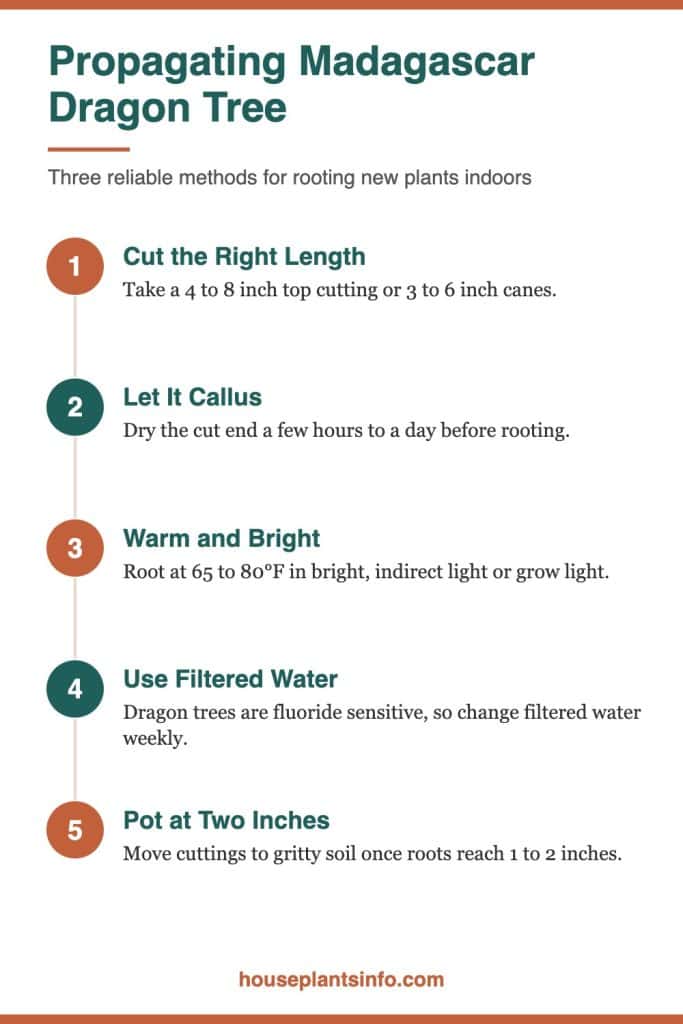
Cut the leafy top 4 to 8 inches below the leaves, strip the lowest leaves, let the cut end dry for a few hours to a day, and set it in water or moist soil.
This is the most reliable method and the one I recommend for first-timers.
Make the Cut
Measure 4 to 8 inches below the lowest leaves of the crown and cut straight across or at a slight angle. Leave at least a few inches of bare stem on the cutting so it has room to root.
If you are also shaping the plant, it helps to read how to trim Dracaena marginata so the remaining stems sit at staggered heights. That gives a fuller look once new growth appears.
Prepare the Cutting
Pull or snip off any leaves that would sit below the waterline or soil surface. Submerged leaves rot quickly and foul the water.
Let the cut end air-dry for a few hours to a full day. A slightly callused end is less likely to rot, especially if you are rooting in soil.
Root in Water
Place the cutting in a clear jar with 2 to 3 inches of room-temperature water. Dragon trees are sensitive to fluoride, so filtered, distilled, or rainwater is a better choice than tap water if you see brown leaf tips on the parent plant.
Change the water every 5 to 7 days, or sooner if it looks cloudy. Small white root bumps usually appear in 3 to 6 weeks.
Root in Soil
Dip the dried end in rooting hormone if you are using it, then insert it 1 to 2 inches deep into a small pot of moist, gritty mix. Firm the soil around the stem so it stands upright.
Keep the soil lightly moist, not wet. A soil moisture meter helps here, since the top inch can look dry while the bottom of a small pot stays soggy. Gentle resistance when you tug the stem after 4 to 8 weeks means roots have formed.

Sophia’s tip: Mark the pot or jar with a piece of tape showing which end is up and the date you cut. It keeps you from tugging too early, which is the easiest way to break new roots.
How Do You Root Cane Sections?
Cut a bare stem into 3 to 6 inch pieces, keep track of which end was up, and lay or stand each piece in moist mix until roots and new buds appear. Each healthy section can become its own plant.
Keep the Pieces Oriented
Dragon tree canes have a top and bottom, and roots form at the bottom end. Upside-down canes will not grow. Cut the bottom of each piece at an angle and the top straight across so you can tell them apart.
Two Ways to Plant Cane
Stand sections upright with the bottom 1 to 2 inches buried, or lay them horizontally, pressed halfway into the soil surface. Horizontal canes often sprout buds along their length, while upright canes usually push new growth near the top.
Some growers seal the top cut with a dab of candle wax to reduce moisture loss and rot. It is optional but helpful in dry, heated rooms.
What to Expect
Cane is slower than tip cuttings because it has to grow both roots and leaves. Small reddish or green buds typically appear in 4 to 10 weeks. Keep the mix lightly moist and resist moving the pot while you wait.
Sophia’s tip: If your apartment runs cool in winter, set cane pots on top of the refrigerator or another gently warm surface, as long as the light there is bright. Steady warmth at the base speeds rooting noticeably.
Can You Air Layer a Leggy Dragon Tree?
Yes. Air layering roots a section of stem while it is still attached to the parent, so the new plant keeps getting water and nutrients until it has its own roots.
It suits tall, prized plants where you do not want to risk a cutting failing.
How to Air Layer
Pick a spot on the stem 6 to 12 inches below the leaves. Make a shallow upward slit about one third of the way through the stem, or remove a thin ring of bark about half an inch wide.
Dust the wound with rooting hormone, wrap it with a fist-sized handful of damp sphagnum moss, and cover the moss with clear plastic wrap. Tie the plastic above and below with twine or twist ties.
Caring for the Wrapped Stem
Check the moss every week and mist it if it feels dry. Roots usually show through the plastic in 4 to 8 weeks.
Once you see several roots 1 to 2 inches long, cut the stem just below the moss and pot the new plant, moss and all. Stake it for the first few weeks if it is top-heavy.
When Should You Move Cuttings Into Soil?
Pot water-rooted cuttings when roots are 1 to 2 inches long, which usually takes 4 to 8 weeks. Waiting much longer produces long, fragile water roots that struggle to adapt to soil.
Choose the Right Pot and Mix
Use a pot only 1 to 2 inches wider than the root mass, with drainage holes. Oversized pots hold extra water, and young dragon tree roots rot easily in soggy soil.
A good mix is standard potting soil with about one third perlite or coarse sand added. For more detail on pot sizes and timing as the plant grows, see this guide to Madagascar dragon tree repotting everything you need to know.

Ease the Transition
Water-grown roots are adapted to constant moisture. Keep the soil slightly more moist than usual for the first 2 to 3 weeks, then let the top inch dry between waterings.
Hold off on fertilizer for about a month. After that, a diluted balanced houseplant fertilizer once a month in spring and summer is plenty.

Moving Plants Outdoors
Young rooted cuttings can spend summer on a shaded balcony or patio once nights stay above 55 to 60°F. Before you do, read whether you can a Madagascar dragon tree live outside in your climate, and bring it in well before the first frost.
What Happens to the Parent Plant After Cutting?
The cut stem stays alive and usually sprouts 1 to 4 new heads just below the cut within 3 to 8 weeks. Your parent plant ends up shorter and bushier rather than lost.
Help It Resprout
Keep the parent in bright, indirect light and water a little less than usual, since it has fewer leaves using water. Overwatering a freshly cut plant is a common cause of stem rot.
Some growers seal the cut top with wax or leave it open to callus. Either works if the cut was clean and the plant stays out of soggy conditions.
Get Back to Normal Care
Once new leaves are growing, resume the standard routine. This guide to Dracaena marginata care: light, water, soil and common problems covers how to keep both the parent and the new plants healthy year-round.
Keep Pets Away From Cuttings
The ASPCA lists Dracaena species, including Madagascar dragon tree, as toxic to cats and dogs. Chewing can cause vomiting, drooling, and loss of appetite, and cats may show dilated pupils.
Read more about why the Dracaena marginata plant is toxic to cats, and keep jars of cuttings on a high shelf.
Sophia’s tip: Jars of cuttings on a low windowsill are tempting for cats and toddlers. A narrow-necked bottle or vase on a top shelf under a grow light keeps them both out of reach and well lit.
Cuttings Not Rooting? Common Problems and Fixes
Most failures come from cold rooms, low light, rot from too much water, or simple impatience. Here are the problems you are most likely to see and how to correct each.
Mushy, Black, or Smelly Stem
This is rot, usually from soggy soil, dirty water, or a crushed cut. Trim the stem above the soft area until you reach firm, clean tissue, let it dry for a day, and start again in fresh water or new mix.
No Roots After 8 Weeks
Cold and low light are the usual causes. Move the cutting to a spot that stays 65 to 80°F with bright, indirect light or 12 to 14 hours under a grow light. Cuttings taken in late fall in a northern apartment can take noticeably longer.
Yellowing or Dropping Leaves
A few lower leaves yellowing is normal while the cutting has no roots. If many leaves drop, the cutting may be losing too much moisture.
Keep it away from radiators, forced-air vents, and AC drafts, and trim very long leaves by a third to reduce water loss.
Brown Leaf Tips
Brown tips often point to fluoride or chlorine in tap water, or dry indoor air. Switch to filtered or distilled water and raise humidity with a small humidifier nearby during heating season.
Cutting Rooted but Wilts in Soil
Water roots need time to adjust. Keep the soil evenly moist for a few weeks, keep the plant out of direct sun, and avoid moving it around while it settles.
Your Next Steps
- Choose a firm, healthy stem and decide whether a top cutting, cane sections, or air layering fits your plant.
- Clean your blade with rubbing alcohol and cut a 4 to 8 inch tip or 3 to 6 inch cane pieces.
- Set cuttings in filtered water or gritty mix in bright, indirect light at 65 to 80°F, away from radiators and vents.
- Change water weekly and check for roots after 3 to 6 weeks without tugging too early.
- Pot water-rooted cuttings when roots reach 1 to 2 inches, using a small pot with drainage.
- Water the cut parent plant lightly and watch for new heads below the cut.
Common Questions About Propagating Madagascar Dragon Tree
How long does it take a Madagascar dragon tree cutting to root?
Top cuttings usually root in 3 to 6 weeks in water and 4 to 8 weeks in soil. Cane sections can take 4 to 10 weeks to show roots and buds. Warmth and bright light shorten the wait.
Can you propagate a Madagascar dragon tree in water permanently?
Cuttings can survive in water for months, but they grow better long-term in soil. Pot them once roots are 1 to 2 inches long so the roots adapt more easily. Long-term water growing tends to produce weaker plants.
Do I need rooting hormone for dragon tree cuttings?
No, dragon tree cuttings root reliably without it. Rooting hormone can speed things up slightly and is most useful for cane sections or cool rooms. Use a light dusting and tap off the excess.
Can I propagate a dragon tree in winter?
Yes, if the cuttings stay at 65 to 80°F with bright light. In a heated winter apartment, place them under a grow light and away from radiators and cold windowpanes. Expect rooting to take a few weeks longer than in summer.
How many new plants can I get from one stem?
One top cutting plus several cane sections can come from a single tall stem, depending on its length. Each 3 to 6 inch healthy cane piece can become a plant. The parent stump will also resprout, so you keep the original too.

Hi! I’m Sophia, and I love plants – especially an expert in growing house plants. I stay in Chicago, United States of America, and through my blog and social media platforms, provide tips and tricks on how to grow healthy, vibrant plants indoors. Check out more here.