
Your kentia palm sits in the corner of the living room, mostly green and graceful, but a few lower fronds have turned yellow, crispy, or brown at the tips.
The short version: Learning how to prune a kentia palm plant comes down to cutting only fronds that are fully or mostly brown, using clean, sharp pruners about 1 to 2 inches from the main stem.
Never cut the central spear or green fronds, because a kentia palm grows from a single growing point per stem and regrows slowly.
This guide covers what to cut, when to cut it, how to trim brown tips, the mistakes that hurt palms, and how to stop the damage from coming back.
At a Glance
| Factor | What it needs |
|---|---|
| Light | Bright, indirect light; tolerates medium light a few feet from an east or north window |
| Water | Water when the top 1 to 2 inches of soil are dry; never let it sit in water |
| Humidity | 40 to 60 percent is ideal; dry winter air causes brown tips |
| Temperature | 65 to 80°F; keep above 55°F and away from cold drafts |
| Soil | Loose, well-draining potting mix in a pot with drainage holes |
| Pet safety | Listed by the ASPCA as non-toxic to cats and dogs |
| Difficulty | Easy, but slow to recover from over-pruning |
What Do You Need Before You Prune a Kentia Palm?
You need a sharp cutting tool, a way to sanitize it, and a clear plan for which fronds come off. Gathering everything first keeps cuts clean and keeps you from snipping at the plant in a hurry.
A Clean, Sharp Blade
A pair of bypass pruners works best for the thick frond stems, called petioles, near the base of the plant. Bypass blades slice like scissors, which leaves a smooth cut instead of crushing the tissue the way anvil pruners can.
For brown leaf tips, a pair of sharp, pointed scissors gives you more control. Dull blades tear the leaf fibers, and torn edges brown faster than clean cuts.
Sanitizing Your Tools
Wipe both blades with 70 percent rubbing alcohol before you start and between plants. This lowers the chance of moving fungal or bacterial spores from one plant to another through fresh wounds.
Let the alcohol dry for a few seconds before cutting. If you are removing a frond that shows dark spots or soft, mushy tissue, wipe the blades again before the next cut.
Protecting Your Floor and Hands
Lay down a sheet or a few pages of newspaper around the pot. Dry kentia fronds shed bits of brown leaf and fiber that scatter across rugs and settle into floor gaps.
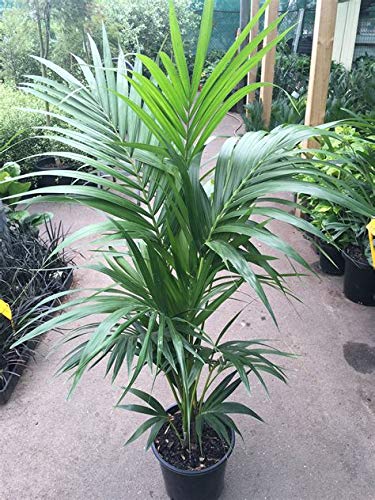
Gardening gloves are helpful but not essential. Kentia palms are smooth and spineless, unlike some outdoor palms, so the main reason to wear gloves is to keep sap and dust off your hands.
Which Fronds Should You Cut and Which Should You Leave?
Cut fronds that are completely brown, or at least two-thirds yellow or brown. Leave every green frond, every partly yellow frond that still has plenty of green, and the new spear emerging from the center.
Signs a Frond Is Ready to Come Off
- The whole frond is brown, dry, and papery.
- The frond is mostly yellow and bends down below the rest of the plant.
- The stem has gone soft, dark, or mushy near the base.
- The frond is broken or snapped and hanging at an awkward angle.
- The leaflets crumble when you touch them.
Why You Should Wait on Yellowing Fronds
Palms pull nutrients, especially potassium and magnesium, out of older fronds as they fade. Those nutrients move into newer growth, so cutting a half-green frond takes away food the plant was still using.
A yellow lower frond is often a normal part of the palm’s life cycle. Indoor kentia palms typically put out only one to three new fronds a year, so each frond you keep matters.
Sophia’s tip: Use a simple rule. If you can still see more green than yellow on a frond, leave it for another few weeks and check again. If you are unsure, wait, because an uncut frond causes far less harm than an early cut.
Fronds You Should Never Remove
The spear is the tightly folded new frond rising from the center of each stem. It holds the plant’s only growing point for that stem, and damaging it can stop that stem from producing new leaves.
Healthy green fronds also stay. Some growers trim them to shape the plant, but kentia palms do not branch or fill in after cutting, so removing green fronds only leaves the plant thinner and slower to grow.
When Is the Best Time to Prune a Kentia Palm?
The best time is late spring through summer, when the palm is actively growing and recovers fastest. That said, a fully dead frond can come off any time of year without harm.
Spring and Summer
Longer days and warmer indoor temperatures push kentia palms into their growth period. Small wounds seal faster, and the plant puts energy into new fronds instead of repairing damage.
If you plan larger cleanups, such as removing several old fronds at once, schedule them for this season.
Fall and Winter
Growth slows when days shorten and indoor air dries out from radiators and forced-air heat. Pruning during these months is fine for dead material, but avoid cutting anything with green on it.
Winter is also when brown tips tend to appear. Trim them if you like, but expect a few more until spring humidity returns.
After Repotting or Moving the Plant
Wait at least four to six weeks after you repot kentia palm plants or move them to a new room. Kentia palms are sensitive to root disturbance and often drop a frond or two afterward.
Give the plant time to settle before deciding what to cut. Some fronds that look stressed right after a move recover once the roots adjust.
How to Prune a Kentia Palm Plant Step by Step
Inspect the plant, choose only dead or mostly dead fronds, and cut each one cleanly near its base. The whole process usually takes 10 to 20 minutes for a typical floor palm.
Step 1: Look the Plant Over in Good Light
Move the palm closer to a window or turn on overhead lights so you can see color clearly. Yellow and pale green are easy to confuse in dim light, especially in the lower part of the plant.
Walk around the pot and look at every stem from several sides. Kentia palms are often sold with several seedlings in one pot, so you may have multiple separate stems.
Step 2: Mark the Fronds You Plan to Remove
Tie a piece of string or a twist tie loosely around each frond you plan to cut. This lets you step back and see how the plant will look before you make any permanent cuts.
If marking removes a large share of the plant, reconsider. A good limit is no more than two or three fronds per stem in one session, and never more than about a quarter of the foliage.
Step 3: Sanitize Your Pruners
Wipe the blades with rubbing alcohol and let them dry. Keep a cloth nearby so you can wipe again between fronds that show any sign of rot or spotting.
Step 4: Cut the Frond Stem Close to the Base
Follow the frond stem down to where it meets the main trunk or the cluster of stems at the soil. Make your cut about 1 to 2 inches out from that point.
Leaving a short stub prevents you from nicking the trunk or the healthy stems pressed close to it. Cut in one firm motion rather than sawing back and forth.
Step 5: Leave the Stub to Dry Naturally
The short stub will dry and turn brown over the next few weeks or months. Once it is fully dry and loose, it often pulls away with a gentle tug.
Do not peel or rip the stub off while it is still attached firmly. Tearing can open a wound in the trunk where moisture and fungi can settle.
Sophia’s tip: Resist the urge to peel the brown, fibrous sheaths wrapped around the base of the stems. They protect the trunk, and pulling them before they loosen on their own leaves raw tissue exposed to rot.
Step 6: Clean Up the Pot and Soil
Pick up any fallen leaf pieces from the soil surface. Decaying plant matter on damp soil can encourage fungus gnats and mold, which are common problems in indoor pots.
Step 7: Return the Palm to Its Spot
Put the plant back in its usual location and water on its normal schedule. Pruning does not change how much water the palm needs, so do not water extra to “help it recover.”
How Do You Trim Brown Tips Without Making Them Worse?
Cut along the brown edge with sharp scissors, following the natural pointed shape of the leaflet, and leave a very thin line of brown. Cutting into green tissue creates a fresh wound that usually browns again.
Follow the Leaflet’s Natural Shape
Kentia leaflets taper to a point. Instead of cutting straight across, angle your scissors to recreate that point so the trimmed leaflet still looks natural from across the room.
Two angled snips per leaflet usually do the job. Work slowly on the first few until you get the feel of it.
Leave a Sliver of Brown
A hair-thin strip of brown at the edge seals off the healthy tissue below. If you cut fully into green, the new edge often dries out and turns brown within a week or two.
This trim is purely cosmetic. It does not help the plant grow, and leaving brown tips alone causes no harm.
When Brown Tips Mean Something More
A few brown tips on older fronds are normal. Widespread browning, brown patches in the middle of leaflets, or tips that brown quickly after trimming point to a care issue.
For a deeper look at what different kinds of browning mean, see kentia palm dead leaves and all you need to know about them. Matching the pattern to the cause is the only way to stop it from spreading.
What Pruning Mistakes Can Damage or Kill a Kentia Palm?
The worst mistakes are cutting the central spear, removing too many green fronds, and tearing tissue with dull tools. Each one either removes the plant’s growing point or opens it to rot.
Cutting the Spear or Crown
Each kentia stem has one growing point at its center. If you cut or crush it, that stem usually cannot make new fronds and will slowly decline.
Unlike many houseplants, a kentia palm will not sprout new branches below a cut. Any damage to the crown is permanent for that stem.
Over-Pruning Green Fronds
Every frond produces energy through photosynthesis. Removing healthy fronds starves the palm and slows the already modest growth rate even further.
Over-pruned palms often respond by yellowing more lower fronds, which tempts owners to cut more. That cycle can leave a plant with only a few sparse leaves.
Using Dull or Dirty Tools
Dull blades crush stems and leave ragged edges. Dirty blades can carry fungal spores into open tissue, leading to spots, stem rot, or decline.
Pulling Instead of Cutting
Yanking a dying frond off by hand may seem quicker, but it often strips tissue from the trunk. That wound sits right at the base of the plant, where soil moisture makes rot more likely.
Pruning a Stressed Plant
A palm that is wilting, overwatered, or freshly moved is already working to recover. Pruning adds more stress, so fix the underlying problem first and prune dead material only.
| Mistake | What happens | Better approach |
|---|---|---|
| Cutting the spear | Stem stops growing | Leave the center untouched |
| Removing green fronds | Less energy, slower growth | Cut only brown or mostly yellow fronds |
| Dull blades | Crushed, browning edges | Use sharp bypass pruners |
| Dirty blades | Spread of fungal spots | Wipe with rubbing alcohol |
| Pulling fronds off | Torn trunk tissue, rot risk | Cut 1 to 2 inches from the base |
| Cutting into green on tips | Tips brown again | Leave a thin brown edge |
How Do You Stop Fronds From Dying Back So Often?
Steady watering, enough indirect light, and moderate humidity prevent most frond damage. Pruning removes the symptom, while better care slows how often you need to prune.
Watering Habits
Overwatering is a leading cause of yellowing and soft, dark stems. Let the top 1 to 2 inches of soil dry before watering, then water until it drains from the bottom and empty the saucer.
Underwatering shows up as crispy, evenly brown fronds and tips. In a warm, heated apartment, check the soil weekly in winter, since radiators can dry pots faster than expected.
Light and Window Placement
Kentia palms handle lower light better than many palms, but very dim corners slow growth and lead to pale, weak fronds. A spot a few feet from an east or north window works well.
Direct afternoon sun through a south or west window can scorch leaflets. If that is your only option, set the plant 4 to 6 feet back or filter the light with a sheer curtain.
Humidity and Drafts
Indoor air often drops well below 40 percent in winter, which causes brown tips. Grouping plants together or running a humidifier nearby helps more than misting, which wears off within minutes.
Keep the palm a few feet from radiators, heating vents, and air conditioning outlets. Hot, dry blasts and cold drafts both stress the fronds closest to the airflow.
Sophia’s tip: Rotate the pot a quarter turn every couple of weeks. This keeps fronds growing evenly toward the window and stops one side from thinning out and needing more pruning.
Feeding and Root Health
A light feeding of balanced or palm-specific fertilizer during spring and summer helps prevent yellowing from nutrient shortages. Skip feeding in fall and winter when growth slows.
Kentia palms like being slightly root-bound and only need repotting every two to three years. For a full routine, see this guide on how to plant, grow and care for kentia palm.
Choosing the Right Palm for Your Space
If your kentia keeps struggling in a particular room, the setting may suit a different palm better. Comparing kentia palm vs majesty palm and which one fits your home can help you decide based on light and humidity.
Majesty palms need more light and moisture and tend to drop fronds faster indoors. If you grow one too, the approach differs a bit, so see how to prune majesty palm plants before you trim it.
Is a Kentia Palm Safe Around Pets and Kids?
Yes. The ASPCA lists the kentia palm as non-toxic to cats and dogs, so a curious nibble is unlikely to cause serious harm.
Keeping Pets Away From Cut Fronds
Even non-toxic plants can cause mild stomach upset if a pet eats a lot of leaf material. Bag cut fronds right away so cats do not chew on dry pieces or drag them around.
Cats sometimes bat at drooping lower fronds. Removing fully dead ones can reduce that temptation, but there is no need to cut green fronds for pet reasons.
Pruning Safety for You
Keep pruners closed and stored out of reach of children. Sharp bypass blades can cause deep cuts, and kids often want to “help” with plant chores.
Work with the pot on a stable surface or the floor. Tall kentia palms can be top-heavy, and leaning over them on a step stool is a common way to knock the pot over.
Your Next Steps
- Check every frond in good light and mark only those that are fully brown or at least two-thirds yellow.
- Sanitize sharp bypass pruners with rubbing alcohol and cut marked fronds 1 to 2 inches from the base.
- Trim brown tips at an angle, leaving a thin strip of brown so the edge does not brown again.
- Move the palm a few feet from radiators, vents, and drafty windows.
- Check soil moisture weekly and water only when the top 1 to 2 inches are dry.
- Set a reminder to inspect the plant again in four to six weeks rather than pruning more now.
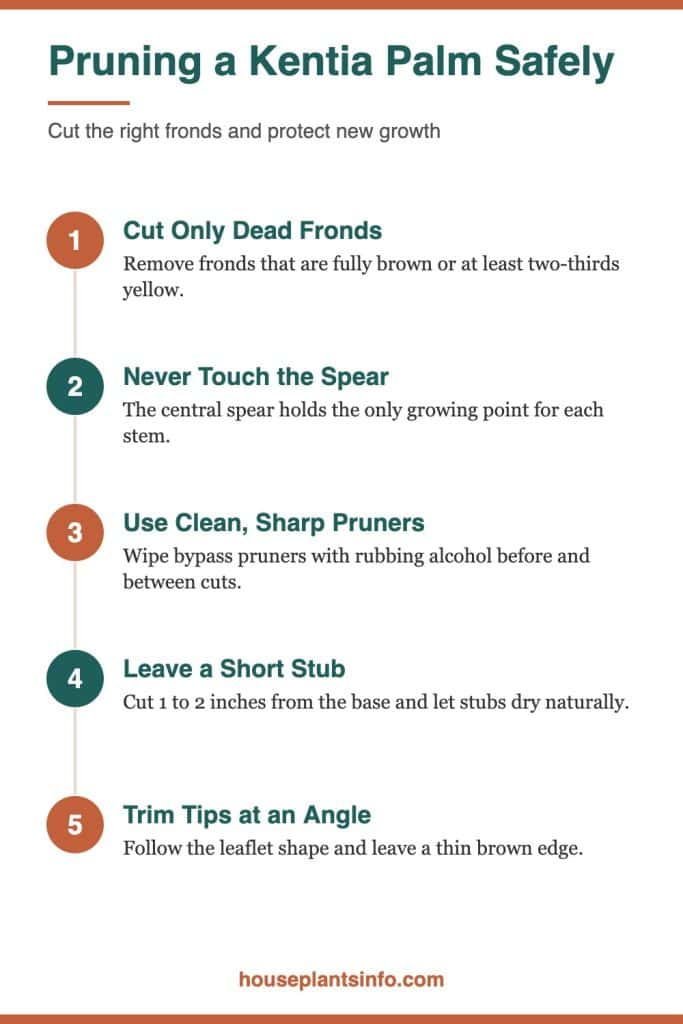
Common Questions About Pruning a Kentia Palm
Will a kentia palm grow back after pruning?
A kentia palm will not regrow a frond that you cut, but it continues producing new fronds from the center of each healthy stem. Growth is slow indoors, often one to three fronds a year. If you cut the central spear, that stem usually stops growing.
Should I cut off yellow leaves on my kentia palm?
Wait until a frond is mostly yellow or brown before cutting it. The palm pulls nutrients from fading fronds, so removing them early takes away food the plant can still use. A single yellowing lower frond is often normal aging.
How often should I prune a kentia palm?
Most indoor kentia palms only need a light cleanup a few times a year. Remove fully dead fronds as they appear and save larger tidying for late spring or summer. Frequent pruning usually means a care problem needs attention.
Can I cut a kentia palm to make it shorter?
No, you cannot shorten a kentia palm by cutting the top. The growing point sits in the crown, and removing it stops that stem from growing. If the plant is too tall, a different location or a smaller replacement palm is the better solution.
Why do the tips I trimmed keep turning brown?
Trimmed tips brown again when the cut goes into green tissue or when the underlying cause continues. Dry indoor air, inconsistent watering, and mineral buildup from fertilizer or tap water are common reasons. Leave a thin brown edge when trimming and address humidity and watering.

Hi! I’m Sophia, and I love plants – especially an expert in growing house plants. I stay in Chicago, United States of America, and through my blog and social media platforms, provide tips and tricks on how to grow healthy, vibrant plants indoors. Check out more here.