
You glance over at the big elephant ear by your window and spot a torn leaf, a few green flecks on the floor, and a child or pet who suddenly seems upset and is drooling.
The short version: Elephant ear plants contain sharp calcium oxalate crystals that cause instant burning and swelling in the mouth, but serious poisoning is uncommon.
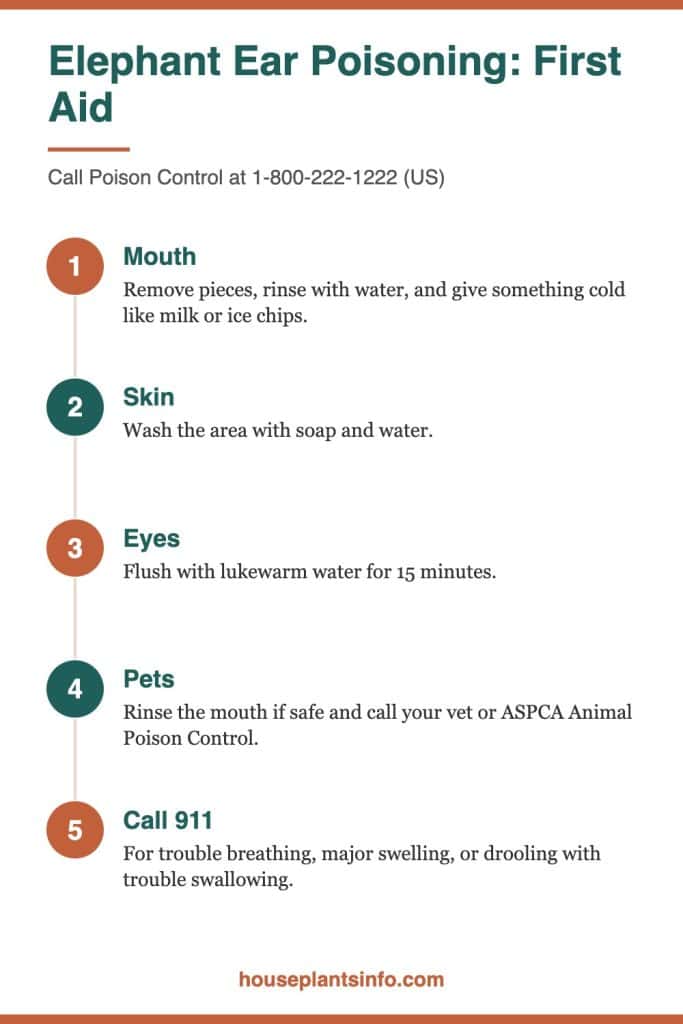
Elephant ear poisoning treatment starts with removing plant pieces, rinsing the mouth with water, and offering something cold. Then call Poison Control at 1-800-222-1222 or your vet for advice specific to your situation.
This guide covers symptoms in people and pets, first aid for the mouth, skin and eyes, when to call 911, and how to keep the plant safely indoors.
At a Glance
| Factor | What it needs |
|---|---|
| Light | Bright, indirect light 3 to 5 feet from an east or south window, or under a grow light |
| Water | Evenly moist soil; water when the top inch feels dry |
| Humidity | 50% or higher; dry winter air from radiators causes crisp edges |
| Temperature | 65°F to 85°F; keep away from AC drafts and cold glass |
| Soil | Rich, airy, well-draining potting mix |
| Pet safety | Toxic to cats and dogs (ASPCA) |
| Difficulty | Moderate; handle with gloves because the sap irritates skin |
This first-aid information is not a substitute for professional help. If anyone has symptoms, call Poison Control, your vet, or 911 instead of relying on this article.
Is the Elephant Ear Plant Poisonous?
Yes. Every part of an elephant ear plant is irritating to people, cats and dogs if chewed, and the sap can bother skin and eyes.
The name covers three related groups: Colocasia, Alocasia and Xanthosoma. They look similar indoors, with large arrow- or heart-shaped leaves on long stems, and they share the same irritating chemistry.
How Toxic Is It, Really?
These plants hurt more than they harm in most cases. The pain is so fast and sharp that people and pets usually spit out the leaf before swallowing much.
The real concern is swelling. If the tongue, lips or throat swell significantly, it can interfere with swallowing or breathing, which is why calm, prompt action matters.
Simple Ways to Handle It Safely
A pair of nitrile gloves is the simplest protection when you prune, repot or wipe leaves. They block the sap better than thin cloth gardening gloves.

A sturdy plant stand or a high shelf keeps the leaves above the reach of crawling babies and curious dogs. Cats can still climb, so placement alone may not be enough for them.
What About Taro?
Taro (Colocasia esculenta) is a food crop in many parts of the world. Its corms and leaves are eaten only after thorough cooking, which breaks down the irritating effect.
Raw taro causes the same burning as an ornamental elephant ear. Never taste a houseplant or an uncooked corm to check whether it is edible.
What Causes the Burning and Swelling?
The burning comes from insoluble calcium oxalate crystals called raphides. These microscopic, needle-shaped crystals pierce the soft tissue of the mouth, lips and throat when the plant is chewed.
How the Crystals Work
The raphides sit packed inside special cells in the leaves, stems and corms. Biting down breaks those cells open and fires the crystals into the tissue.
The tiny punctures cause immediate pain, and the body reacts with swelling and irritation. That is why symptoms start within seconds instead of hours.
Why the Sap Irritates Skin
The same crystals are present in the sap. When a cut stem drips onto your hands or forearms, the crystals and other plant compounds can rub into the skin.
This leads to redness, itching or a rash, especially if you touch your face or rub your eyes afterward. Sensitive skin reacts more strongly.
Insoluble vs. Soluble Oxalates
Elephant ears contain insoluble oxalates, which mainly cause local irritation where they touch. They are different from the soluble oxalates in some other plants that can affect the kidneys.
For elephant ears, the main problems are pain and swelling at the point of contact. That still deserves attention, but it explains why serious poisoning is uncommon.
Symptoms in People, Kids and Pets
Symptoms appear almost right away and center on the mouth and throat. Look for burning pain, drooling, swelling and difficulty swallowing.
Symptoms in Adults and Kids
After chewing a leaf or stem, a person may have:
- Immediate burning and pain in the mouth and lips
- Swelling of the lips, tongue or throat
- Drooling
- Trouble swallowing
- Hoarse voice
- Sometimes vomiting
Young children may not explain what hurts. Crying, pawing at the mouth, refusing to eat or drink, and sudden drooling are clues worth acting on.
Symptoms From Skin and Eye Contact
Sap on the skin can cause redness, itching and a rash. These usually show up soon after contact and are most common on the hands and wrists.
Sap in the eyes causes pain, tearing and redness. A child who handled a leaf and then rubbed their eyes is a common scenario.
Symptoms in Cats and Dogs
Pets show the same mouth irritation in their own way. Common signs include:
- Pawing at the mouth or face
- Heavy drooling
- Vomiting
- Trouble swallowing
- Head shaking or reluctance to eat
Cats often chew leaf tips, while dogs may tear into a fallen leaf or dig up a corm from the pot. Either way, the reaction is fast.
First Aid if Someone Chews a Leaf
Remove any plant pieces, rinse the mouth with water, and offer something cold to ease the pain. Then call Poison Control at 1-800-222-1222, which is free and available 24/7 in the US.
Step 1: Clear the Mouth
Gently remove any leaf bits from the mouth with your fingers or a damp cloth. Have older kids and adults spit out what they can.
Wipe away plant material around the lips and chin. If the person was holding a leaf, wash their hands so they do not spread more sap.
Step 2: Rinse and Cool
Rinse the mouth with water and have the person spit it out. Repeat a few times if they can tolerate it.
Then give a cold drink, milk, or something cold like ice chips or a frozen treat. Cold soothes the burning and can help limit swelling. For small children, a frozen treat is often easier than ice chips.
Step 3: Call Poison Control
Call 1-800-222-1222 even if symptoms seem mild. The specialists will ask about age, weight, what was chewed and how the person looks, then tell you whether home care is enough.
Do not make anyone vomit. Vomiting brings the irritating material back up through the throat and can make swelling worse.
Sophia’s tip: Save Poison Control (1-800-222-1222) and your vet’s number in your phone today, and tape them inside a kitchen cabinet. If a babysitter watches your kids or pets, show them where the list is.
Step 4: Keep Watching
Stay with the person and watch their breathing, voice and ability to swallow for the next several hours. Most symptoms ease gradually as the irritation settles.
If swelling increases or breathing changes at any point, move straight to emergency help.
What to Do for Sap on Skin or in the Eyes
For skin, wash the area with soap and water. For eyes, flush with lukewarm water for 15 minutes, then call Poison Control for next steps.
Skin Contact
Wash the affected skin gently with mild soap and plenty of water. Avoid scrubbing hard, which can push crystals deeper into irritated skin.
Remove any clothing with sap on it and wash it separately. Call Poison Control if redness, itching or rash is severe or keeps spreading.
Eye Contact
Flush the eye with lukewarm running water for a full 15 minutes. Hold the eyelid open gently and let water run from the inner corner toward the outer corner.
A sink faucet set to a gentle stream or a shower works well. For kids, it helps to lay them back and pour water slowly from a cup.
After Flushing
Call Poison Control after flushing, especially if pain, redness, tearing or blurry vision continues. They may advise an eye exam.
Keep the person from rubbing the eye. Rubbing can scratch the surface if any crystals remain.
Sophia’s tip: Keep a pair of nitrile gloves in the same drawer as your pruning snips. If you reach for the snips, the gloves are right there, and you avoid sap on your hands before you touch your face.
What to Do if Your Cat or Dog Bites the Plant
Rinse your pet’s mouth with water if you can do it safely, then call your vet or the ASPCA Animal Poison Control Center at (888) 426-4435. A fee may apply for the ASPCA line.
Rinse Only if It Is Safe
A pet in pain may bite, even a gentle one. If your cat or dog allows it, wipe the mouth with a damp cloth or let water trickle gently along the side of the mouth.
Offer fresh water to drink. Some pets will lick a little plain yogurt or milk, though cats in particular may refuse anything when their mouths hurt.
Call for Guidance
Call your vet or the ASPCA Animal Poison Control Center right away. Have your pet’s weight and an estimate of how much was chewed ready.
Do not try to make your pet vomit. As with people, vomiting can cause more irritation and swelling on the way back up.
Remove the Temptation
Pick up fallen leaves and torn pieces, and move the plant to a room your pet cannot access. Check the pot for exposed corms, which dogs may dig up.
If you are deciding which plants to keep, this guide on which tropical houseplants are poisonous to cats can help you sort your collection.
When to Get Emergency Help
Call 911 right away for any trouble breathing, drooling with an inability to swallow, or major swelling of the lips, tongue or throat. These signs mean the airway may be affected.
Signs That Need 911
- Noisy, labored or fast breathing
- Drooling and being unable to swallow saliva
- Significant swelling of the lips, tongue, mouth or throat
- A voice that becomes very hoarse or muffled
- Unusual drowsiness or unresponsiveness
Do not wait to see if these improve. Call 911 first, then follow the dispatcher’s instructions.
Emergency Signs in Pets
For a cat or dog, labored breathing, a swollen face or throat, or inability to swallow means you should go to an emergency vet now. Call ahead on the way if you can.
What to Bring
Take a piece of the plant or a clear photo of it, including the leaves and stems. This helps responders confirm the plant type quickly.
Note the time of exposure and any first aid you already gave. That information shapes the next steps.
How to Keep an Elephant Ear Safely at Home
Wear gloves when you handle the plant, place it out of reach of kids and pets, and clean your tools after pruning. With a few habits, an elephant ear can live safely in many homes.

Choose a Smart Spot
Pick a location that gives the plant bright, indirect light without putting it in a high-traffic area. A spot 3 to 5 feet from an east window or near a south window with a sheer curtain works well.
Keep it away from radiators, forced-air vents and AC drafts, which dry out leaves and cause damage that leads to more dropped leaf pieces. Healthy, sturdy plants shed less debris for pets to find.
Handle It With Care
Wear gloves when pruning, dividing or repotting, since these tasks release the most sap. Long sleeves help when you reach into a large plant.
Wash pruners and scissors with soap and water after each use. Wipe down the counter or floor where cuttings landed.
If you are starting new plants, the same gloves apply when planting elephant ear bulbs indoors, because the corms contain the crystals too.
Keep Leaves Healthy and Tidy
Drooping or damaged stems are more likely to break off and end up on the floor. Learning why an elephant ear plant droops helps you fix watering or light issues before leaves collapse.
Remove yellowing leaves with gloved hands and bag them right away. Do not leave them in an open trash can a dog can raid.
Plan Around Kids and Pets
Toddlers and climbing cats will reach plants on low tables and windowsills. A closed room, a tall stand, or a hanging planter far from furniture reduces access.
Training helps too. You can find practical methods to keep cats from eating houseplants, like offering cat grass and using deterrents.
Consider Safer Alternatives
If a pet keeps going after the plant, I recommend rehoming it or keeping it in a room the pet never enters. In a dim apartment corner, there are low light plants that are safe for cats that bring similar leafy greenery.
Sophia’s tip: Put a large saucer or tray under the pot and check it each morning for fallen leaf bits. It takes seconds and removes the most common thing pets and toddlers pick up.
Your Next Steps
- Save Poison Control (1-800-222-1222) and the ASPCA Animal Poison Control Center ((888) 426-4435) in your phone.
- Move your elephant ear out of reach of kids and pets, or into a room they cannot enter.
- Keep nitrile gloves with your pruning tools and wash tools after every use.
- Check the floor and saucer daily for dropped leaves or exposed corms.
- Teach older kids that houseplants are for looking, not tasting.
- If symptoms ever appear, follow the first aid above and call for help right away.
Common Questions About Elephant Ear Poisoning
How long do elephant ear poisoning symptoms last?
Mouth pain and swelling usually start right away and ease gradually over several hours as the irritation settles. Some soreness may linger longer. Call Poison Control or your vet for guidance on what to expect in your situation.
Can touching an elephant ear plant hurt you?
Brushing against intact leaves is generally harmless. The sap from cut or broken stems can cause skin redness, itching or a rash, so wear gloves when pruning and wash your skin with soap and water after contact.
Is milk or ice better for elephant ear poisoning?
Both can help. A cold drink, milk, ice chips or a frozen treat can soothe the burning after you rinse the mouth with water. After that, call Poison Control at 1-800-222-1222 for next steps.
Should I make my child or pet throw up after chewing a leaf?
No. Do not make anyone vomit, including pets, because the irritating material can cause more pain and swelling on the way back up. Rinse the mouth and call Poison Control or your vet instead.
Are Alocasia and Colocasia equally toxic?
Both contain insoluble calcium oxalate crystals and cause the same burning and swelling, as does Xanthosoma. The ASPCA lists elephant ear as toxic to cats and dogs, so treat any type with the same caution.

Hi! I’m Sophia, and I love plants – especially an expert in growing house plants. I stay in Chicago, United States of America, and through my blog and social media platforms, provide tips and tricks on how to grow healthy, vibrant plants indoors. Check out more here.