
Your majesty palm stands by the window with its long, arching fronds, and your cat is batting at the lowest leaf and starting to chew on the tip.
The short version: The majesty palm (Ravenea rivularis) is generally considered non-toxic to cats. It is not known to contain poisonous compounds, so a nibble usually causes mild stomach upset at most.
The real risks are swallowed fibers, sharp frond tips, and any fertilizer or pesticide on the plant.
This guide covers what happens when a cat chews the palm, which palms are truly dangerous, how to stop the chewing, and how to keep the plant healthy indoors.
At a Glance
| Factor | What it needs |
|---|---|
| Pet safety | Generally considered non-toxic to cats; mild stomach upset possible if chewed |
| Light | Bright, indirect light, 3 to 6 feet from a south or west window, or right at an east window |
| Water | Evenly moist soil; water when the top 1 inch feels dry |
| Humidity | 50% or higher; dry winter air invites spider mites |
| Temperature | 65°F to 85°F; keep above 55°F and away from cold drafts |
| Soil | Peat- or coir-based potting mix with perlite, in a pot with drainage |
| Difficulty | Moderate; needs more light and humidity than most indoor palms |
Is the Majesty Palm Safe for Cats?
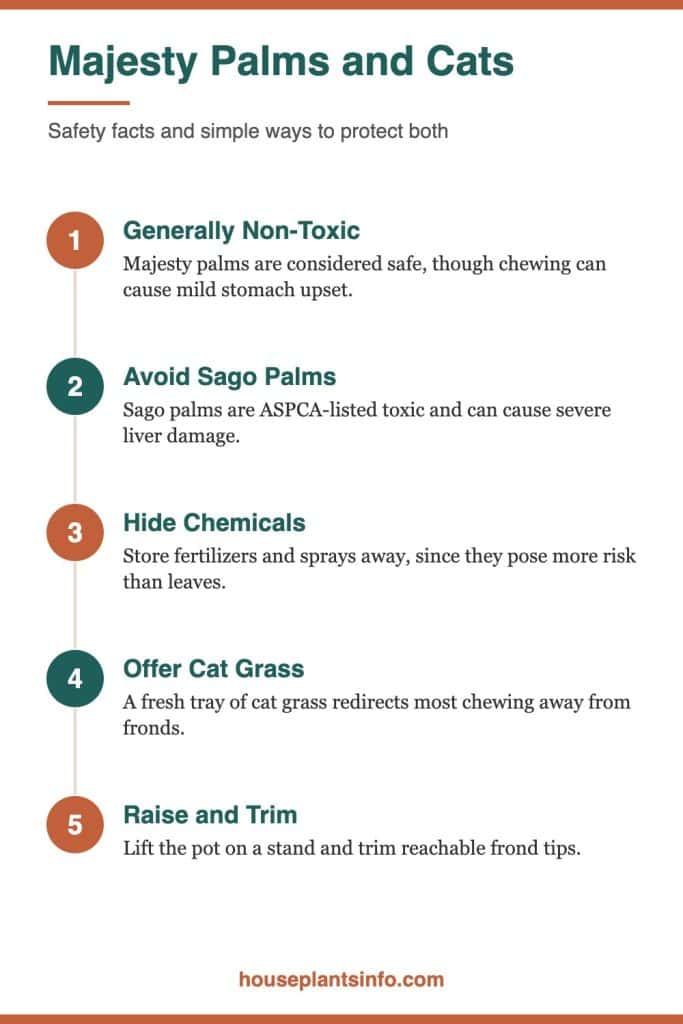
Yes, for most practical purposes the majesty palm is safe for cats. It is widely treated as a non-toxic palm, and it does not belong to the cycad group that includes the dangerous sago palm.
“Non-toxic” does not mean a cat can eat it freely. The fronds are fibrous and tough, and a cat that swallows a lot of leaf material may vomit, drool, or have loose stool for a day.
That reaction comes from the plant’s texture, not a poison.
What Makes It Low Risk
Majesty palms are true palms in the Arecaceae family. Several close relatives, including the parlor palm and the areca palm, appear on the ASPCA’s list of plants non-toxic to cats.
The majesty palm is generally grouped with these safer palms, and there are no well-documented cases of serious poisoning from it.
If you want certainty about any plant in your home, the ASPCA maintains a searchable toxic and non-toxic plant list. It is a good habit to check every new plant against it before bringing it inside.
Where the Real Hazards Hide
Most problems come from what is on or around the plant rather than the leaves themselves. Watch for these:
- Granular or liquid fertilizer sitting on the soil surface
- Systemic insecticides, which move into the leaves and can be harmful if eaten
- Leaf-shine sprays and oils
- Sharp, split frond tips that can poke an eye or irritate the mouth
- A top-heavy pot that tips over when a cat climbs it
A sturdy plant stand with a wide base keeps a tall palm from toppling, and a tray of cat grass placed nearby gives your cat something better to chew. Both cost little and solve two of the most common issues at once.
Sophia’s tip: If you use any spray on your palm, even neem oil or insecticidal soap, move the plant to a room your cat cannot enter until the leaves are completely dry, then wipe the lower fronds with a damp cloth.
What Happens If Your Cat Chews a Majesty Palm?
Usually very little. Most cats take a few bites, lose interest, and show no symptoms, while a cat that eats a larger amount may vomit once or twice.
Mild Signs That Usually Pass
Because frond fibers are hard to digest, the stomach often rejects them. Expect one or more of these within a few hours:
- Vomiting, sometimes with visible green fibers
- Drooling or lip licking
- Mild diarrhea
- Brief loss of appetite
These signs typically clear within 24 hours. Offer fresh water, keep the cat away from the plant, and watch its behavior and litter box.
Signs That Mean You Should Call a Vet
Call your veterinarian or a pet poison hotline if you see any of the following:
- Vomiting that continues for more than a day
- Repeated retching with nothing coming up
- Lethargy, hiding, or weakness
- A swollen, painful belly
- Refusing food for more than 24 hours
- Tremors or seizures, which point to a different toxin such as a pesticide
The ASPCA Animal Poison Control Center runs a 24-hour hotline at (888) 426-4435. A consultation fee may apply.
Have This Information Ready
If you call for help, it speeds things up to know what your cat ate and roughly how much. Note the time of the chewing, the symptoms you see, and whether the plant was recently fertilized or sprayed.
Take a photo of the plant and any product labels.
Which Palms Are Actually Dangerous to Cats?
The sago palm is the one to worry about. It is not a true palm but a cycad, and the ASPCA lists it as toxic to cats, dogs, and horses.
The Sago Palm Problem
Every part of the sago palm contains cycasin, a toxin that can cause severe liver damage. The seeds hold the highest concentration. Symptoms can include vomiting, bloody stool, jaundice, and seizures, and the outcome can be fatal even with treatment.
If you are unsure what your plant is, read our guide on why the sago palm is toxic to cats and how to identify it.
Sago palms have stiff, glossy, needle-like leaflets and a thick, shaggy trunk, which looks very different from the soft, feathery majesty palm.

Look-Alikes That Get Mislabeled
Garden centers sometimes sell plants under loose common names. “Palm” appears in names of plants that are not palms at all, so always confirm the botanical name on the tag.
| Plant | Botanical name | Cat safety |
|---|---|---|
| Majesty palm | Ravenea rivularis | Generally considered non-toxic |
| Parlor palm | Chamaedorea elegans | ASPCA non-toxic |
| Areca palm | Dypsis lutescens | ASPCA non-toxic |
| Kentia palm | Howea forsteriana | Generally considered non-toxic |
| Sago palm | Cycas revoluta | ASPCA toxic, highly dangerous |
Choosing the Right Palm for a Cat Household
If your cat is a persistent chewer, a tougher palm can hold up better than the delicate majesty palm. To weigh the options, see our comparison of the kentia palm vs majesty palm and which one fits your home.
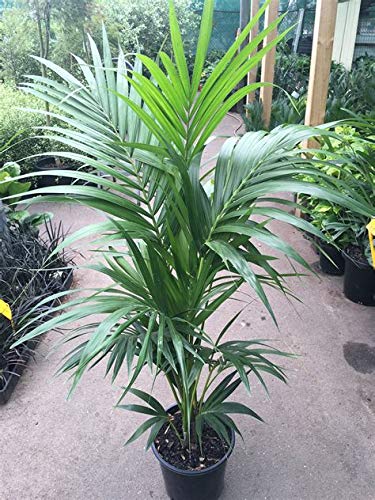
Kentia palms tolerate lower light and recover from damage more easily.
Why Does Your Cat Chew on the Palm?
Cats chew plants for a mix of instinct, texture, and boredom. Long, grass-like fronds that sway in a draft look a lot like the grasses wild cats chew outdoors.
Instinct and Digestion
Many cats eat grass and leafy plants even though they are obligate carnivores. One common explanation is that plant fiber helps them bring up hairballs or move material through the gut. Another is simple taste and texture, since young fronds are tender.
Movement and Play
Majesty palm fronds move with the slightest air current. Forced-air heat vents, ceiling fans, and AC drafts make the leaves twitch, which triggers a cat’s hunting response. A frond within paw reach becomes a toy.
Boredom and Routine
Indoor cats in apartments often have fewer things to stalk and explore. A cat that chews plants mostly while you are away, or during long winter months, may simply need more play and enrichment.
Chewing that suddenly increases can also signal a dietary or health change worth mentioning to your vet.
How to Stop Your Cat From Chewing the Majesty Palm
Combine a better alternative with a less tempting plant. Removing access alone rarely works with a determined cat, but redirecting the urge usually does.
Give a Better Option
Offer cat grass, usually wheatgrass or oat grass, in a shallow pot near your cat’s favorite resting spot. Keep it fresh by sowing a new tray every two to three weeks. Many cats switch to the grass once it is consistently available.
Catnip or cat thyme planted in a small pot is another option. Place these at floor level, where they are easier to reach than the palm.
Make the Palm Less Appealing
These steps reduce temptation without harming the cat:
- Lift the pot onto a stand so the lowest fronds sit above your cat’s reach
- Trim or tie back the lowest, dangling fronds
- Lightly spray the leaf tips with a pet-safe bitter deterrent, reapplying every few days
- Cover the soil with large, smooth river stones to stop digging
- Place a strip of double-sided tape or a textured mat around the base
- Move the palm out of the path of vents and fans so the fronds stop twitching
Citrus peels around the base also discourage some cats, though they need frequent replacing.
Sophia’s tip: Test any bitter spray on one frond first and wait 48 hours. Some sprays leave spots or brown tips on palm leaves, so a small test saves the whole plant.
Redirect the Energy
Ten to fifteen minutes of active play with a wand toy, twice a day, can noticeably reduce plant chewing. A window perch facing a busy street or bird feeder adds daily stimulation. Puzzle feeders also keep cats occupied during the hours you are gone.
What Not to Do
Avoid spraying water at your cat, mothballs, or essential oils on or near the plant. Many essential oils, including tea tree, eucalyptus, and citrus oils in concentrated form, are toxic to cats.
Coffee grounds and cayenne pepper are also poor choices because cats can ingest them.
How to Keep a Majesty Palm Healthy Indoors
A healthy palm holds up better to occasional chewing and grows new fronds faster. Majesty palms need bright light, consistent moisture, and humid air, which is more than many indoor palms ask for.
Light and Placement
Give the plant bright, indirect light for six or more hours a day.
In a Chicago apartment, an east window works well right at the glass, while a south or west window is best with the plant set back 3 to 6 feet or behind a sheer curtain.
Too little light causes pale, stretched fronds and slow decline. In dark winter months, a full-spectrum grow light placed 12 to 24 inches above the crown for 10 to 12 hours a day keeps growth steady.
Water and Soil
Keep the soil evenly moist but never soggy. Water when the top inch feels dry, which is often every 5 to 10 days in summer and less often in winter.
For a detailed schedule by season and pot size, see our guide on how often to water a majesty palm.
Use a well-draining mix based on peat or coir, with perlite added. The pot must have drainage holes, and you should empty the saucer after watering so roots never sit in water.
Humidity and Temperature
Majesty palms come from riverbanks in Madagascar and prefer humidity of 50% or higher. Radiators and forced-air heat can drop indoor humidity to 20% to 30% in winter, which leads to brown tips and spider mites.
A humidifier placed nearby is the most reliable fix. Grouping plants together and using a pebble tray help a little. Keep temperatures between 65°F and 85°F, and keep the plant away from cold windows below 55°F and AC vents.
Feeding Without Risk to Your Cat
Feed every 4 to 8 weeks during spring and summer with a balanced fertilizer made for palms, which supplies the magnesium and potassium these plants need. Skip feeding in winter.
If you prefer gentler options, our guide to homemade fertilizer for majesty palm explains what works.
With cats around, liquid fertilizer watered into the soil is safer than granules on the surface. Store all fertilizers in a closed cabinet.
Pests to Watch For
Spider mites are the most common pest, especially in dry winter air. Look for fine webbing and speckled, dull fronds. Rinse the plant in the shower and raise humidity rather than reaching for systemic insecticides, which can make leaves harmful to chew.
Chewed Fronds: How to Trim and Help the Plant Recover
Cut a frond only when most of it is brown or damaged. Palms draw nutrients from older fronds, and removing too much green slows the plant down.
When to Cut and When to Leave It
A frond with a few chewed tips can stay. Trim just the brown edges with clean scissors, following the natural shape of the leaf and leaving a thin line of brown so you do not cut into healthy tissue.
A frond that is more than half brown, broken, or shredded can be removed at its base. For step-by-step guidance, see how to prune a majesty palm without harming the crown.
Protect the Growing Point
The majesty palm grows from a single central bud. If that crown is damaged, the plant cannot replace it. Never cut the newest spear-like frond emerging from the center, and keep cats from chewing or pulling it.
Recovery Time
New fronds emerge slowly, often one every few weeks in good light and warmth. Expect visible recovery over two to four months during the growing season. Growth slows sharply in winter, so damage done in December may not fill in until spring.
Sophia’s tip: Sterilize your scissors with rubbing alcohol before every trim, and dispose of the cut fronds in a covered trash bin so your cat does not chew them on the floor.
How Big Does a Majesty Palm Get Indoors?
Indoors, a majesty palm usually reaches 5 to 10 feet tall with a spread of 3 to 5 feet. In its native habitat it can grow far taller, but pots and indoor light keep it much smaller.
Growth Rate and Size Control
Growth is moderate, often 1 to 2 feet per year in strong light and warm conditions, and much slower in low light. Pot size limits the final height.
Repotting every two to three years into a container only 2 inches wider keeps growth steady without making the plant oversized.
Planning Space With a Cat
A tall palm with fronds above 3 feet is less tempting than a young plant with leaves at floor level.
Smaller plants are the most likely to be chewed, so a stand or a corner away from your cat’s climbing routes helps during the early years.
Allow enough room so the fronds do not brush against curtains, furniture, or radiators. Fronds touching hot surfaces brown quickly, and constant contact with walls bends the leaves.
Your Next Steps
- Check the plant tag for the botanical name Ravenea rivularis and confirm it is not a sago palm
- Move fertilizers, sprays, and leaf-shine products into a closed cabinet
- Set up a tray of cat grass near your cat’s favorite spot this week
- Raise the palm onto a stable stand and trim any frond tips your cat can reach
- Place the plant in bright, indirect light away from vents, radiators, and AC drafts
- Save the ASPCA Animal Poison Control number in your phone
Common Questions About Majesty Palms and Cats
Is the majesty palm toxic to cats if they eat a lot of it?
The majesty palm is generally considered non-toxic, so eating it is not expected to poison your cat. A large amount of fibrous leaf can cause vomiting or diarrhea for about a day. Call your vet if symptoms last longer or your cat seems weak.
Is the majesty palm safe for dogs too?
The majesty palm is also generally considered safe for dogs, with the same caution about mild stomach upset. Dogs tend to eat larger quantities than cats, so chewed pieces can cause more vomiting. Keep fertilizers and sprays out of reach for both pets.
Why are the frond tips turning brown after my cat chews them?
Chewed tissue dies back and turns brown, which is normal and does not spread far. Brown tips across many fronds, however, usually point to dry air, uneven watering, or salt buildup. Trim the brown edges and check humidity first.
Can my cat get sick from the soil in the palm pot?
Plain potting mix is not highly toxic, but it can contain perlite, fertilizer residue, and fungus gnat larvae. Cats that dig or eat soil may get an upset stomach. Covering the soil with large stones stops most digging.
Which indoor palm is the best choice for a home with cats?
Parlor palms and areca palms are both on the ASPCA non-toxic list and handle indoor conditions well. Parlor palms are especially tolerant of lower light. Avoid sago palms entirely, since they are highly toxic to cats.

Hi! I’m Sophia, and I love plants – especially an expert in growing house plants. I stay in Chicago, United States of America, and through my blog and social media platforms, provide tips and tricks on how to grow healthy, vibrant plants indoors. Check out more here.