
You walk into the living room and find torn leaves under the trailing ivy on your bookshelf, a few stems on the rug, and your dog licking its lips nearby.
If your dog ate English ivy, you probably have a dozen questions and a racing heart. This guide gives you calm, clear answers.
The short version: English ivy is toxic to dogs, but most dogs who chew a few leaves develop mild stomach upset such as drooling, vomiting or diarrhea. Large amounts can cause more serious illness.
Call your veterinarian or a pet poison control line now, even if your dog seems fine.
This guide covers how toxic ivy is, which symptoms to watch for, what to do in the first few minutes, when to go to the emergency vet, and how to keep it from happening again.
At a Glance
| Factor | What it needs |
|---|---|
| Pet safety | Toxic to dogs and cats (ASPCA) |
| Toxic compounds | Triterpenoid saponins (such as hederagenin) and polyacetylenes |
| Common signs | Vomiting, drooling, abdominal pain, diarrhea |
| First step | Clear leaves from the mouth, note the amount and time |
| Who to call | Your vet, ASPCA Animal Poison Control (888) 426-4435, or Pet Poison Helpline |
| Emergency signs | Repeated vomiting, trouble breathing, weakness, large amount eaten |
| Prevention | Hang ivy out of reach, use barriers, train “leave it” |
Is English Ivy Poisonous to Dogs?
Yes. The ASPCA lists English ivy (Hedera helix) as toxic to dogs and cats, mainly because of irritating compounds in the leaves.
The good news is that serious poisoning is uncommon with small amounts. Most dogs who nibble a leaf or two have a short bout of stomach upset. Still, every dog is different, so a professional should help you judge your specific situation.
What Makes Ivy Toxic
English ivy leaves contain triterpenoid saponins, including a compound called hederagenin. Saponins irritate the lining of the mouth, stomach and intestines, which is why drooling and vomiting are the most common reactions.
The plant also contains polyacetylene compounds. These are linked to skin irritation and allergic reactions when the sap touches skin. The leaves carry most of the concern, and berries on mature outdoor ivy are also considered harmful.
Why the Amount Matters
How sick a dog gets depends largely on how much it ate compared to its body size. A few leaves for a 70-pound Labrador is a very different situation than the same amount for a 6-pound Yorkie.
Before you call for advice, gather a few details.
Use your phone camera to photograph the plant and any chewed pieces, and if the room is dim, use a flashlight to check your dog’s mouth and gums for leftover leaf bits.
These details help the person on the phone give you better guidance.
Is Your Plant Really English Ivy?
Indoor ivy is sold under many names, and several unrelated plants are called “ivy.” English ivy has thick, glossy leaves with three to five pointed lobes and woody, trailing stems that can grip surfaces with tiny rootlets.
Pothos, often called devil’s ivy, is a different plant that is also toxic to dogs. Swedish ivy is a different plant again. If you are unsure what you have, that photo of the plant becomes even more useful when you call.
Symptoms to Watch For
The most common signs are vomiting, drooling, abdominal pain and diarrhea. They usually show up within a few hours of chewing, and large amounts may cause more serious illness.
Early Signs in the First Few Hours
Mouth irritation often appears first. Your dog may drool more than usual, lick its lips repeatedly, paw at its face or seem reluctant to eat.
Stomach upset tends to follow. Watch for:
- Vomiting, sometimes with bits of green leaf
- Excess drooling or foamy saliva
- Diarrhea or loose stool
- A hunched posture, restlessness or reluctance to lie down, which can signal abdominal pain
- Lip smacking, gulping or repeated swallowing
- Loss of appetite
Signs That Point to a More Serious Reaction
Some signs mean your dog needs to be seen right away. These include repeated vomiting that does not stop, weakness, wobbliness, unusual lethargy or collapse.
Trouble breathing, swelling of the face or throat, or pale gums also need emergency care. Dehydration from ongoing vomiting and diarrhea is a real risk, especially in small dogs and puppies.
How Long Symptoms Usually Last
In mild cases, stomach upset often settles within a day or so once the irritating plant material passes through. Your vet can tell you what timeline to expect for your dog.
If symptoms get worse instead of better, or new symptoms appear, call your vet again. Do not wait for things to resolve on their own.
Sophia’s tip: Write down the time you found the chewed ivy and every symptom as it happens, with the time beside it. A simple note on your phone gives your vet a clear timeline instead of a guess.
What to Do Right Now If Your Dog Ate English Ivy
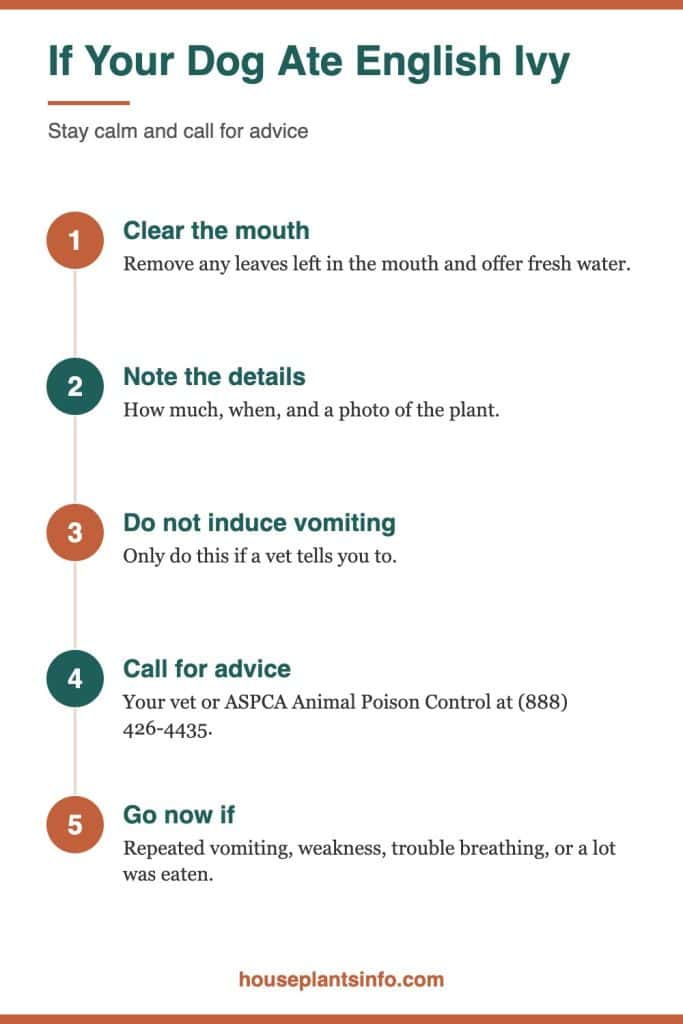
Stay calm, remove any leaves left in your dog’s mouth, and call your vet or a pet poison control line. Do not try to make your dog vomit unless a vet tells you to.
Step 1: Clear the Mouth and the Area
Gently open your dog’s mouth and remove any leaves or stems you can see. Only do this if your dog is calm and you can do it safely, without risking a bite.
Then pick up every fallen leaf and stem from the floor, rug and furniture. Move the plant to a closed room so your dog cannot go back for more while you make calls.
Step 2: Note How Much and When
Look at the plant and estimate how much is missing. Count stems if you can, or compare the plant to an older photo on your phone.
Try to pin down when the chewing happened. If you were out, the window may be “sometime in the last four hours,” and that is still useful information.
Step 3: Take a Photo of the Plant
Photograph the plant, a close-up of a leaf, and any chewed pieces or vomit. Keep the plant label or nursery tag if you still have it.
These photos help confirm the plant is English ivy and not something more dangerous. You may also need to show them at the vet clinic.
Step 4: Offer Fresh Water
Set out a bowl of clean, fresh water. A few sips can help rinse irritating sap from the mouth.
Do not force water or food on your dog. Let it drink on its own, and hold off on treats until you have spoken with a professional.
Step 5: Do Not Induce Vomiting
Do not give hydrogen peroxide, salt, or any home remedy to make your dog vomit unless your vet or poison control specifically tells you to. Induced vomiting can cause harm if done in the wrong situation.
A professional will decide whether vomiting is appropriate based on the plant, the amount, the timing and your dog’s health. They will tell you exactly how to proceed if it is needed.
Step 6: Make the Call
Call your veterinarian, the ASPCA Animal Poison Control Center at (888) 426-4435, or the Pet Poison Helpline. Poison control lines may charge a consultation fee, and they are staffed by specialists who handle plant cases often.
Have your dog’s weight, age, breed, any health conditions and your notes ready. Follow their instructions over anything you read online, including this article.
Sophia’s tip: Save your vet’s number, your nearest 24-hour emergency vet and the ASPCA Animal Poison Control number in your phone today. Tape a copy inside a kitchen cabinet so a pet sitter can find it too.
When to Call the Vet or Poison Control
Call as soon as you know or suspect your dog ate ivy, even if it seems fine. Go straight to an emergency vet if you see severe signs or if a large amount was eaten.
Call for Advice Even in Mild Cases
Most cases with small amounts are mild. Even so, a quick call gives you a plan based on your dog’s size and health, and it tells you which signs mean you should come in.
Calling early also gives you options. Some treatments work best when started soon after the plant was eaten.
Go to an Emergency Vet Right Away If
Head to an emergency clinic without waiting if any of these apply:
- Your dog has vomited repeatedly or cannot keep water down
- Your dog is having trouble breathing
- Your dog seems weak, wobbly, confused or collapses
- Your dog ate a large amount of the plant
- Your dog is a puppy or a small breed
- Your dog is senior or has an existing health condition
- Your face or throat swelling appears
Call the clinic on the way so they can prepare for your arrival. Bring the plant photos, your notes and a sample of the plant in a sealed bag.
Information to Have Ready
The person on the phone will ask similar questions each time. Having answers ready speeds things up:
- Your dog’s weight, age and breed
- What plant was eaten and which parts
- Roughly how much and when
- Symptoms so far, with times
- Any medications or health issues
What the Vet May Do
Treatment for English ivy is usually supportive, meaning the vet manages symptoms and keeps your dog comfortable while the plant passes. Many dogs go home the same day.
Exam and Questions
The vet will start with a physical exam, checking your dog’s mouth, hydration, heart rate, breathing and belly. They will review the timeline you bring.
Depending on the situation, they may run bloodwork to check hydration and organ function. This is more likely if symptoms are severe or a lot of ivy was eaten.
Common Treatments
The vet may choose one or more of these, based on your dog’s needs:
- Induced vomiting at the clinic, if the plant was eaten recently and it is safe to do so
- Activated charcoal, which can bind some toxins in the gut
- Anti-nausea medicine to settle vomiting
- Fluids under the skin or through an IV to treat or prevent dehydration
- Monitoring for a few hours or overnight in more serious cases
Care at Home Afterward
Follow the vet’s instructions on feeding, which may include a bland diet for a day or two. Keep fresh water available and give your dog a quiet place to rest.
Watch for any return of vomiting, diarrhea or lethargy, and call the clinic if anything changes. Keep the ivy well out of reach while your dog recovers.
Skin Contact and Rashes
Contact with English ivy sap can cause skin irritation or dermatitis in some dogs and people. It is usually mild, but it can be uncomfortable.
Signs on Your Dog’s Skin
Look for redness, itching, small bumps or irritated patches, especially on the muzzle, lips, paws and belly. These are the spots that touch the plant most often.
Your dog may scratch, lick or rub its face on the carpet. Constant licking can make the irritation worse and spread it.
Rinsing and Relief
Rinse the affected skin gently with lukewarm water and a mild pet shampoo, then pat it dry. Do not apply human creams or ointments without asking your vet first, since dogs may lick them off.
Call your vet if the rash spreads, swells, blisters, or does not improve within a day or two. Facial swelling needs prompt attention.
Protecting Your Own Hands
People can react to ivy sap too. Wear gloves when you prune, repot or clean up chewed stems, and wash your hands and tools afterward.
Wipe any sap off floors, sills and shelves so your dog does not lick it up later. A damp cloth with a little dish soap works well on hard surfaces.
Sophia’s tip: Keep a pair of gloves and a small trash bag in the same spot as your pruning scissors. Bag every ivy trimming right away so no stray stems end up on the floor.
How to Keep Your Dog Away From Ivy
The most reliable fix is to keep English ivy completely out of your dog’s reach or replace it with a pet-safe plant. Training helps, but distance is your best protection.
Hang It High or Move It Away
Ivy trails, and those dangling stems are tempting to curious dogs. Hang it from a ceiling hook or place it on a high shelf where vines cannot droop within reach, even when your dog stands on its hind legs.
Bright indirect light suits ivy best, so a hanging planter a few feet back from an east or north window works well indoors. If you keep ivy and notice color changes in winter, this guide to English ivy turning red explains what is normal.

Trim trailing stems regularly so they stay short. Pick up fallen leaves daily, especially in dry winter air when forced-air heat and radiators can make leaves drop.
Use Barriers and Closed Rooms
If you cannot hang the plant, keep it in a room your dog cannot enter, such as a home office with the door closed. Baby gates also work for many dogs.
For yards and patios with ivy on fences or walls, fencing off the area or removing the ivy may be the safest choice. Outdoor ivy grows fast, so read up on how to prevent English ivy from spreading into spaces where your dog plays.
Train a Solid “Leave It”
A reliable “leave it” command can stop a dog before it grabs a leaf. Practice with low-value items first, reward generously, and work up to houseplants.
Training is a backup, not a replacement for keeping toxic plants away. Puppies and bored dogs especially will test limits when you are not home.
Choose Pet-Safe Plants Instead
I recommend replacing ivy with plants the ASPCA lists as non-toxic to dogs and cats, especially if you have a puppy or a persistent chewer. Spider plant, Boston fern, calathea and parlor palm are common indoor choices.
Many households have cats too, so it helps to choose plants that work for both.
Lists of low light plants that are safe for cats often overlap with dog-safe options, and it is smart to learn which tropical houseplants are poisonous to cats before buying new greenery.
Even pet-safe plants can cause mild stomach upset if eaten in quantity. The same tactics people use to keep cats from eating houseplants, such as height, barriers and offering safe chew alternatives, work well for dogs.
Reduce Boredom Chewing
Dogs often chew plants out of boredom or curiosity. Daily walks, puzzle feeders and safe chew toys give that energy somewhere else to go.
If your dog suddenly starts eating plants or other non-food items, mention it to your vet. Changes in chewing habits can sometimes have a medical cause.
Your Next Steps
- Call your veterinarian, the ASPCA Animal Poison Control Center at (888) 426-4435, or the Pet Poison Helpline now if you have not already.
- Photograph the plant and note how much was eaten and when.
- Go to an emergency vet if your dog vomits repeatedly, struggles to breathe, seems weak, ate a lot, or is a puppy or small dog.
- Move all English ivy out of reach today, or into a room your dog cannot enter.
- Save emergency vet and poison control numbers in your phone and post them in your kitchen.
- Swap ivy for plants the ASPCA lists as non-toxic to dogs and cats.
Common Questions About a Dog Eating English Ivy
Can a dog die from eating English ivy?
Deaths are rare, and most dogs who eat small amounts have only mild stomach upset. Large amounts can cause more serious illness, especially in small dogs and puppies. Call your vet or poison control so a professional can assess the risk for your dog.
How soon do symptoms appear after a dog eats ivy?
Symptoms such as drooling, vomiting and diarrhea often appear within a few hours. Some dogs show mouth irritation almost right away. Call for advice immediately rather than waiting to see whether symptoms develop.
Should I make my dog throw up after eating English ivy?
No, not unless your vet or a poison control specialist tells you to. Inducing vomiting at home can cause harm in some situations. A professional will decide whether it is safe and guide you through it if needed.
Is dried or fallen English ivy still toxic to dogs?
Fallen and dried leaves still contain the same compounds and should be treated as toxic. Pick them up promptly, especially in winter when indoor heat can cause leaf drop. Bag trimmings right away so your dog cannot find them later.
Are other plants called ivy also toxic to dogs?
Several plants with “ivy” in the name are toxic to dogs, including pothos, also called devil’s ivy. Others, like Swedish ivy, are different plants entirely. Check the ASPCA plant list and share a photo with your vet if you are unsure what your dog ate.

Hi! I’m Sophia, and I love plants – especially an expert in growing house plants. I stay in Chicago, United States of America, and through my blog and social media platforms, provide tips and tricks on how to grow healthy, vibrant plants indoors. Check out more here.