
A small cactus on the bathroom windowsill looks clean, sculptural, and easy, right up until the steam from a hot shower fogs the glass around it. So are cactus good for bathrooms?
Some are, and many are not, and the difference comes down to light, airflow, and the type of cactus you choose.
The short version: Desert cactus can live in a bathroom only if it gets several hours of direct sun and the room dries out quickly after showers.
Jungle cactus, such as Christmas cactus and Rhipsalis, handle bathroom humidity well and are the better choice for most bathrooms. A dim, windowless, steamy bathroom is a poor home for any cactus.
This guide covers the conditions cactus need, which types fit a bathroom, the common problems and their fixes, setup, watering, and pet safety.
At a Glance
| Factor | What it needs |
|---|---|
| Light | Desert cactus: 4 to 6+ hours of direct sun. Jungle cactus: bright, indirect light |
| Water | Desert: only when soil is fully dry. Jungle: when the top 1 inch is dry |
| Humidity | Desert: under 50% most of the day. Jungle: 40% to 60% is ideal |
| Temperature | 65°F to 85°F in the growing season; cooler winter nights help blooming |
| Soil | Gritty, fast-draining cactus mix in a pot with a drainage hole |
| Pet safety | Christmas cactus is non-toxic per the ASPCA; spines on desert types can injure pets |
| Difficulty | Easy for jungle cactus in a bright bathroom; moderate to hard for desert cactus |
Are Cactus Good for Bathrooms, or Is It a Bad Fit?
Cactus can be good for bathrooms, but only bathrooms with a real window and decent ventilation. Desert cactus struggle with steam and low light, while jungle cactus come from humid forests and adapt well.
Bathrooms vary more than any other room in a home. A bathroom with a large south-facing window and an exhaust fan is a very different environment from an interior powder room lit only by a ceiling fixture.
Before you buy a plant, look at what your specific room offers.
Measure Before You Commit
A small digital hygrometer tells you how humid the room gets after a shower and, more usefully, how long it stays that way. If humidity drops back below 50% within an hour, a desert cactus has a chance.
If it stays above 70% for most of the day, choose a jungle cactus.
Light is the other number to check. If your bathroom has no window or only a frosted north-facing one, you would need a full-spectrum LED grow light running 12 to 14 hours a day to keep a desert cactus compact and healthy.

Why the Two Cactus Groups Behave So Differently
Desert cactus evolved in places with intense sun, very low humidity, and long dry spells. Their thick stems store water, and their roots rot quickly when they sit in damp soil or stale, humid air.
Jungle cactus, also called epiphytic cactus, grow on tree branches in tropical and subtropical forests. They receive filtered light, frequent rain, and high humidity, yet their roots dry fast because they cling to bark rather than sitting in dense soil.
If you are still deciding whether cactus fit your home in general, this look at whether cactus are good houseplants covers the wider picture beyond the bathroom.
A Note on Air Quality Claims
You may see claims that cactus clean bathroom air or absorb odors. A few potted plants do not measurably change indoor air in a typical home, and your exhaust fan does far more.
Cactus have real ecological value outdoors, which you can read about in this piece on how cactus are good for the environment, but indoors, grow them for looks rather than air purification.
What Bathroom Conditions Do Cactus Actually Need?
Cactus need strong light, soil that dries out between waterings, steady temperatures, and moving air. Humidity matters, but it matters less than light and drainage.
Light Comes First
Light is the factor that most often decides success.
Desert cactus want at least 4 to 6 hours of direct sun, which in most North American homes means a south or west window, with the pot no more than 1 to 2 feet from the glass.
Frosted and textured privacy glass cuts light more than most people expect. A cactus behind frosted glass in an east window may receive only moderate light, which is fine for a Christmas cactus but too little for most desert types.

Signs of too little light include pale green color, stretching toward the window, and new growth that is thinner than the old growth. This stretching, called etiolation, does not reverse, so it is better to prevent it than fix it.
Humidity and Airflow
A shower can push bathroom humidity to 80% or higher. The real issue for desert cactus is not the brief spike but humidity that lingers for hours, because damp air slows the drying of soil and encourages fungal problems.
Running the exhaust fan for 20 to 30 minutes after each shower, or cracking the door or window, helps the room recover. Airflow matters more than the peak number on your hygrometer.
Temperature Swings
Most cactus are comfortable from 65°F to 85°F during spring and summer. Bathrooms usually sit in this range, though a window in a Chicago winter can drop the sill temperature into the 40s at night.
Keep cactus from touching cold glass in winter, and keep them out of the direct path of a radiator, a forced-air vent, or a space heater.
Heat blasts dry the plant unevenly, and cold drafts from a window AC unit in summer can scar tender growth.
Soil and Drainage
Every cactus needs a pot with a drainage hole and a gritty mix. In a bathroom, where soil dries slowly, drainage is even more important than it would be in a sunny living room.
Which Cactus Do Best in a Bathroom?
Jungle cactus are the most reliable choice for bathrooms, while small, sun-loving desert cactus work only in bright, well-ventilated rooms. Match the plant to your light first and humidity second.
Jungle Cactus for Humid Rooms
These tolerate or even prefer the moisture a bathroom provides:
- Christmas cactus and Thanksgiving cactus (Schlumbergera): flat, segmented stems and bright winter flowers. Bright indirect light suits them well.
- Easter cactus (Rhipsalidopsis or Hatiora): similar look, spring blooms, slightly more sensitive to overwatering.
- Rhipsalis, often called mistletoe cactus: thin, trailing stems that look great in a hanging pot near a window.
- Orchid cactus (Epiphyllum): long, flat stems and very large flowers. It needs space and bright light.
- Fishbone cactus (Disocactus anguliger): zigzag stems that trail. It enjoys humidity and bright indirect light.
Desert Cactus for Bright, Airy Bathrooms
If your bathroom has a sunny south or west window and a working fan, these smaller types can do well:
- Mammillaria species: small, clustering, often flowering in rings.
- Bunny ear cactus (Opuntia microdasys): compact pads, but the tiny barbed bristles called glochids are hard to remove from skin.
- Moon cactus (grafted Gymnocalycium): colorful top, though the graft often has a limited lifespan.
- Star cactus (Astrophytum): slow-growing and sculptural, very sensitive to wet soil.
Quick Comparison
| Type | Light | Humidity tolerance | Bathroom fit |
|---|---|---|---|
| Christmas cactus | Bright indirect | High | Excellent |
| Rhipsalis | Bright indirect | High | Excellent |
| Fishbone cactus | Bright indirect | High | Very good |
| Easter cactus | Bright indirect | Moderate to high | Good |
| Mammillaria | Direct sun | Low | Fair, sunny rooms only |
| Astrophytum | Direct sun | Low | Poor to fair |
| Bunny ear cactus | Direct sun | Low | Fair, sunny rooms only |
Watch for Look-Alikes
Some plants sold as cactus are not cactus at all. Many Euphorbia species look like columnar cactus, but they have toxic, irritating milky sap, which matters if you have pets or kids.
True cactus have areoles, small fuzzy bumps where spines grow, and Euphorbias do not.
Sophia’s tip: If your bathroom window faces north or east, I would skip desert cactus entirely and choose a Rhipsalis or Christmas cactus. You will get a healthier plant without needing a grow light.
What Problems Do Bathrooms Cause for Cactus? Causes and Fixes
Most bathroom cactus problems come from wet soil, low light, or poor airflow. Each has a clear sign and a direct fix.
Root Rot From Slow-Drying Soil
The cause is soil that stays damp for days, made worse by humid air and pots without drainage. Signs include a soft, mushy base, yellowing or translucent stems, and a sour smell from the soil.
The fix is to unpot the plant, cut away any brown or black roots with a clean blade, let the cuts dry for several days, and repot into dry, gritty mix.
If the stem base is soft, the plant may need to be propagated from a healthy upper section.
Stretching and Pale Growth
The cause is too little light. The plant leans toward the window and grows thin, pale tips.
The fix is to move it closer to the brightest window or add a grow light placed 6 to 12 inches above the plant. Increase light gradually over a week or two, because sudden direct sun can scorch a plant that grew in dim conditions.
Fungal Spots and Mold on Soil
The cause is stagnant, humid air. You may see brown or black spots on stems or white fuzz on the soil surface.
The fix is to improve airflow with the exhaust fan, space plants apart, and top-dress with a thin layer of gravel or pumice so the stem base stays dry. Remove fuzzy soil from the surface and water less often.
Pests That Like Damp Rooms
Fungus gnats breed in soil that stays moist, and mealybugs show up as white cottony patches near spines and stem joints.
For gnats, let the soil dry much more between waterings. For mealybugs, dab them with a cotton swab dipped in rubbing alcohol and check the plant weekly until they are gone.
Flower Buds Dropping on Christmas Cactus
The cause is often sudden change: moving the plant, temperature swings, or soil that is too dry or too wet once buds form.
The fix is to keep the plant in one spot once buds appear, water evenly, and keep it away from heat vents. Turning the bathroom light on and off at night can also interfere with bud setting in fall.
How Do You Set Up a Cactus in a Bathroom?
Choose the brightest spot in the room, use a draining pot and gritty mix, and plan for airflow. Setup prevents most of the problems above.
Pick the Right Spot
The windowsill is usually best, as long as the plant is not pressed against cold glass in winter. For desert cactus, choose the side of the sill that receives the most direct sun.
Avoid placing cactus directly beside the shower, on the back of a toilet in a dim room, or on a shelf where shower spray reaches it. Splashes of water on the stems slow drying and invite rot.
Choose the Pot
A terracotta pot is the strongest choice for a bathroom because the porous walls pull moisture out of the soil. This explanation of how clay pots are good for a cactus goes into the details.
Choose a pot only 1 to 2 inches wider than the root ball. Oversized pots hold extra soil that stays wet long after the roots have finished drinking.
Mix a Gritty Soil
A good bathroom cactus mix is roughly half to two-thirds mineral grit such as pumice, perlite, or coarse sand, with the rest a quality cactus potting mix.
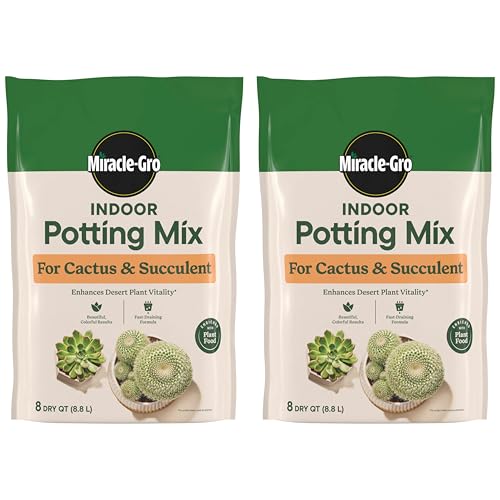
Jungle cactus prefer a slightly chunkier, more organic blend, such as cactus mix combined with orchid bark and perlite.
Skip the layer of gravel at the bottom of the pot. It does not improve drainage and can actually keep the soil above it wetter.
Add Light if the Window Falls Short
If your bathroom is dim, a full-spectrum LED grow light on a timer gives you control. Set it for 12 to 14 hours a day for desert cactus and 10 to 12 hours for jungle types.
In fall, Christmas and Thanksgiving cactus need about 12 to 14 hours of uninterrupted darkness each night for around six weeks to set buds. A bathroom used at night with the light on can block blooming.
Sophia’s tip: Put a small plug-in timer on the bathroom fan or set a phone reminder to run it for 30 minutes after each shower. That one habit does more for a bathroom cactus than any soil additive.
How Should You Water and Feed a Bathroom Cactus?
Water a desert cactus only after the soil is completely dry, and a jungle cactus when the top 1 inch is dry. Feed lightly during the growing season and not at all in winter.
Watering Desert Cactus
In spring and summer, desert cactus in a bright bathroom usually need water every 2 to 4 weeks. Soak the soil until water runs out the drainage hole, then empty the saucer completely.
In winter, most desert cactus go semi-dormant and need water only every 4 to 8 weeks, or not at all in a cool spot. Bathrooms dry more slowly than other rooms, so lean toward the longer end of each range.
Watering Jungle Cactus
Jungle cactus like more regular moisture but still hate soggy roots. Water when the top inch of soil feels dry, which is often every 1 to 2 weeks in the growing season.
After blooming, give Christmas cactus a short rest with lighter watering for about a month. Then return to regular care as new growth appears.
Using a Moisture Meter Well
A soil moisture meter helps, especially for larger pots where the surface dries much faster than the root zone. Push the probe about two-thirds of the way down, and water only when it reads in the dry range for desert cactus.
A wooden chopstick works too. Insert it to the bottom of the pot for a few minutes; if it comes out with damp soil clinging to it, wait.
Feeding
Use a balanced or low-nitrogen fertilizer diluted to half or quarter strength, about once a month from spring through late summer. Stop feeding in fall and winter.
Home additives get a lot of attention online. If you are curious, read about whether coffee grounds are good for cactus plants and whether eggshells are good for cactus before adding them to a pot that already dries slowly.
Sophia’s tip: In a bathroom, write the watering date on a small tag in the pot. Humid rooms make soil look damp longer, and a date removes the guesswork.
Are Bathroom Cactus Safe for Pets and Kids?
Christmas cactus is listed as non-toxic to cats and dogs by the ASPCA, which makes it a safer bathroom choice. Desert cactus are rarely a poisoning concern, but their spines and glochids can injure curious pets and children.
The Real Risk Is Physical
Spines can lodge in a pet’s mouth, paws, or face, and glochids on Opuntia species are tiny, barbed, and very hard to remove from skin. If a pet gets a mouthful of spines, contact your veterinarian.
Bathroom windowsills are often within easy reach of cats, and small kids spend time near the tub. Keep spiny types on a high shelf or choose spineless jungle cactus instead.
Watch the Look-Alikes Again
The bigger toxicity risk comes from Euphorbia plants mislabeled as cactus. Their sap can irritate the mouth, skin, and eyes of people and pets, so confirm what you are buying, especially for a room where kids bathe.
Cleaning Products Matter Too
Bathroom cleaners, bleach, and aerosol sprays can damage plant tissue. Keep plants away from spray zones and move them out of the room during heavy cleaning.
Your Next Steps
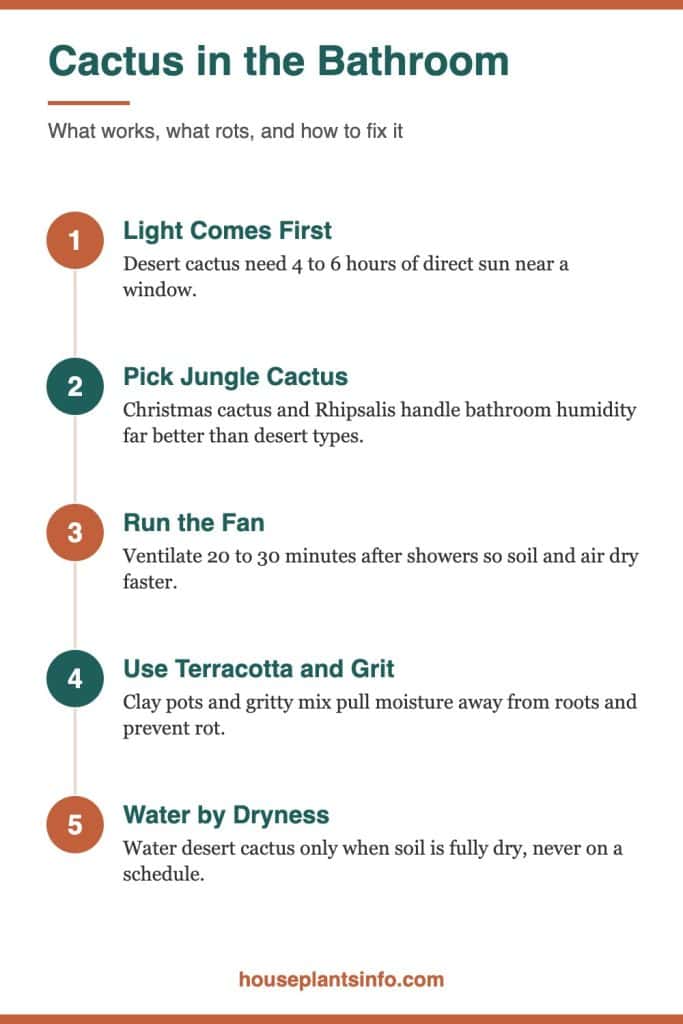
- Check your bathroom window direction and note whether the glass is clear or frosted.
- Place a hygrometer in the room for a few days and note how long humidity stays above 60% after showers.
- Choose a jungle cactus for dim or steamy rooms, or a small desert cactus only for a sunny, ventilated one.
- Pot your cactus in terracotta with a drainage hole and a gritty mix.
- Run the exhaust fan for 20 to 30 minutes after every shower.
- Water by soil dryness and the date tag, not by a fixed schedule.
Common Questions About Cactus in Bathrooms
Can a cactus live in a bathroom with no window?
A desert cactus cannot survive long in a windowless bathroom without a strong grow light. Even with one running 12 to 14 hours a day, low airflow makes it tricky, so a jungle cactus or a different plant is usually the better choice.
Does shower steam hurt a cactus?
Brief steam is not a problem for most cactus, especially jungle types. The damage comes when humidity stays high for hours and the soil cannot dry, which leads to rot and fungal spots.
Is a Christmas cactus good for a bathroom?
Yes, a Christmas cactus is one of the best cactus for a bathroom with a bright window. Just keep the bathroom light off at night in fall so the plant gets the long, dark nights it needs to set buds.
How often should I water a cactus in a bathroom?
Desert cactus usually need water every 2 to 4 weeks in summer and every 4 to 8 weeks in winter, once the soil is fully dry. Jungle cactus need water when the top inch is dry, often every 1 to 2 weeks in the growing season.
Should I mist a cactus in the bathroom?
No, misting is unnecessary for desert cactus and can encourage rot and spotting. Jungle cactus already get enough humidity in most bathrooms, so misting adds little benefit.

Hi! I’m Sophia, and I love plants – especially an expert in growing house plants. I stay in Chicago, United States of America, and through my blog and social media platforms, provide tips and tricks on how to grow healthy, vibrant plants indoors. Check out more here.