
A Christmas cactus sits on your windowsill or a garden center shelf, its arching green stems tipped with pink, red, or white blooms. If you sneeze easily, you may wonder whether bringing one home is a mistake.
Concerns about christmas cactus allergies are common, especially for anyone who reacts to pollen or dust.
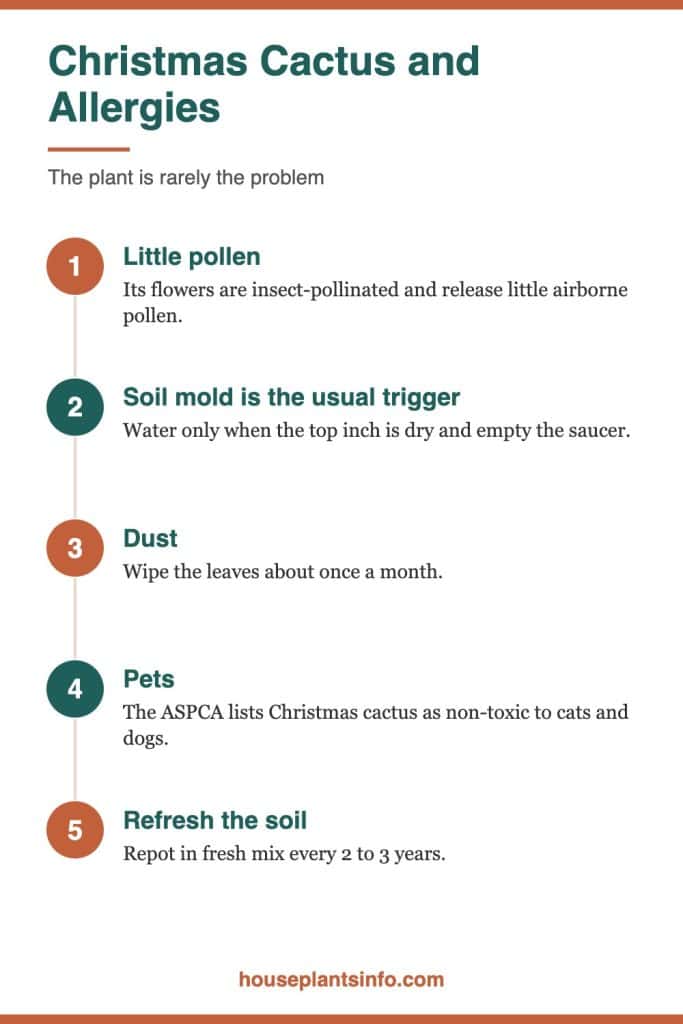
The short version: A Christmas cactus is generally considered a low-allergen houseplant. Its flowers release very little airborne pollen, and it has no shedding spines.
When allergy symptoms do show up, the cause is usually mold in damp soil, dust on the stems, or fungus gnats, not the plant itself.
This guide covers what actually triggers symptoms, how to keep the plant allergy-friendly, and which houseplants are better or worse choices for sensitive households.
Check These First
- Press a finger into the soil. If it feels wet an inch down and the plant has not been watered in days, mold may be growing.
- Look at the saucer. Standing water and a fuzzy or slimy film are common allergy triggers.
- Run a finger along a stem segment. A gray coating means dust has built up and can be stirred into the air.
- Watch the soil surface for tiny black flies. Fungus gnats point to soil that stays too wet.
- Notice when symptoms happen. Itching only after handling the plant suggests skin sensitivity, while constant sneezing suggests mold or dust.
Can a Christmas Cactus Cause Allergies?
Rarely. The plant itself is a low-allergen choice, and most symptoms people link to it come from the conditions around the plant rather than the cactus.
Christmas cactus belongs to the genus Schlumbergera. Despite the name, it is a forest cactus that grows on trees in its native habitat, and it has no sharp spines. That matters, because some cacti shed fine hairs or spines that can irritate skin and eyes.
Why the Plant Gets Blamed
When a houseplant arrives and symptoms start, it is natural to blame the plant. However, the plant usually comes with a pot of potting mix, and that soil is where trouble tends to start.

Damp soil can grow mold. A plant on a shelf collects dust. Wet conditions invite fungus gnats. Each of these can affect sensitive people, and each can be controlled without getting rid of the plant.
If you want a broader picture of how indoor greenery affects sensitive people, read more on whether can you be allergic to houseplants in a typical home.
Checking Moisture Without Guessing
The single most useful habit for allergy control is checking soil moisture before you water. A simple soil moisture meter takes the guesswork out, especially in a pot that is hard to reach on a high shelf or deep windowsill.
If symptoms seem tied to the room rather than the plant, a portable air purifier with a HEPA filter can help reduce airborne dust and mold spores. It works best alongside good watering habits, not as a replacement for them.
When Skin Contact Is the Issue
A small number of people may react to handling the sap or flowers, as with any plant. This usually shows up as mild itching or redness on the hands after pruning or repotting.
If that sounds familiar, wear gloves when you handle the plant and wash your hands afterward. Most people never notice any reaction at all.
Pollen: Why It Is Rarely a Problem
Christmas cactus pollen is unlikely to bother you. The flowers are insect-pollinated, so they produce sticky, heavy pollen that stays on the flower rather than drifting through the air.

Insect Pollination vs. Wind Pollination
Plants that cause hay fever are mostly wind-pollinated. Grasses, ragweed, and many trees release huge clouds of lightweight pollen designed to travel through the air.
Insect-pollinated flowers work differently. They rely on hummingbirds or insects to carry pollen from bloom to bloom, so they release far less into the air. Christmas cactus falls into this group.
Close Contact Still Counts
Low airborne pollen does not mean zero pollen. If you put your nose right into a bloom or rub your eyes after touching the flowers, a sensitive person could still notice mild irritation.
Keeping blooms away from your face is enough for most people. Avoid placing the plant on a nightstand right beside your pillow if you are very sensitive.
Blooming Season and Symptoms
Christmas cactus typically flowers in late fall and early winter. This is also when windows stay shut, forced-air heat runs constantly, and indoor dust circulates more.
If you notice symptoms during the bloom season, consider the whole room before blaming the flowers. Dry heated air and dust are much more common winter triggers.
To encourage healthy flowering without stressing the plant, see how to how to make a Christmas cactus bloom with the right light and temperature cues.
Mold in the Soil: The Hidden Trigger
Mold growing in wet potting mix is the most common houseplant-related allergy trigger. The fix is to let the soil dry out between waterings and keep saucers empty.
How Mold Takes Hold
Mold spores are everywhere, indoors and out. They only grow into visible colonies when they find moisture and organic material, and damp potting mix provides both.
A Christmas cactus that sits in soggy soil, especially in a cool room or a dim corner, gives mold ideal conditions. When you water or brush past the pot, spores can be released into the air.
Signs to Look For
White or gray fuzz on the soil surface is the most obvious sign. You might also notice a musty smell, a crust that stays damp, or a slimy film in the saucer.
Mold on the soil surface is common and usually not harmful to the plant. For a sensitive person, though, it is worth removing. Here is how to handle moldy houseplant soil safely and keep it from returning.
Watering to Prevent Mold
Christmas cactus likes more moisture than desert cacti, but it does not want wet feet. Water only when the top inch of soil is dry, then let excess water drain completely.
Watering needs change through the year. A plant near a south window in summer dries faster than one in a north window in winter. Read more about how often to water a Christmas cactus in different seasons.
Sophia’s tip: Top-dress the pot with a thin layer of gravel, about a quarter inch deep. It keeps the soil surface drier, which discourages both mold and fungus gnats, and it still lets you check moisture with a finger or meter.
Fungus Gnats and Allergies
Fungus gnats are tiny dark flies that breed in consistently moist soil. Some people react to them, and their presence signals that the soil is staying wet too long.
Letting the top inch dry between waterings usually breaks their life cycle. Yellow sticky traps placed near the soil can catch adults while the soil dries.
Dust on Leaves
Dust settling on the flat stem segments can be stirred into the air whenever you move or water the plant. Wiping the stems once a month keeps this trigger under control.
Why Dust Builds Up Indoors
Forced-air heating and cooling systems move dust through the home. A plant placed near a vent or on top of a radiator cover collects more than one in a still corner.
In a city apartment, open windows during warm months can also bring in outdoor grime. The broad, flat segments of a Christmas cactus catch it easily.
How to Clean the Stems
Use a soft, damp cloth and gently support each segment from below as you wipe. Christmas cactus segments can snap off if you press too hard.
For a heavily dusty plant, rinse it under lukewarm water in the shower, then let it drain fully. Avoid cold water, and do not leave water pooling in the pot.
Dust and Plant Health
Clean stems absorb light better, which helps the plant grow and flower. A dusty plant in a north window may already be short on light, and a layer of dust makes that worse.
If you use a grow light to supplement winter sun, keeping the stems clean helps the plant make the most of it.
Is Christmas Cactus Safe for Pets and Kids?
Yes. The ASPCA lists Christmas cactus as non-toxic to cats and dogs, though eating it can cause mild vomiting or diarrhea.
Pets
Cats in particular like to chew on arching plants. A nibble is unlikely to cause serious harm, but the fibrous stems can upset a pet’s stomach.
Place the plant on a high shelf or in a hanging planter if your pet is a persistent chewer. Call your veterinarian if vomiting or diarrhea continues.
Kids
Christmas cactus is generally considered a safe choice for homes with young children. It has no spines, and it is not considered toxic.
Even so, keep the pot out of reach of toddlers. The bigger risks are a tipped pot, spilled soil, or a mouthful of potting mix rather than the plant itself.
Soil and Fertilizer Safety
Fertilizers and some potting mix additives can irritate skin or upset stomachs if eaten. Store plant food out of reach and wash hands after handling soil.
For households with allergies, this is another reason to keep the soil covered with gravel. It limits curious fingers and paws digging into damp mix.
How to Keep a Christmas Cactus Allergy-Friendly
A few simple habits keep allergy triggers low: water carefully, empty saucers, keep the stems clean, and refresh the soil every few years.
Watering and Drainage Habits
Water only when the top inch of soil is dry. Pour water until it drains from the bottom, then empty the saucer within about 15 minutes.
Use a pot with a drainage hole. A decorative pot without drainage traps water at the bottom, which creates exactly the damp conditions mold prefers.
Sophia’s tip: Keep the plant in a plain plastic nursery pot with drainage holes, then set it inside a decorative cachepot. Lift the inner pot out after watering, let it drain in the sink, and return it once dripping stops.
Placement in Your Home
Bright, indirect light works best. An east window is ideal, or a few feet back from a south or west window so the stems do not scorch.
Keep the plant away from radiators and forced-air heat vents. Heat dries the stems and blows dust onto them. Cold AC drafts and drafty winter glass can stress the plant too.
Fresh Soil Every Few Years
Repot in fresh mix every 2 to 3 years. Old potting mix breaks down, holds more water, and becomes a better home for mold.
Use a fast-draining mix, such as a cactus or succulent blend with added bark or perlite. Do repotting outdoors or over newspaper, and consider wearing a mask if you react to dust or mold.
Room Humidity and Air
Dry winter air from forced heat can irritate your nose and throat, which is easy to confuse with an allergy. Christmas cactus also appreciates moderate humidity.
A humidifier can help both you and the plant, but keep humidity moderate. Very damp air encourages mold on walls and windowsills, which works against your goal.
Sophia’s tip: If you are sensitive to flowers, move the blooming plant to a spot you see but do not sit right beside, such as a shelf across the room. You still enjoy the color without close contact.
Better and Worse Houseplants for Allergy Sufferers
Plants with low pollen, no shedding parts, and moderate watering needs are usually better choices. Plants with lots of airborne pollen, irritating sap, or constantly wet soil are usually worse.
What Makes a Plant Allergy-Friendly
Look for plants that do not need constantly moist soil, since soggy pots invite mold. Smooth, easy-to-wipe leaves also help, because they make dust removal quick.
Christmas cactus fits this profile well. It flowers without much airborne pollen, has no spines, and tolerates a drying-out period between waterings.
Plants Often Called Worse for Allergies
Flowering grasses release airborne pollen, which can trigger hay fever symptoms indoors. Chrysanthemums are also known for causing reactions in sensitive people.
Some ficus species produce a milky latex sap, which can be a problem for people with latex allergy. Any plant kept in constantly wet soil, regardless of species, can become a mold source.
Comparison Table
| Plant or condition | Allergy concern | Why |
|---|---|---|
| Christmas cactus | Low | Insect-pollinated, little airborne pollen, no spines |
| Flowering grasses | Higher | Release airborne pollen |
| Chrysanthemums | Higher | Pollen and plant contact can irritate sensitive people |
| Some ficus | Higher for latex allergy | Milky latex sap |
| Any plant in constantly wet soil | Higher | Encourages mold and fungus gnats |
Air Quality Expectations
Houseplants are pleasant to live with, but they are not a substitute for ventilation or air filtration. The EPA recommends controlling sources of indoor pollution and improving ventilation as the main strategies for indoor air.
If you are curious, read more about are cactus good for air quality and the broader question of what houseplants clean the air in a real home.
A Note on Serious Allergies
People with serious allergies or asthma should follow their doctor’s advice before adding plants to their home. An allergist can test for specific triggers, such as mold or certain pollens.
If you notice wheezing, shortness of breath, or worsening asthma after bringing home any plant, remove it from the room and talk to your doctor.
Your Next Steps
- Check the soil an inch down before every watering, and water only when it feels dry.
- Empty the saucer after each watering and confirm the pot has a drainage hole.
- Add a thin layer of gravel to the soil surface to keep it dry.
- Wipe the stem segments with a damp cloth once a month.
- Place the plant in bright, indirect light, away from radiators, heat vents, and AC drafts.
- Mark your calendar to repot in fresh, fast-draining mix every 2 to 3 years.
Common Questions About Christmas Cactus Allergies
Can a Christmas cactus make you sneeze?
The plant itself rarely causes sneezing, because its flowers release little airborne pollen. Sneezing near a houseplant is more often caused by mold in damp soil or dust on the leaves. Keeping the soil drier and the stems clean usually solves the problem.
Is Christmas cactus pollen bad for hay fever?
Christmas cactus is insect-pollinated, so its pollen is heavy and stays on the flower. Hay fever is mainly triggered by wind-pollinated plants such as grasses and ragweed. If you are very sensitive, keep blooms away from your face.
Can touching a Christmas cactus cause a rash?
A small number of people may react to the sap or flowers, as with any plant. Mild itching or redness on the hands is the most common reaction. Wearing gloves while pruning or repotting prevents most problems.
Is Christmas cactus safe if my cat eats it?
The ASPCA lists Christmas cactus as non-toxic to cats and dogs. Eating it can still cause mild vomiting or diarrhea. Call your veterinarian if symptoms continue or seem severe.
Should I get rid of my Christmas cactus if I have asthma?
Not necessarily, since the plant is considered low-allergen. Mold in wet soil is the bigger concern, so careful watering matters. People with asthma or serious allergies should follow their doctor’s advice about houseplants.

Hi! I’m Sophia, and I love plants – especially an expert in growing house plants. I stay in Chicago, United States of America, and through my blog and social media platforms, provide tips and tricks on how to grow healthy, vibrant plants indoors. Check out more here.